• Home
  • About me/Chi sono
  • Contact

Un po' di pepe

~ …… (oon∙poh∙dee∙PEH∙peh) Cristina writes about interesting stuff /Cristina scrive di cose interessanti

Un po' di pepe

Tag Archives: Italian food

Olive Oil Limoncello Cake

25 Thursday Jan 2018

Posted by Un po' di pepe in Mangiamo!, Recipes

≈ 28 Comments

Tags

Casa Berti, Catalyst Art Retreat, Cucina Italiana, Dolci, Gugliano, Italian food, Limoncello, Lucca, Olive oil harvest, Olive oil limoncello cake

In November I attended an art retreat, surrounded by 900 olive trees!  It was at Casa Berti near Gugliano, about 40 minutes outside of Lucca. There were also lemon trees in giant terra cotta pots on the terrace, not yet ready to be moved into the limonaia for the winter. Many of the lemons become limoncello.  I was so inspired and distracted by the olive trees that I took several breaks from art making to pick olives.  I could not help it-they were calling to me!  Every day or two, when there were enough picked, they would be taken to the frantoio or olive press and then return to Casa Berti as lush, fragrant oil.  Green gold as a friend calls it. The Casa Berti cucina had a stainless steel bidone full of new oil with a little spout for pouring.

Being surrounded by olives, freshly pressed oil, fresh lemons and limoncello, I had the urge to make an olive oil limoncello cake.  I have been making this cake for years, but I did not have the recipe with me.  I also left my art making to bake just when Ben, the owner of Casa Berti, had gone on another run to the frantoio with olives. I searched the kitchen but could not find any measuring utensils or a scale, so the measurements were all a big guess. ??? Luckily I knew where the limoncello was!

The cake came out better than usual, probably due to the quality and freshness of the ingredients.  I usually just dust it simply with zucchero in polvere-icing sugar.  For a fancier look, make a limoncello glaze with icing sugar and limoncello.  The cake is also nice with fresh fruit, especially raspberries or blueberries.  It goes equally well with a cup of espresso or a glass of limoncello and is also very easy to make-you don’t even need a mixer-just a wooden spoon and a whisk.  I adjusted some of the amounts to the recipe based on the Casa Berti cake, but if your measurements are not exact, non ti preoccupare, it will probably still taste good!

Casa Berti

Casa Berti Olive Oil Limoncello Cake

400g (~3 cups) flour

200g (almost 1 cup) sugar

4 medium sized eggs or 3 large eggs

160ml (~ ¾ cup) extra virgin olive oil

130 ml (~½ cup) milk

60 ml (¼ cup, 4 tablespoons) limoncello

Grated zest/peel of 2 organic lemons

16g packet Pane degli Angeli (or 15 ml/1 tablespoon baking powder)

  1. Preheat oven to 160°C (325°F)
  2. Butter and flour a 23 cm (9 inch) pan
  3. In a small bowl, add the lemon peel to the sugar and mix with fingers or the back of a spoon until they are well mixed and the sugar looks damp
  4. Whisk the eggs and add the sugar/peel mixture
  5. Add the olive oil, milk and limoncello
  6. Add flour a bit at a time and stir with a wooden spoon just until the flour is mixed in.  Do not over mix
  7. Add Pane degli Angeli
  8. Spoon into the pan and bake for 40-45 minutes.  Be careful not to overbake or it may come out dry
  9. Cool and dust with icing sugar
  10. For a fancier topping, make a limoncello glaze with 1 cup icing sugar and 30 ml (2 tablespoons) limoncello.  If it is too dry, add another 15 ml (1 tablespoon) limoncello or milk.  Mix together and drizzle onto cake.

For a post on how to make your own limoncello, click Limoncello.  Buon appetito, Cristina

Share this:

  • Click to share on Facebook (Opens in new window) Facebook
  • Click to share on Pinterest (Opens in new window) Pinterest
  • Click to share on X (Opens in new window) X
  • Click to email a link to a friend (Opens in new window) Email
  • Click to share on WhatsApp (Opens in new window) WhatsApp
Like Loading...

Panettone Fatto in Casa

20 Wednesday Dec 2017

Posted by Un po' di pepe in Mangiamo!, Recipes

≈ 29 Comments

Tags

Biga, Dolci di Natale, Italian food, Lievito madre, Panettone, Panettone con fichi e noci, Panettone fatto in casa, Panettone recipe

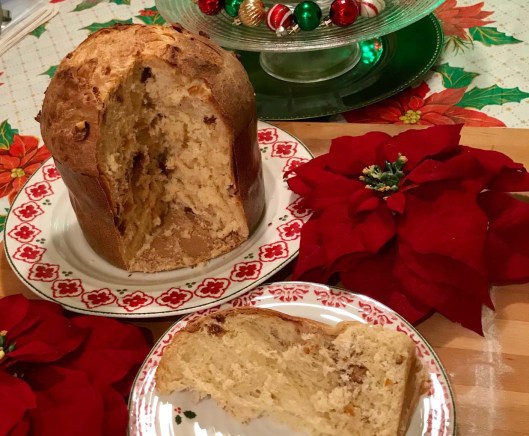
I started experimenting with panettone last year. I did not do it intentionally… it was an act of desperation.  I had made lievito madre– mother yeast or bread starter that I was keeping for months, and needed to feed at least once or twice a week.  I had to do something with the part you need to give away or throw out.  It was invading my cucina! I ran out of people to give it to, and did not like throwing it away.  Then I found out I could use my lievito madre to make panettone. Yeast still had to be added, but the lievito madre added flavour and texture to the dough and helped it stay fresh longer.  I adapted this overnight panettone recipe, replacing 1 cup of flour with 1 cup of my starter.  It was pretty good.  This year, I no longer have my starter, plus I lost all of my recipe experimentation notes. Mannaggia!  So I had to start all over, but luckily my panettone turned out better.  This time I used a biga (BEE•gah), a sort of ‘mini starter’ that ferments overnight.  After trying a lot of different things, I can finally post the recipe, just in time for Natale.  Traditionally, panettone is made with uvetta and canditi-raisins and candied citrus peel.  I love panettone, and canditi, but I usually end up picking out the raisins, so I used dried figs soaked in grappa instead.  If you like raisins, they do grappa well too!  Panettone dough needs to rise 3 times, so this recipe is not recommended for the inpatient or inexperienced bread baker.  Be sure to read my notes at the bottom.  My previous post Panettone details the history of this lovely dolce.

Panettone con Fichi, Noci e Arancia/Panettone with Figs,Walnuts and Orange:

Make a biga the night before:

  • 100 g 00 flour or all-purpose flour (200 ml, ~¾cup)
  • 100 ml milk (85g, a bit more than ⅓ cup) at room temperature
  • 1 (7 g) package active dry yeast (not quick rise or instant) Lievito di birra is what I used*
  • 15 g honey (10 ml, 2 tsp)

In a glass bowl or measuring cup, dissolve the yeast in the milk.  Add honey, then flour.  Cover with a tea towel and leave overnight or longer. It should be bubbly and doubled in size

Soak fruit: 250-500 ml (1-2 cups) chopped dried figs (or apricots, cranberries, raisins or other mixed dried fruits).  Cover with 30ml (2 tablespoons or 1 ‘shot’) of grappa and soak overnight.

Make the dough the next morning:

  • Biga made the night before
  • 400g flour (~800 ml, 3 ¼cups)
  • 60 ml white wine (¼ cup, 4 tablespoons)
  • 100 g sugar (120 ml, ½ cup)
  • 100 g butter at room temperature (125 ml, ½ cup, 1 ‘stick’)
  • 6 g salt (1 tsp)
  • 3 eggs (plus one extra yolk if the eggs are small)
  • 5 ml (1tsp) Fiori di Sicilia (or 1 tsp vanilla extract or ⅓ a vanilla bean and 5 drops of orange oil) **

Make a well in the center of the flour. Add the biga and other ingredients.  Mix with a wooden spoon.  Knead by hand on a floured surface for 10-20 minutes or electric mixer 10 minutes followed by a few minutes by hand. Cover bowl with a tea towel and let rise for a minimum of 3 hours.  Longer is better*

Add fruit and canditi:

Deflate the dough and pull it into a rectangle. Top with:

  • Grated rind of 1 large orange
  • Drained figs or other dried fruit soaked in grappa
  • 125-250 ml (½ to 1 cup) Canditi-candied citrus peel
  • 125-250 ml (½-1 cup) chopped walnuts

Roll dough up into a log, then knead on a floured surface to evenly mix in the fruit, nuts, and canditi. Shape into a ball.

Place the ball in a 750g panettone paper mold, a metal coffee can lined with parchment paper, an 8 cup glass pyrex measuring cup lined with parchment paper, or a new terra cotta pot. Whatever you use, make sure the sides are tall enough to allow for the dough rising. Let rise 4-5 hours*** I had to let mine rise overnight in the oven-turned off with the light on.
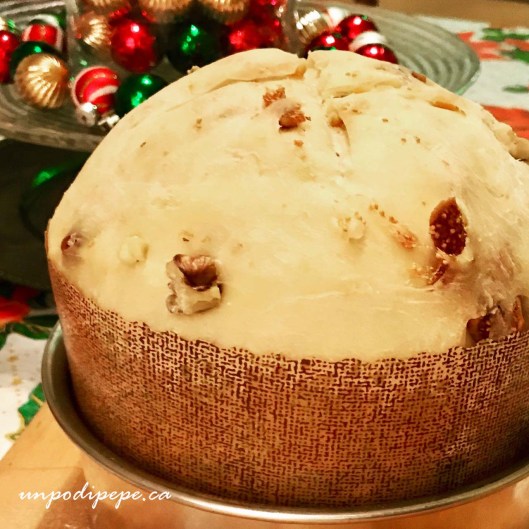
Slash a cross on top of the panettone and place a small square of butter in the middle

Bake panettone in a preheated 190° C (375° F) oven for 45-50 minutes or until the top is done.  If the top is becoming too dark, cover with a piece of aluminum foil

Cool panettone upside down to prevent falling.  I could not find bamboo skewers, so I used my bamboo knitting needles to skewer the bottom then hung it upside down over a large pot. I don’t know if this step is really necessary, but after all this work, I am not willing to find out! It also looks cool.  See photo:
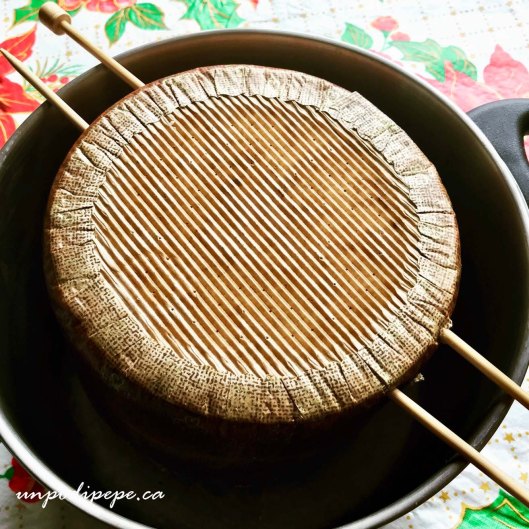
The panettone should keep fresh for 5 days in a plastic bag- if it lasts that long!

Notes:

Amounts can vary depending on temperature, humidity and type or size of ingredient.  I have included ml and cup measurements in brackets, but measuring ingredients by weight is the most accurate.

Fig and chocolate is also a nice panettone combination.  For best results, freeze the chocolate pieces before adding to the dough.

I made my own canditi-candied orange peels, using the instructions on Domenica’s post. It was easier than I thought and I won’t be buying canditi any more!

*Lievito di birra is beer yeast.  It is available from some Italian supermarkets in packets.  Use ‘active’ dry yeast, not instant or quick-rise.

**Fiori di Sicilia is a vanilla citrus mixture that smells like panettone in a bottle. It can be hard to find and expensive.  Vanilla extract and orange oil is a good substitute.

***Dough rising times are variable, especially in colder weather. If you are having difficulty getting your dough to rise, there are some things that can help.

  • Place the dough on the counter while a pot of water is simmering on the stove
  • Place the dough in the oven (turned off) with the light on
  • If really having difficulty, preheat the oven to a ‘keep warm’ setting, then turn it off and place the dough in there.
  • Abbia pazienza-Just be patient!

Buon appetito e Buon Natale, Cristina
Share this:

  • Click to share on Facebook (Opens in new window) Facebook
  • Click to share on Pinterest (Opens in new window) Pinterest
  • Click to share on X (Opens in new window) X
  • Click to email a link to a friend (Opens in new window) Email
  • Click to share on WhatsApp (Opens in new window) WhatsApp
Like Loading...

Pomodoro Day!

27 Sunday Aug 2017

Posted by Un po' di pepe in Italian life, Mangiamo!

≈ 21 Comments

Tags

Italian food, Passata di pomodoro, photography, Pomodori, Pomodoro day, Pugliese Traditions, Tomato day, Tomato sauce

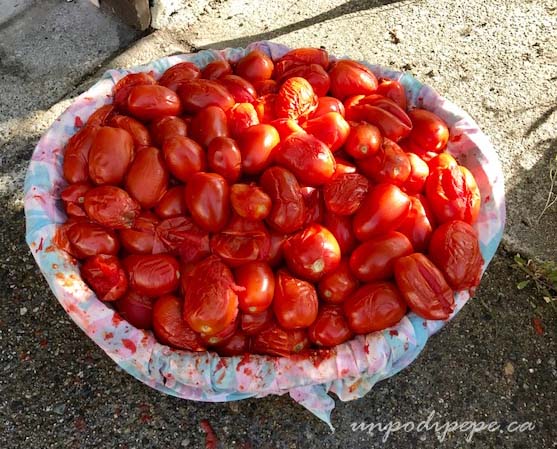
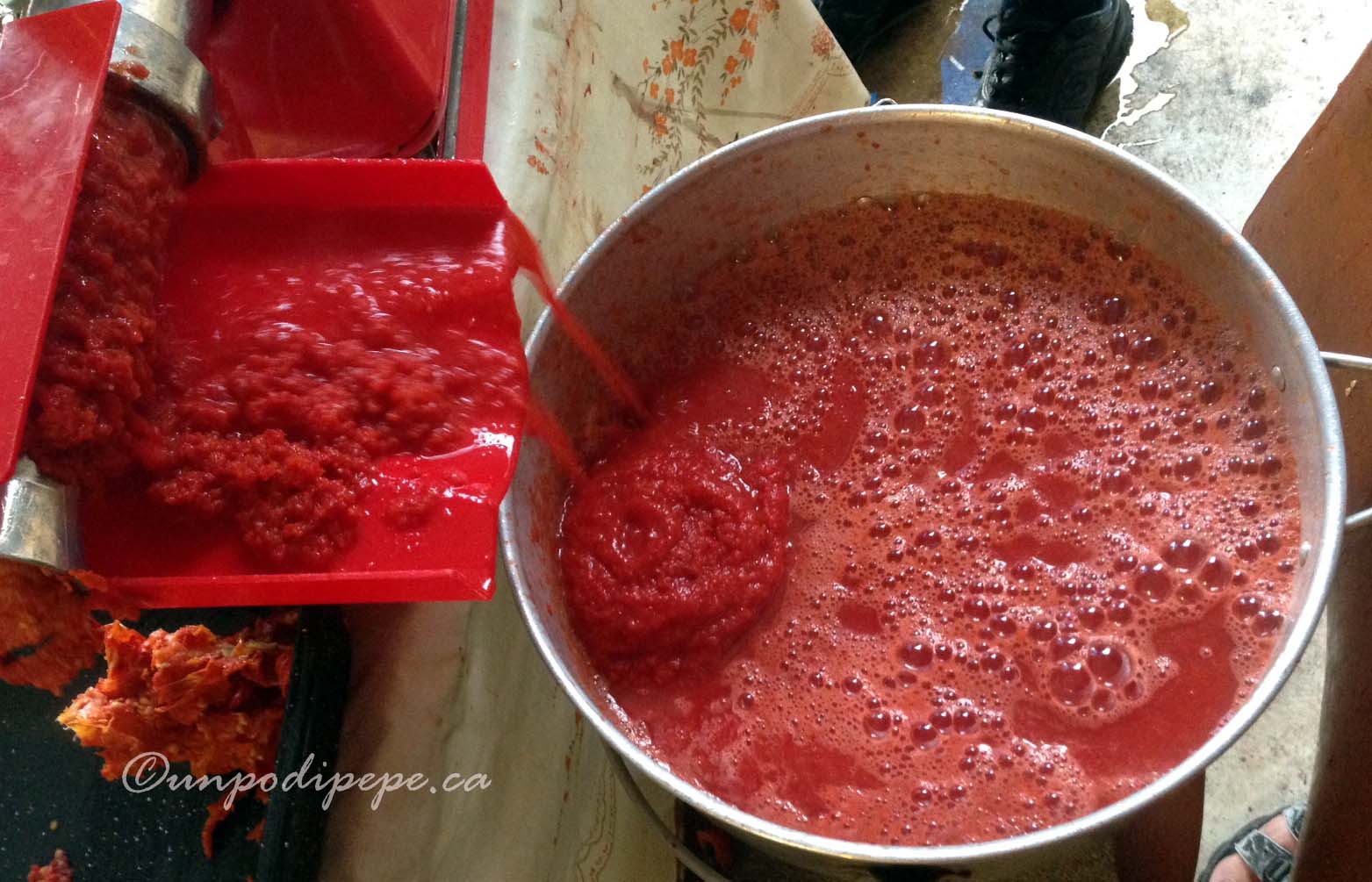
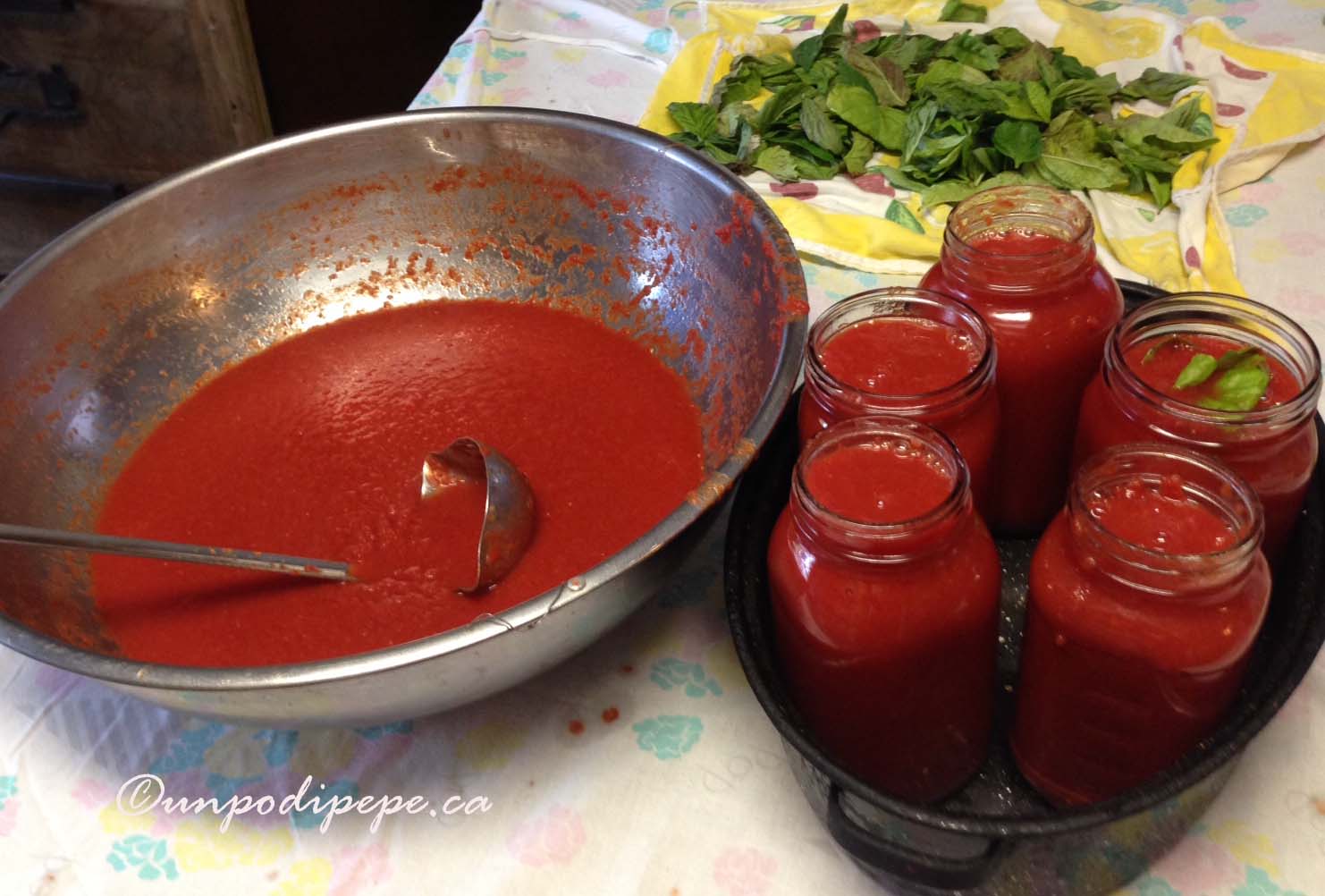
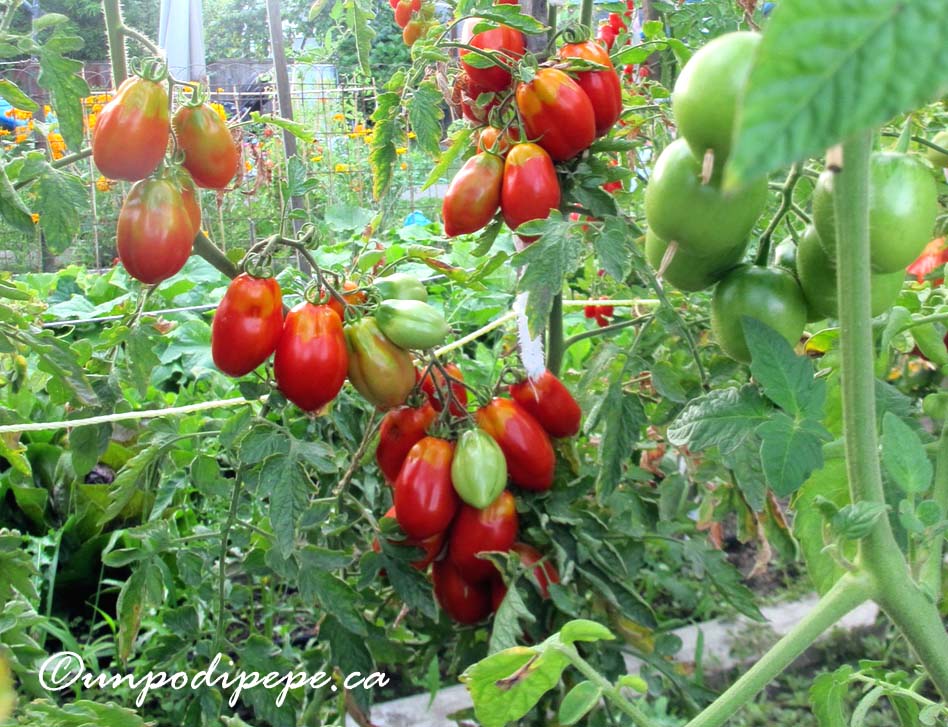
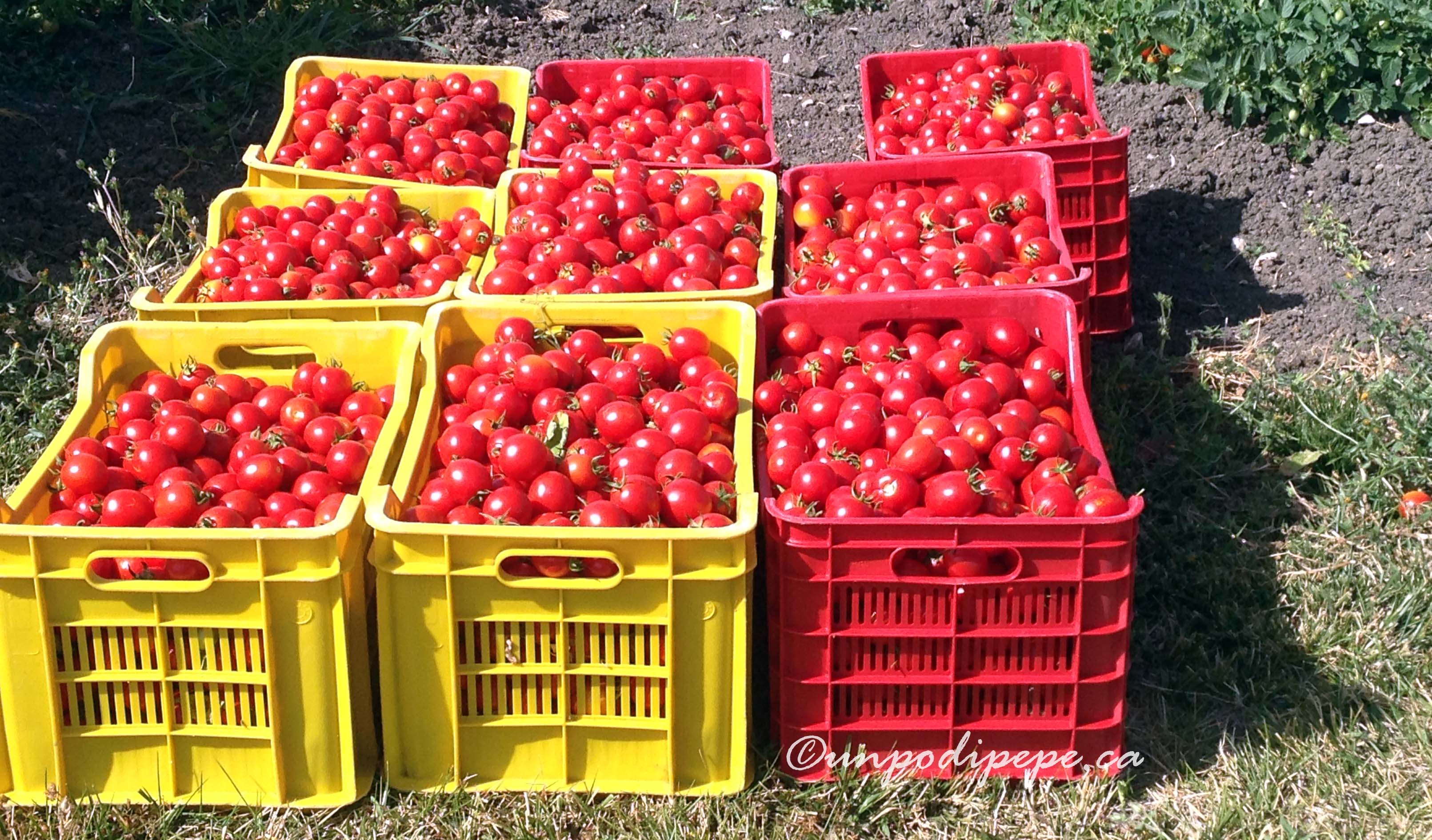
Today was my famiglia‘s annual pomodoro day.  We turned 15 boxes of pomodori, plus more from our gardens into passata di pomodoro, or as we simply call it ‘la salsa’. The boxes were 18 kg each (40 lbs)! That is 272 kg of pomodori and we made 140 litres of passata. Siamo stanchi!

For new readers of Un po’ di pepe, or those of you who have not read my previous pomodoro related posts, here they are.  Click on the appropriately coloured red links!

Passata di pomodoro

Passata di Pomodoro is a detailed description of my famiglia’s annual passata making day.  There is a lot of red in photos in this post! Rosso come un pomodoro, but no one is blushing.

Il Pomodoro discusses the history of the pomodoro and how it came to Italia and eventually became edible. You read that correctly-pomodori originally tasted really gross and were used only for ornamental purposes.  You’ve come a long way, pomodoro.

Does your famiglia make passata di pomodoro? I’d love to hear about it.  Ciao, Cristina

Share this:

  • Click to share on Facebook (Opens in new window) Facebook
  • Click to share on Pinterest (Opens in new window) Pinterest
  • Click to share on X (Opens in new window) X
  • Click to email a link to a friend (Opens in new window) Email
  • Click to share on WhatsApp (Opens in new window) WhatsApp
Like Loading...

Peppe Zullo~Il Cuoco-Contadino

28 Sunday May 2017

Posted by Un po' di pepe in Amici e Famiglia, Orsara di Puglia, Puglia, Vino

≈ 16 Comments

Tags

Italian food, Orsara di Puglia, Peppe Zullo, Pugliese Traditions, Southern Italy, Tuccanese, Wines of Puglia

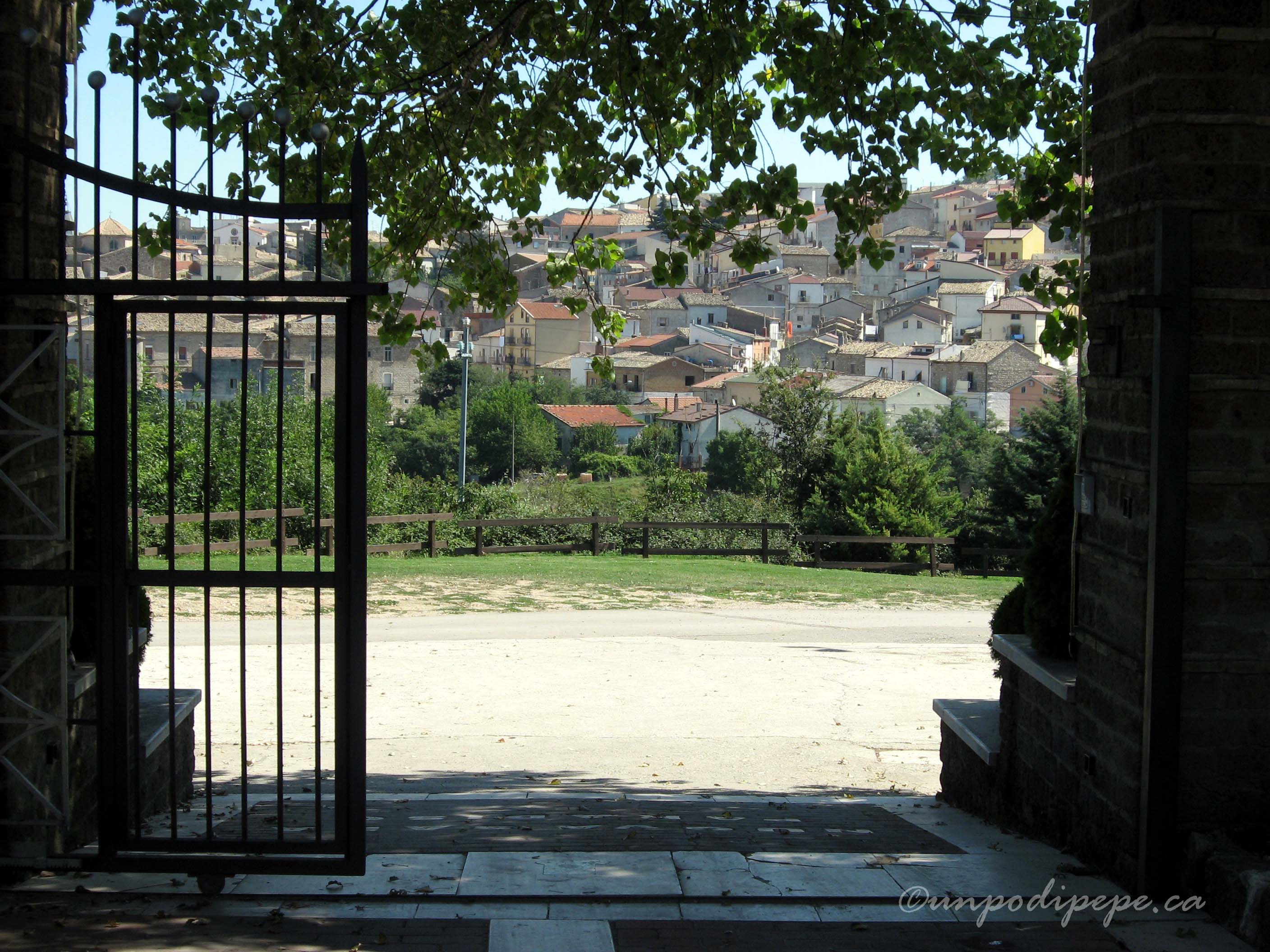
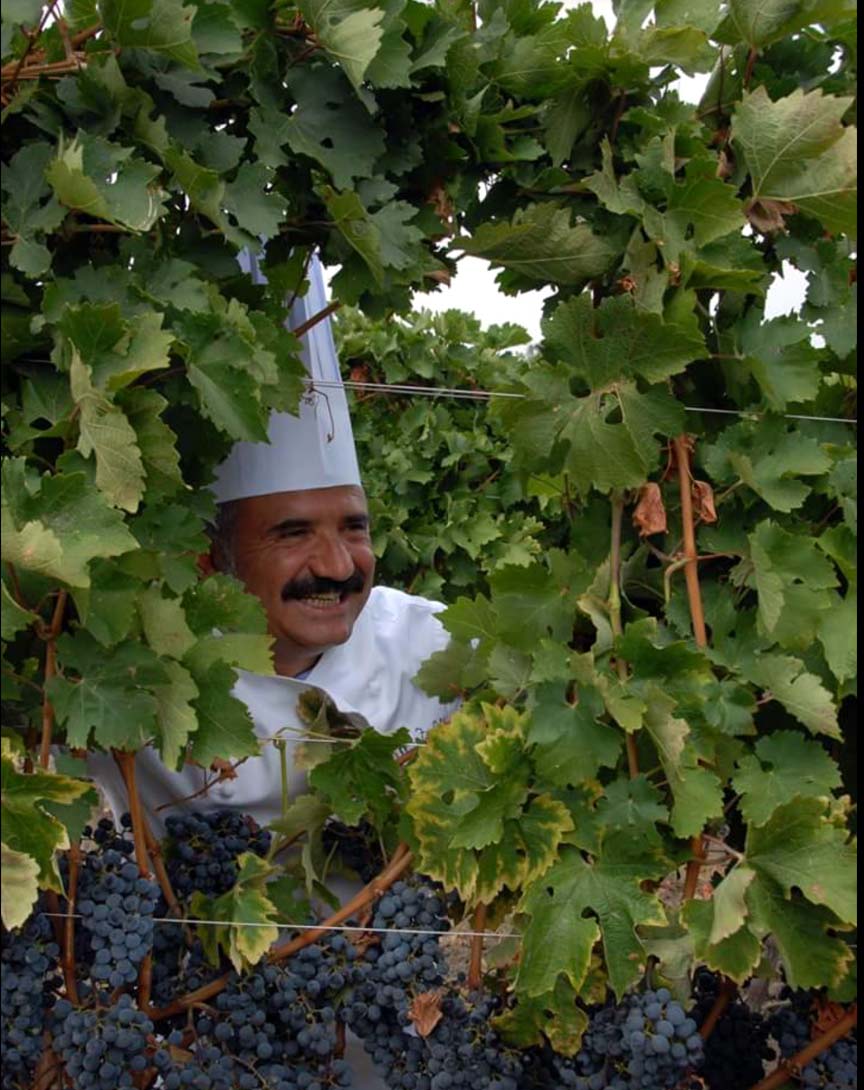
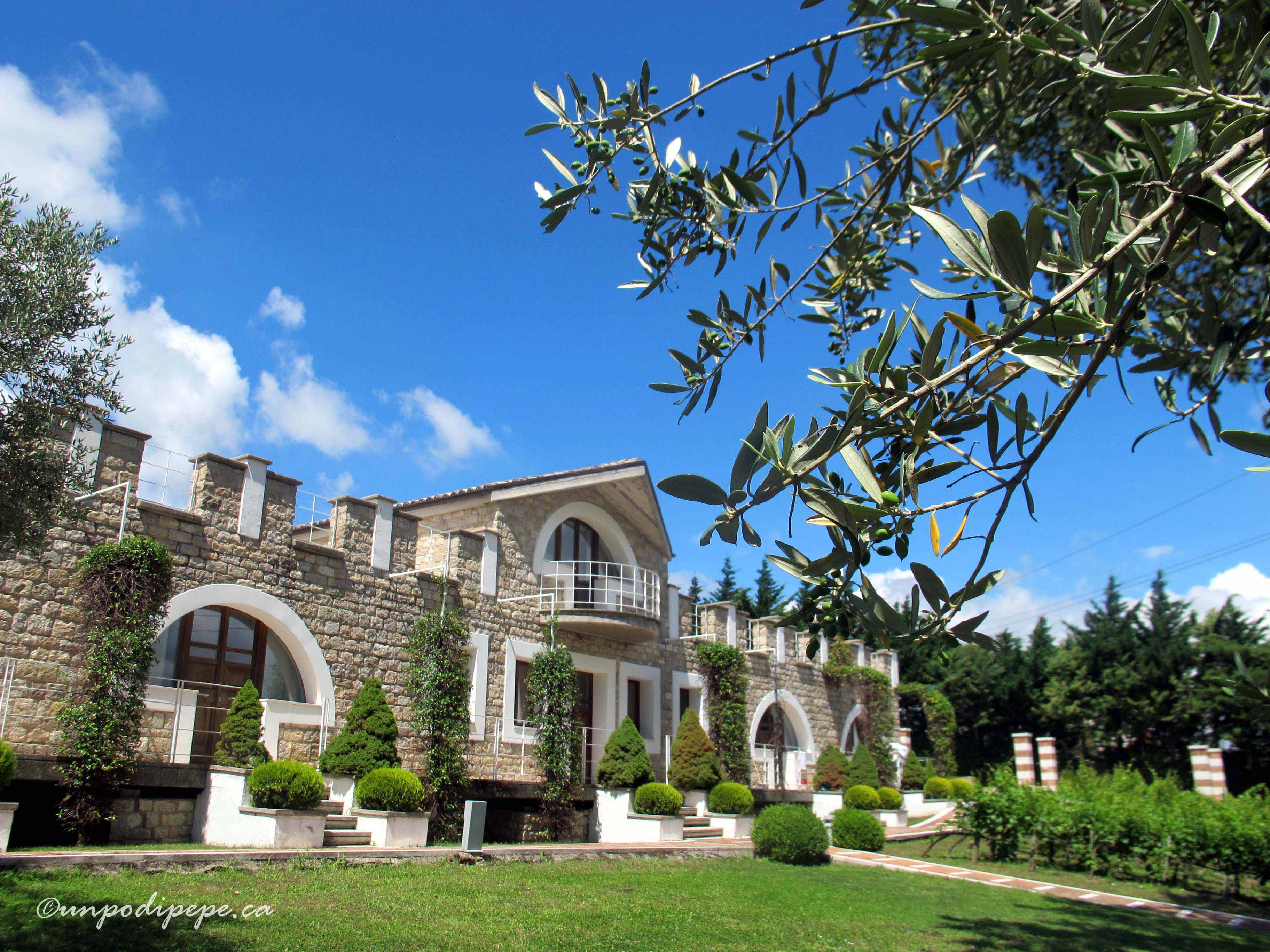
My amico Peppe Zullo is known as ‘Il Cuoco-Contadino’. At the age of 24, Peppe left Orsara di Puglia to work in Boston and Puerto Vallarta Mexico, where he opened a restaurant.  He moved back to Orsara and opened his ristorante in 1992 on his family land in the Piano Paradiso area.  Piano Paradiso is an idyllic setting facing Orsara di Puglia, with spectacular views.  Peppe greets visitors with the appropriate salutation ‘Benvenuti in Paradiso’.

Peppe Zullo nel vigneto. Photo Nicola Tramonte

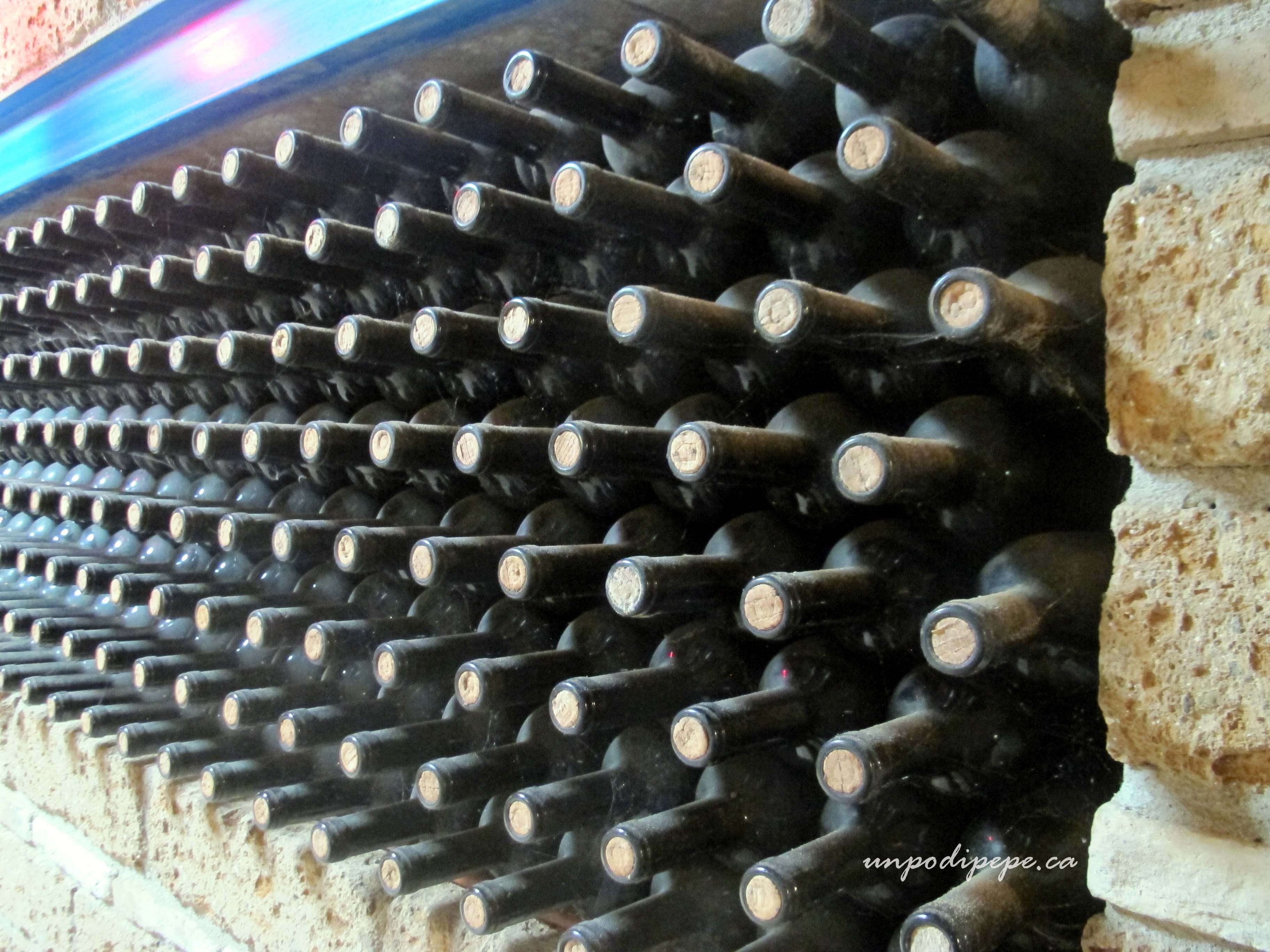
The Piano Paradiso site also includes a reception hall, Nuova Sala Paradiso and the award winning cantina. Peppe’s wine cellar La Cantina del Paradiso, designed by Nicola Tramonte was featured in the exhibit ‘Le Cattedrali del Vino’ at the Biennale di Venezia Archittetura in 2010. It is built into the side of a hill, with a vineyard on top! As Peppe likes to say, it’s the only cantina where you have to climb up stairs! This is the best place in town on a hot day! The cantina is built to resemble a subterranean small town with narrow streets and rooms. It also features colourful, whimsical original artwork by Leon Marino, an artist from Troia.

L’angelo contadino by Leon Marino

La Cantina is full of vino! Peppe Zullo produces about 25,000 bottles per year. His 2 wines are Aliuva and Ursaria. Aliuva is 80% Tuccanese 20% Uva di Troia (Nero di Troia) and Merlot.  Ursaria is 80% Tuccanese, 20% Uva di Troia and Cabernet, and is aged for 5 years in wood barrels. Peppe’s vino is served in his restaurant and event facilities and sold on site and at Peppe Zullo Point in Foggia. Read more in part 3 of my Vini di Puglia series- Il Tuccanese.

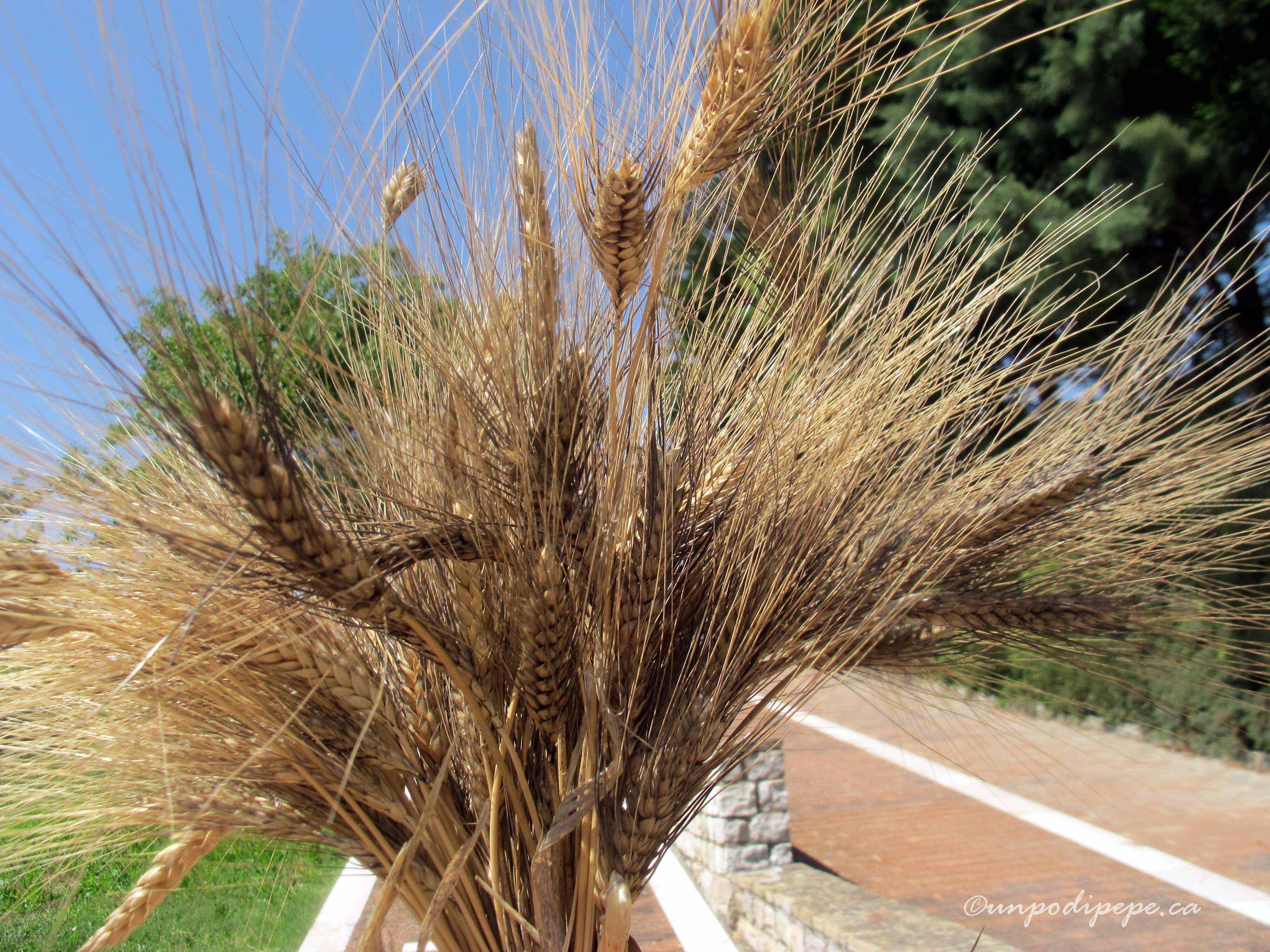
At the top of the hill, looking out over the vigna, are the Suites del Paradiso, 5 rental suites with a view of the rooftops of Orsara. Above the suites, at the top of the estate is a wheat field growing an ancient Pugliese strain called Senatore Cappelli.  We call it  ‘Strambell’ in Orsarese. Pale Eoliche, wind turbines belonging to Montaguto can be seen behind the field.  Also on site are Peppe’s home, offices, several places for outdoor receptions or enjoying the scenery and a fenced in area with fruit trees, sheep and horses.

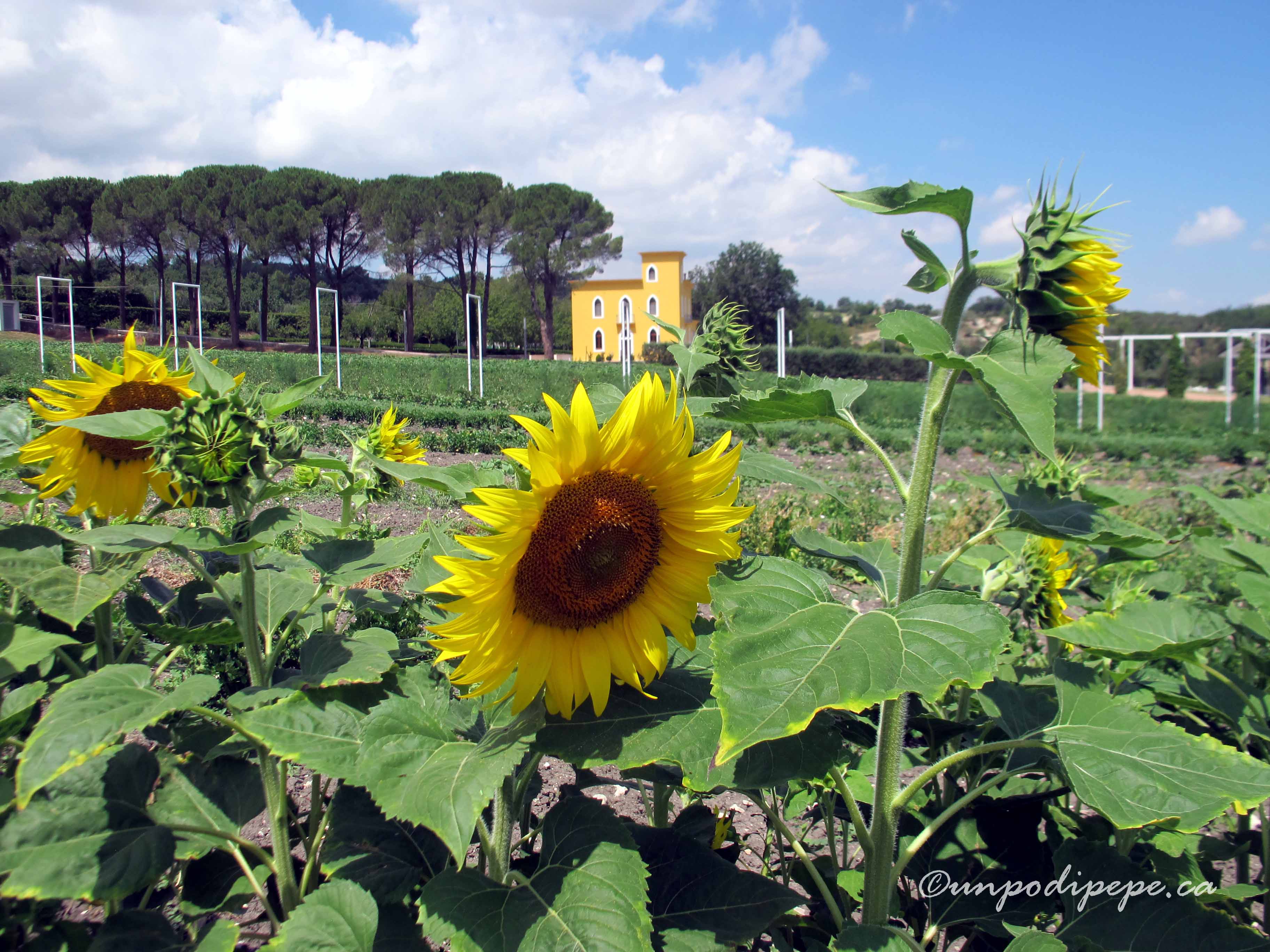
Peppe’s 180,000 m² azienda agricola (agricultural estate) also includes a second location acquired in 2004.  Villa Jamele is a few km down the road towards Troia.  The reconstructed 1700’s villa is home to an international cooking school, with rooms on the upper floor. Villa Jamele is featured in the next post.

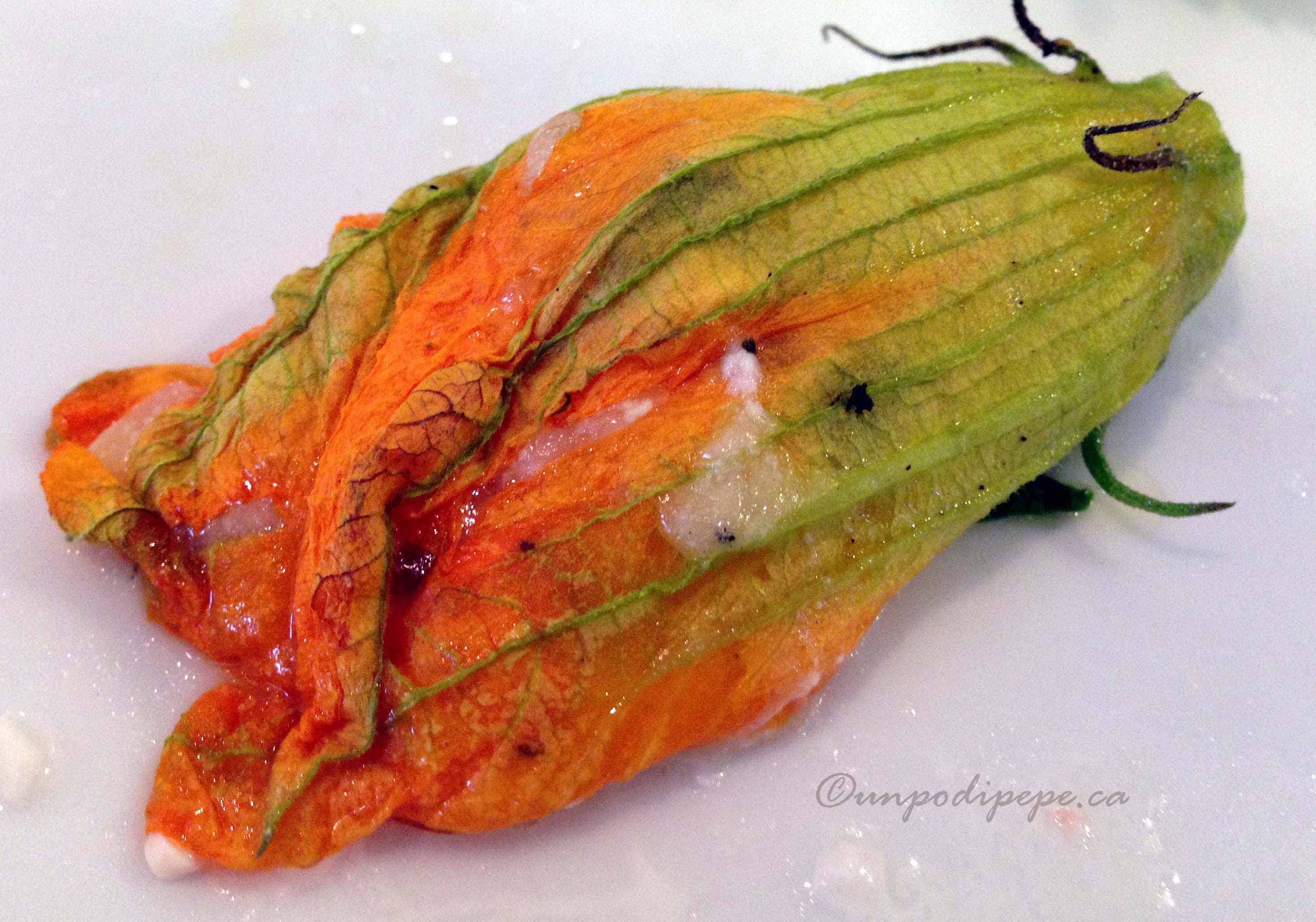
Dalla terra alla tavola or Cibo a km 0 is the philosophy here.  This translates to ‘Field to table’ or the ‘100 mile diet’. Food does not get any fresher. In addition to producing wine and olive oil, Peppe grows most of his own vegetables at Villa Jamele, including pomodori which are canned on site in August.  Il Bosco dei Sapori Perduti is a biodiverse orchard which includes over 50 varieties of fruit trees and herbs.  Peppe uses local, traditional products including wild greens and herbs such as boragine (borage), marasciuolo (a type of wild rucola found in Puglia), fiori di zucca, wild asparagus, Greek mint and Cacioricotta, a DOP goat cheese made only in Orsara. He makes bread and pasta with zucca and grano arso and also produces his own cheeses. One of Peppe favourite antipasti are ‘ostriche di montagne’ or ‘mountain oysters’.  These are lightly battered and fried foglie di Boragine – borage leaves. My favourite antipasto is fiori di zucca al forno ripieni di caciocavallo!

Orecchiette di grano arso al sugo, Ristorante Peppe Zullo Orsara di Puglia

Peppe is an ambassador for cucina povera and the gastronomic traditions of Puglia.  In the last few years, he has made frequent television appearances on RAI’s Uno Mattina and Geo & Geo. Check them ou on his Youtube channel. Appuntamento con la Daunia, a 2 day event celebrating local cuisine and products is held at Villa Jamele every year, the second week in October. I receive an invitation every year but have not been able to attend…yet.

Peppe was the chef representing Puglia for the month of May at Expo 2015 in Milano. They served a lot of orecchiette di grano arso!  That same year, along with another Pugliese chef, he catered an Indian wedding for 1,000 guests in Borgo Egnazio, near Ostuni. In 2016 he catered the 80th birthday party for Lino Banfi-who plays the adorable Nonno on RAI’s ‘Un Medico in Famiglia’.

Peppe Zullo & Lino Banfi

Ristorante Peppe Zullo is open daily for pranzo, the mid-day meal. They are not open in the evening.  Afterwards, visit the cantina, vigneto or take a short passeggiata to Orsara.  La Scuola di Cucina at Villa Jamele is open from September to November and February to April.  Classes are 5 hours per day 6 days a week and can be organized for 8-16 participants. To make a reservation at Ristorante Peppe Zullo, book a suite, cooking class or destination wedding, call or email 39 0881 964763  info@peppezullo.it

Via Piano Paradiso, Orsara di Puglia FG www.peppezullo.it

Peppe is on Facebook, Instagram(@peppezullo), Twitter(@peppezullo2), and Youtube

Stay tuned for posts on Villa Jamele and La Cantina del Paradiso.  Ciao, Cristina

Share this:

  • Click to share on Facebook (Opens in new window) Facebook
  • Click to share on Pinterest (Opens in new window) Pinterest
  • Click to share on X (Opens in new window) X
  • Click to email a link to a friend (Opens in new window) Email
  • Click to share on WhatsApp (Opens in new window) WhatsApp
Like Loading...

Italian Street Food Cookbook

05 Saturday Nov 2016

Posted by Un po' di pepe in Amici e Famiglia, Culture, Libri, Mangiamo!

≈ 24 Comments

Tags

Italian food, Italian Street Food Cookbook, Paola Bacchia

Italian Street Food by Paola BacchiaItalian Street Food: Recipes from Italy’s Bars and Hidden Laneways is finally available, and I just received my copy!  Some of you may remember in February I had the pleasure of being a ‘recipe tester’ for Paola Bacchia of Italy on my Mind for this book. I tested the recipe for Fiadoni Abbruzzesi which were squisito.  I have made them several times now and can’t wait to try more of the recipes.Fiadoni Abruzzesi

A country’s street food is usually reflective of its ‘real’ food…what people actually eat.  Paola draws on her own experiences growing up in an Italian family, and also her frequent ‘on site’ experiences travelling the back streets of Italian cities.  Many of the recipes are similar to things I grew up eating too.  Besides the yummy and genuine recipes, the book is visually stunning.  Most of the photos were taken by Paola.  The cover is not a teaser-the inside is just as beautiful.  Each recipe also comes with a story about the history of the food and Paola’s personal experience with where she tasted it. I know some of you are drooling and jealous reading this, but you can order your own copy from Amazon.

Paola is Italoaustraliana, living in Melbourne and her roots are in the Veneto and Istria.  She teaches cooking classes in Melbourne and is a guest instructor at the  Anna Tasca Lanza Cooking School in Sicilia.  Her blog was voted best food blog twice in the ITALY magazine blog awards.  Cool fact-Paola was also a contestant on Masterchef Australia! Buon Appetito, Cristina

Share this:

  • Click to share on Facebook (Opens in new window) Facebook
  • Click to share on Pinterest (Opens in new window) Pinterest
  • Click to share on X (Opens in new window) X
  • Click to email a link to a friend (Opens in new window) Email
  • Click to share on WhatsApp (Opens in new window) WhatsApp
Like Loading...

Spaghetti all’Amatriciana

30 Tuesday Aug 2016

Posted by Un po' di pepe in Italia, Mangiamo!, Recipes, Roma

≈ 16 Comments

Tags

Amatrice, Croce Rossa Italiana, Cucina Romana, Earthquake relief Central Italy, Inspiration, Italian food, Pasta all'Amatriciana, Terremoto 2016, Traditional recipes

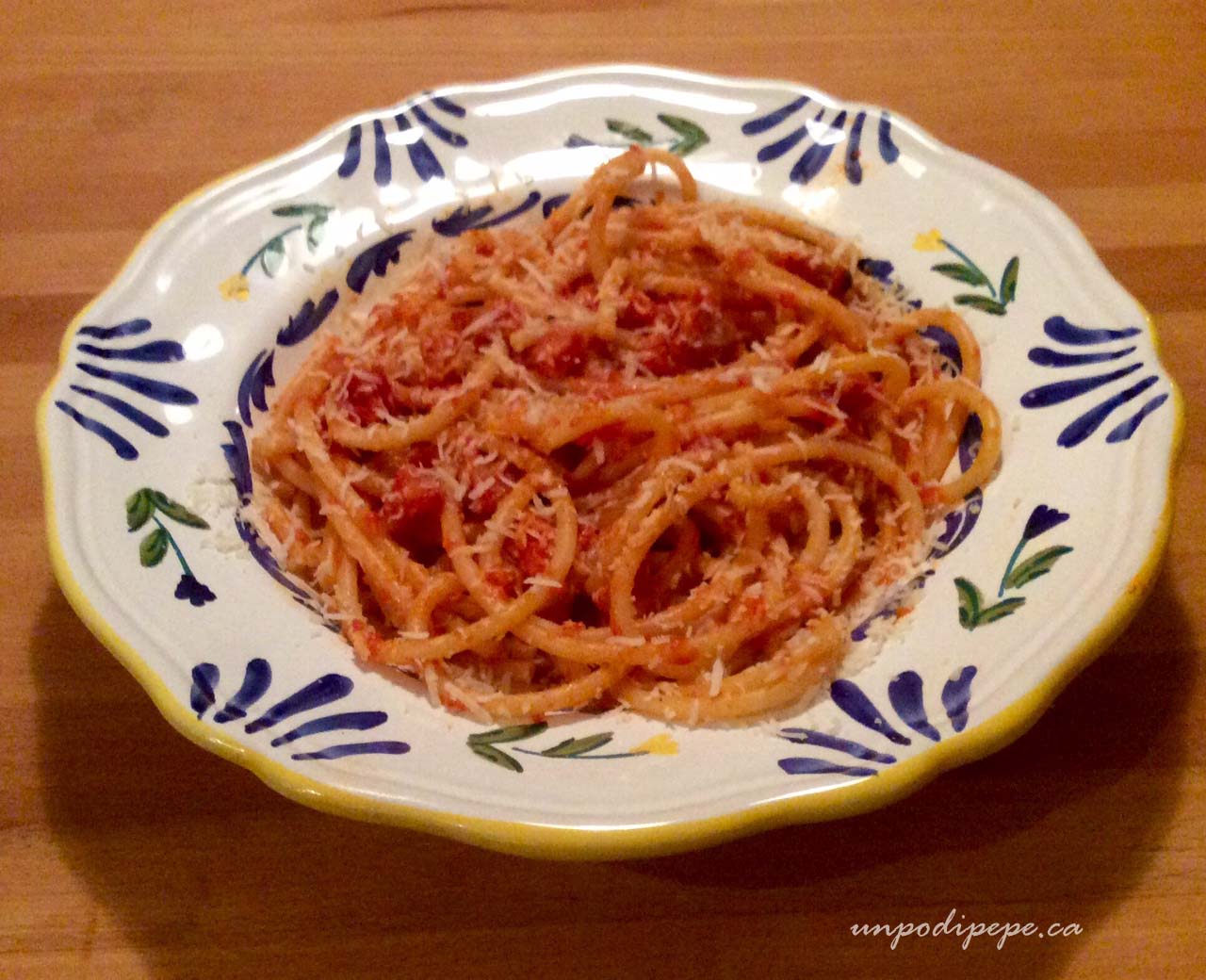
Pasta all'AmatricianaMy last post was about the terremoto in Italia and I listed ways you can help with earthquake relief.  One of these ways was to order Pasta all’Amatriciana at one of the many restaurants participating to raise money for the Croce Rossa Italiana.  I realized that not everyone will have a restaurant in their area participating, so I am posting a recipe, just in case anyone wants to host their own small fundraiser. August 27-28 would have been the Spaghetti all’Amatriciana festa in Amatrice.  Amatriciana

Pasta all’Amatriciana-also known as Pasta alla Matriciana in dialetto Romano, is made with guanciale (cured pork cheek), Pecorino Romano, and pomodoro (tomato).  Peperoncino is often added.  Pasta all’Amatriciana originated from Pasta alla Gricia, made with guanciale and Pecorino.  It is basically Pasta Carbonara with tomato instead of  eggs. Shepherds near Amatrice carried the simple ingredients with them into the fields.  The pomodoro had not been brought to Europe yet.  In Amatrice, they started making the Pasta alla Gricia with pomodoro, once it had been introduced.  When Amatriciani moved from the outlaying areas to Roma, the sauce became popular, and is now considered a staple of Cucina Romana.  In Roma, Amatriciana is made with bucatini, which are spaghetti with a hole down the middle, or rigatoni, but in Amatrice, it is only made with spaghetti! Making Amatriciana

Spaghetti all’Amatriciana

100g guanciale (pancetta can be used if guanciale not available)

350g passata di pomodoro, or pelati (peeled tomatoes)-about 1 500ml canning jar

75g Pecorino Romano, freshly grated

Black pepper, freshly grated

320g spaghetti or bucatini (80g per person)

Cut guanciale into strips or cubes. In a frying pan, cook guanciale until crispy.  When the white part becomes transparent, add tomatoes and pepper.  While this is simmering, cook spaghetti in a large pot of salted water.  Cook for 1 minute less than the time it says on the box! Drain well then add to the pan and toss in the sauce and add Pecorino.  Serve with extra Pecorino Romano on top.  Serves 4. Buon Appetito!Amatriciana

Share this:

  • Click to share on Facebook (Opens in new window) Facebook
  • Click to share on Pinterest (Opens in new window) Pinterest
  • Click to share on X (Opens in new window) X
  • Click to email a link to a friend (Opens in new window) Email
  • Click to share on WhatsApp (Opens in new window) WhatsApp
Like Loading...

Fiadoni Abruzzesi

12 Saturday Mar 2016

Posted by Un po' di pepe in Amici e Famiglia, Mangiamo!

≈ 8 Comments

Tags

Abruzzo, Fiadoni, Italian food, Italian Street Food, Italyonmymind

Fiadoni AbruzzesiThis weekend I had the pleasure of being a ‘recipe tester’ for Paola of Italy on my Mind for her upcoming cookbook on Italian street food and bar food. Paola is Italoaustraliana, living in Melbourne and her roots are in the Veneto and Istria.  She runs cooking classes in Melbourne.  In September she will be a guest instructor at the Anna Tasca Lanza Cooking School in Sicilia.  Paola was also a contestant on Masterchef Australia!

These cheese-filled Fiadoni were squisito and I will definitely be making them again soon.  I’m not able to share the recipe here-we’ll have to wait for Paola’s book!  Ciao, Cristina

Share this:

  • Click to share on Facebook (Opens in new window) Facebook
  • Click to share on Pinterest (Opens in new window) Pinterest
  • Click to share on X (Opens in new window) X
  • Click to email a link to a friend (Opens in new window) Email
  • Click to share on WhatsApp (Opens in new window) WhatsApp
Like Loading...

Margherita di Savoia

20 Wednesday Jan 2016

Posted by Un po' di pepe in Italian language, Mangiamo!

≈ 16 Comments

Tags

Capanna Regina Margherita, Grand Hotel Terme, Italian food, Italian history, Margherita di Savoia, Pizza Margherita, Puglia, Savoiardi

Queen_Margharitha_di_SavoiaA few nights ago I was at my favourite pizzeria having a pizza Margherita. This made me think about Margherita di Savoia, and all the random connections to her name.  Margherita di Savoia (Mar·gehr∙EE∙tah dee Sah∙VOH∙yah) lived from 1851-1926.  She became the first Queen of Italia when her husband, Umberto I di Savoia became King.  They had one son born in 1870, and he became King Vittorio Emanuele III in 1900 after the assassination of Umberto by an anarchist.

Regina Margherita was a great supporter of the arts and ‘opere di beneficenza’ – charitable works. She encouraged artists and writers and was involved with the Red Cross. During the war, she turned her house in Roma into a hospital. Margherita loved hiking and driving.  The Royal garage was filled with cars named after birds.  After her death, the cars were auctioned off for charity. In 1893, she climbed the peak of Monte Rosa in the Alps for the opening of Capanna Regina Margherita, the highest mountain hut in Europe.

Margherita was extremely popular with the public. On her visit to Napoli in 1889, she took off her gloves to eat a chicken leg with her hands, which is the origin of the saying ‘Anche la regina Margherita mangia il pollo con le dita/ Even Regina Margherita eats chicken with her fingers’.  Unfortunately Margherita’s political views leaned towards fascism in her later years, but fortunately that isn’t one of my random connections!

My list of random connections to Margherita di Savoia:

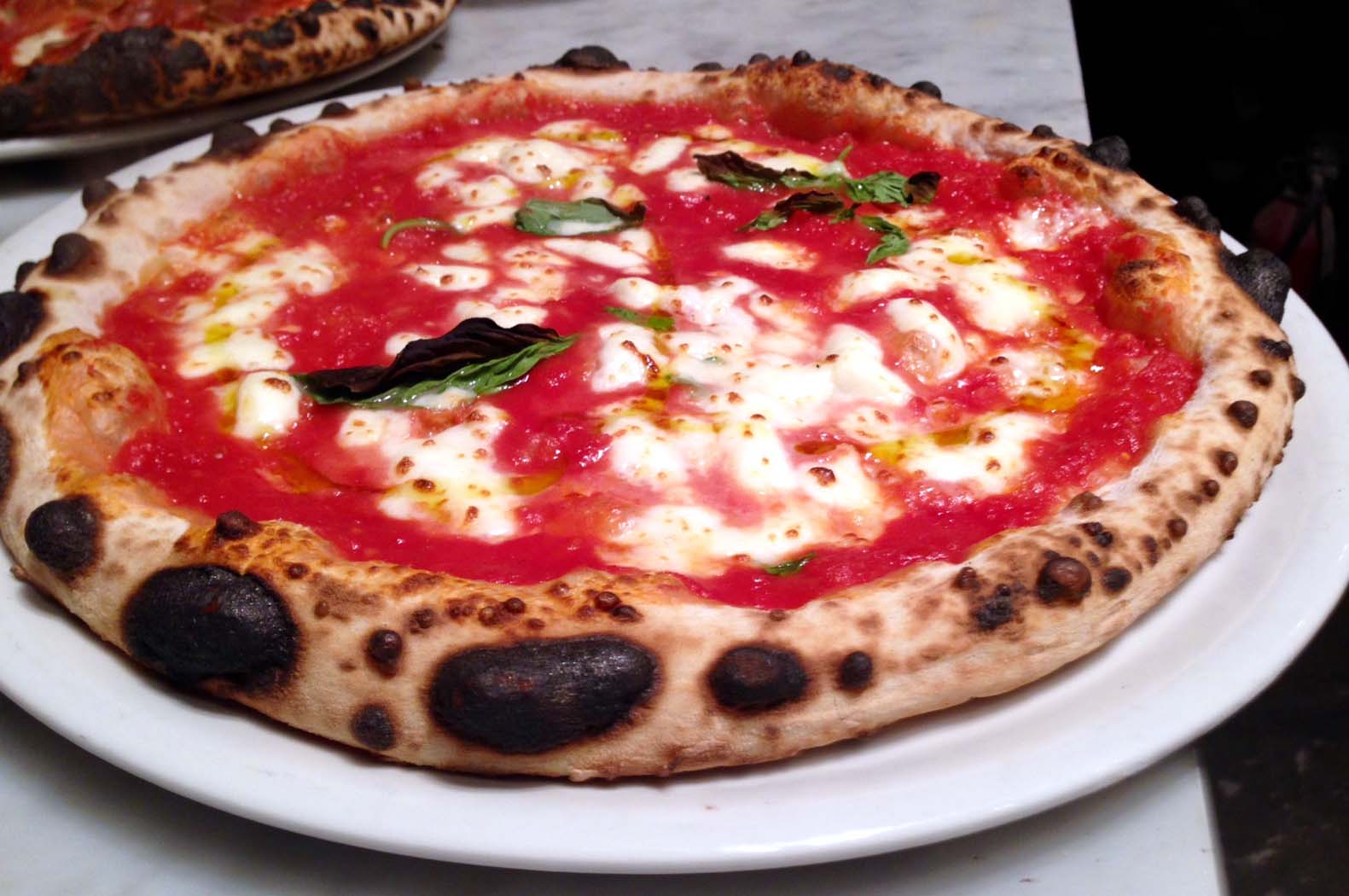
1-Pizza Margherita. In 1889, in honour of the royal visit to Napoli, Raffaele Esposito of Pizzeria Brandi ‘created’ pizza Margherita topped with pomodoro, mozzarella and basilico (tomato, mozzarella and basil) to represent the colours of the Italian flag.  In reality these pizza toppings were already being used in Napoli, so it was the name created by pizzaiolo Raffaele. I remember having a delicious calzone a long time ago in Montaguto called ‘Le Mutande della Regina’.  It was filled with Margherita toppings, and the calzone was left a bit open on the 2 sides, with sausage meat spilling out so they looked like frilly underwear!margherita

2-Margherita di Savoia, Puglia.  In the summer, there is a direct bus from Orsara di Puglia to Margherita di Savoia, a seaside thermal spa town in the province of Barletta 2 hours away. Before 1879, it was called Saline di Barletta because of the saltworks.  Salt has been collected here since the Roman times.  Approaching Margherita, the salt looks like snowy mountains by the beach.  The water is very salty and therapeutic, and the Grand Hotel Terme di Margherita is known for ‘fanghi’ salty mud treatments.Margheritadisavoia2015margheritasale

Margheritadisavoiaspiaggia3-The Pantheon.  Regina Margherita is buried with her husband Umberto in my favourite architectural masterpiece, the Pantheon.tombadimargherita

4-Tiramisù. Savoiardi are named after the Savoia family. They were the 15th Century official court biscuit of the House of Savoia, created in honour of a visit from the King of France.  Without savoiardi, there would be no tiramisù.Tiramisu

5-Forza Azzurri! The Italian National Team wear azzurro, the colour of the House of Savoia.

Forza Azzurri! Forza Azzurri!

6-My address! In Orsara di Puglia, I live on Via Regina Margherita.vrmargherita

viarmargheritaThe last one is my favourite Margherita! The word ‘margherita‘ means daisy, as in the flower.  Can you think of other random Margherita connections?

*Portrait of Margherita di Savoia 1881 from Wikimedia Commons

©2016www.unpodipepe.ca


Share this:

  • Click to share on Facebook (Opens in new window) Facebook
  • Click to share on Pinterest (Opens in new window) Pinterest
  • Click to share on X (Opens in new window) X
  • Click to email a link to a friend (Opens in new window) Email
  • Click to share on WhatsApp (Opens in new window) WhatsApp
Like Loading...

Gnocchi di Zucca

15 Sunday Nov 2015

Posted by Un po' di pepe in Mangiamo!, Recipes

≈ 15 Comments

Tags

Gnocchi, Gnocchi di zucca, Italian food, Pumpkin carving, Pumpkin gnocchi recipe, Traditional recipes

GnocchidizuccaOne of my favourite things about fall is zucca (ZOOK•kah).  Zucca can mean pumpkin or squash and I love them both. Risotto di zucca, zuppa di zucca, roasted zucca…..yum! It always makes me sad to throw out my carved hallowe’en pumpkin, so this year, I used a small battery operated candle and ‘recycled’ my zucca into another one of my favourite things- gnocchi! Hallowe'enzuccaGnocchi (NYOK•kee) are usually made with potatoes, but they can also be made with ricotta, zucca, or a combination.  I made mine with no potato- just zucca as they are lighter and have a more intense zucca flavour.  A large hallowe’en zucca makes a lot of gnocchi, but you don’t have to use all of the polpa di zucca (pumpkin flesh) at once.  It can keep in the fridge for 3 days until you have time to make more gnocchi.  All of the measurements in this recipe are very approximate, as it depends on the water content of the zucca.Gnocchidizucca4

Gnocchi di Zucca

500-600 grams mashed roasted zucca (pumpkin) with excess water removed (2 cups)

1 small egg, beaten

160g 00 flour (about 1¼ cup) + extra for dusting

60g (¼cup) grated Pecorino Romano (or Parmigiano if you don’t have Pecorino)

Pinch of freshly grated nutmeg (optional)

Pinch of salt

  • Cut zucca into pieces, wrap in aluminum foil and bake at 180⁰C (350⁰F) for 50 minutes
  • Scoop out the flesh and mash by hand with a potato masher or a fork, or use a potato ricer.   Unless you plan to make zuppa di zucca (pumpkin soup) do NOT use a food processor or immersion blender!
  • Remove as much water as possible, or the gnocchi will absorb too much flour and become dense and rubbery. Do this by straining the mashed zucca through a tea towel. A lot of water will come out! If this is too messy for you, return the mashed zucca to the oven, uncovered for half an hour to remove moisture. The tea towel method works better.
  • Stir in the egg and mix well, then salt, nutmeg and Pecorino.
  • Add half of the flour and mix well
  • Add more flour as needed-only a little at a time. Use as little flour as possible-only enough to make the dough hold together
  • On a floured surface, cut off sections of dough and hand roll into 1.5 cm (½ inch) ropes
  • Cut rope into 2-2.5 cm (1 inch) lengths and roll each gnocco with your thumb against the the back tines of a forchetta (fork) or over a rigagnocchi. Rigagnocchi literally means ‘gnocchi line-maker’. It is a small wooden paddle with lines carved into it, as seen in the photos. I used a forchetta to roll my gnocco over the rigagnocchi.
  • Place finished gnocchi on a floured tray or surface and sprinkle with more flour to prevent sticking. To freeze the gnocchi, place on a floured tea towel on a tray or baking sheet and freeze for half an hour, then put the frozen gnocchi into zip-loc® bags or containers and refreeze.
  • To cook gnocchi, drop them into a large pot of boiling, salted water. They only need about 3 minutes to cook, then lift them out with a slotted spoon. If cooking frozen gnocchi, do not thaw them. Take them directly from the freezer into the boiling water. Frozen gnocchi hold their shape well, but not if they have been defrosted. They will take about 4 minutes to cook.
  • Gnocchi di zucca should be served with a simple sauce, so as not to overpower the delicate taste. I like to heat some extra virgin olive oil and add finely chopped garlic and whole sage leaves, then toss this over my gnocchi. I sprinkled on freshly grated cacioricotta from Orsara di Puglia. If you aren’t lucky enough to have cacioricotta, use freshly grated Pecorino or Parmigiano.Gnocchidizucca6Buon Appetito!

Share this:

  • Click to share on Facebook (Opens in new window) Facebook
  • Click to share on Pinterest (Opens in new window) Pinterest
  • Click to share on X (Opens in new window) X
  • Click to email a link to a friend (Opens in new window) Email
  • Click to share on WhatsApp (Opens in new window) WhatsApp
Like Loading...

Pesto Genovese

18 Friday Sep 2015

Posted by Un po' di pepe in Mangiamo!, Recipes

≈ 24 Comments

Tags

Basilico, Italian food, Moretum, Mortar and pestle, Pesto, Pesto Genovese, Pesto recipe, Traditional recipes

Pesto2This year, I grew basilico (basil) from seed again.  Thanks to the unusually warm summer, my plants were happy and grew nicely.  I love to shake the basilico plant a bit, stick my face in it and inhale the incredible aroma.  Some of my basilico was already used to make passata di pomodoro.  The rest will be used to make Pesto, before it starts to rain and the leaves turn brown.basilico

Pesto Genovese, usually just called Pesto, originated in Genoa, Liguria.  It is made with fresh basil leaves, garlic, pine nuts, extra virgin olive oil, Pecorino Sardo or Pecorino Romano, and Parmigiano Reggiano.

Before the age of food-processors, Pesto was made by grinding the ingredients in a marble or stone mortar with a wooden pestle.  The words ‘pesto’ and ‘pestle’ come from ‘pestare‘ which means to pound or crush.  The most flavourful pesto is actually made by hand with a mortar and pestle, but it is hard work! Pesto made with old stone mortar/mortaioLigurian basilico has very small leaves and is easier to grind.  My basilico tends to have very large leaves and is difficult to crush.  The biggest problem with the food processor is that it gets very hot.  I recommend putting the blades in the freezer for an hour before making pesto.  This prevents the food processor from overheating and the pesto is also less likely to turn brown.basilicobw

The ancient Romans made something similar called Moretum.  They named it after the mortar instead of the pestle!  Moretum was a spread made with fresh sheep milk cheese, herbs, salt, pine nuts and olive oil.

Basilico was likely brought to Italia from India, and the climate of Liguria was perfect for it.  The Genovese adapted the Romans’ recipe to include basilico, and Pesto Genovese was born! In Liguria, Pesto is usually served with trofie or linguine.  It is also used on pasta, potatoes and green beans, all cooked in the same pot of water. Yum!

When I make Pesto, I do not measure the ingredients, but I estimated them here for you. Good quality ingredients are necessary to make delicious Pesto.  No skimping!Pesto Genovese

Pesto Genovese

2 firmly packed cups (500 ml) large basil leaves

3 cloves of garlic

¼ cup (50 grams) European pine nuts

salt and pepper

½ cup (125 ml) good quality extra virgin olive oil

½ cup (45 grams) grated Pecorino Sardo or Pecorino Romano

½ cup (45 grams) grated Parmigiano Reggiano

  • Put the blades of the food processor in the freezer for an hour
  • Wash the basil and dry well.  Water on the leaves will turn them brown and the Pesto will go bad.  Yuck!
  • I like to toast the pine nuts as it brings out the flavour, but this is optional
  • Blend garlic and pine nuts in a food processor until fine
  • Add basil, pulsing a handful at a time until blended
  • Add salt and pepper.  Not too much salt, as the cheese is salty too
  • Pour in olive oil slowly while food processor is running
  • Pour it all into a bowl and add the Pecorino and Parmigiano
  • Spoon the Pesto into small jars with tight fitting lids
  • Seal the jar with a thin film of olive oil
  • Pesto keeps well in the fridge for 6-8 months.  If you use part of a jar, add another thin film of olive oil before putting it back in the fridge
  • To freeze the Pesto, leave out the 2 cheeses and add them when you are going to use itPesto1

Buon Appetito!

©2015 unpodipepe.ca

basilico4

Share this:

  • Click to share on Facebook (Opens in new window) Facebook
  • Click to share on Pinterest (Opens in new window) Pinterest
  • Click to share on X (Opens in new window) X
  • Click to email a link to a friend (Opens in new window) Email
  • Click to share on WhatsApp (Opens in new window) WhatsApp
Like Loading...
← Older posts
Newer posts →

Enter your email address to follow 'un po' di pepe' and receive notifications of new posts by email.

Join 511 other subscribers
Follow Un po' di pepe on WordPress.com

Popular Posts

  • Hairstyling in Ancient Roma
    Hairstyling in Ancient Roma
  • Espresso Cookies
    Espresso Cookies
  • Panforte di Siena
    Panforte di Siena
  • Il Pumo Pugliese
    Il Pumo Pugliese
  • Panettone Fatto in Casa
    Panettone Fatto in Casa
  • Internment of Italian Canadians
    Internment of Italian Canadians
  • San Nicola
    San Nicola

Recent Posts

  • Castel del Monte
  • ‘The Nuances of Love’
  • Hostaria Antica Roma~Eat like an Ancient Roman
  • Santa Maria in Aracoeli
  • Casino dell’Aurora~Villa Boncompagni Ludovisi
  • Nasoni di Roma
  • Bloghiversario #11
  • Fontana di Trevi
  • Acqua Vergine
  • Giubileo 2025
  • Sanremo 2025
  • In Vino there are Memories
  • A Literary Harvest
  • 2024~Un po’ di pepe Year in Review
  • Buon Natale 2024
  • Il Bicerin
  • Mercato Porta Palazzo
  • Torino
  • Catanzaro, Calabria
  • Il Pumo Pugliese
  • Artemisia Gentileschi
  • Cavalli di San Marco
  • Panzerotti
  • Torcello
  • 10 years of Un po’ di pepe!

Categories

Amici e Famiglia Architecture Art Art history Art projects Bilingual posts Blogging Canada Culture Feste Firenze Inspiration Italia Italian Folklore Italian language Italian life Italocanadesi Libri Mangiamo! Orsara di Puglia Parole piacevoli Photography Puglia Recipes Roma Travel Travel tips Uncategorized Vino

Archives

Un po’ di pepe on Facebook

Un po’ di pepe on Facebook

Start a Blog at WordPress.com.

  • Subscribe Subscribed
    • Un po' di pepe
    • Join 511 other subscribers
    • Already have a WordPress.com account? Log in now.
    • Un po' di pepe
    • Subscribe Subscribed
    • Sign up
    • Log in
    • Report this content
    • View site in Reader
    • Manage subscriptions
    • Collapse this bar
 

Loading Comments...
 

    %d