• Home
  • About me/Chi sono
  • Contact

Un po' di pepe

~ …… (oon∙poh∙dee∙PEH∙peh) Cristina writes about interesting stuff /Cristina scrive di cose interessanti

Un po' di pepe

Author Archives: Un po' di pepe

Aria Pericolosa!

08 Wednesday Aug 2018

Posted by Un po' di pepe in Italian Folklore, Italian language, Italian life

≈ 34 Comments

Tags

Cervicale, Colpo d'aria, Dolcevitabloggers, Health beliefs

C2550C42-73D9-4AC4-A015-1FD60DAF0E24‘Culture Shock’ is this month’s topic for the Dolce Vita Bloggers group. I was born in Italia, grew up in an Italian family in an italian/multicultural neighbourhood and have been travelling  to Italia my whole life.  There isn’t much culture shock going on for me to write about.

However……because in my ‘real job’, I work as a health care professional, there are a few malattie…illness related things that just drive me pazza! Repeat after me ….. illnesses are caused by viruses!  Le malattie sono causate dai virus (pronounced VEE•roos).

A unique category of illnesses exists exclusively in Italia, caused by wind, cold, sweat and wet hair! The thing they all have in common is sudden changes in temperature or extreme temperature fluctuations. Anyone who is from an Italian family will instantly relate to all of these.  My title Aria Pericolosa! means ‘dangerous air’.  We now know malaria is caused by mosquitoes, but in the past this was not known.  The word mal aria actually means ‘bad air’! These health beliefs are generally left over or adapted from times when we did not know the cause of disease.

54544A2F-D29B-4F76-82F6-EF0451394D02Colpo d’aria means literally a smack, strike or big hit of air.  An example of this is going from outside on a hot day into a shopping mall blasted with air conditioning.  Someone who has cold symptoms or a sore back, headache, earache or even indigestion might say ‘ho preso un colpo d’aria’.  Italians are somewhat distrustful of air conditioning, using it only when really necessary- in sharp contrast to the North American obsession with it. Severe back spasm is often called ‘colpo della strega’- Strike of the witch. 

Un colpo d’aria can also come from ‘la corrente’ which is an air current or a draft.  Walking or sitting in a corrente is thought to cause illness.  A draft caused by 2 open windows or doors directly opposite each other is considered bad luck in Feng Shui, because the good Chi goes in one window and out the other, however… winds and drafts do not carry disease! I’ve had many meals in a place as hot as a sauna because they refused to open both windows or doors at the same time-only one or the other! Mannaggia!

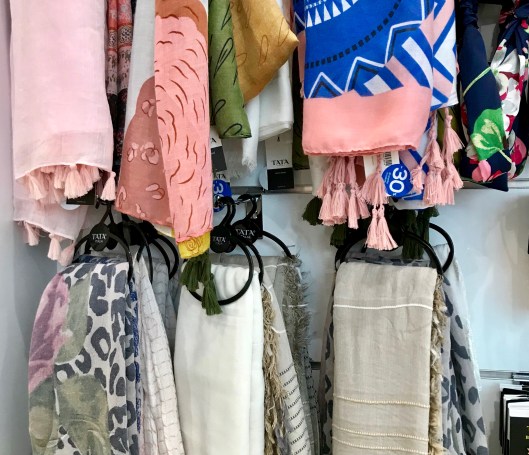
4D18D924-1F65-48E3-8AD5-55D051B16C11.jpegLa cervicale is another classic condition related to colpo d’aria.  This is a stiff neck cause by the neck being exposed to cold.  And you thought everyone wore scarves just to be fashionable!Calciodistrada2015

Running around sudato -with a sweaty body is also thought to cause illness. I suppose hot and sweaty are 2 temperature fluctuations! This is especially applicable to bambini, running around playing, and also wearing sweaty clothes. You may here ‘è sudato!’ exclaimed on the playground by many an Italian Mamma.  Italian bambini are always provided with multiple changes of clothes for when they get sweaty, even at the beach! They wear canottiere, undershirts made of wool in winter and cotton in summer to absorb sudore.  These are sometimes referred to as a ‘maglietta della salute’/health shirts. Being sudato then sitting in a corrente—you are doomed to illness!

Let’s not forget capelli bagnati! Going outside with wet hair is thought to cause illness, even pneumonia….even death!  I always air dry my hair, as it takes too long to blowdry.  I compare this to drying the dishes.  Why dry the dishes when nature will dry them on their own?  If I leave the house with wet hair in Italia, I inevitably will get asked the obvious ‘ma c’hai i capelli bagnati?’ Being in a corrente while sweaty with wet hair and senza giacca -without a jacket….you might as well call the funeral home!

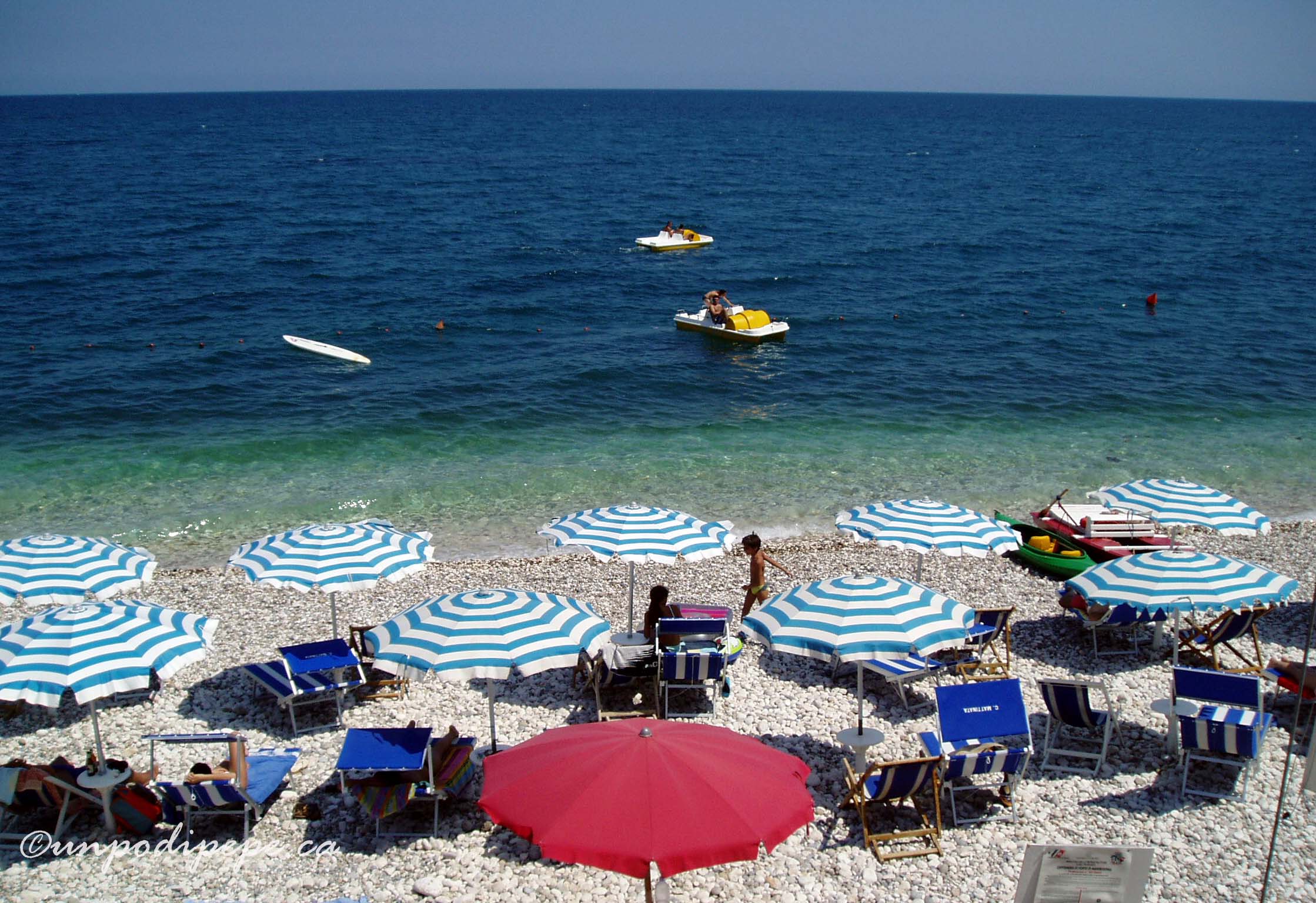
Swimming within 3 hours after eating is thought to cause cramps and this will cause you to drown. In Italia, the main meal is usually pranzo, around 1pm.  Yes, even on the beach it is often a full on meal and not just a panino.  This means the meal is heavier while at the beach, but it certainly doesn’t take 3 hours to digest the food.  I am ready for my next gelato by this time.  Noon until 3 pm is also the hottest time of the day, so it is not such a bad thing to be in the shade under an ombrellone at this time, it is the reasoning that drives me nuts.   One of my colleagues is from India, and she tells me her family says the same thing, so this one  m ay not beexclusive to italia. Perhaps it was originally related to eating questionable food before refrigeration was available? Still, I have yet to hear about someone drowning because they went swimming on a full stomach!

I could go on and on, but I need to go back out and enjoy the Pugliese sunshine.  All of these malattie might lead you to believe Italia is a uniquely immunocompromised country, but Italians are generally in very good health!  I try to explain that these ailments exist exclusively in Italia, but I give up! None of these are harmful, but they can get annoying, especially to a health care professional. Remember….. Le malattie sono causate dai virus!  You can still follow Nonna Mari’s advice and  ‘metti la giacca!’

This post is written as part of the monthly #dolcevitabloggers linkup, hosted by Jasmine of Questa Dolce Vita, Kelly of Italian at Heart and Kristie of Mamma Prada the 7th -14th of every month.

Note-I will be Chiuso per Ferie without a computer, so may not be able to link this post to the other ‘Culture Shock’ posts until I get home. If the links do not work, check back later.

FYI ‘Aria pericolosa‘ can also refer to the lingering smell that keeps on giving after a smelly fart!

Ciao, Cristina….e metti la giacca!

Share this:

  • Share on Facebook (Opens in new window) Facebook
  • Share on Pinterest (Opens in new window) Pinterest
  • Share on X (Opens in new window) X
  • Email a link to a friend (Opens in new window) Email
  • Share on WhatsApp (Opens in new window) WhatsApp
Like Loading...

Limoncello Ricotta Cookies

19 Thursday Jul 2018

Posted by Un po' di pepe in Mangiamo!, Recipes

≈ 15 Comments

Tags

Italian food, Limoncello, Limoncello ricotta cookies, Traditional recipes

Last week I had a bancarella at the Italian summer outdoor market. I like to bring dolci for friends who come to visit, or anyone who stops by to chat. Buy a card… get a cookie. It was an unusually hot day, and my espresso cookies would melt and make a mess all over the place, so I made refreshing, sweet and tangy limoncello ricotta cookies.  Limoncello and ricotta are 2 of my favourite ingredients.

When I was growing up, our Abruzzesi neighbours often made these soft cakey cookies-minus the limoncello. They used Anice (ah·Nee·cheh), a liqueur similar to Sambuca, and topped them with multi-coloured sprinkles.  The ricotta makes them soft, moist and chewy. If fresh is not available***, make your own ricotta!

Limoncello Ricotta Cookies:

350g flour (2½ cups)

5 g salt (1 tsp)

8g Pane degli Angeli (½ bustina/envelope, 2 teaspoons) *

100 g olive oil (½ cup) **

400 g sugar (2 cups)

2 eggs

450 g fresh ricotta (1 lb)

30g limoncello (30 ml, 2 tablespoons)

15 g freshly squeezed lemon juice (15 ml, 1 tablespoon)

Grated peel of 1 lemon

Glaze: same as for Casa Berti Olive Oil Limoncello Cake

200 g (1½ cups) powdered sugar/icing sugar

30g limoncello (30ml, 2 tablespoons)

15g freshly squeezed lemon juice (15 ml, 1 tablespoon)

Grated peel of 1 organic lemon

Preheat oven to 190°C (375°F)

Mix the 3 dry ingredients together. In another bowl, mix sugar and grated lemon peel together with the back of a spoon until the sugar becomes fragrant.  Add eggs, 1 at a time.  Add oil, then ricotta and limoncello. Stir in dry ingredients.

The dough is quite sticky. Use 2 tablespoons or a small cookie scoop to measure the dough onto a cookie sheet.  The dough may be easier to work with if it is left in the fridge for 30-60 minutes.  Bake for 15 minutes, being careful not to burn the edges.  Let cool.

To make glaze, mix the all ingredients except lemon peel in a small bowl until smooth.  If it is too thick and sticky, add more limoncello or lemon juice.  Add lemon peel last.  Use a teaspoon to spread glaze onto each cookie.  Leave glaze to harden and set for 1-2 hours.

Makes 40-60 cookies, depending on the size.  Store in a covered container.

* If Pane degli Angeli is not available, substitute 2 tsp baking powder and a tiny splash of vanilla extract

**if you prefer to use 125g unsalted butter (½ cup), mix the sugar and butter together first with a mixer, then add eggs one at a time, followed by the other ingredients

  ***Cottage cheese is NOT an appropriate substitute for ricotta!

Friends and customers often tell me I should be selling the cookies. I am not sure how to take that.  Are they trying to tell me my baking is more appealing than my artwork?  Hmmmm, I had better not overthink this one!

If you love limoncello and ricotta as much as I do, check out some of my other posts: Make your own Limoncello, Limoncello Cheesecake, Casa Berti Olive Oil Limoncello Cake, Ricotta fatta in casa, Tortelloni di Ricotta.

Read more about the mercato here.

Buon appetito, Cristina

Share this:

  • Share on Facebook (Opens in new window) Facebook
  • Share on Pinterest (Opens in new window) Pinterest
  • Share on X (Opens in new window) X
  • Email a link to a friend (Opens in new window) Email
  • Share on WhatsApp (Opens in new window) WhatsApp
Like Loading...

The Sicilian Wife~Book Review

25 Monday Jun 2018

Posted by Un po' di pepe in Libri

≈ 11 Comments

Tags

AICW, Association of Italian Canadian Writers, Italian Canadian Literature, Italocanadesi, The Sicilian Wife

I downloaded The Sicilian Wife onto my ipad before a long flight.  I was actually looking for another book by the same author, Finding Rosa.  It was not available as a ebook at the time, so I purchased The Sicilian Wife instead. Once I started reading, I could not put it down.  I have not read many crime thrillers.  This one was very ‘film noir-ish’.  In fact, I kept visualizing every scene in grainy black and white on a big screen.  I hope someone is working on a screenplay!

The book features 2 strong female characters: Marisa De Luca is the decorated commissario in a small Sicilian village, dealing with local organized crime, a station full of chauvinists and investigating a mysterious death, and Fulvia Arcuri, the reluctant mafia princess, constantly running from her troubled upbringing.  Fulvia immigrates to Canada and starts a new life free from the reach of her family…or so she thinks.

The Sicilian Wife goes back and forth between different timelines, as well as a double setting, Sicily and Edmonton, Alberta. These are not hard to follow, despite twists and turns in the plot.  Sicilian folktales and proverbs, and contemporary Italian history add to the themes of escape and migration.  Just when you think you know what is going on ….. I really can not say any more without giving away too much.  Just read it, especially if you are Italocanadese!

I give it 5 peperoncini out of 5 🌶🌶🌶🌶🌶!

Note:  The author of The Sicilian Wife, Caterina Edwards, is a fellow member of the Association of Italian Canadian Writers (AICW), although we have not met. Hopefully we will meet at a future conference!  I purchased the ebook and the opinions written here are my own.

Buona lettura, Cristina

Share this:

  • Share on Facebook (Opens in new window) Facebook
  • Share on Pinterest (Opens in new window) Pinterest
  • Share on X (Opens in new window) X
  • Email a link to a friend (Opens in new window) Email
  • Share on WhatsApp (Opens in new window) WhatsApp
Like Loading...

Baia di Campi

08 Friday Jun 2018

Posted by Un po' di pepe in Italia, Puglia, Travel

≈ 17 Comments

Tags

Baia di Campi, Dolcevitabloggers, Gargano campsites, Il Gargano, Parco Nazionale del Gargano, Vieste

One of the most beautiful areas on earth, Il Promontorio del Gargano (gar·GAH·noh) is the promontory sticking out above ‘il tacco’, the heel of Italia.  You can also think of it as la caviglia-the ankle spur of Italia.  Surrounded by the Adriatico on 3 sides, the area is more like an island; biodiverse with unique flora and fauna. Most of the promontorio is a protected area and marine reserve, Il Parco Nazionale del Gargano, which includes le Isole Tremiti and the ancient Foresta Umbra. Fortunately, this has prevented overdevelopment by large multinational hotels and resorts.

Il Gargano is full of campsites, inexpensive, rustic accommodation and B & B’s.  The campeggi e villaggi turistici -campsites and tourist villages, are ben attrezzati-well equipped. Go with a camper and all the gear, or just a vehicle and a tent.  There are villette-little cabins for rent, but you need to bring your own sheets and towels, so these are mostly used by locals. This website (in Italiano) lists Gargano campsites. I have spent many weekends at different sites in the Gargano  with my cugini and their camper.  In July, we stayed at Campeggio Baia di Campi, near Vieste. Here is a video of the private beach during my windy morning walk:

Baia di Campi

Baia di Campi

Nothing like having a spiaggia all to myself! We were going to paddle by canoa-kayak to la Grotta dei due occhi, a sea cave 10 minutes away.  Unfortunately, it became too windy to go, so I will hopefully have the opportunity to go again. The campsite had a shuttle bus to whitewashed Vieste, 20 minutes away. Read about other campsites I have stayed at in Campeggio sul Gargano.

View of Vieste from the SS89

The winding road around the Gargano, SS 89 from Foggia, has sharp turns and viste mozzafiato (VIS·teh moz·zah·FYAH·toh)-breathtaking views.  You will not see any dehydrated (yuk!) camping food in Puglia.  Most campsites have a little market selling fresh fruit, giant watermelon, mozzarelle and other necessities.  Fresh fish is never far away, so I get to enjoy Mauro’s insalata di polpo ubriaco-drunken octopus salad!Most of the tourists visiting the Gargano area are Italian, especially in the summer.  Many Germans drive their campers down too, but you will not meet many North Americans here.  Il Gargano is the place to visit to improve your Italiano!  This post is written as part of the monthly #dolcevitabloggers linkup, hosted by Jasmine of Questa Dolce Vita, Kelly of Italian at Heart and Kristie of Mamma Prada the 7th -14th of every month. This month’s topic is ‘Hidden gems’.  Il Gargano is not so much ‘hidden’, as remote, unknown and not easily accessible without either a car or a lot of time.  I hope you all make it here one day!  As the Gargano website says, visit il Gargano ‘per una vacanza tra natura, mare e cultura’…for a holiday among nature, sea and culture!

More Il Gargano posts by Cristina: Isole Tremiti, I Trabucchi del Gargano, Campeggio sul Gargano, Santa Maria di Siponto.

Ciao e buon viaggio, Cristina

Share this:

  • Share on Facebook (Opens in new window) Facebook
  • Share on Pinterest (Opens in new window) Pinterest
  • Share on X (Opens in new window) X
  • Email a link to a friend (Opens in new window) Email
  • Share on WhatsApp (Opens in new window) WhatsApp
Like Loading...

Il Sole di Metà Pomeriggio

23 Wednesday May 2018

Posted by Un po' di pepe in Italia, Orsara di Puglia, Photography, Puglia

≈ 16 Comments

Tags

Italy photography, La luce del sole, Orsara di Puglia, Southern Italy

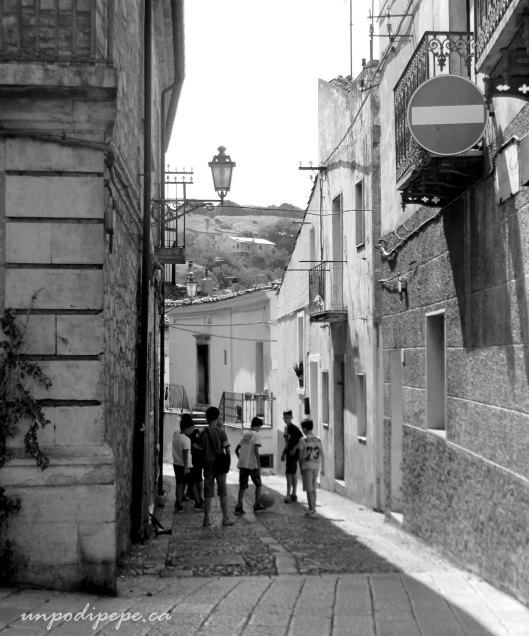
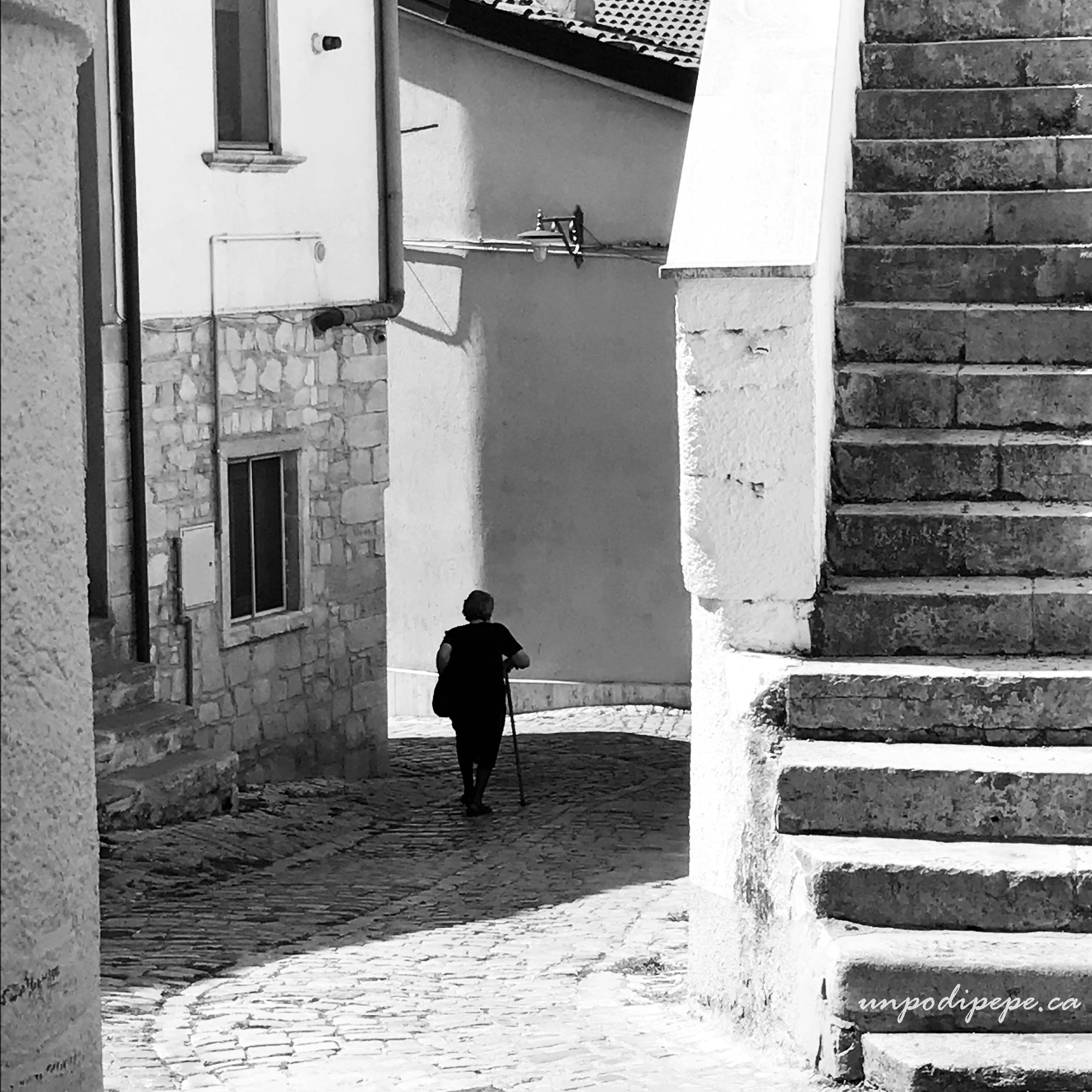
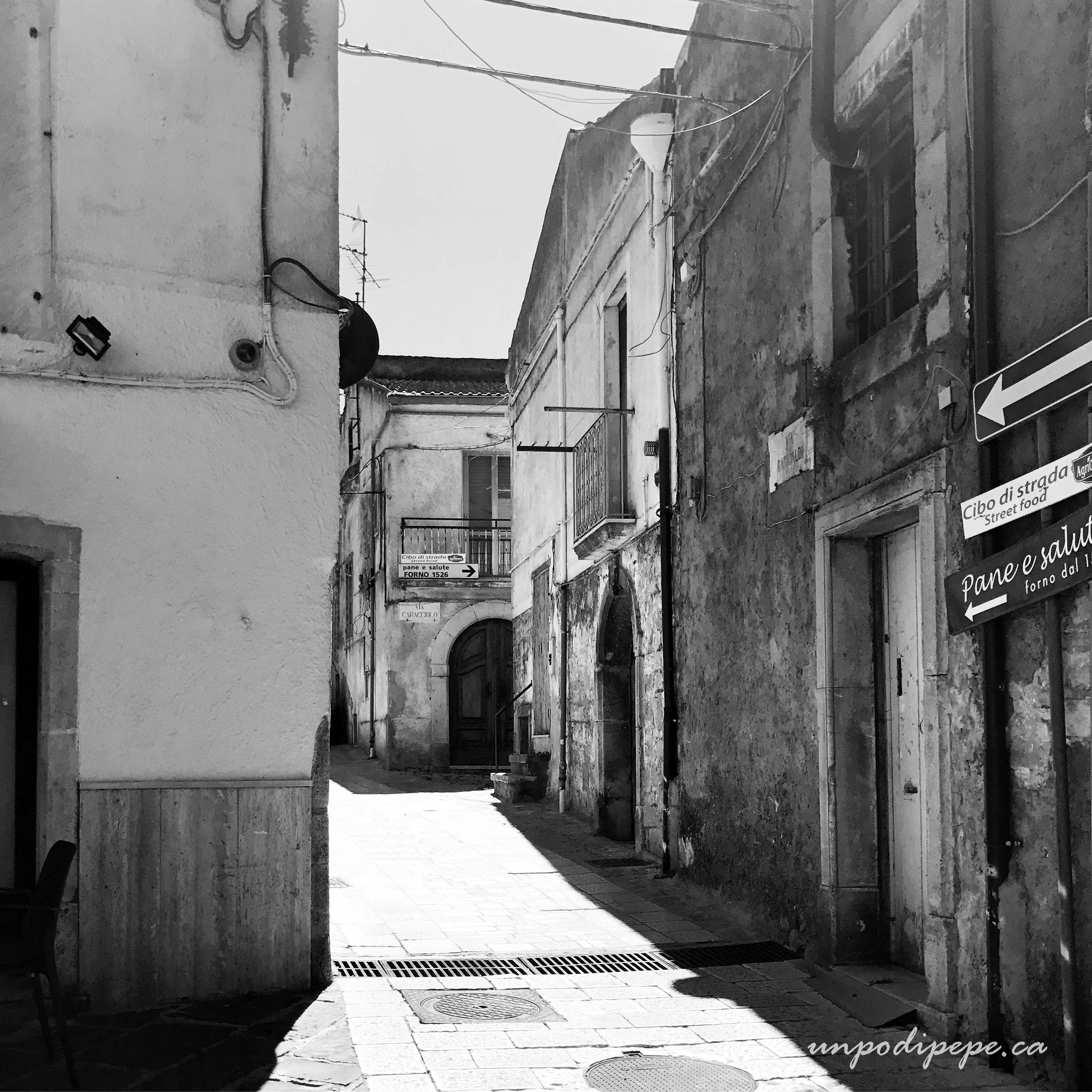
La luce del sole di metà pomeriggio- the light of the mid-afternoon Mediterranean sun is absolutely stunning.  In the backdrop of a medieval hilltop village, cast shadows create abstract shapes among the stone walls, staircases and winding cobblestone streets.

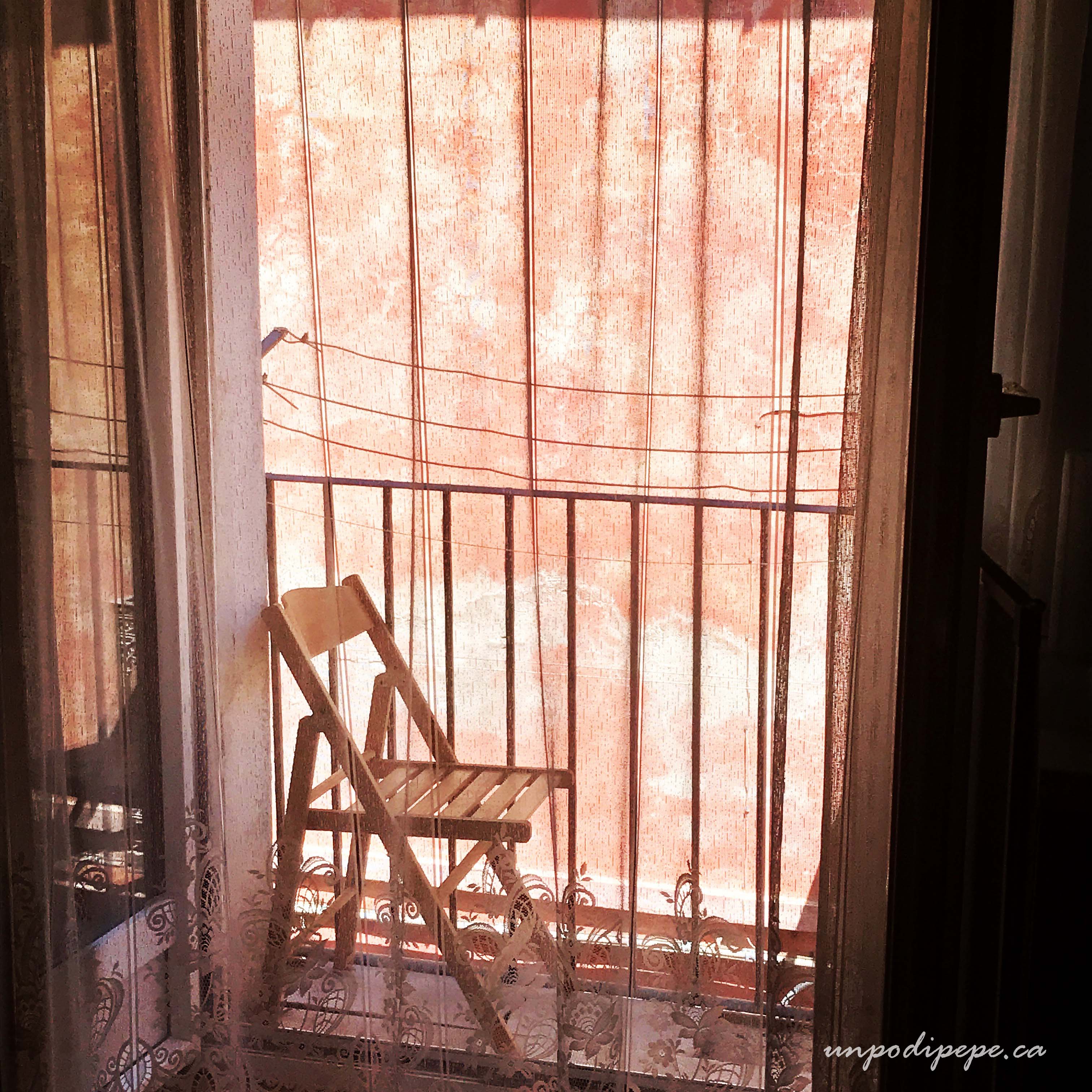
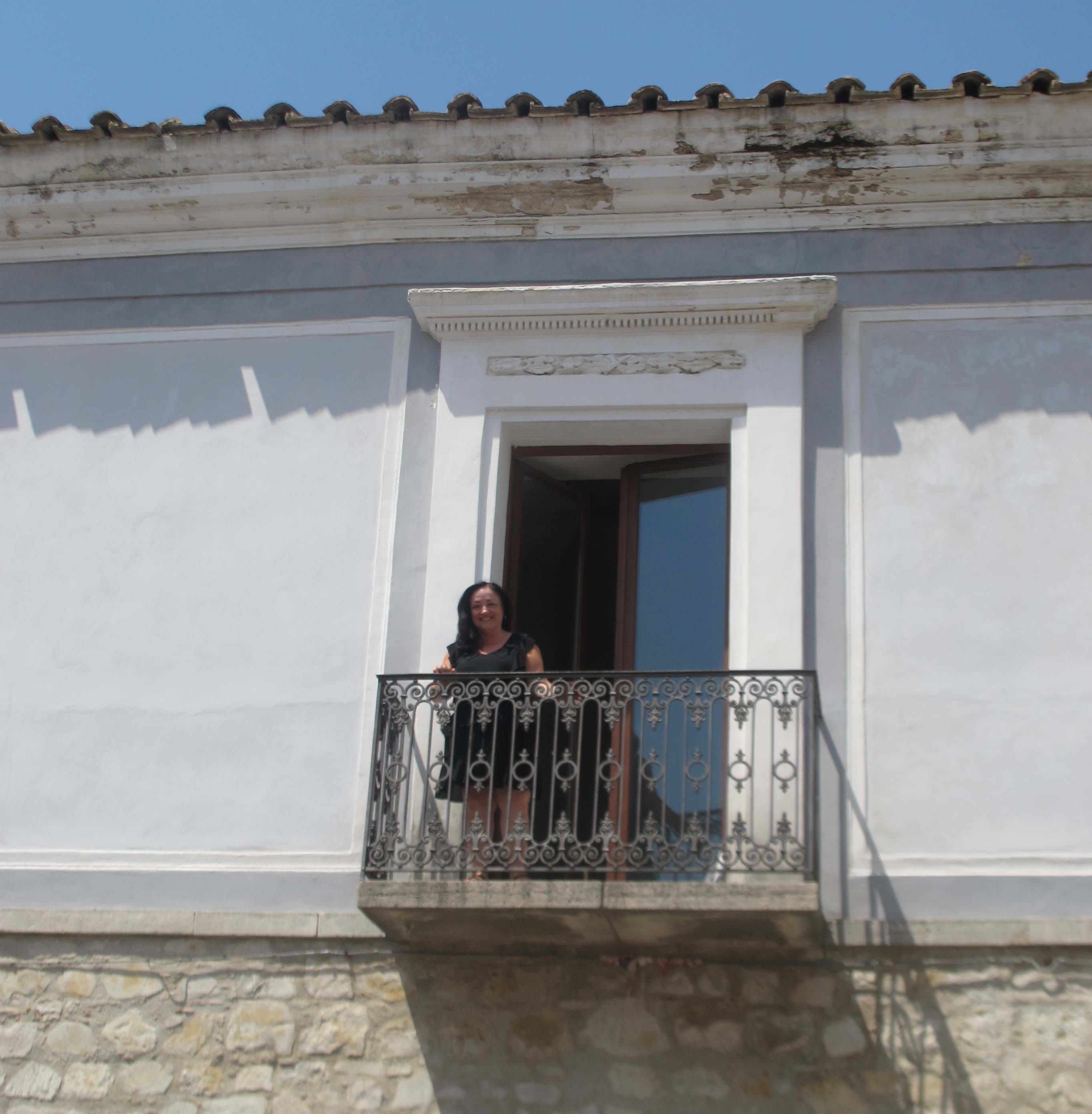
Last summer was exceptionally hot, even at an altitude of 750m like Orsara di Puglia.  Both of the negozi elettrodomestici, the appliance stores, repeatedly ran out of portable electric fans.  Most people remained indoors after pranzo, until at least 4pm.  While everyone else was resting in the cool enclaves of their stone houses,  I often ventured out to try and capture the light with my camera.Here are some of my results….mostly monochromatic, mostly square, abstract shapes cast by the magnificent light of the mid-afternoon sun.Even my tiny balcony on narrow Via Regina Margherita is flooded with la luce del sole!

Imagine the smell of orecchiette con sugo wafting down empty Via XX Settembre just before pranzo. Yum!

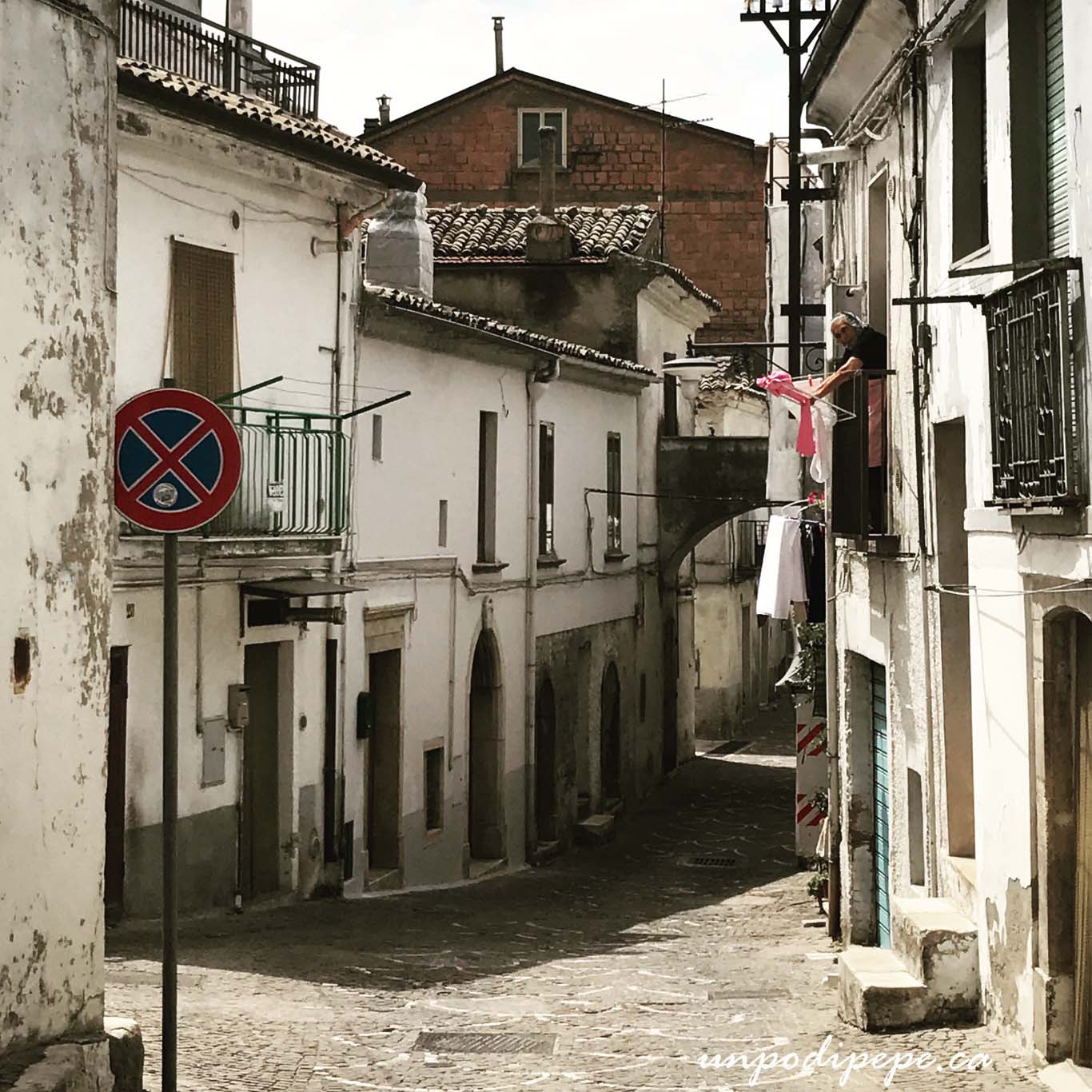
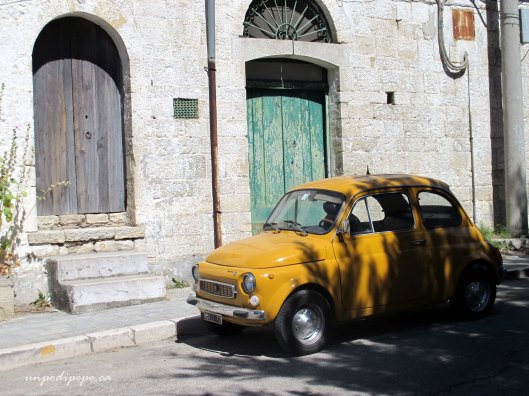
Laundry dries in no time with the heat of the afternoon sun, and the shadows make interesting shapes on the old stone walls. This Nonna on Via Cavour wonders what I am doing out in this heat!My Cinquecento radar spots a visiting specimen in town.  The light makes interesting reflections and cast shadows on the street.

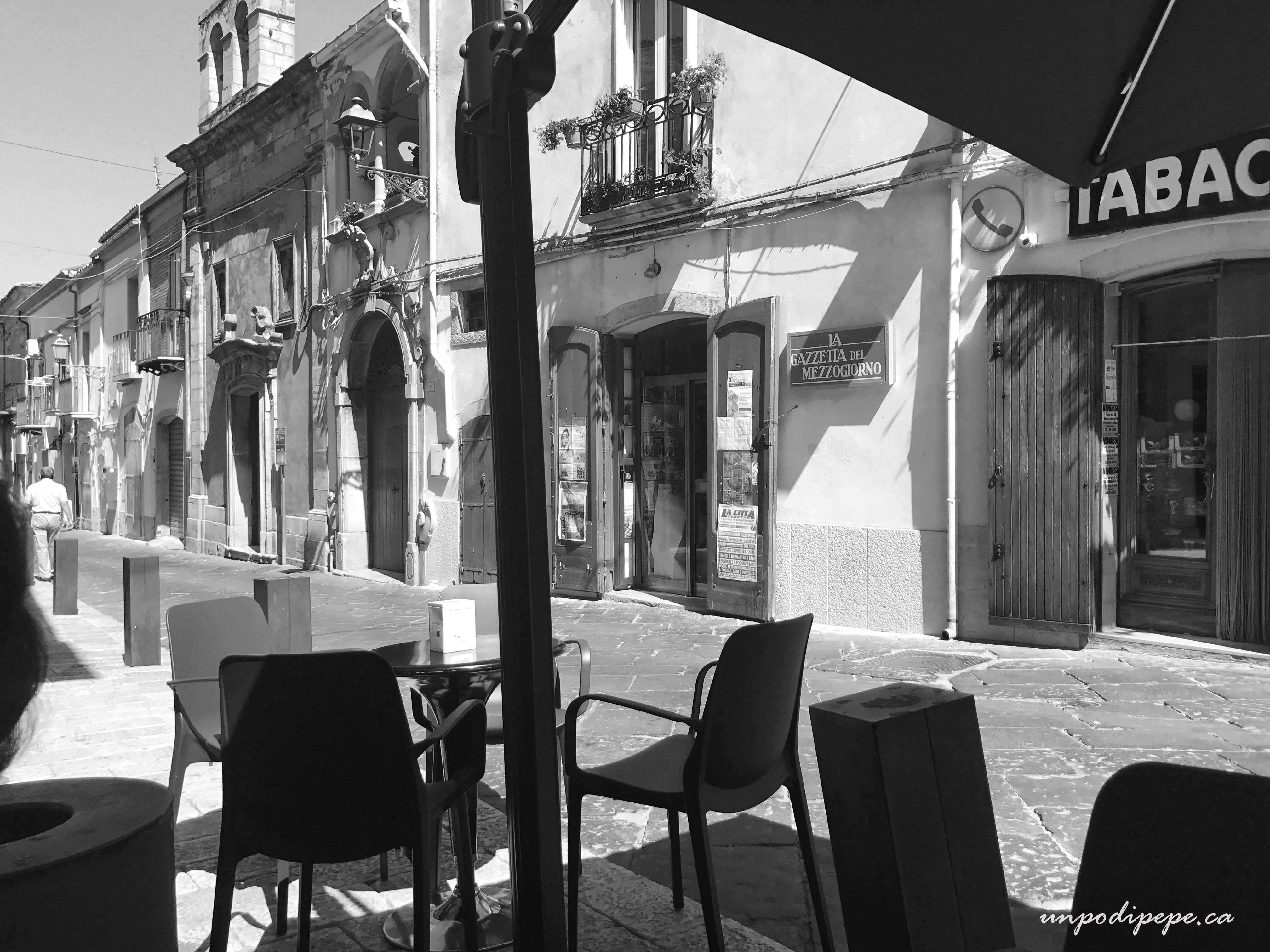
Shade under the ombrellone at the local bar.          I hope you enjoyed my attempt to capture ‘la luce’ in these photos!    Ciao, Cristina

Share this:

  • Share on Facebook (Opens in new window) Facebook
  • Share on Pinterest (Opens in new window) Pinterest
  • Share on X (Opens in new window) X
  • Email a link to a friend (Opens in new window) Email
  • Share on WhatsApp (Opens in new window) WhatsApp
Like Loading...

Uffa, allora, purtroppo, magari, ….mannaggia!

08 Tuesday May 2018

Posted by Un po' di pepe in Italian language, Parole piacevoli

≈ 51 Comments

Tags

Allora, Dolcevitabloggers, Il Marmoraro, Italian pronunciation, Magari, Mannaggia, Purtroppo, Uffa

Cinque parole, 5 words.  This is the topic of this month’s #dolcevitabloggers linkup.  With thousands of parole piacevoli like strofinacci, aspirapolvere, sciaquare, zoppicare and strozzinaggio, I could have been awake every night for months trying to choose 5.  Instead, because I need my sleep, I chose words that I use, am frequently asked the meaning of and may not directly translate to English.  I also liked the way the words sound together.  If I ever write a memoir, I will call it ‘Uffa, allora, purtroppo, magari…..mannaggia’!

Uffa! (OOF∙fah) Uffa can be an exclamation of frustration, exasperation or impatience, depending on the tone, context and gesti –hand gestures.  It can be like a long, drawn out sigh uuuuuuffffffah, perhaps accompanied by an extended eyeroll, or more of a quick grunt. Uffa is often used by itself, but can also be used in a sentence.  ‘Uffa, che caldo!’ ‘Uuuuuufffffa, ancora non sei pronta!’.

Allora (al∙LOR∙ah) Allora is one of the most versatile words in the Italian language.  The meaning depends on the context, punctuation, and even where it appears in the sentence.  It comes from the Latin ‘ad illa horam’ which literally means ‘a quel tempo’ / ‘at that time’.  It can still be used in this way.  For example, Nonno might say ‘Allora si andava a scuola a piedi….in salita andata e ritorno’-Back then/at that time, we went to school on foot…..uphill both ways!’ It can also mean ‘since then’, for example ‘Da allora non ho più il telefono fisso’/ ‘Since then I no longer have a land line’.  ‘Prima di allora non c’era email’/before then/before that time, there was no email’.

Allora is also a ‘filler’ word to buy time, meaning ‘well, then’ ‘then’ or ‘so….’. ‘Allora, che facciamo?’ ‘Allora vediamo’.  Allora used on its own as a question can also imply impatience depending on tone of voice and gesti. For example a waiter may say ‘Allora?’/ so…..what’s it going to be?’ if the table is taking a long time to place an order.  At the start of a sentence it can mean ‘therefore’ or ‘in that case’, similar to the word ‘dunque’.  For example ‘Non mi piace il cibo cinese, alora andiamo al ristorante messicano’/I don’t like Chinese food, therefore let’s go to a Mexican restaurant’. ‘Piove, allora andiamo in macchina’/’it’s raining, so we will go by car’.  Allora should not be confused with ‘alloro‘ which is a laurel tree.

Purtroppo (poohr∙TROP∙poh)-this one is actually a straightforward translation.  It means unfortunately.  I included it because it sounded good with the other words, and I have this lovely incised marble purchased from La Bottega del Marmoraro on Via Margutta in Roma.  Purtroppo… quando si dice purtroppo, c’è sicuramente una fregatura!-unfortunately… ‘when the word unfortunately is used, there is definitely a con/ you are surely being screwed!’ 

Magari (mah∙GAH∙ree) usually means ‘if only’.  For example, if you ask someone ‘che faresti se avessi un milione di euro?’/What would you do if you had a million euro?’, they would probably respond with an emphatic ‘Magari!’/’If only’ or’ I wish!’ Magari can also mean ‘maybe/perhaps’-the same as the word forse.’ Magari domani non piove e andiamo in bici’/Perhaps tomorrow it will not rain and we can go biking’.

Mannaggia! (mahn∙NAJ∙geeah) Readers of my blog know I use this word all the time. It is not the Italian word for ‘manager’! It does not really translate but can be used like the English word ‘damn!’ or ‘rats!’.  Mannaggia comes from ‘male ne abbia’ which in dialetto becomes ‘mal n’aggia’ which kind of means ‘I don’t have bad’ or ‘may you have bad’, so it can mean something like ‘a curse on you!’.  It can also just be used as a term of frustration, similar to uffa! 19th Century Sicilian writer Giovanni Verga of Cavalleria Rusticana fame wrote ‘Malannaggia l’anima tua’/damn your soul!’.  This may be the origin of the word but it is unclear.  Mannaggia! Not so straightforward is it?  Mannaggia can be used alone or with other words, for example ‘Mannaggia la miseria’/damn poverty!’, ‘Mannaggia l’America’, ‘Mannaggia a te’, ‘Mannaggia a me’ and many others which are not so polite!


I hope you enjoyed my cinque parole and silly examples- just be glad I did not choose stronzo! This post is written as part of the monthly #dolcevitabloggers linkup, hosted by Jasmine of Questa Dolce Vita, Kelly of Italian at Heart and Kristie of Mamma Prada the 7th -14th of every month.

If you enjoyed my phonetic pronounciation, check out Italiano per Ristoranti, my Italian pronunciation guide. with downloadable PDF. Ciao, Cristina

Share this:

  • Share on Facebook (Opens in new window) Facebook
  • Share on Pinterest (Opens in new window) Pinterest
  • Share on X (Opens in new window) X
  • Email a link to a friend (Opens in new window) Email
  • Share on WhatsApp (Opens in new window) WhatsApp
Like Loading...

Bloghiversario & Book Review

25 Wednesday Apr 2018

Posted by Un po' di pepe in Blogging, Inspiration, Libri

≈ 17 Comments

Tags

Blogging, Bridge of Sighs and Dreams, Inspiration

Caspita, il tempo vola! Non ci credo che oggi è bloghiversario numero 4 per Un po’ di pepe!  How time flies. I can’t believe it is already 4 years since publishing my first post on Un po’ di pepe.

This was another exciting blogging year.  I wish I could post more often, but until I can manage to get 27 hours out of a day, twice a month will continue to be the average. Here are some highlights of the year…

  • Blog love!  In June I met photographer Flynn at my mercato bancarella. He bought a tiny print and wrote a very nice and well-timed post on his blog about inspiration and art.
  • I was interviewed by Silvia for her blog in October.  It was amazing that someone actually wanted to interview me.  Now I actually have the ability to quote myself-as I did in my last post, and will continue to do so as often as I can! Just because I can.  Link to the bilingual post here.
  • In February, honorary Calabrese Karen of the blog and book Calabria: The Other Italy nominated me for the Unique Blogger Award.  This is a pay-it-forward, share-the-love blog vehicle.  Nominees answer a set of questions, then nominate others. I have not found the time to respond yet, but Karen did say there was no pressure, no time limit.
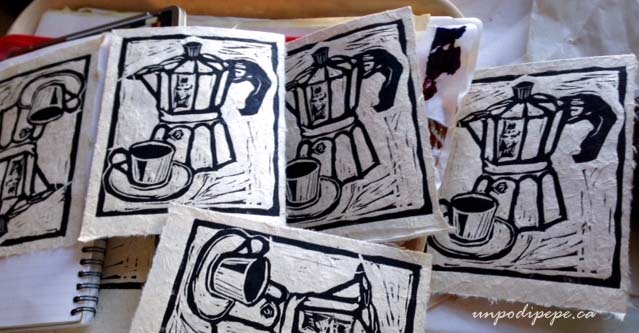
  • To celebrate follower#250, Mlle Cher was sent one of my ‘Espresso per Uno’ linocut prints!  Hopefully it arrived before she left NY for Pietrasanta.
  • I managed to squeeze in a spontaneous ‘extra’ trip to Italia in November to attend an art retreat and Fucacoste e Cocce Priatorje!
  • Many of you enjoyed my attempt at contemporary art criticism in La Grande Cacata.  The title says it all!
  • I joined the #DolceVitaBloggers linkup for my last post.  The group posts on a selected topic from the 7th to the 14th of every month.  I hope to participate again!
  • You may have noticed those pesky ads for things like toenail fungus removal have disappeared from the bottom of the posts!  Yipee!  I upgraded my wordpress plan.  Now I can use videos, once I learn how to load them.
  • My pronunciation guide Italiano per Ristoranti continues to be the most viewed post.  I am still planning to turn the downloadable PDF into an e-book once I figure out how to do that. Any tips would be greatly appreciated!

    Bruschetta (broo.SKET.tah)

Today is also La Festa della Liberazione d’Italia, the anniversary of the liberation of Italia from Fascist occupation in 1945.  Viva la libertà!  Last year, I said I was going to write about Le Donne Partigiane-women who were partisans in the Italian Resistance. Well… that post is not written yet, so instead, I will include a book review of a book with una donna partigiana as the main character.

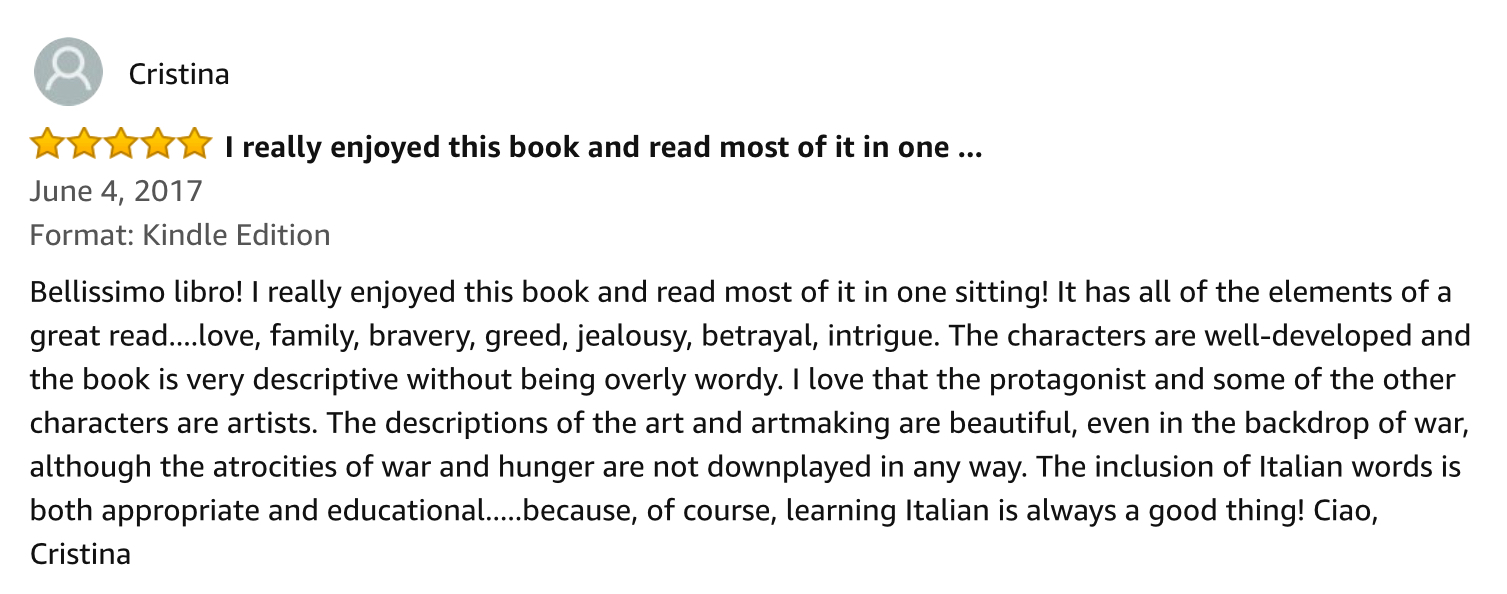
Bridge of Sighs and Dreams is written by fellow blogger Pamela Allegretto.  I loved it and here is my Goodreads/Amazon 5/5 star review:

I give it 5 peperoncini out of 5 🌶🌶🌶🌶🌶!

Grazie to all of you for taking the time to read, comment, send messages and especially for giving me an excuse to research and write about things that interest me!  If you have any suggestions for posts or just want to say ‘ciao‘, leave me a comment.

Grazie a tutti per leggere e darmi una scusa per scrivere di cose che mi piacciono.  Lasciami un messaggio se hai un idee per un post o se vuoi dice ‘ciao’.  Un abbraccio, Cristina

Share this:

  • Share on Facebook (Opens in new window) Facebook
  • Share on Pinterest (Opens in new window) Pinterest
  • Share on X (Opens in new window) X
  • Email a link to a friend (Opens in new window) Email
  • Share on WhatsApp (Opens in new window) WhatsApp
Like Loading...

A Perfect Day in Italia

10 Tuesday Apr 2018

Posted by Un po' di pepe in Italia, Italian life, Orsara di Puglia, Puglia

≈ 41 Comments

Tags

Dolcevitabloggers, Orsara di Puglia, Pugliese Traditions, Southern Italy

The Dolce Vita Bloggers link-up theme this month is ‘a perfect day in Italy’. What a topic!  There are so many possibilities.  I have written about many wonderfully perfect days, in Roma, Matera, Alberobello, the Val d’Orcia, Polignano a Mare….  How do I narrow down what to write about? With too much material to choose from, I decided to write about a typical day ‘at home’ in Orsara di Puglia, where most days are laid back, spontaneous and pretty darn perfetto!

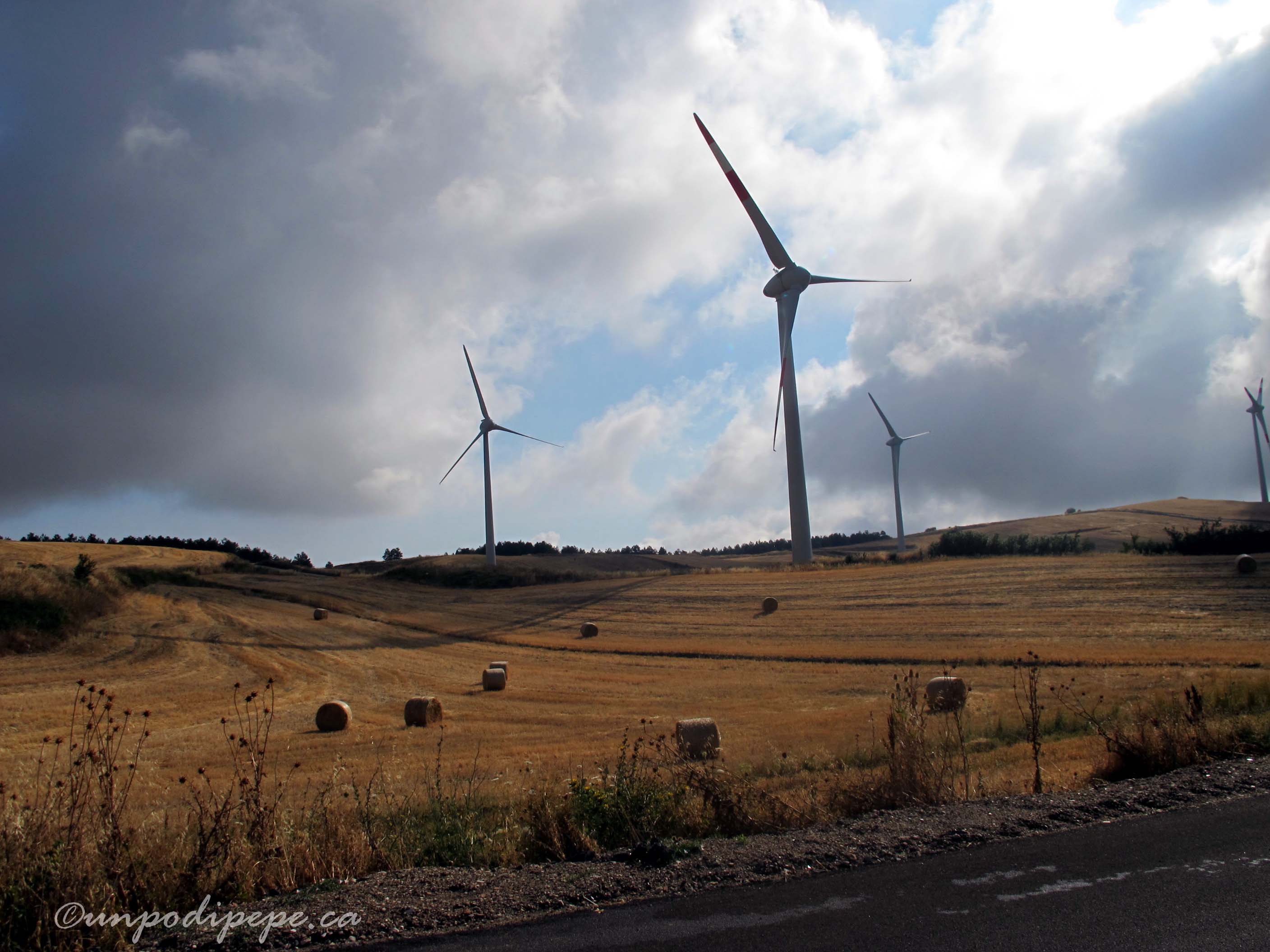
My day usually starts out with a long, early morning passeggiata to la Montagna Spaccata.  I call it ‘la Palestra di Madre Natura’ or ‘mother nature’s gym’, an uphill zig-zag walk up the mountain towards Campania with fresh aria di montagna, breathtaking views and encounters with fellow walkers.  I usually walk to the border with Campania, when I reach the pale eoliche (PAH•leh Eh•oh•LEH•keh).

Pale eoliche (wind turbines) near Montaguto

I have also walked all the way to Montaguto, in Campania 6 km away . I am not a ‘morning person’, but in the summer, the walk must be early, otherwise it gets too hot to walk on the way back. Long walks are necessary when you spend weeks eating lots yummy food and still want to fit into your clothes!
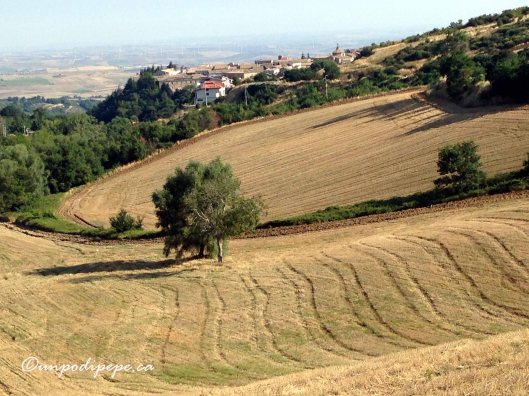
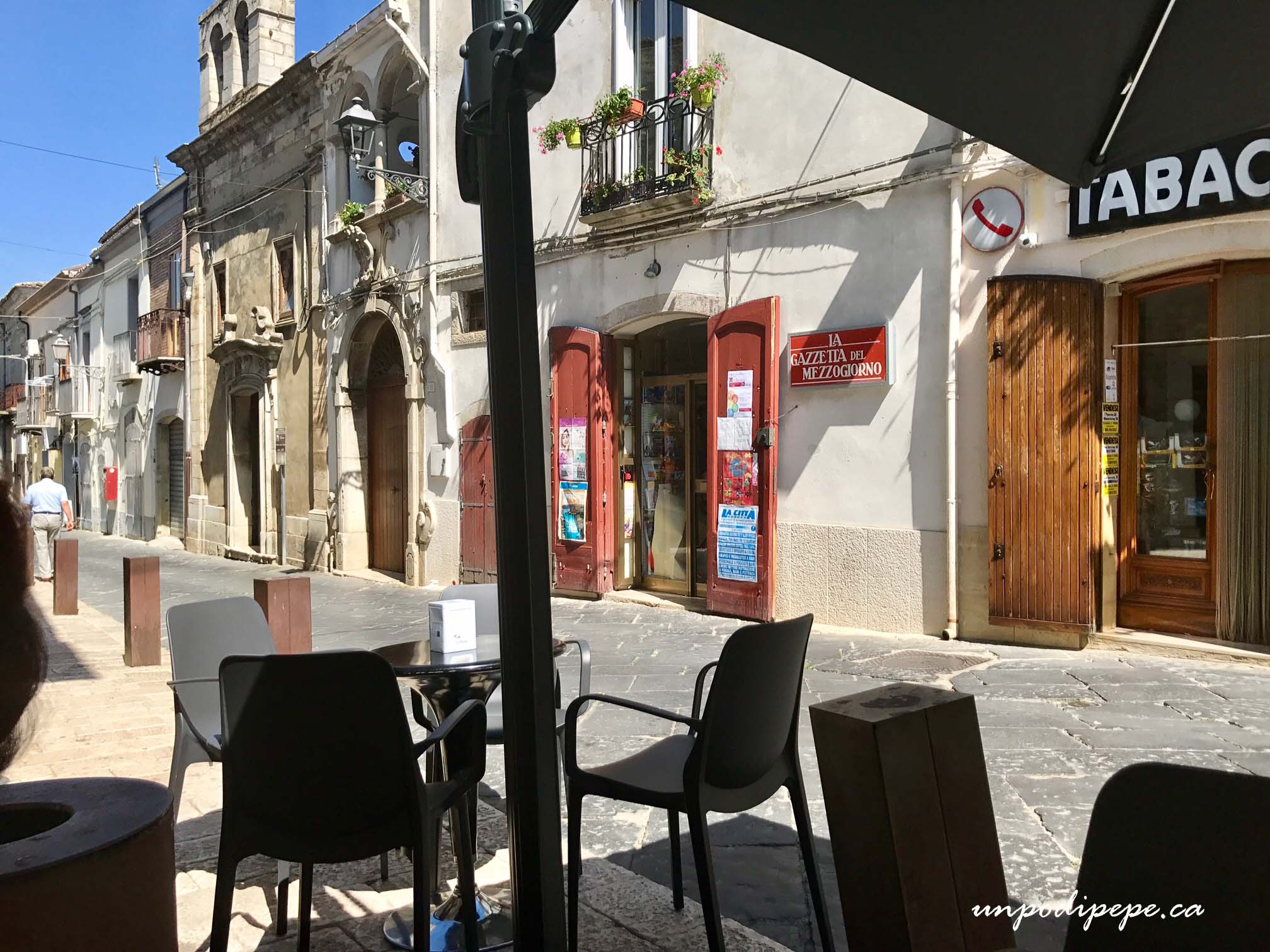
When I am back from my walk, cleaned up and changed, I often stop at the bar for an espressino, known as caffè marocchino in the rest of italia.  I also sneak in a few minutes of wifi.  Sometimes I walk to Piano Paradiso and have caffè with Peppe Zullo in the morning or afternoon.  Then I usually do servizi-errands, including shopping for food. Refrigerators are small, and most people shop at least every other day for fresh local ingredients.  Fresh bread and taralli are purchased at il forno.  Generi Alimentari are delis and also carry general grocery items.  My favourite items to purchase are fresh mozzarelle and the local specialty, cacioricotta.  Once a week, mozzarelle di bufala arrive and I am first in line! Fruit and vegetables are from the fruttivendolo-unless the neighbours give you produce from their orto.  There are also travelling fruttivendoli, selling out of small trucks.
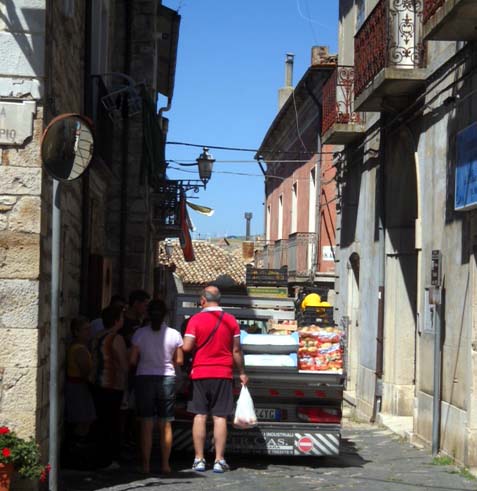
Il fruttivendolo barely fits in Via Regina Margherita!

I celebrate when fiori di zucca are available!  Another local specialty is Tuccanese, vino made from a local native grape. As in most non-touristy towns in Italia, shops close at 1pm for la pausa pranzo and reopen at 5pm, until 8pm.

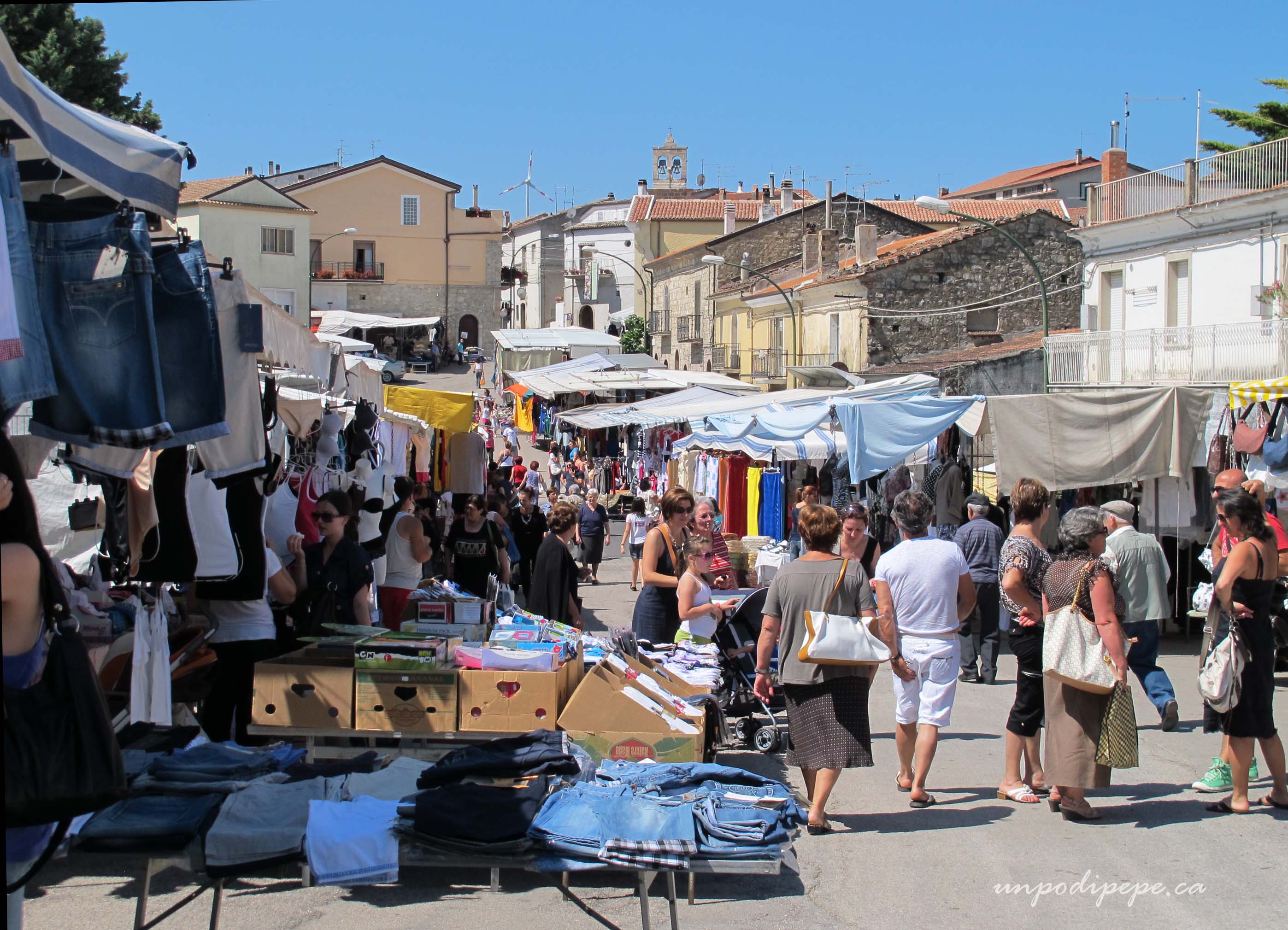
Giovedi mattina-Thursday morning is the mercato in Orsara.  The street is lined with bancarelle selling everything from fresh formaggi to produce, linens, shoes and household stuff.  A great spot to run into everyone in town, including visitors. Il postino likes giovedi, as he can hand everyone their mail on their way to the mercato.

The rest of the morning is usually spent helping to prepare pranzo, the main meal of the day, at 1pm.  In the summer, my parents are also in Orsara, sometimes my sister and her family too, so there is lots of food preparation going on, using ultra fresh local ingredients.

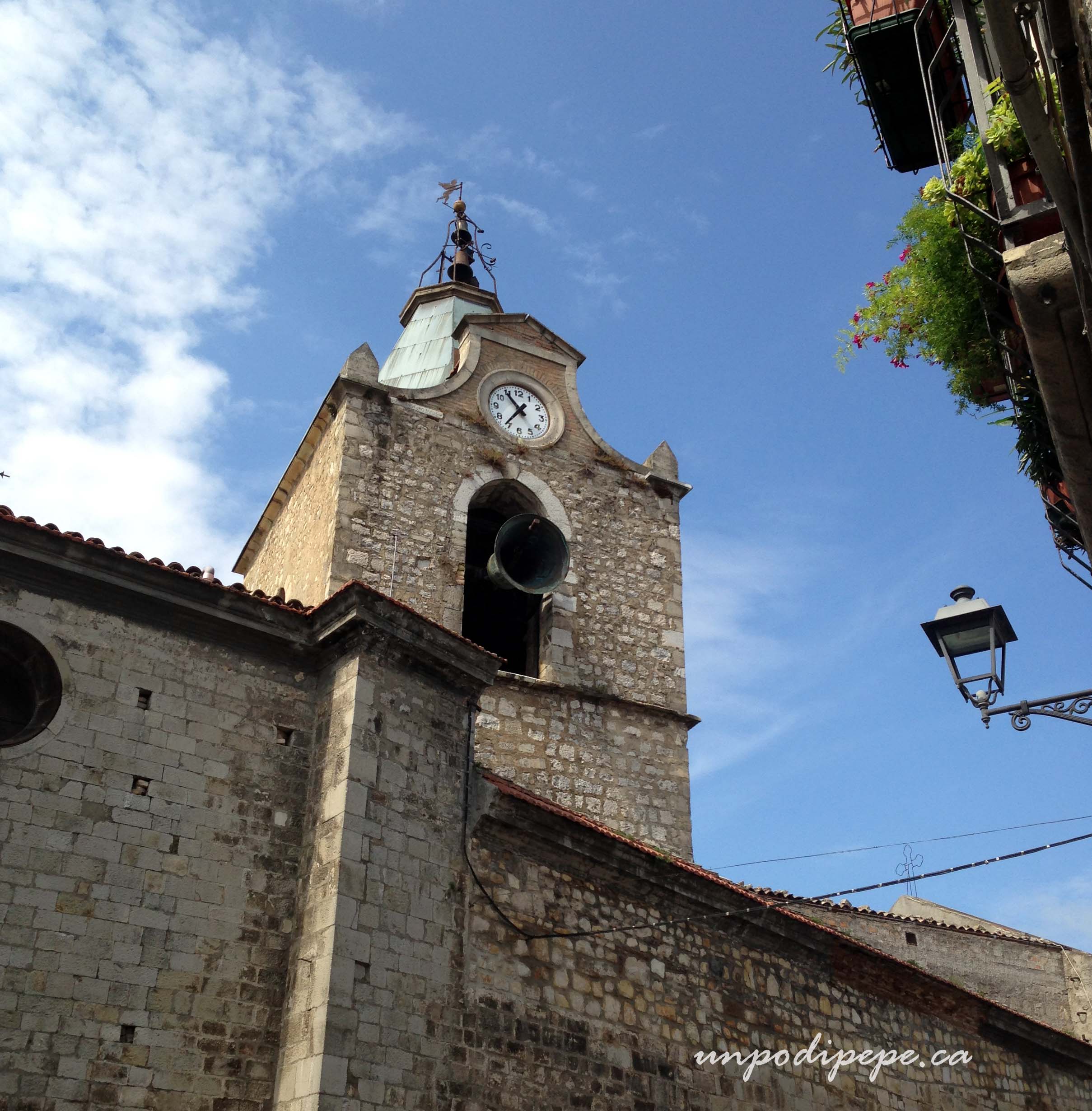
There is no need for a watch. My casa is right near the main church and the campanile– bell tower.  La campana rings every 15 minutes.  On the hour, there is one ‘ding’ for each hour, and every 15 minutes there is a higher pitched ‘ding’.  For example, at 12:45 la campana rings 12 times, followed by 3 higher pitched rings.  Back in the day when no one had a watch, contadini working in the fields would know the time. You might think this would get annoying, but la campana was broken for a year, and it was really missed! Once the dishes are done, it is orario di riposo-quiet time, as it is too hot to do much else.  Most people do not nap every afternoon, but they at least stay home and have a riposo, a rest. A short pisolino is quite civilized if you are up very early and plan to stay out late! The afternoon rest is not called a siesta in italiano- riposo or la pausa. I often read or do clean up stuff around the house, like hang laundry to dry. There are no dryers here as electricity is ridiculously expensive and sunlight is free. I may brave the mid afternoon sun to go out and take photos. The maze of steep, windy, cobblestone streets and alleys are empty and I am alone with the light and the incredible shadows.  To quote myself…
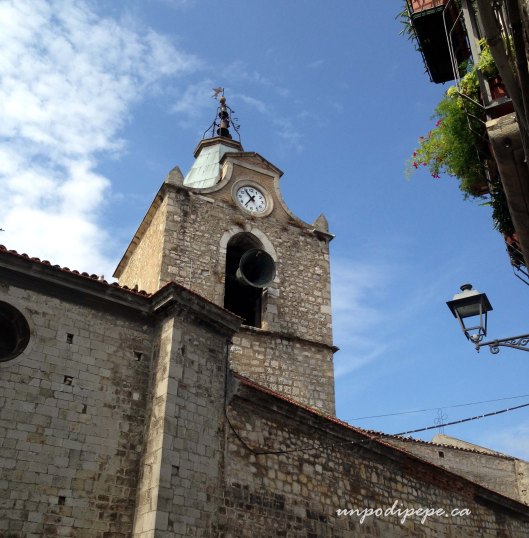
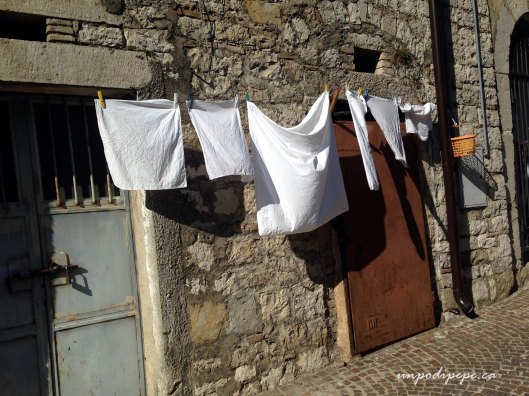
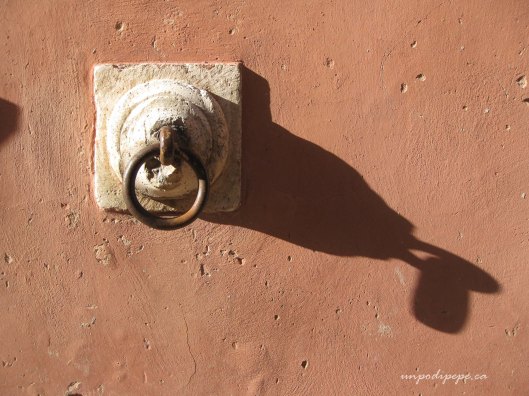
’ la luce … la gloriosa e magnifica luce del sole di metà pomeriggio è incredibile. Vorrei dipingere quella luce! / the light….the glorious and magnificent light of the mid-afternoon sun is incredible.  I want to paint that light!’ (Cristina, October 2017).

At 5pm shops and bars reopen and the streets come to life again.  I visit friends and relatives, meet for gelato, shop, or find somewhere to sit with my sketchbook. I also love to walk to La Cupa, the olive grove that used to belong to my Nonno to pick plums, figs and pears. I usually need to stop at one of the bars to use wifi, although as I explained in Chiuso per Ferie in August, this can end up seeming quite antisocial.

Sundays, I sleep in, unless going on a daytrip.  I love to have cappuccino and a cornetto crema di pistacchio before 11:00 Mass in the ancient Grotta di San Michele Arcangelo. At least one Sunday, I look forward to a barbecue at La Cupa with my extended family.

‘un po’ di relax’ under the olive trees

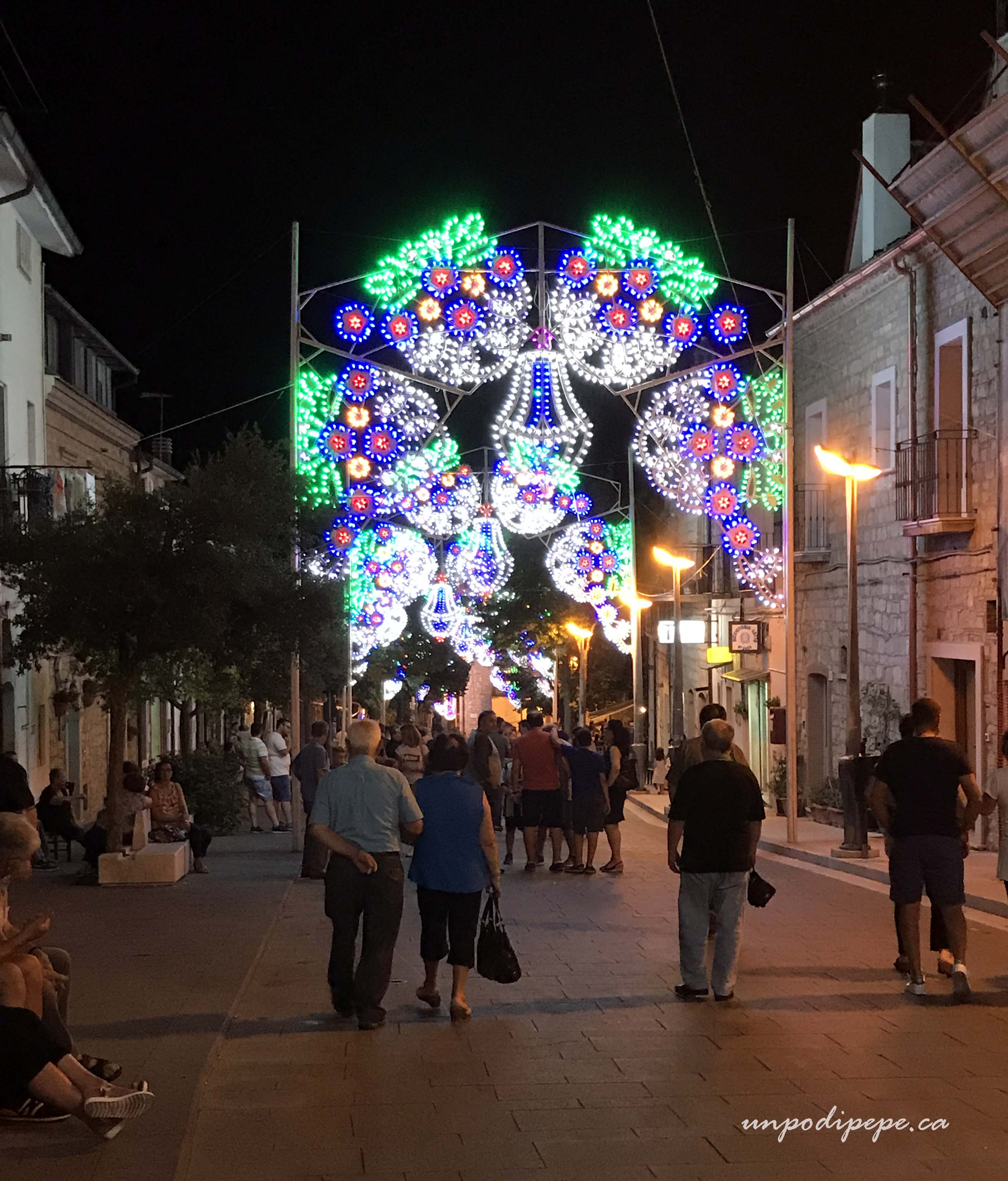
After 9pm, it is time for the evening passeggiata, walking up and down ‘il Corso’ and socializing. There are pizzerie and bars with outdoor seating along il Corso. On summer evenings, there are often concerts or special events.My favourite part of the passeggiata is walking all the way to the top of the Corso, past where the houses stop, then the streetlights stop.  It is buio (BOO•yoh) -dark, you can hear grille (GREEL•leh)-crickets, and see the stars.  On clear, windless nights, lucciole (looch•CHEEOH•leh)-fireflies make the night absolutely magical. There is usually a stop for a drink at an outdoor table before ending up back at home…never before midnight though! Buonanotte, Cristina.

Click on these links to read previous posts about wonderfully perfect days spent in… Alberobello, the Isole Tremiti, Matera, Polignano a Mare, Paestum, Roma, Trani and the Val d’Orcia.

This post is written as part of the monthly #dolcevitabloggers linkup, hosted by Jasmine of Questa Dolce Vita, Kelly of Italian at Heart and Kristie of Mamma Prada the 7th -14th of every month.
Share this:

  • Share on Facebook (Opens in new window) Facebook
  • Share on Pinterest (Opens in new window) Pinterest
  • Share on X (Opens in new window) X
  • Email a link to a friend (Opens in new window) Email
  • Share on WhatsApp (Opens in new window) WhatsApp
Like Loading...

Insalata Purtuall’

18 Sunday Mar 2018

Posted by Un po' di pepe in Italian language, Mangiamo!, Recipes

≈ 28 Comments

Tags

Arancia, Gastronomic history, History of oranges, Insalata Purtuall', Italian language, Orange, Orange and fennel salad, Portokali, Traditional recipes

Insalata di arancia e finocchio-orange and fennel salad always brings back memories of my grade 1 lunchroom. My delicious lunches included home made crusty bread stuffed with melanzane and roasted peppers, prosciutto, capicollo or cotoletto di vitello, frittata, pizza or ‘chocolate sandwiches’ made with Nutella. Papà would often make me Insalata Purtuall’, with oranges cut crosswise in rounds, fennel and black olives, drizzled with olive oil and a bit of salt.  A true flavour explosion for 6 year old me.  I did not know why everyone at school thought my lunches were so weird.  The ‘Anglo’ kids made fun of them, and even the teachers eyed my food suspiciously.  Today all of these foods are available and trendy, so who is laughing now?  Ha! I do not remember being too bothered by the teasing.  I actually felt sorry for my classmates.  Their lunches were gross, usually consisting of ‘plastic’ cheese on bright white squishy bread that was sliced like cake! Poveretti. I will have to write more about my early gastronomic experiences in another post….
A while back, Frank from Memorie di Angelina wrote about orange and fennel salad, and I commented that we called it ‘Portugal’ salad, but did not know why. I asked Papà why we called it ‘Insalata Purtuall’. Purtuall’ is dialetto for Portogallo which is Portugal in italiano. His answer surprised me. He said it was not a Portuguese salad, but purtuall’ is what the orange were called. Hmmm.  Soon after this, I was at a writers’ conference and one of the presenters displayed a map showing the word for orange across Europe in various languages. Aha! I saw that the Greek word for orange is ‘portokali’. This was getting interesting!

Arancia amara, bitter orange, was known to the Romans. Sweet oranges were only introduced to Europe and the Mediterranean in the 14th century. Portuguese ships were the first to circumnavigate Africa and brought sweet oranges back from the Far East. In many countries, oranges were named after Portugal-the country that they seemed to be coming from! In Greek oranges are portokali, in North Africa and most Middle East countries burtuqall, in Iran purtuqol, in Turkey portakal and in Hungary and Romania portokal. In most of Western Europe, the Mediterranean and Britain, the word for orange comes from ‘narangas’, Sanskrit for orange tree. For example, in italiano arancia, in spanish naranja, portuguese laranja, and of course english orange. There are a few places in Italia where the dialetto still uses the ‘portuguese’ term. In Campania, Puglia, Basilicata and Abruzzo, purtuallo or portajalli, in Sicilian partualli (or aranciù), and in Piemonte portugaj. In modern Greek, bitter oranges are called ‘nerantzi’ while sweet oranges are called ‘portokali’. Who knew that the yummy salad I used to bring for lunch in elementary school reflects thousands of years of history, trade voyages and etymology between East and West!

A ‘recipe’ is not really needed for Insalata Purtuall’. Just peel a few oranges and remove as much of the pith as possible, then slice them crosswise and lay them on a plate. Cut half a fennel bulb and slice in either small or larger pieces. Add ‘un filo d’olio’, a drizzle of olive oil and salt, then a few black olives and garnish with fennel fronds. I sometimes like to throw in some pomegranate seeds or rucola. It is hard to mess up this healthy, refreshing winter insalata! I recently found out that Insalata Purtuall’ was served at my parents’ wedding in Orsara di Puglia in the 1960’s, so now it tastes even better!

Buon appetito, Cristina

Share this:

  • Share on Facebook (Opens in new window) Facebook
  • Share on Pinterest (Opens in new window) Pinterest
  • Share on X (Opens in new window) X
  • Email a link to a friend (Opens in new window) Email
  • Share on WhatsApp (Opens in new window) WhatsApp
Like Loading...

Tortelloni di Ricotta in a Snowstorm

18 Sunday Feb 2018

Posted by Un po' di pepe in Mangiamo!

≈ 9 Comments

Tags

Italian food, Ostro, Pasta, Pasta fatta a mano, Ricotta tortelloni

It snowed again last night.  Shoveling snow and picking ice cubes off of my poor olive tree is not my idea of a relaxing Sunday morning.  Yesterday, facebook sent me one of those ‘your memories from one year ago’ messages with this black and white photo.  It snowed a LOT last year, and this particular Saturday night, I was bloccato dalla neve -snowed in.  I decided this was a good time to do my recipe testing for Julia Busuttil Nishimura’s cookbook Ostro.  Ostro is also the name of Julia’s website.  The recipe was for Ricotta tortelloni with butter, sage and hazelnuts.  Tortelloni are super-size tortellini and I had not made them before.  Filling and shaping them was fun and easier than I thought.

I had to use a beer glass to cut the circles, so they came out quite big.  Once I was done making the tortelloni, I made the butter sage and hazelnut sauce-except I had to improvise.   It was dark outside and still snowing heavily.  The sage was growing in the backyard.  I had to dress like an Eskimo and go out with my flashlight to forage for sage under a foot of snow!  Brrrr.  I did not have any hazelnuts, and had even run out of butter making cookies.  Grocery shopping was not an option at this point, so I ended up making an olive oil, sage and toasted almond sauce instead. It was so delicious I did not even have a chance to take a decent photo of the finished dish!

I have made these ricotta tortelloni a few more times, even with ricotta fatta in casa.  Ostro is now out in print and is Gourmet Traveller Australia’s 2017 book of the year.  Auguri Julia!   I believe Ostro is available only in Australia for now.  In Canada, it is only available on kindle so far, so I have not seen it yet.  You can find the recipe here.More about my adventures in (and complaining about) the snow along with snowy photos can be found in Bloccato dalla neve.

Another recipe from Julia and a review of Ostro can be found on Emiko Davies’ blog here.

Ciao e buon appetito, Cristina

Share this:

  • Share on Facebook (Opens in new window) Facebook
  • Share on Pinterest (Opens in new window) Pinterest
  • Share on X (Opens in new window) X
  • Email a link to a friend (Opens in new window) Email
  • Share on WhatsApp (Opens in new window) WhatsApp
Like Loading...
← Older posts
Newer posts →

Enter your email address to follow 'un po' di pepe' and receive notifications of new posts by email.

Join 511 other subscribers
Follow Un po' di pepe on WordPress.com

Popular Posts

  • Hairstyling in Ancient Roma
    Hairstyling in Ancient Roma
  • Cucina Italiana Patrimonio UNESCO
    Cucina Italiana Patrimonio UNESCO
  • Grano Arso
    Grano Arso
  • Napoli Street Art
    Napoli Street Art
  • Venezia~La Serenissima
    Venezia~La Serenissima
  • Un altro giorno a Napoli
    Un altro giorno a Napoli
  • Gallerie d'Italia Napoli
    Gallerie d'Italia Napoli

Recent Posts

  • Cucina Italiana Patrimonio UNESCO
  • 2025~Un po’ di pepe Year in Review
  • Castel del Monte
  • ‘The Nuances of Love’
  • Hostaria Antica Roma~Eat like an Ancient Roman
  • Santa Maria in Aracoeli
  • Casino dell’Aurora~Villa Boncompagni Ludovisi
  • Nasoni di Roma
  • Bloghiversario #11
  • Fontana di Trevi
  • Acqua Vergine
  • Giubileo 2025
  • Sanremo 2025
  • In Vino there are Memories
  • A Literary Harvest
  • 2024~Un po’ di pepe Year in Review
  • Buon Natale 2024
  • Il Bicerin
  • Mercato Porta Palazzo
  • Torino
  • Catanzaro, Calabria
  • Il Pumo Pugliese
  • Artemisia Gentileschi
  • Cavalli di San Marco
  • Panzerotti

Categories

Amici e Famiglia Architecture Art Art history Art projects Bilingual posts Blogging Canada Culture Feste Firenze Inspiration Italia Italian Folklore Italian language Italian life Italocanadesi Libri Mangiamo! Orsara di Puglia Parole piacevoli Photography Puglia Recipes Roma Travel Travel tips Uncategorized Vino

Archives

Un po’ di pepe on Facebook

Un po’ di pepe on Facebook

Start a Blog at WordPress.com.

  • Subscribe Subscribed
    • Un po' di pepe
    • Join 511 other subscribers
    • Already have a WordPress.com account? Log in now.
    • Un po' di pepe
    • Subscribe Subscribed
    • Sign up
    • Log in
    • Report this content
    • View site in Reader
    • Manage subscriptions
    • Collapse this bar
 

Loading Comments...
 

    %d