• Home
  • About me/Chi sono
  • Contact

Un po' di pepe

~ …… (oon∙poh∙dee∙PEH∙peh) Cristina writes about interesting stuff /Cristina scrive di cose interessanti

Un po' di pepe

Tag Archives: Pugliese Traditions

In Vino there are Memories

24 Friday Jan 2025

Posted by Un po' di pepe in Amici e Famiglia, Bilingual posts, Italocanadesi, Vino

≈ 14 Comments

Tags

Food writing, Italian Canadian Literature, Italocanadesi, Pugliese Traditions, vino cotto, Winemaking

To celebrate my birthday, today I am posting my story from the recently published anthology ‘A Literary Harvest: Canadian Writing about Wine and other Libations’.  I hope you enjoy it as much as I enjoyed writing it.  It is followed by an Italian translation.  Per l’italiano, leggi sotto.  Salute!….

When I look into a glass of wine, I see more than a delicious beverage to sip and enjoy. I see tradition and family, and a piece of my cultural heritage. I think of my Nonno’s vineyard in Puglia and I imagine my ancestors tilling the soil. I also imagine the journey the grapes made, coming from Greece and the Balkans millennia ago, then again across the Atlantic to North America. Immigrant journeys, similar to ours.

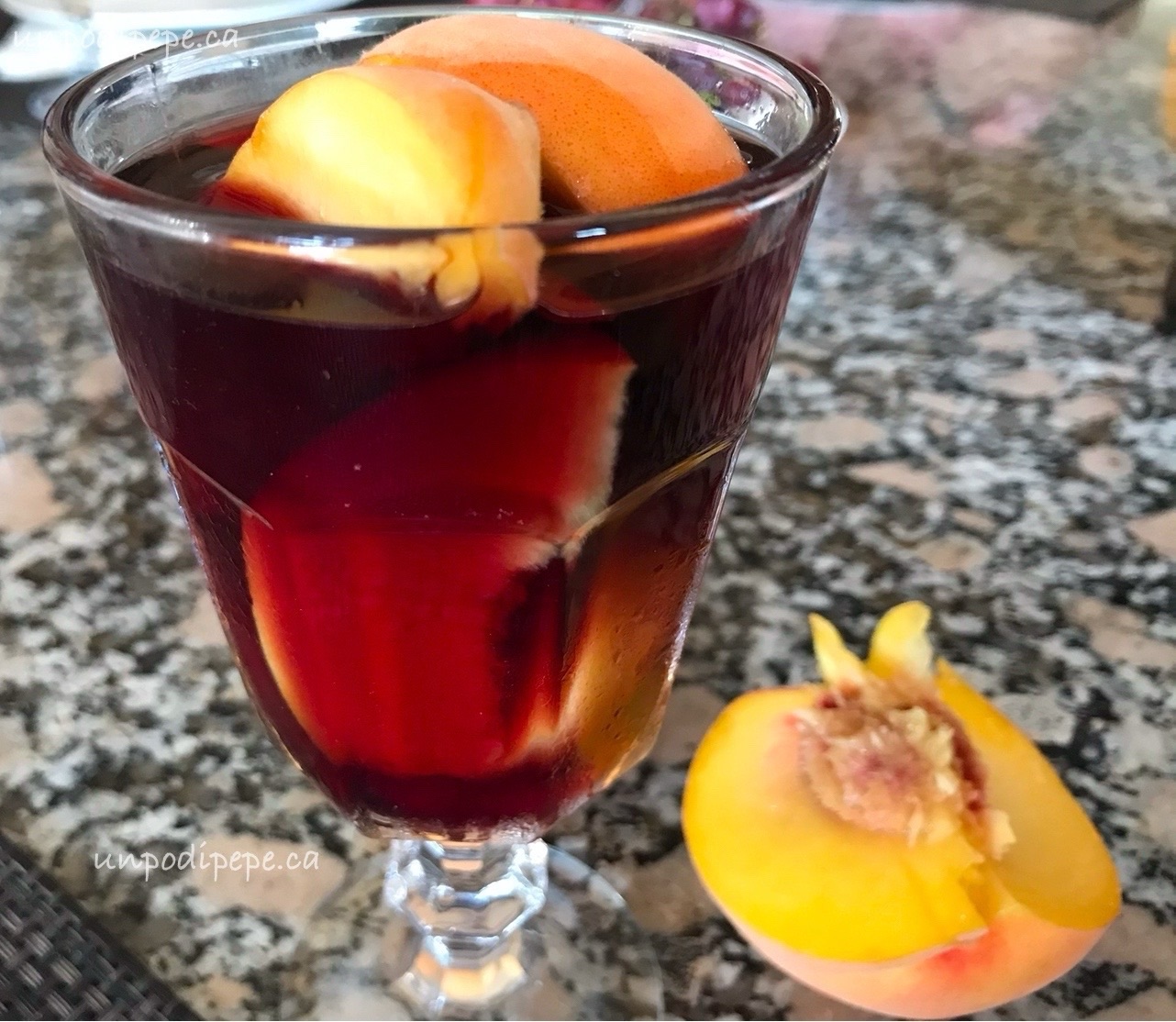
Wine is an integral part of growing up in an italocanadese family and is a staple of every family function. Everyone was allowed to have a bit of vino with dinner – it was exciting and made us feel grown up. Even when we were little … at first with 7-Up, Sprite or Ginger Ale, and eventually straight vino. In the summer, everyone looks forward to la pesca in vino. This involves cutting up a fresh peach, placing the slices in a glass, then filling it with vino. After the wine is consumed, lovely, sweet, wine-saturated peach slices await you for dessert. The peach slices take up most of the space in the glass, so the amount of wine to drink is really very little.
Wine making season is mid- to late-September, right after the pomodori are canned and stored in the cantina. The grapes grown in the back-yard garden are mostly for eating, so wine grapes are purchased from the Okanagan Valley. This is an area with summer weather similar to southern Italia … hot and dry during the day and colder at night. This combination produces the sweetest grapes.

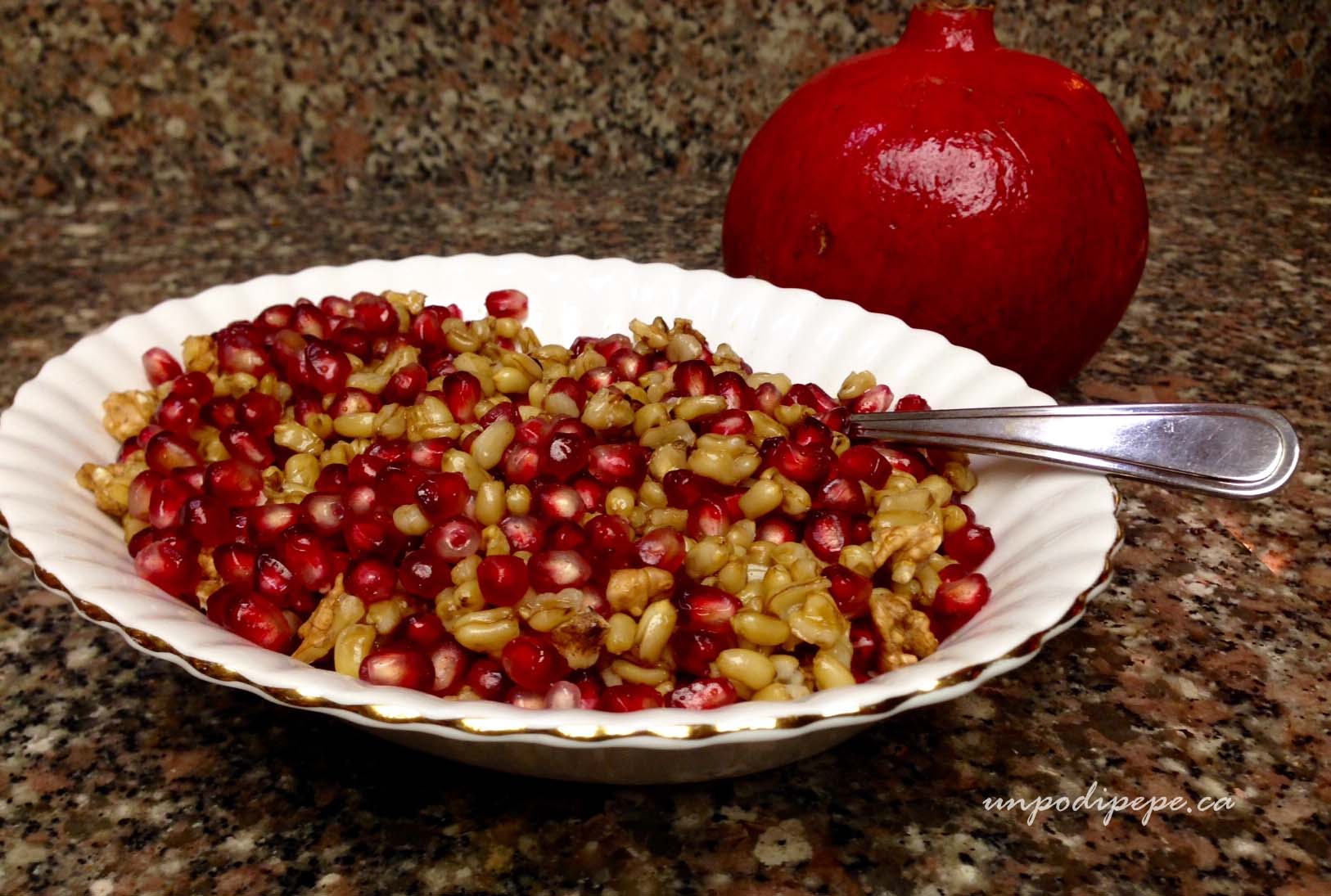
Making vino is a real family affair. When the grapes arrive, everyone who is free lends a hand, even the little ones, the nipotini. We help cart the boxes of grapes from the truck and empty them straight into the hand cranked grape crusher on top of a barrel.  Everything goes in;  skins, seeds and stems. Then we break apart the boxes, or else the wasps soon descend- Vespe know a good thing when they smell it! All month the aroma of fermenting grapes fills the garage!Mamma takes some of the mosto, the wine must, and boils it down like molasses to make vino cotto.  It really should be called mosto cotto, but we have always called it vino cotto. The thick, sweet liquid is poured over boiled wheat berries on November 1st to celebrate Tutti i Santi, All Saints’ Day. This traditional dish, in the local dialect, is called muscitaglia, from the words in Greek and Latin mosto and talia (grain). Walnut pieces and pomegranate seeds are added when available. Vino cotto is also drizzled on cartellate, a traditional Pugliese Christmas treat, and even on snow, like a vino cotto slushie!
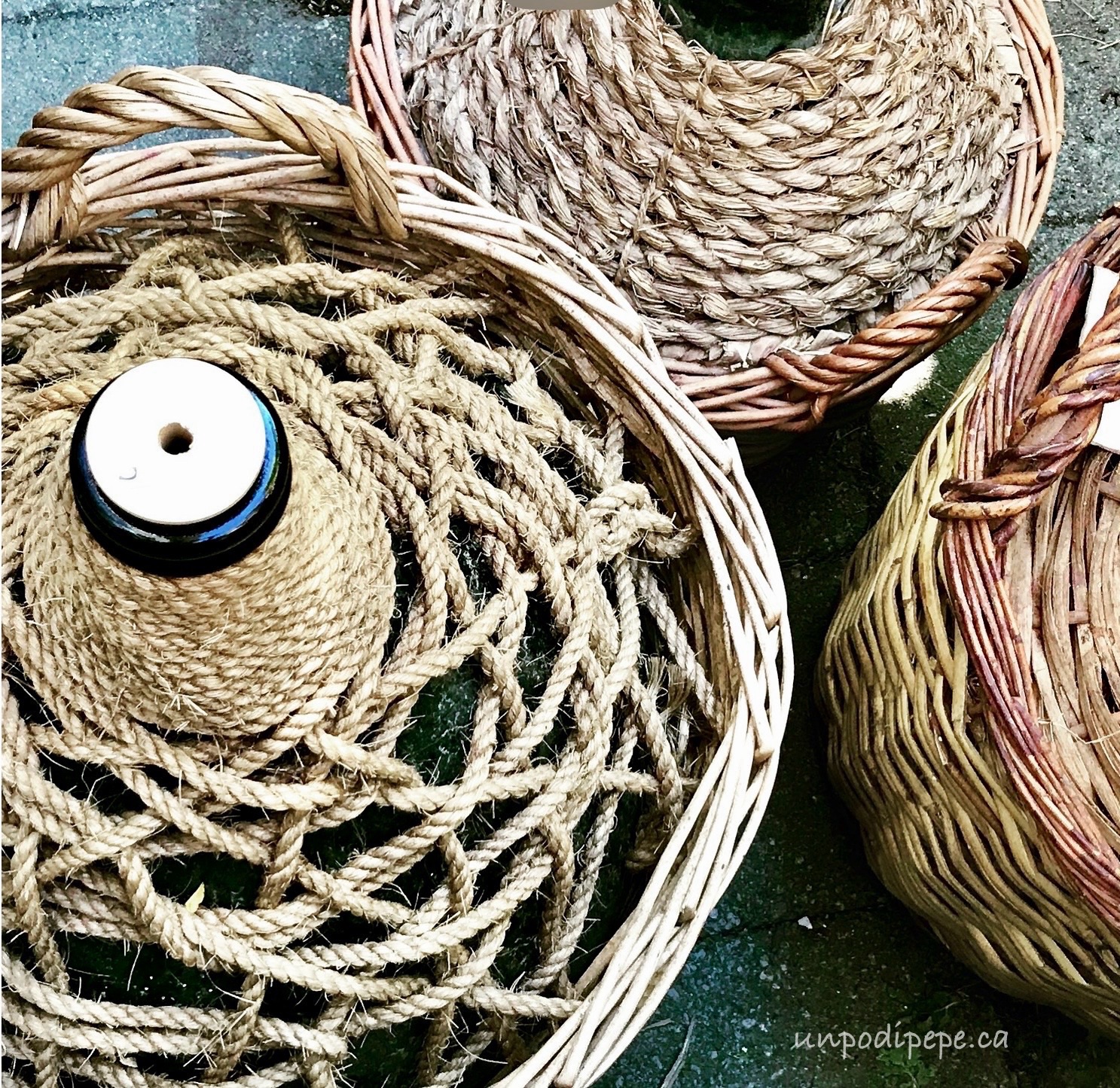
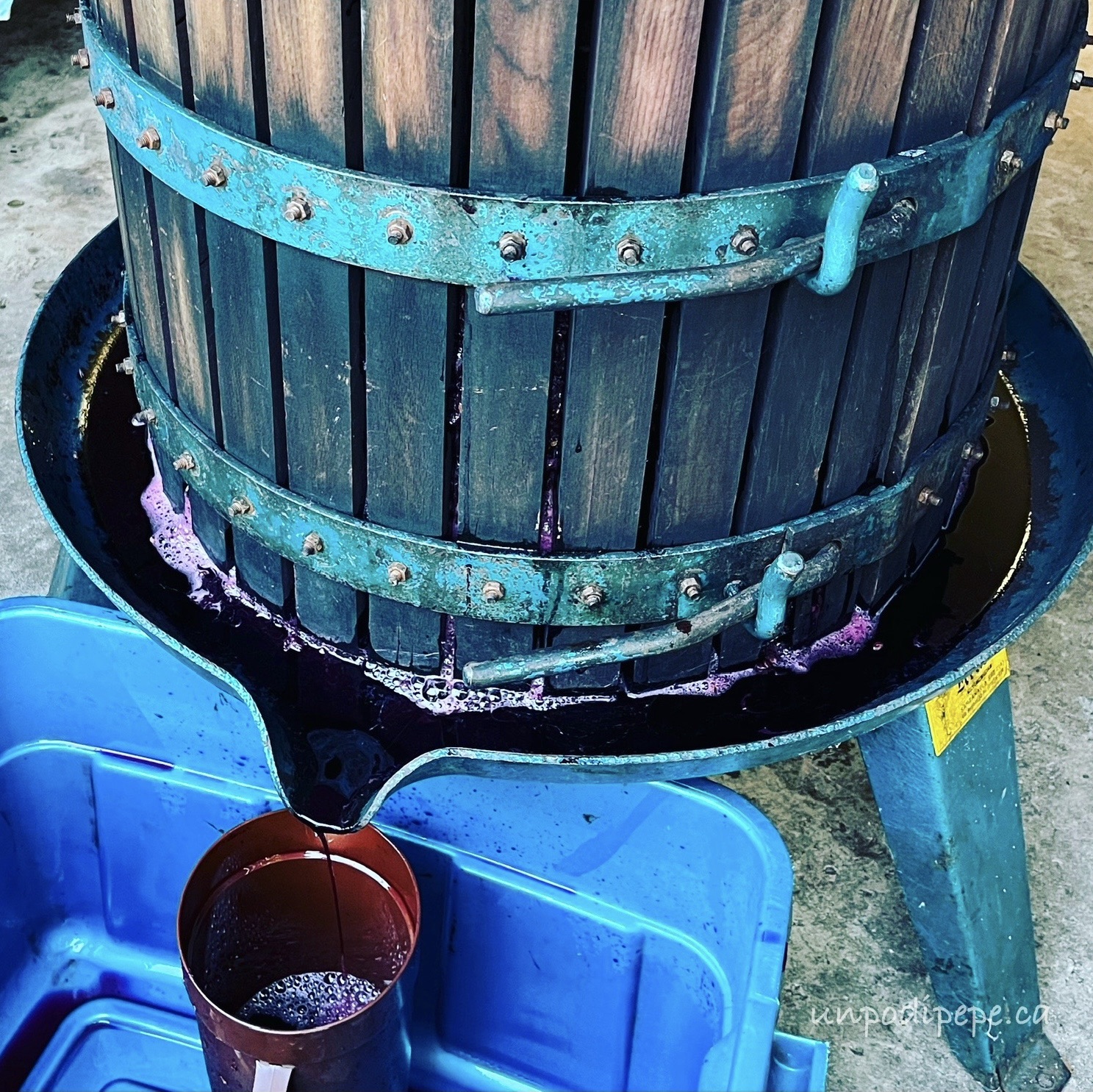
When ready, the fermented grapes are transferred to the old wooden torchio, for pressing. Since there are no preservatives added, our vino is stored in large, bell-shaped, wicker-covered glass damigiane, and siphoned into bottles only as needed. The wine needs to be tramutato a few times. This involves transferring it from one damigiana to another, to remove sediment. Like everything else Papà does, this is done according to the phases of the moon. Vino is tramutato during la luna calante, the waning moon, although the damigiane are still left open to air. On November 11th, the feast day of Saint Martin, the new vino is tasted and then the damigiane are closed until bottling. The old proverbs say “A San Martino, ogni mosto diventa vino” which means “On St Martin’s Day, every must turns into wine”, and ‘A San Martino, si lascia l’acqua e si beve vino’, ‘On Saint Martin’s Day, one abandons water and drinks wine’.
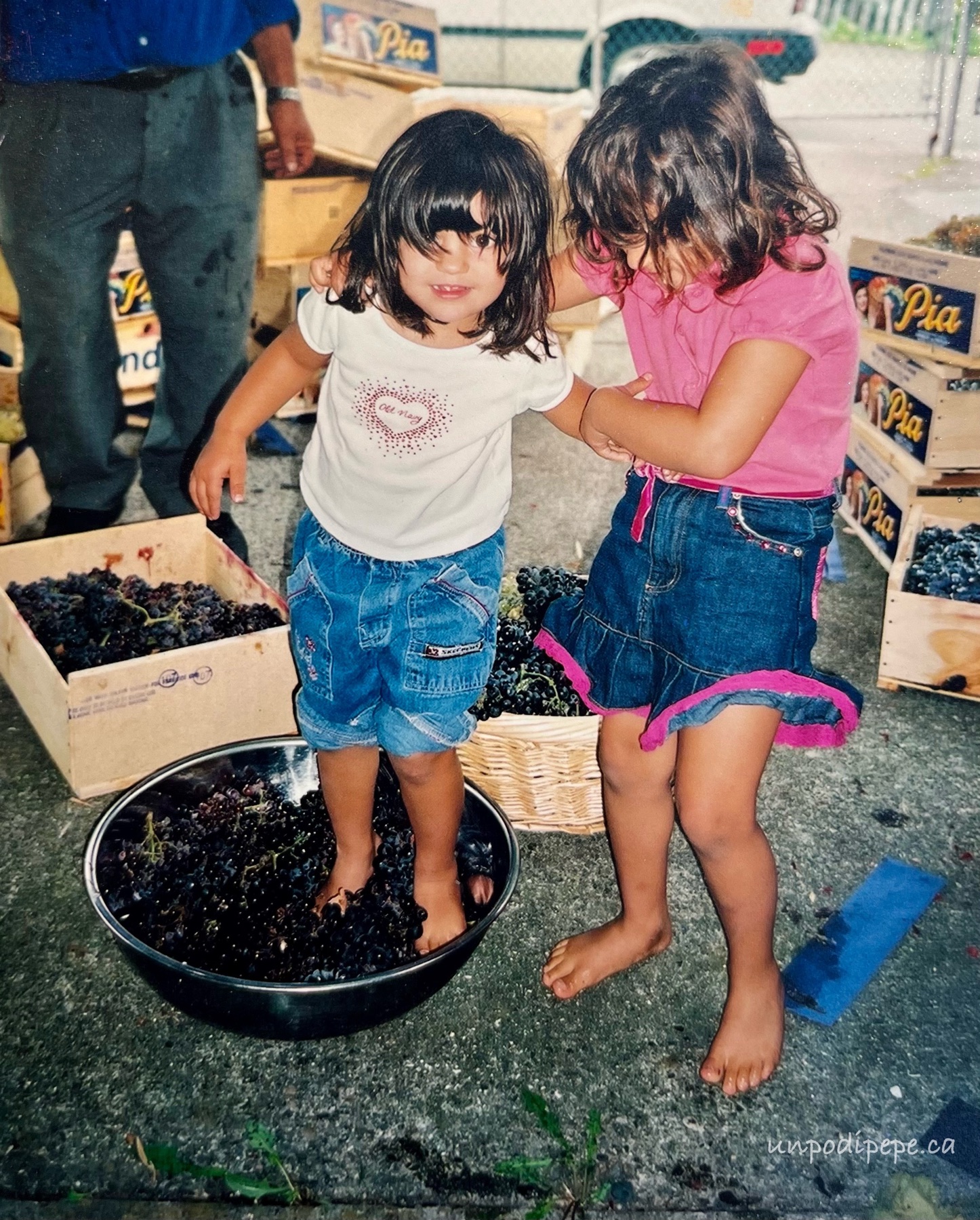
Papà makes the best vino. No sulfites or preservatives, just pure fermented grape juice. It has a full, robust flavour and does not leave you with a headache. Whenever anyone (anyone non-Italian, that is), asks him how he makes such good vino, he always has the same answer. “Ok … I tell you” … then he gets all dramatic… “for 2 weeks … I no wash the feet…” You can see where this is going. It is amazing how many people sit there open-mouthed for a few minutes and actually believe him! That is, until they see the mischievous smirk on his face. Just for fun, all of my nipotini have had photos taken à la “I Love Lucy,” crushing grapes in a half barrel or tub with their bare feet. These grapes are not added to il torchio, even though they did wash their feet. Salute!

         Published in ‘A Literary Harvest:  Canadian Writing about Wine and Other Libations. Editors Licia Canton, Giulia De Gasperi & Decio Cusmano.  Longbridge Books, 2025, p 94-96.
In Italiano:

Nel Vino ci sono Ricordi

Quando guardo dentro un bicchiere di vino, vedo più di una bevanda deliziosa da sorseggiare e gustare. Vedo tradizione e famiglia, e un pezzo del mio patrimonio culturale. Penso al vigneto di mio nonno in Puglia e immagino i miei antenati che coltivano la terra. Immagino anche il viaggio che hanno fatto le uve, provenienti dalla Grecia e dai Balcani millenni fa, poi di nuovo attraverso l’Atlantico fino al Nord America. Viaggi di immigrazione, simili ai nostri.

Il vino è parte integrante della crescita in una famiglia italocanadese ed è un elemento fondamentale di ogni festa familiare. A tutti era permesso bere un po’ di vino a cena: era emozionante e ci faceva sentire grandi. Anche quando eravamo piccoli… all’inizio con 7-Up, Sprite o Ginger Ale, e alla fine vino puro. In estate, tutti aspettano con ansia la pesca in vino. Ciò comporta tagliare una pesca fresca, mettere le fette in un bicchiere, quindi riempirlo di vino. Dopo aver consumato il vino, deliziose, dolci, fette di pesca sature di vino ti aspettano. Le fette di pesca occupano la maggior parte dello spazio nel bicchiere, quindi la quantità di vino da bere è davvero molto ridotta.

La stagione della vinificazione va da metà a fine settembre, subito dopo che i pomodori sono stati inscatolati e conservati in cantina. L’uva coltivata nel orto sul retro è destinata al consumo umano, quindi l’uva da vino viene acquistata nella Okanagan Valley. Questa è una zona con un clima estivo simile a quello dell’Italia meridionale… caldo e secco durante il giorno e più freddo di notte. Questa combinazione produce l’uva più dolce.

La produzione del vino è una vera e propria faccenda di famiglia. Quando arriva l’uva, tutti quelli che sono liberi danno una mano, anche i più piccoli, i nipotini. Aiutiamo a trasportare le casse di uva dal camion e le svuotiamo direttamente nella pigiatrice a manovella in cima a una botte. Ci mettiamo dentro tutto: bucce, semi e raspi. Poi rompiamo le casse, altrimenti le vespe scenderanno presto: le vespe sanno riconoscere una cosa buona quando la sentono! Per tutto il mese l’aroma dell’uva in fermentazione riempie il garage!

Mamma prende un po’ di mosto di vino, e lo fa bollire come la melassa per fare il vino cotto. Dovrebbe chiamarsi mosto cotto, ma noi lo abbiamo sempre chiamato vino cotto. Il liquido denso e dolce viene versato sui chicchi di grano bolliti il ​​1° novembre per celebrare la festa di Tutti i Santi, il giorno di Ognissanti. Questo piatto tradizionale, nel dialetto locale, è chiamato muscitaglia, dalle parole in greco e latino mosto e talia (grano). Pezzi di noce e semi di melograno vengono aggiunti quando disponibili. Il vino cotto viene anche versato sulle cartellate, un dolce natalizio tradizionale pugliese, e anche sulla neve, come un granita di vino cotto!

Quando è pronto, l’uva fermentata viene trasferita nel vecchio torchio di legno, per la pressatura. Poiché non vengono aggiunti conservanti, il nostro vino viene conservato in grandi damigiane di vetro a forma di campana, ricoperte di vimini, e travasato nelle bottiglie solo quando necessario. Il vino deve essere travasato un paio di volte. Ciò comporta il trasferimento da una damigiana all’altra, per rimuovere i sedimenti. Come ogni altra cosa che fa Papà, questo viene fatto in base alle fasi lunari. Il vino viene travasato durante la luna calante, anche se le damigiane vengono comunque lasciate all’aria aperta. L’11 novembre, giorno della festa di San Martino, si assaggia il vino nuovo e poi le damigiane vengono chiuse fino all’imbottigliamento. I vecchi proverbi dicono “A San Martino, ogni mosto diventa vino” e “A San Martino, si lascia l’acqua e si beve vino”.

Papà fa il miglior vino. Niente solfiti o conservanti, solo puro succo d’uva fermentato. Ha un sapore pieno e robusto e non ti lascia il mal di testa. Ogni volta che qualcuno (chiunque non sia italiano, ovviamente) gli chiede come fa a fare un vino così buono, lui ha sempre la stessa risposta. “Ok… ti dico”… poi diventa tutto drammatico… “per due settimane… non si lavano i piedi…” Puoi capire dove vogliamo arrivare. È incredibile quante persone se ne stanno lì a bocca aperta per qualche minuto e ci credono davvero! Cioè, finché non vedono il sorrisetto malizioso sul suo viso. Solo per divertimento, tutti i miei nipotini si sono fatti fotografare alla “I Love Lucy”, mentre schiacciavano l’uva in una mezza botte a piedi nudi. Quest’uva non si aggiunge al torchio, anche se si lavano i piedi. Salute!

Pubblicato in ‘A Literary Harvest: Canadian Writing about Wine and Other Libations. editors Licia Canton, Giulia De Gasperi & Decio Cusmano. Longbridge Books, 2025, p 94-96.
Share this:

  • Share on Facebook (Opens in new window) Facebook
  • Share on Pinterest (Opens in new window) Pinterest
  • Share on X (Opens in new window) X
  • Email a link to a friend (Opens in new window) Email
  • Share on WhatsApp (Opens in new window) WhatsApp
Like Loading...
Il Pumo Pugliese

25 Sunday Aug 2024

Posted by Un po' di pepe in Bilingual posts, Italian Folklore, Puglia

≈ 7 Comments

Tags

Italian lucky charms, Portafortuna, Pugliese Traditions, Pumo, Pumo Pugliese, Southern Italy

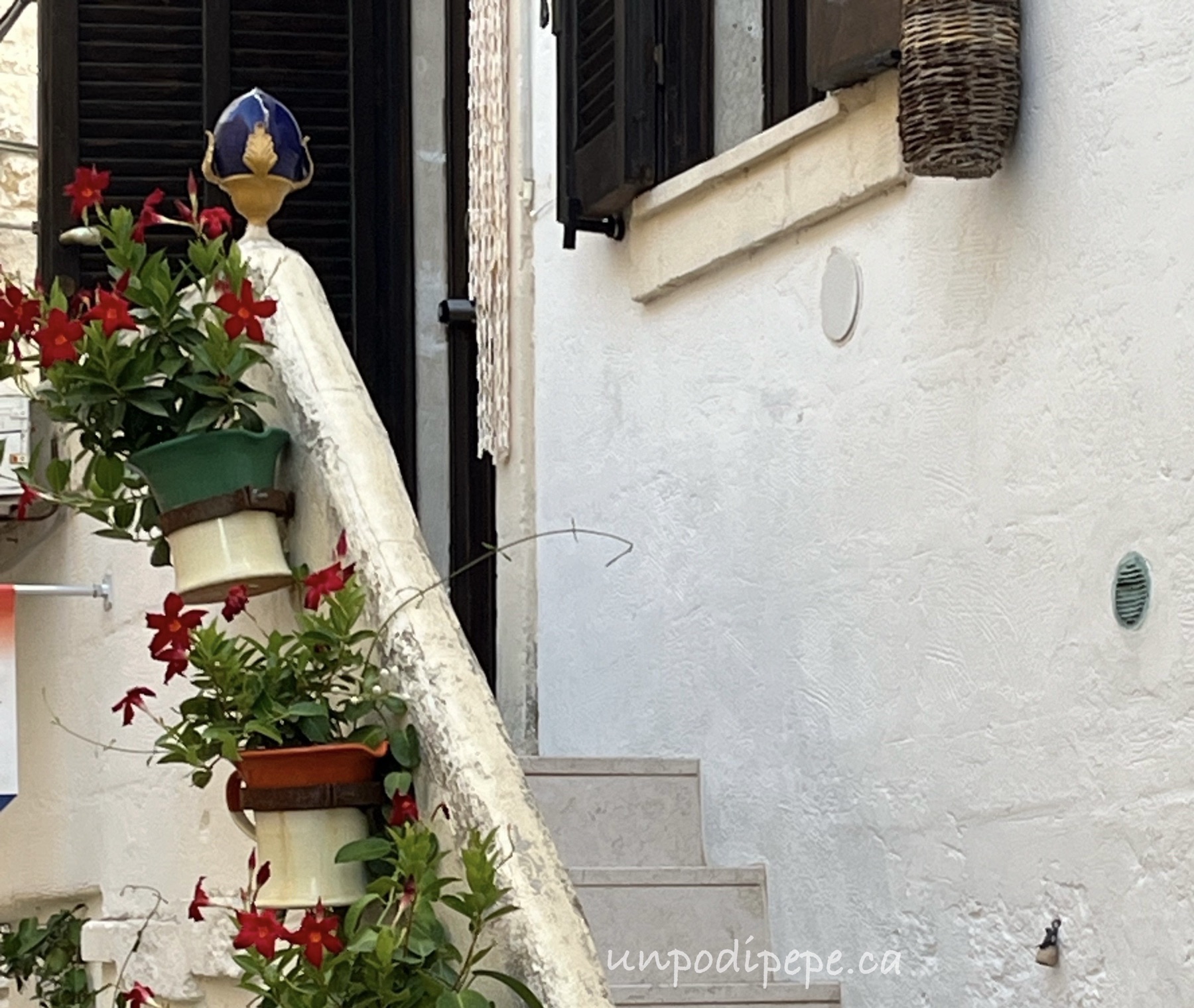
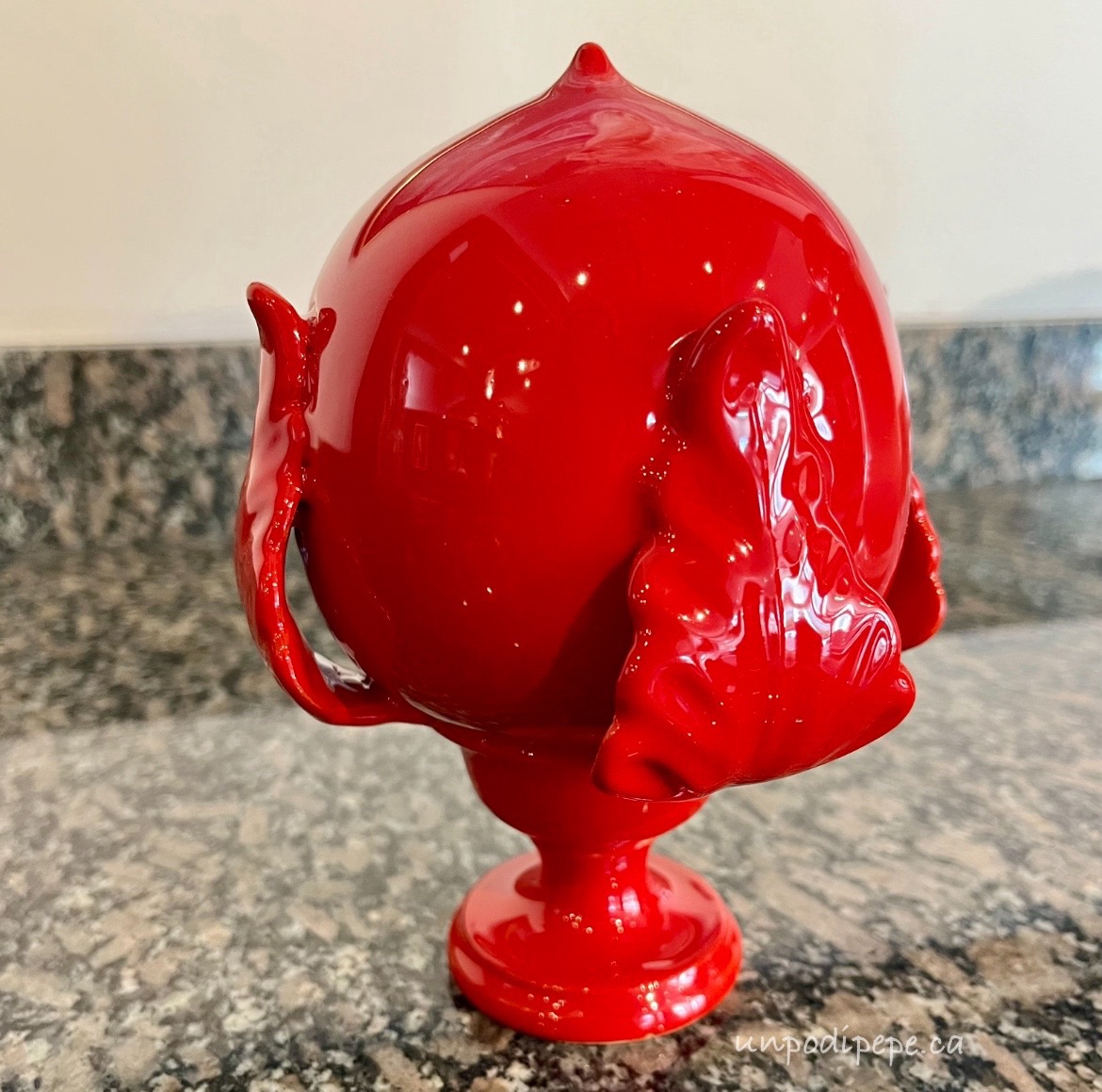
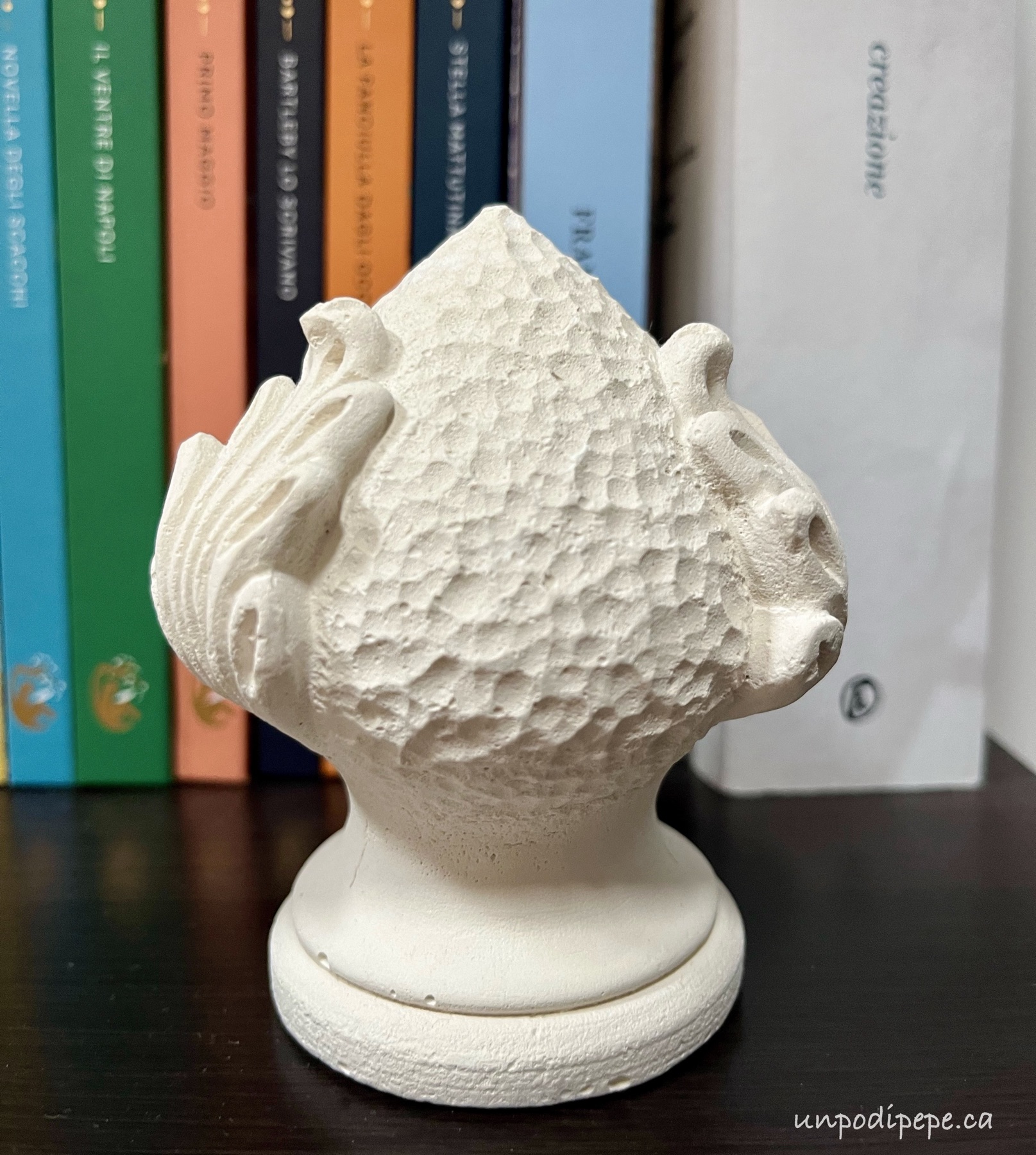
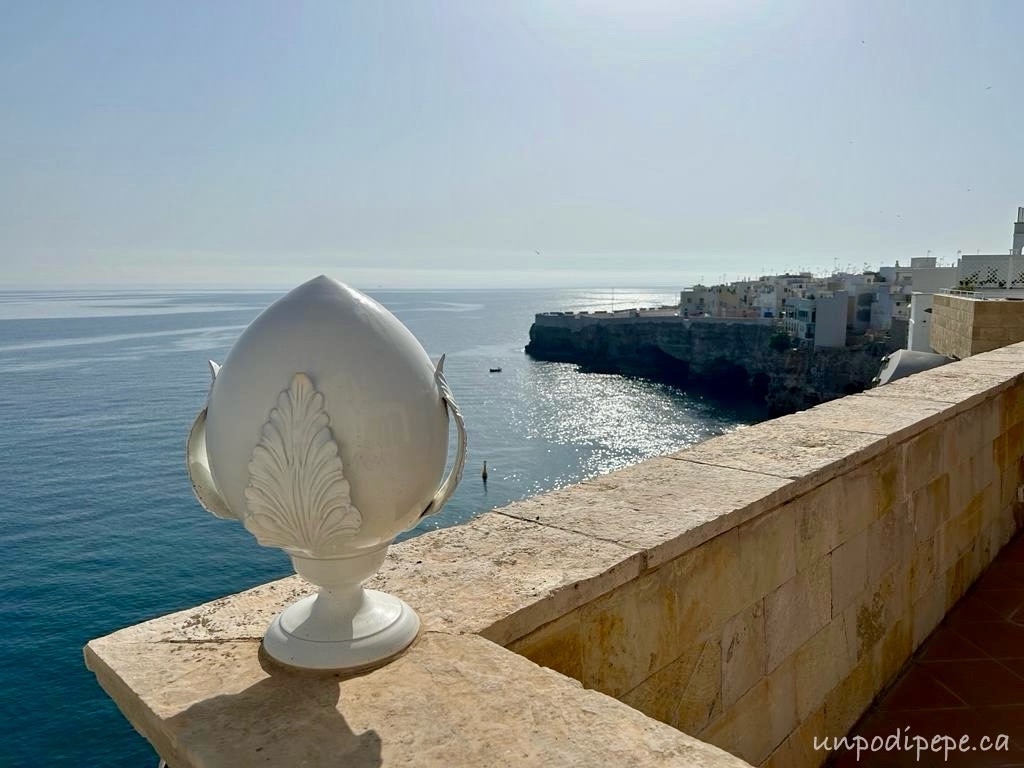
The Pumo is an artisanal decorative ceramic object in the form of a bud just about to flower, enclosed by acanthus leaves. It symbolizes the capacity to regenerate and form new life.  The acanthus leaves, the same ones found on ancient Greek and Roman Corinthian columns, symbolize long life and immortality.  For these reasons the pumo is a traditional Pugliese good luck charm, providing protection and bringing prosperity, happiness, good fortune and fertility.

The name pumo comes from the latin words pomum (fruit) and pumum (pine cone) and is tied to the cult of the goddess Pomona, protector of fruit.

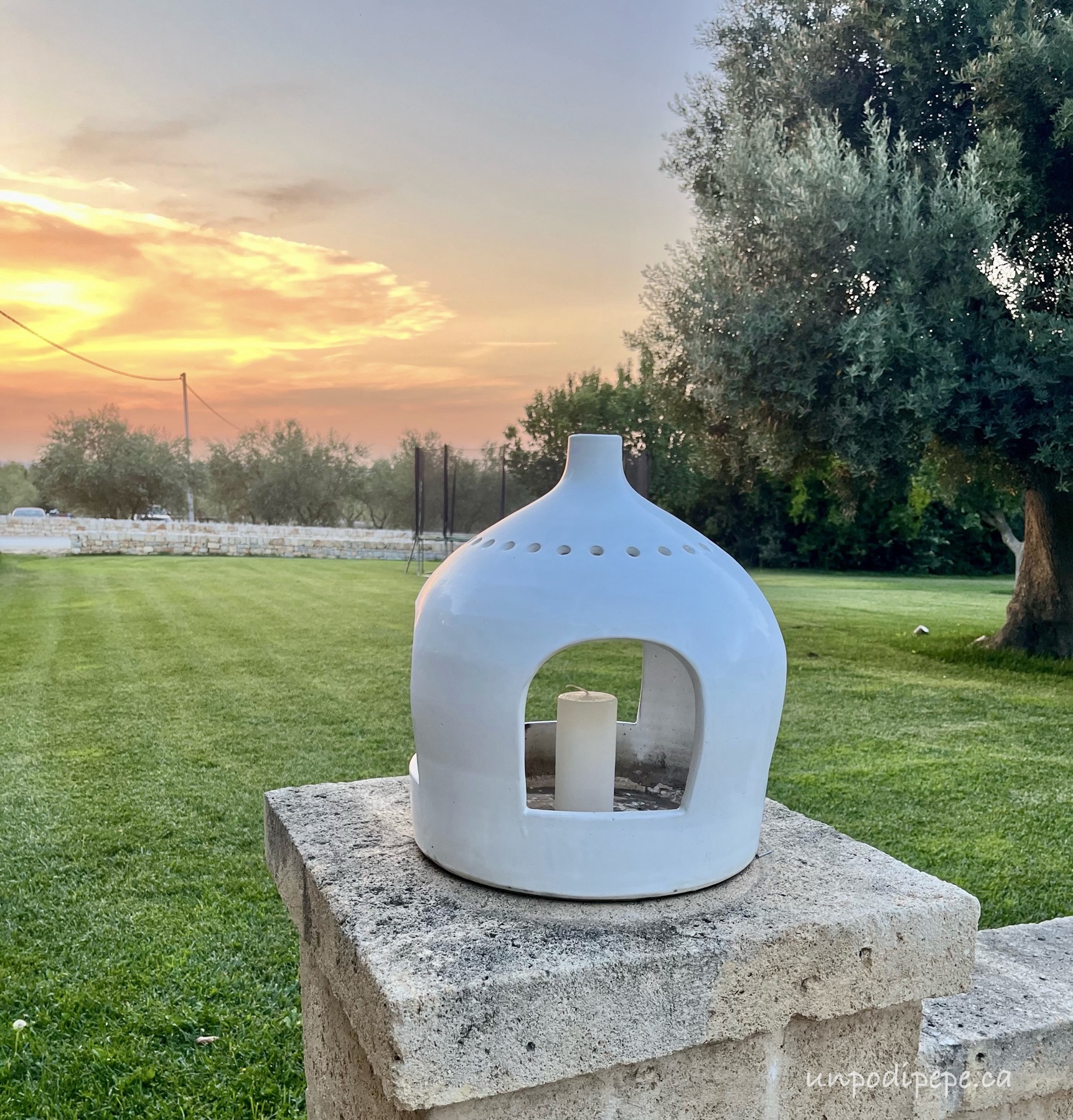
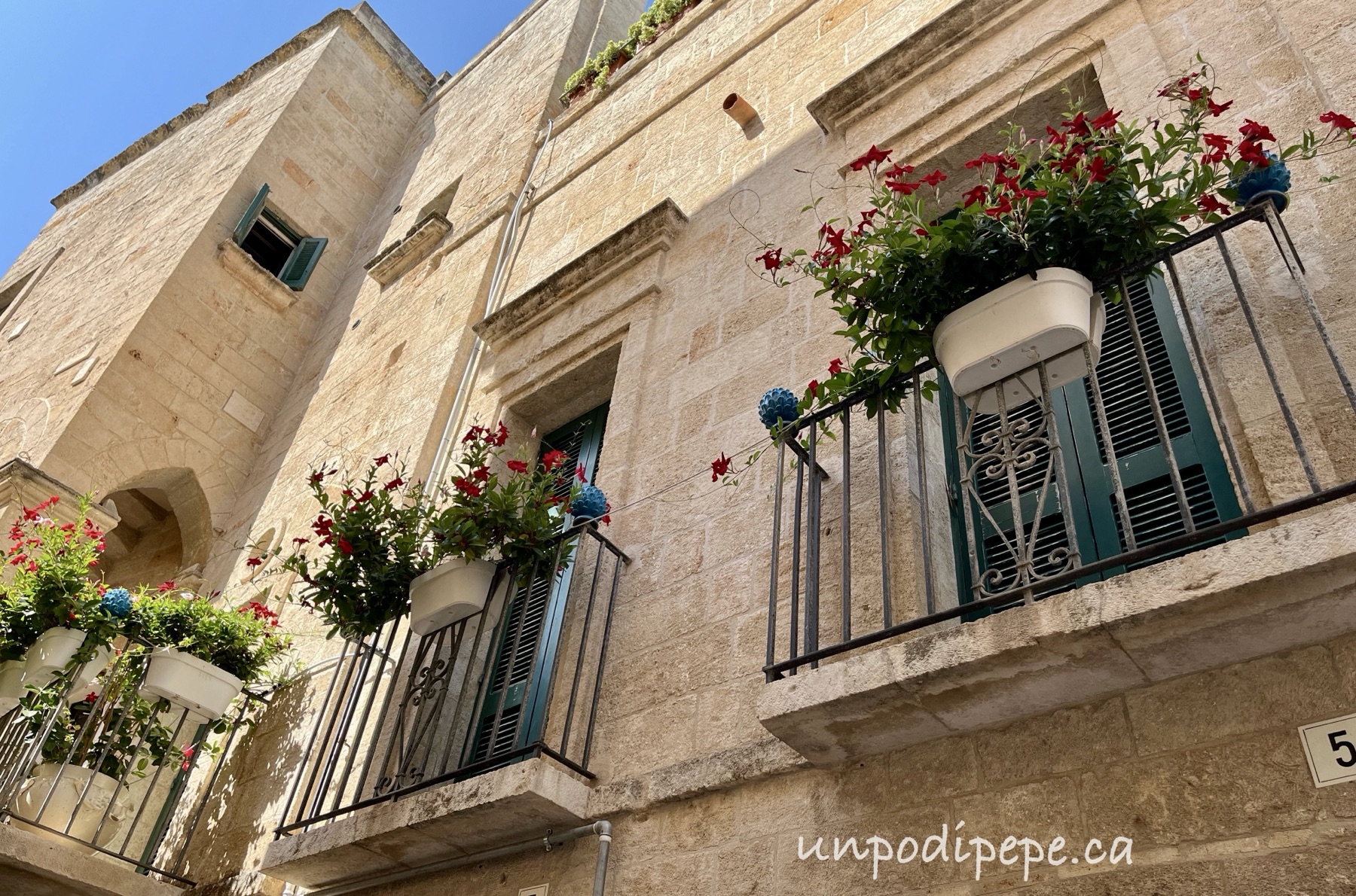
Centuries ago, noble Pugliese families used pumi (plural) as ornaments on building facades, staircases, balconies, and at the foot of the bed of newly married couples. They were also frequently given as wedding gifts.  Pumi were originally only available to wealthy families, since they were the only ones who could afford decorative ceramics.  Today the pumo is an emblem of Puglia and is often used as a piece of jewellery, a bomboniera (wedding favour) or a souvenir from Puglia.   Sometimes they are in the shape of a rose bud or pine cone and can even be room fragrance diffusers, decorative lamps, candleholders or bottles.

In Italiano

Il Pumo è un oggetto decorativo artigianale in ceramica a forma di un bocciolo in procinto di sbocciare, chiuso tra foglie di acanto. Simboleggia la capacità di rigenerarsi e formare nuova vita. Le foglie di acanto, le stesse che si trovano sulle antiche colonne corinzie greche e romane, simboleggiano lunga vita e immortalità. Per queste ragioni il pumo è un portafortuna tradizionale pugliese, che fornisce protezione e porta prosperità, felicità, buona fortuna e fertilità.

Il nome pumo deriva dalle parole latine pomum (frutto) e pumum (pigna) ed è legato al culto della dea Pomona, protettrice della frutta.

Secoli fa, le famiglie nobili pugliesi utilizzavano i pumi come ornamenti sulle facciate degli palazzi, sulle scale, sui angoli delle ringhiere dei balconi e ai piedi del letto delle coppie di novelli sposi. Venivano anche spesso offerti come regali di nozze. I pumi erano originariamente disponibili solo per le famiglie ricche, poiché erano le uniche che potevano permettersi ceramiche decorative.Oggi il pumo è un emblema della Puglia e viene spesso utilizzato come gioiello, bomboniera o souvenir pugliese.  A volte ha la forma di un bocciolo di rosa o di una pigna e può anche essere un diffusore di fragranze per ambienti, una lampada decorativa, un portacandele o una bottiglia.

Buona fortuna, Cristina

Share this:

  • Share on Facebook (Opens in new window) Facebook
  • Share on Pinterest (Opens in new window) Pinterest
  • Share on X (Opens in new window) X
  • Email a link to a friend (Opens in new window) Email
  • Share on WhatsApp (Opens in new window) WhatsApp
Like Loading...

Panzerotti

26 Sunday May 2024

Posted by Un po' di pepe in Mangiamo!, Puglia, Recipes

≈ 7 Comments

Tags

brea, Cucina povera, Cucina Pugliese, Italian food, pan, Pizze fritte, Pugliese Traditions, Southern Italy

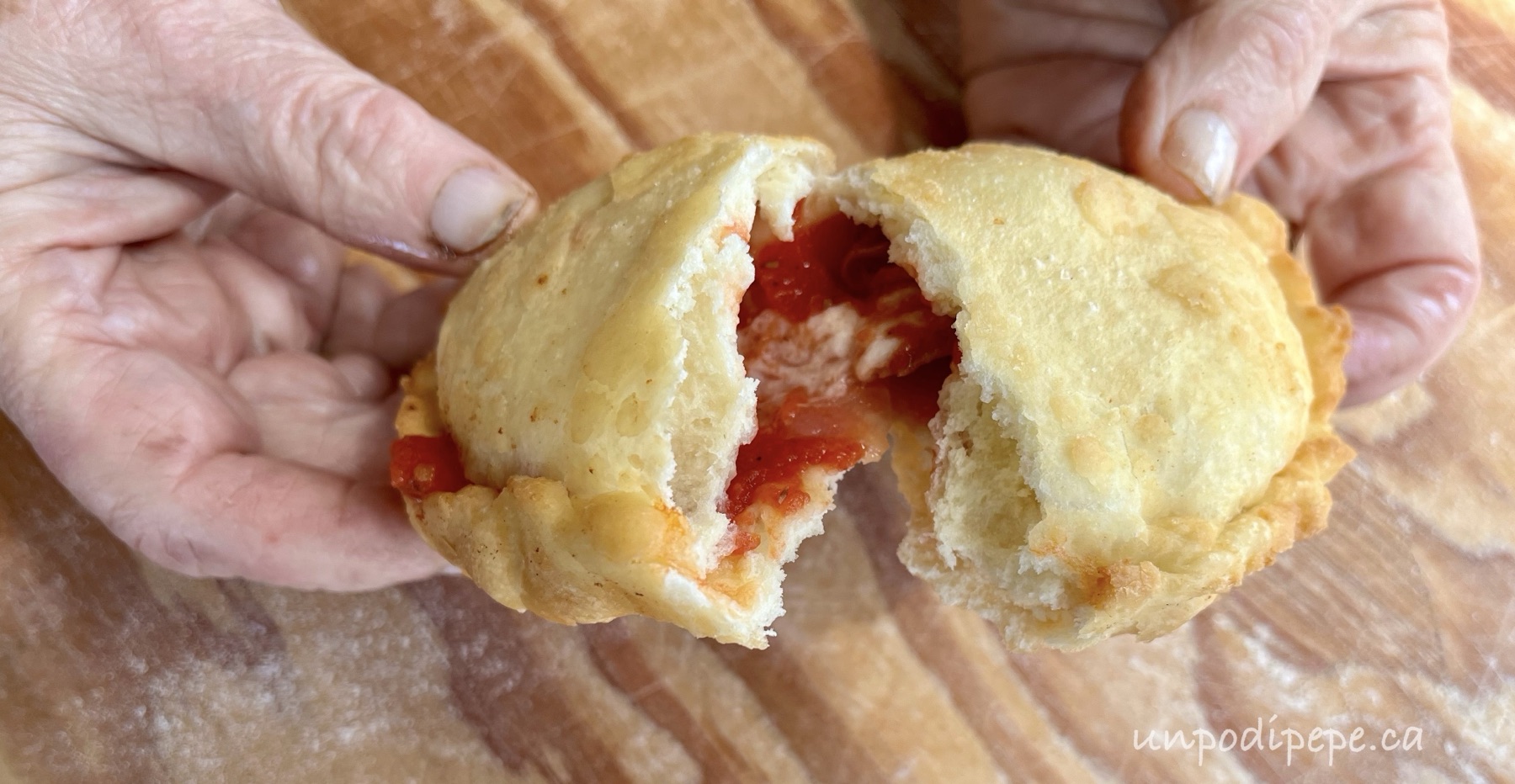
Panzerotti are a popular Pugliese street food.  In the spirit of ‘cucina povera’ where nothing is wasted, they came about from using leftover bread or pizza dough to make small, fried stuffed pizze. They are crispy outside, fluffy inside and mezzaluna (half moon) shaped.  Panzerotti can have a simple tomato and mozzarella filling, or prosciutto, prosciutto cotto (ham), or fresh sausage cut out of its casing and fried can be added.  Other common fillings include onion, olive, capers anchovies and tomato, and spicy pork, similar to a porchetta.

Panzerotto (singular) is the diminutive form of panza, dialetto for pancia, which means belly, because the dough swells up like a bloated belly when fried in oil!

Panzerotti Recipe:

Dough:

500 g total of flour:  -250g 00 flour (1¾ cups)

                                     -250g semola rimacinata*(2 cups)

10g (2 teaspoons) instant dried yeast

250 ml warm water

Pinch of sugar

60 ml (¼ cup) olive oil, plus more to grease the bowl

125 ml (½ cup) milk

5g (1 tsp) salt

Filling:

250 g passata di pomodoro or a tin of Mutti Polpa, which may need to be strained

Mozzarella -if using fresh mozzarella, drain first to decrease moisture

Prosciutto

Oregano or basil

My favourite ingredient-un po’ di pepe-a bit of pepper!

Sunflower oil for frying

Instructions:  Disolve the yeast in 1 cup water and a pinch of sugar or honey and let sit for 10 minutes.  Add all the flour(s) to a large mixing bowl or on a spianatoia (pasta board).  Make a hole in the center and add the milk, oil and water /yeast.  Mix together with a fork, slowly incorporating more flour.  Add salt last, then knead on a lightly floured surface for 10 minutes, until the dough is smooth and elastic. Add more flour if it is too wet, and more milk if it is too dry.

Lightly oil the bowl and place the dough back in.  Cover with a damp tea towel/cloth so it does not dry out, and let rise 2 hours or until doubled in size.

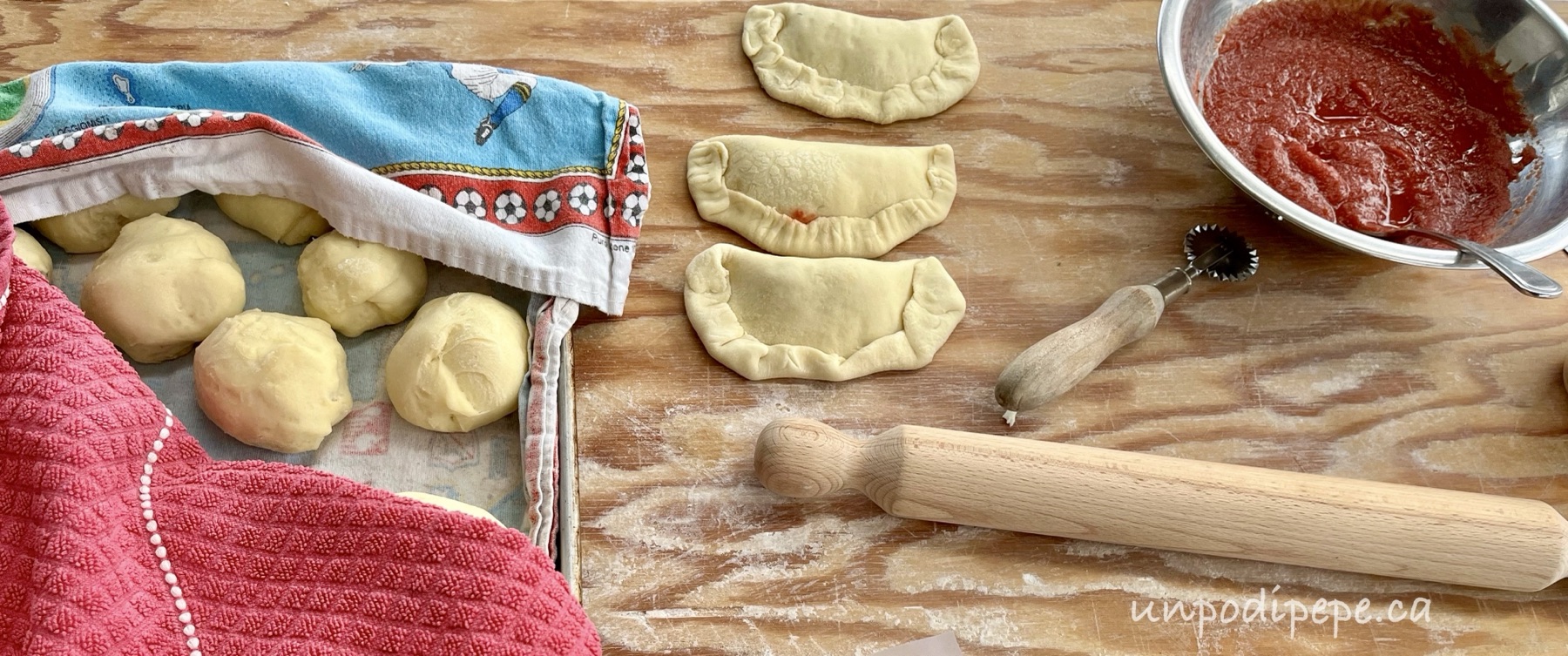
Roll out 14-15 balls (~ 50g each) and place on a cookie sheet lined with parchment paper.  Cover with a damp tea towel/cloth and let rise for 1 hour. The panzerotti will cook more evenly if they are all about the same size.

Add oregano or basil, and pepper to the tomato passata or polpa.  I do not add salt if using an already salty filling like prosciutto. Drain mozzarella to avoid extra moisture if using fresh.

One at a time, roll a ball of dough into a thin circle.  Add ½ to 1 tablespoon tomato mixture in the center and smooth it around with a spoon.  Do NOT go too close to the edges, and add more in the bottom half of circle.  Add other ingredients to the bottom half of the circle.  Fold in half, pressing edges firmly together, then double seal by folding the edge over again and pinch with fingers to make a fancy design. You do not want the panzerotti to open during frying.  This will make a mess of the oil.  Too much filling and /or too much moisture will also cause them to open.

Keep aside a small piece of dough to test the oil to see if it is hot enough. Fry in sunflower oil in batches of 2-3 panzerotti for 2-3 minutes per side or until golden and puffy.  You can spoon a bit of oil over the top to prevent bubbles-although I like the bubbles!  Drain on paper towels so they stay crispy and do not get soggy.  Fry right away, as if they sit, the dough continues to rise, making them more likely to open.  It is best to make panzerottiwith 2 people-1 to assemble and 1 to fry.  If you do not have 4 hands, put the filled panzerotti in the fridge as you make them, until ready to fry them all.  They are best served soon after frying. Makes about 14-15 panzerotti.  I usually double this recipe and freeze them.

Raw, stuffed panzerotti can also be frozen.  Fry them still frozen, as defrosting may turn them into soup.  Place a splash screen on top of the pan in case the oil spatters!

Panzerotti can also be baked at 200°C (295°F) for 20 minutes, although technically this makes them calzone. Brush the top with egg yolk or oil before baking or they may be dry.

*Semola or semolina is the yellow durum wheat endosperm.  Semola rimacinata has been ground once more.  It gives the dough more of a bite to it.  You can just use 500 g All Purpose flour, but I find the best results using a combination of 00 and semola rimacinata.  It is also common to just use simple pizza or bread dough to make panzerotti, but those are more like stuffed pizze fritte.

**as with all recipes involving flour, it is always best to weigh with a scale rather than measure with cups.

Buon appetito!  Cristina

Share this:

  • Share on Facebook (Opens in new window) Facebook
  • Share on Pinterest (Opens in new window) Pinterest
  • Share on X (Opens in new window) X
  • Email a link to a friend (Opens in new window) Email
  • Share on WhatsApp (Opens in new window) WhatsApp
Like Loading...

In my Kitchen in Puglia, 2023

12 Tuesday Sep 2023

Posted by Un po' di pepe in Amici e Famiglia, Italian life, Mangiamo!, Orsara di Puglia, Puglia

≈ 23 Comments

Tags

Barrel vaulted ceiling, Cucina Pugliese, Fiori di zucca, In my kitchen, Mozzarella di bufala, Orsarosa, Parmigiana di melanzane, Pugliese Traditions, Ravioli

I recently returned from 6 weeks at our little casa in Orsara di Puglia.  As usual, there was a lot of activity in the kitchen. Cucina povera, literally ‘food of the poor’, is what you will mostly find in Puglia.  Simple foods made with fresh local ingredients. Here are just a few of the things my family and I were up to in our tiny but functional summer kitchen in Orsara di Puglia. Since I have so much material to write about, I have kept it to gifts of food received from amici, parenti e vicini di casa -friends, relatives and neighbours.

About the space, the whole place is only 40m² (about 450 square feet) including a bedroom and bathroom.  That is about the size of a double garage.  The room with the cucina is also the living room, guest room (aka my room) and art studio. The highlight of the room is the amazing barrel vaulted stone ceiling, which is hard to fit in a photo. There is even the face of a Madonnina on one of the stones.We had a lot of visitors, many who came bearing gifts.  This lovely cestino, filled with locally grown vegetables was dropped off by one of our neighbours.

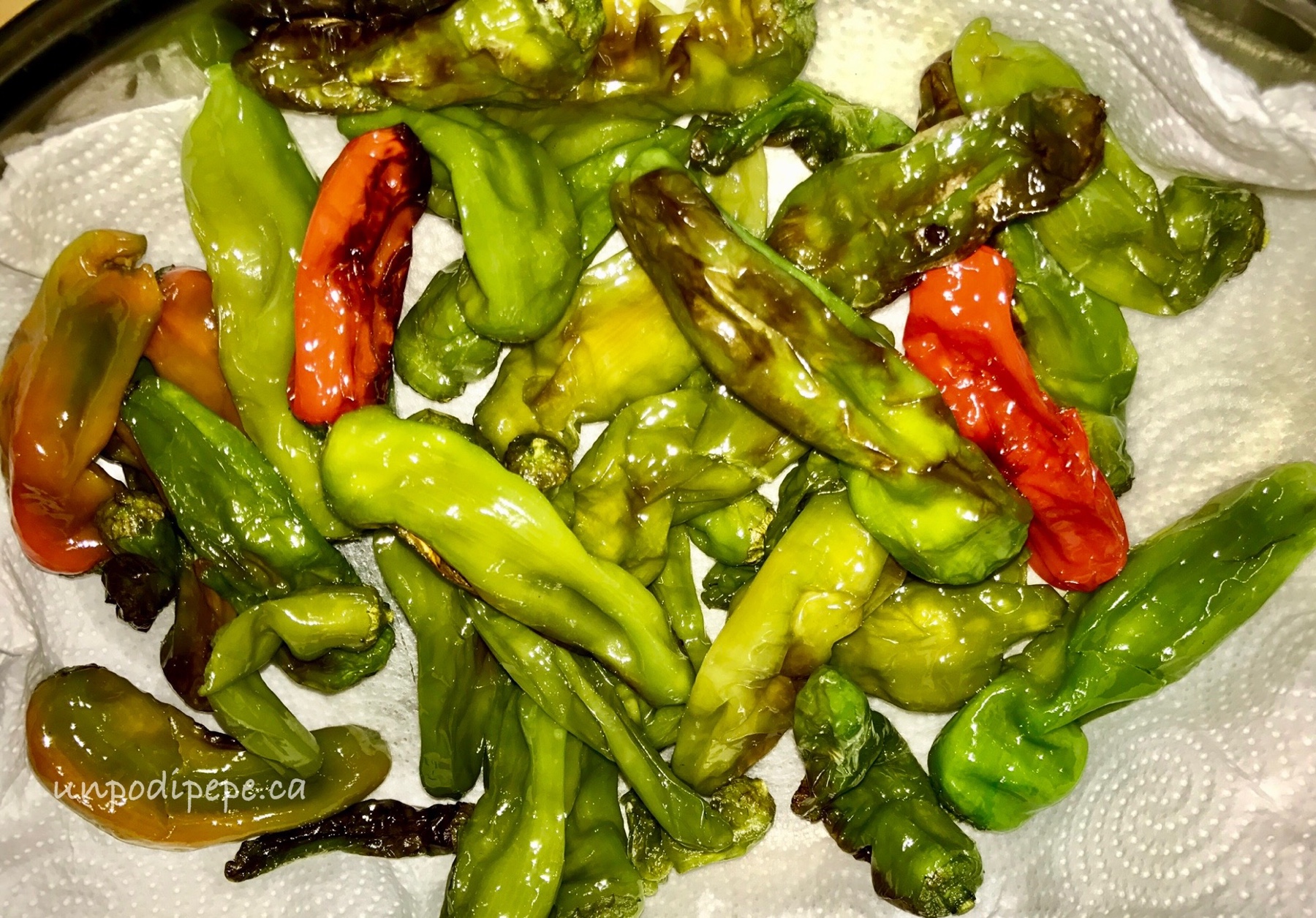
The melanzane (eggplant, or aubergine for the Brits) were stuffed and baked. The pulp was fried up with a bit of ground beef and pork, garlic, breadcrumbs and parmigiano, then stuffed and topped with tomato sauce and mozzarella. They were soooo yummy, but we only made them once, as it was so hot that having the oven on was painful!The long green and red peperoni or peppers in the cestino are called friarill’. They are sweet tasting, and as the name implies, are usually fried. Friarill’ on fresh bread taste heavenly!The gift of fresh eggs is amazing.  I used half of them to make fresh egg pasta for ravioli di ricotta e spinaci.  I froze them for the festa della Madonna della Neve Aug 5th. Freezing them was hard, as the freezer is so tiny. I make these often in Vancouver, and they are good-but the goat milk ricotta here is so incredibly good that they taste better.I was happy to use my spianatoia one more time.  That is the wooden pasta rolling board. It has a lip on one end so it stays put on the table and a handy carrying handle, just like the chair.

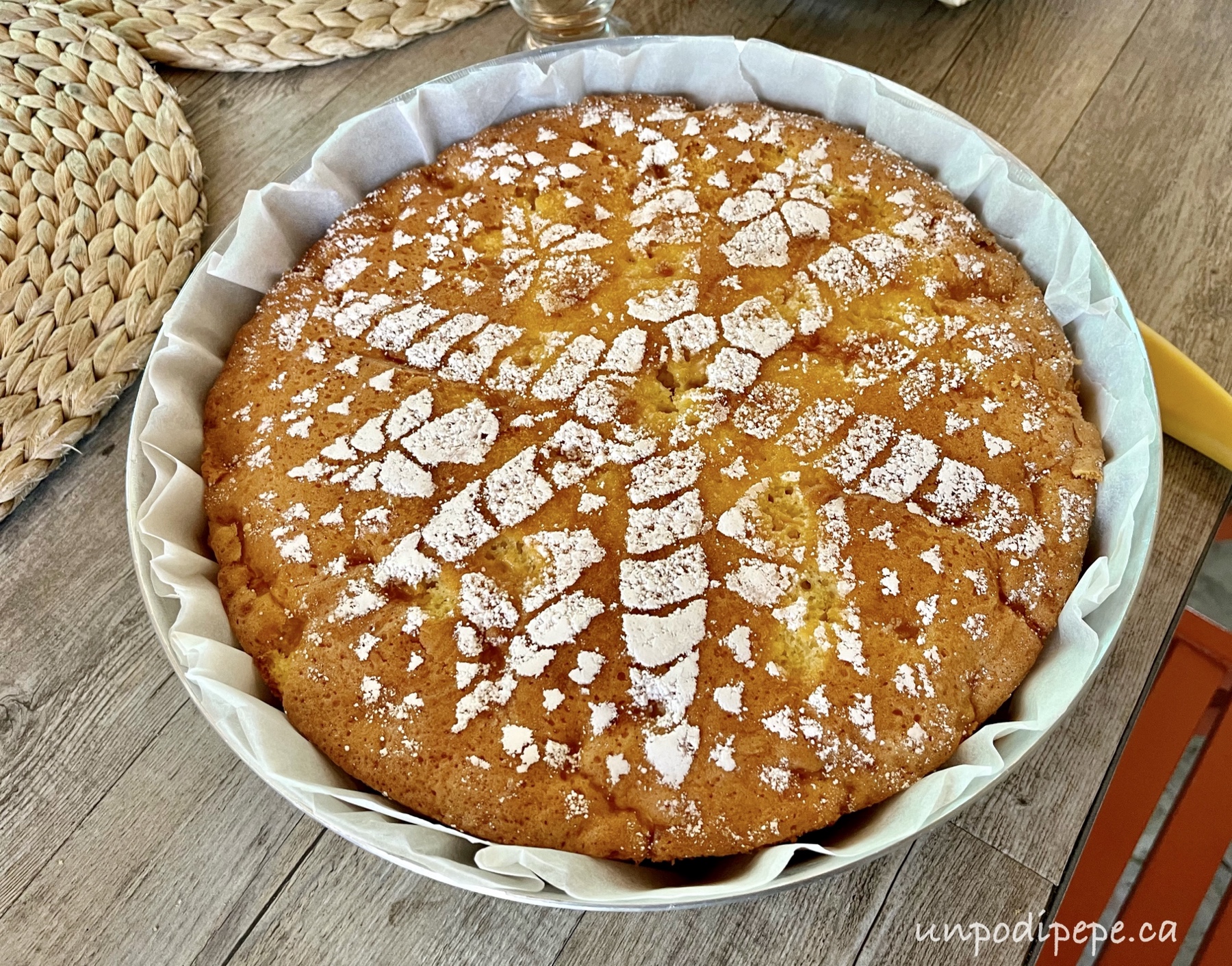
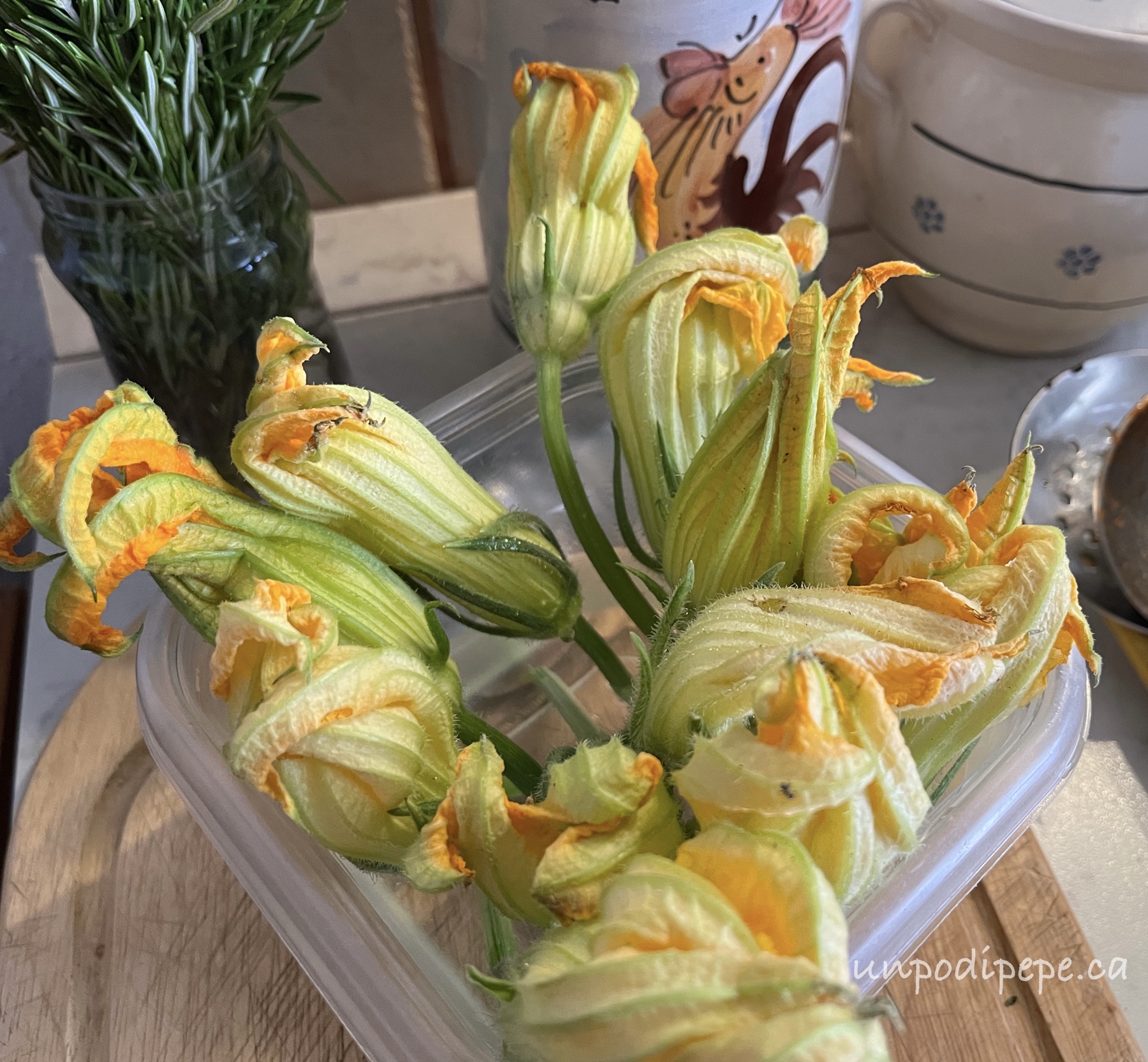
Mamma and I used the rest of the eggs to make Torta di mela, an apple cake.  We made it to bring to our family grigliata -BBQ- at the olive grove that was my Nonno’s. It had to be baked at 1 am as it was just too painful to turn the oven on during the day.La torta looked a bit plain, so I placed a clean crochet doily over the top and sprinkled icing sugar all over. The fancy shmancy design was left on the cake. I often have to do this to my Torta Caprese because the top always collapses a bit. Fiori di zucca are one of my favourite summer foods-and my favourite bouquet of flowers. My Zio brought over a LOT of them one day, an hour before we were going to be eating.  I stuffed some of them with what I had available. There were a few trecce-fresh, braided mozzarella, in the fridge and basilico growing out on the tiny terrazza. Once they were stuffed, I battered them in flour and mineral water with a few bonus ingredients like parmigiano and basilico, and then fried them.

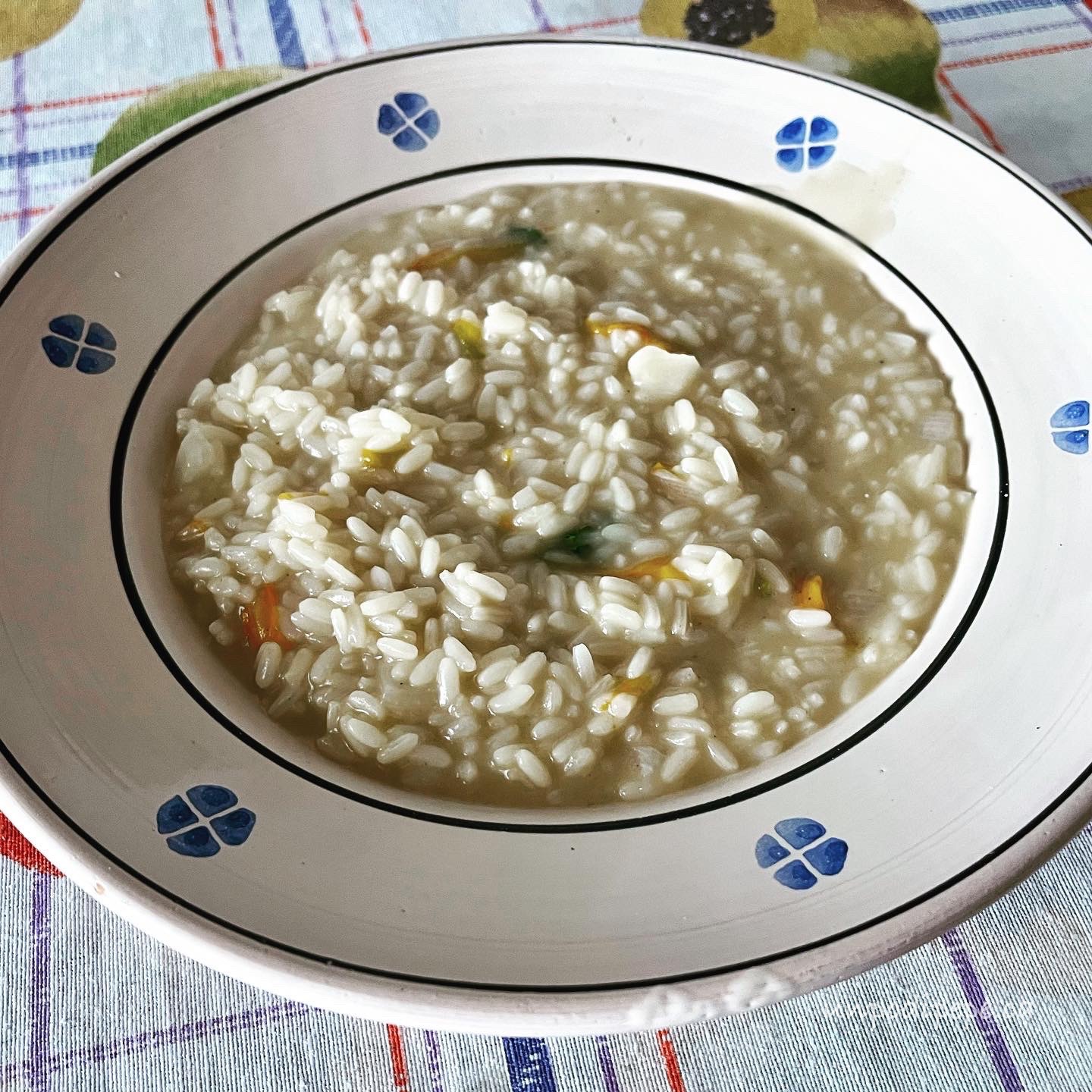
They were crunchy and delicious, but I only had time to use up less than half of my precious fiori.  Fiori di zucca are extremely delicate.  They only last a day 2 and do not freeze well.  Not wanting to waste them, once I finished the dishes, I drizzled olive oil on a baking pan, borrowed some caciocavallo from my neighbour, and stuffed a bunch more.  The stuffed fiori were placed in the pan, which went straight into the freezer to use a 4 days later.  Great idea, no?  Well-yes and no.  They had to be baked, since attempting to fry these beauties after freezing would turn them into mush. Baking them at 1am was not an option. We had to endure the heat but they were worth the sweat!A few fiori were saved to make risotto the next day.  This was a new thing for me, as I have never had so many fiori that I could make risotto.  More recipe ideas and harvesting tips can be found in the post Fiori di zucca. My amico Peppe Zullo gave me a few bottles of his vino rosato Amarosa.  Apparently the name Amarosa has been trademarked by someone else, so the vino is getting a name change.  It will now be named after Orsara’s women’s soccer (or football for the Brits) team….Orsarosa!Mercoledi/Wednesday is mozzarella di bufala day.  I came home from Procida on a Thursday and a friend had left me these melt in your mouth ones. They are from Masseria Li Gatti near Torremaggiore, SanSevero (FG). The mozzarella are in the new Pugliese serving bowls my sister brought from Polignano a Mare. The piattaia is full so I will need to find somewhere to display them.I hope this post has made you either hungry and drooling or wishing you could visit Puglia yourself.  Perhaps it has done both? Perché no?  I am already planning my next visit!  Buon appetito e buon viaggio, Cristina

Thanks Sherry from Australia for hosting the monthly food blogging event, In My Kitchen (IMK). Click the link to Sherry’s Pickings to read about other world kitchens this month. Buon appetito, Cristina

Share this:

  • Share on Facebook (Opens in new window) Facebook
  • Share on Pinterest (Opens in new window) Pinterest
  • Share on X (Opens in new window) X
  • Email a link to a friend (Opens in new window) Email
  • Share on WhatsApp (Opens in new window) WhatsApp
Like Loading...

Appuntamento con la Daunia

18 Wednesday Jan 2023

Posted by Un po' di pepe in Amici e Famiglia, Mangiamo!, Orsara di Puglia, Puglia

≈ 11 Comments

Tags

Amarosa, Dalla terra alla tavola, Italian food, Monti Dauni, Peppe Zullo, Pugliese Traditions, Southern Italy, Villa Jamele

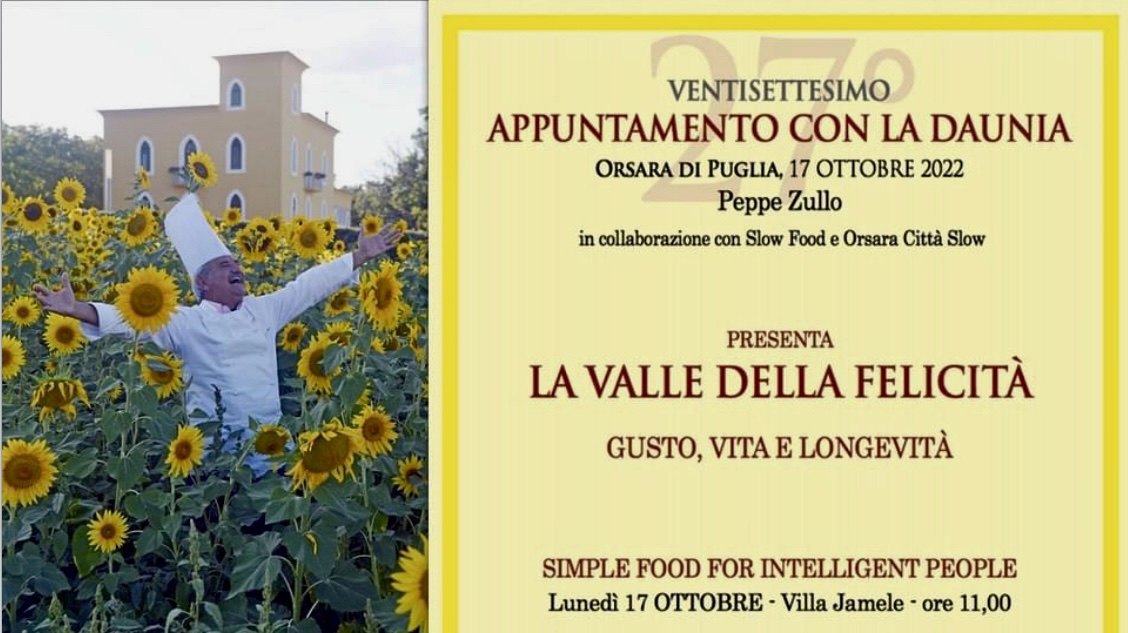
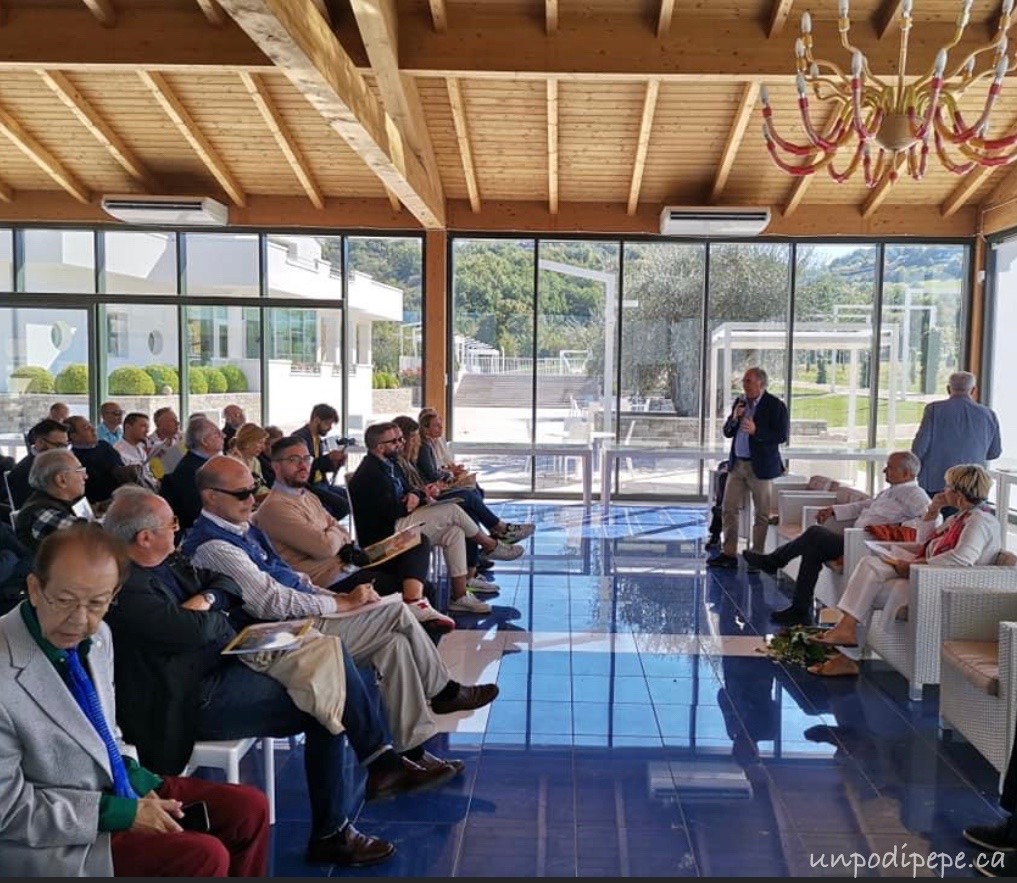
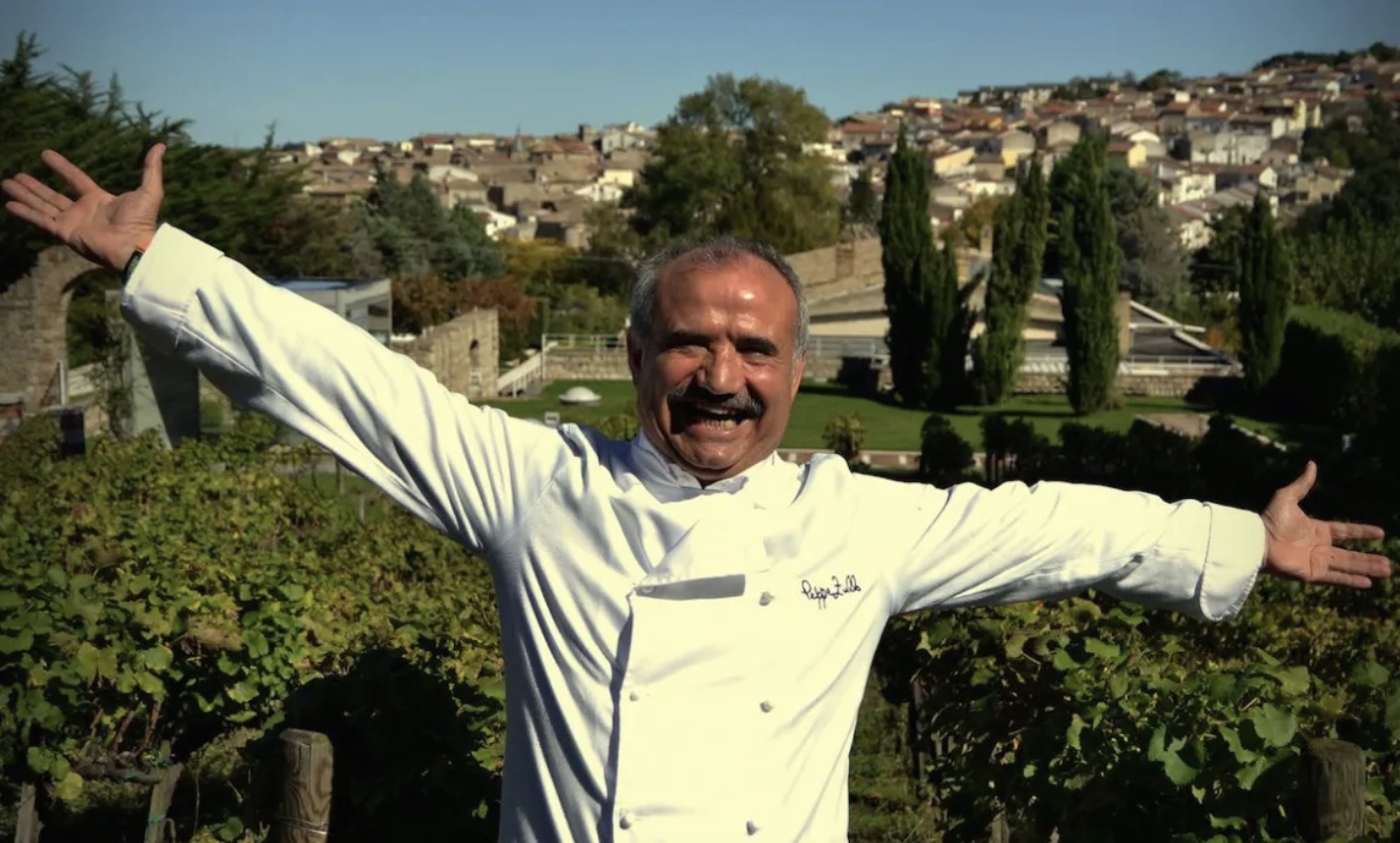
On October 17th, I attended the 27th edition of Appuntmento con la Daunia, hosted by my amico Peppe Zullo. Every year I receive an invitation, but this was the first time I was actually in Italia in October.   La Daunia is the modern day Provincia di Foggia, named after the people who lived there under King Daunus.

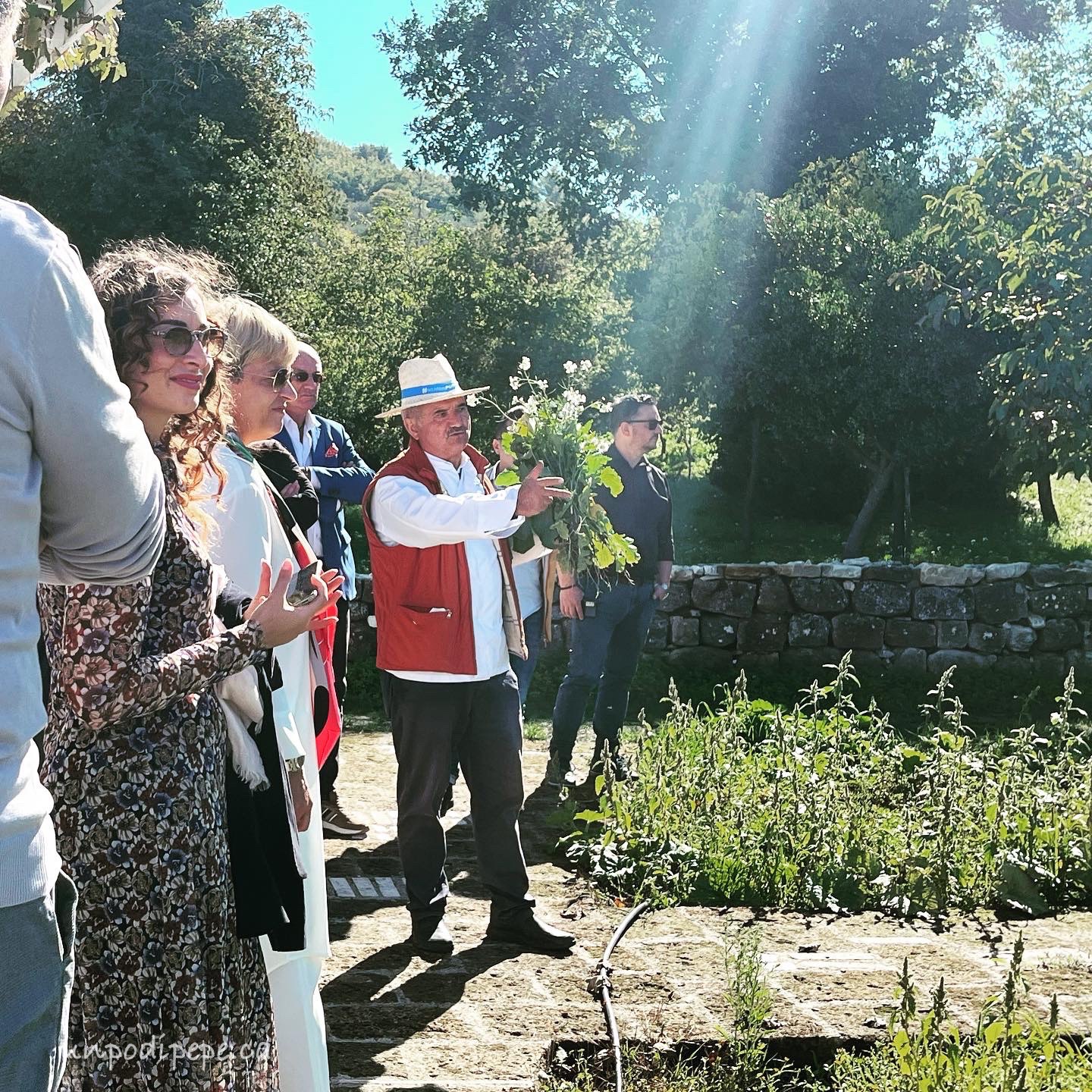
Held at Villa Jamele in Orsara di Puglia, the event featured local food and wine, focusing on the biodiversity of the area.  It was attended by journalists, food writers, and those involved in the local enogastronomic industry. There were various site tours, then a round table discussion with 6 speakers from the enogastronomic industry and the Director of tourism for the Regione Puglia.  There was discussion and sharing of information and research for growth, development and sustainability concerning local food and culture.

New research was presented from the University of Foggia further confirming that the soil in the Monti Dauni area is rich in the antioxidant Selenium.  This is likely why there are a higher than usual number of centenarians in the area. Nature, nutrients and culture…ingredients of the Daunia.

The event concluded with a meal made entirely with locally sourced, seasonal ingredients. Dalla terra alla tavola-from the earth to the table-you won’t get any fresher than this!

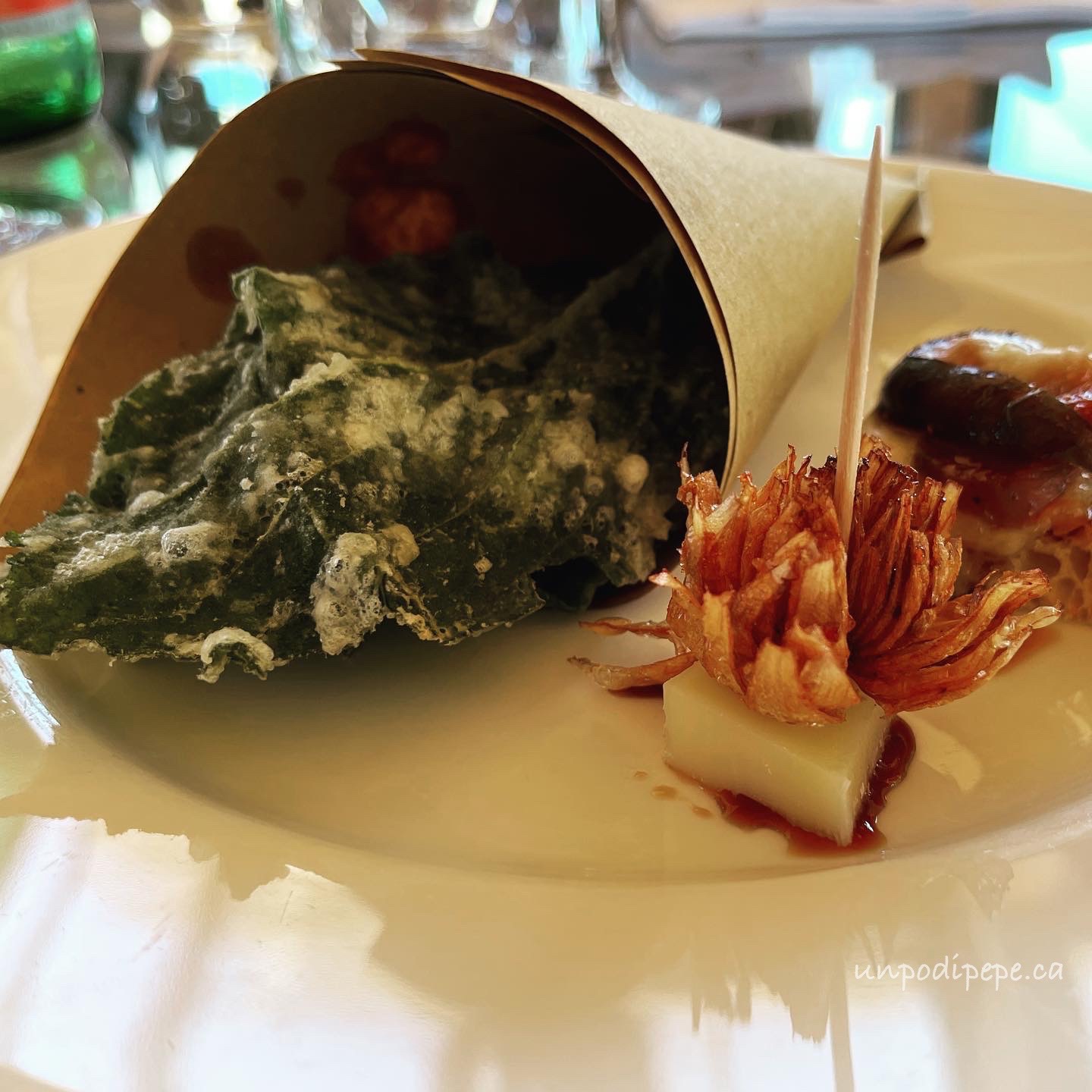
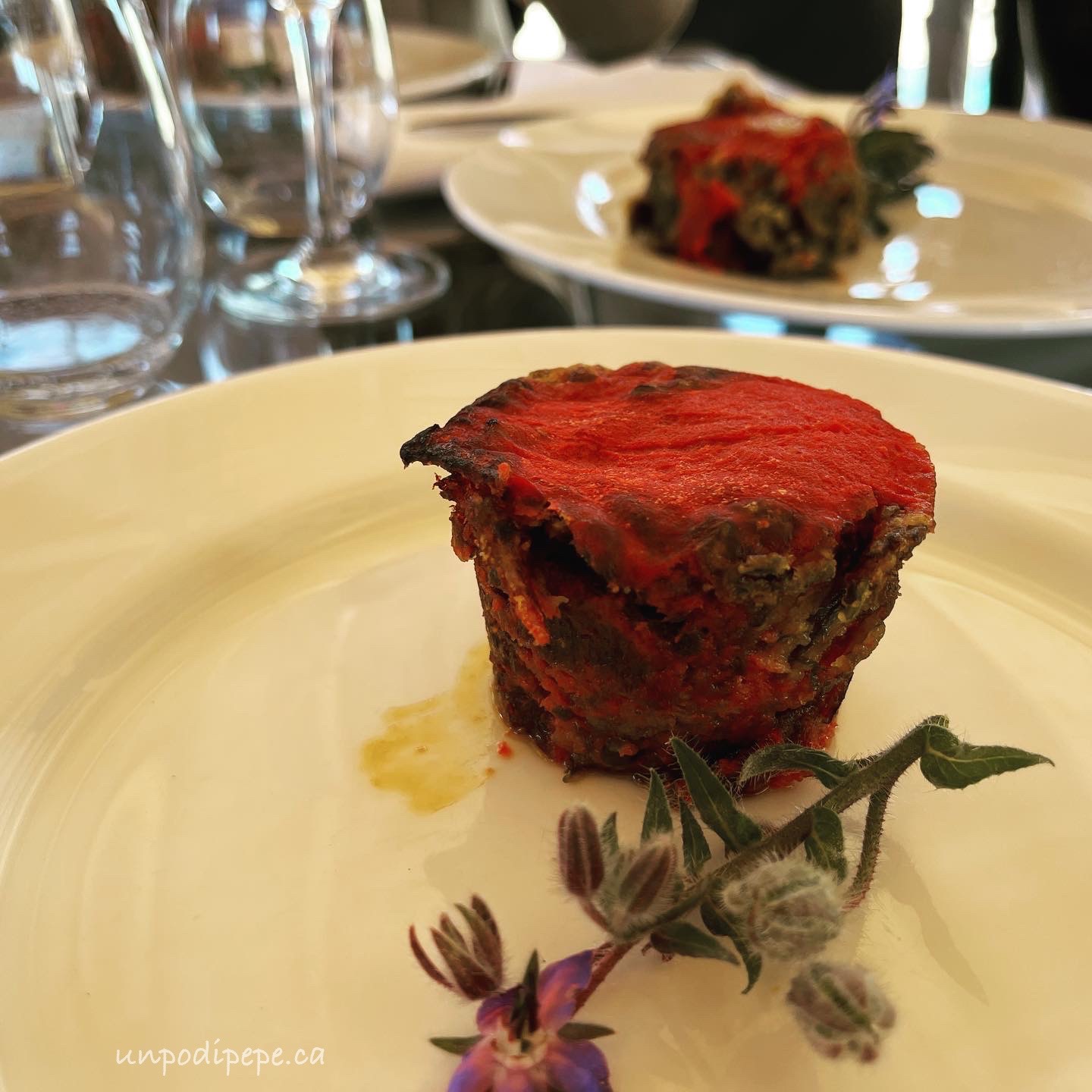
‘Ostriche di montagna’ which means ‘mountain oysters’.  They are actually fried borragine/borage leaves, served with lampascione con pecorino (fried wild onion on pecorino) and crostino di salsiccia e fico (sausage and fig crostino)Parmigiana di borragine, similar to parmigiana di melanzane, but layered with borage leaves instead of eggplant.

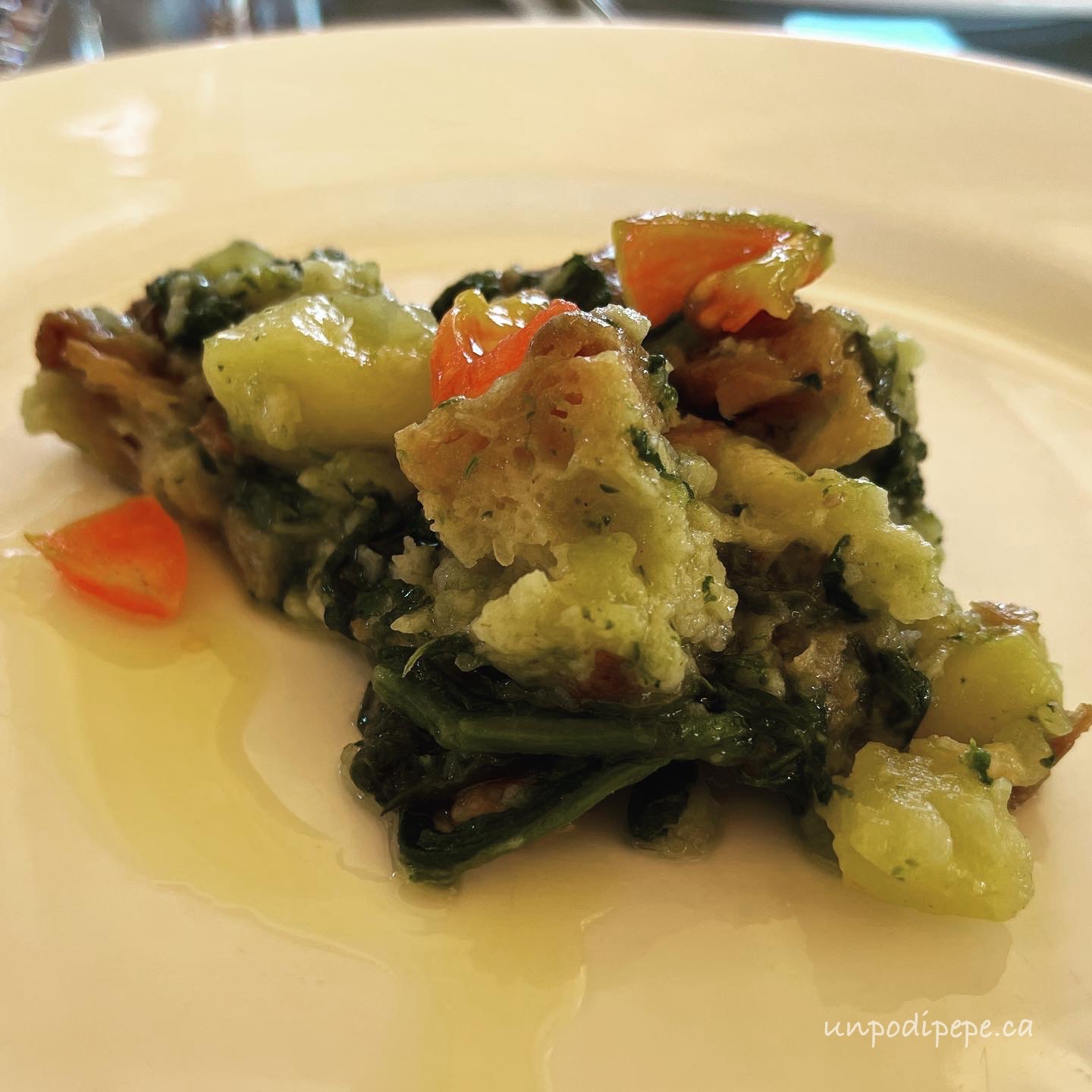
Pancotto e patate con verdure e pomodorini (cooked bread and potatoes with wild greens and tomatoes). Pancotto e patate is Cucina Povera at its best-my favourite comfort food.

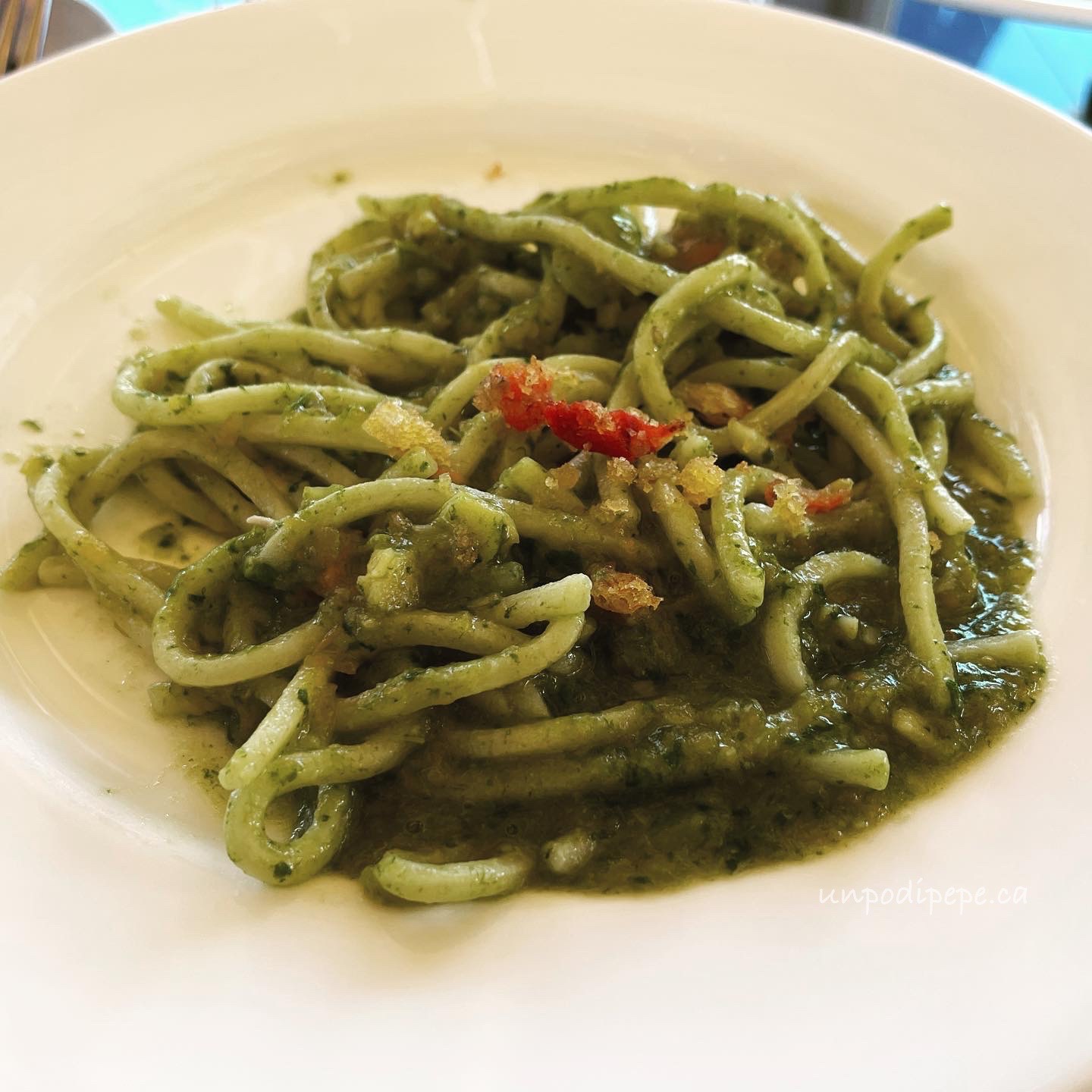
Troccoli con zucca, cicerchi e cime di rapa (Handmade Troccoli with squash, local chick peas and rapini)

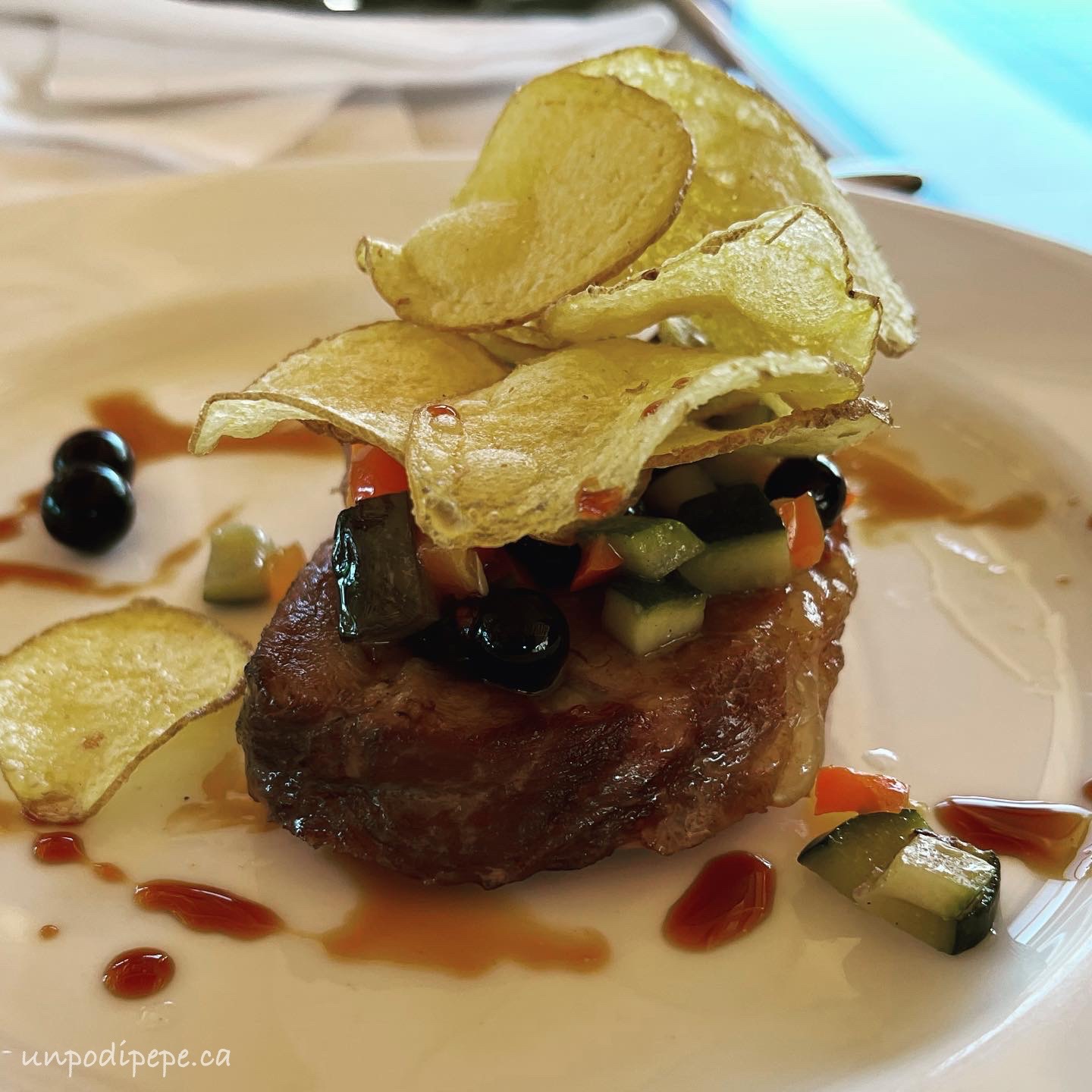
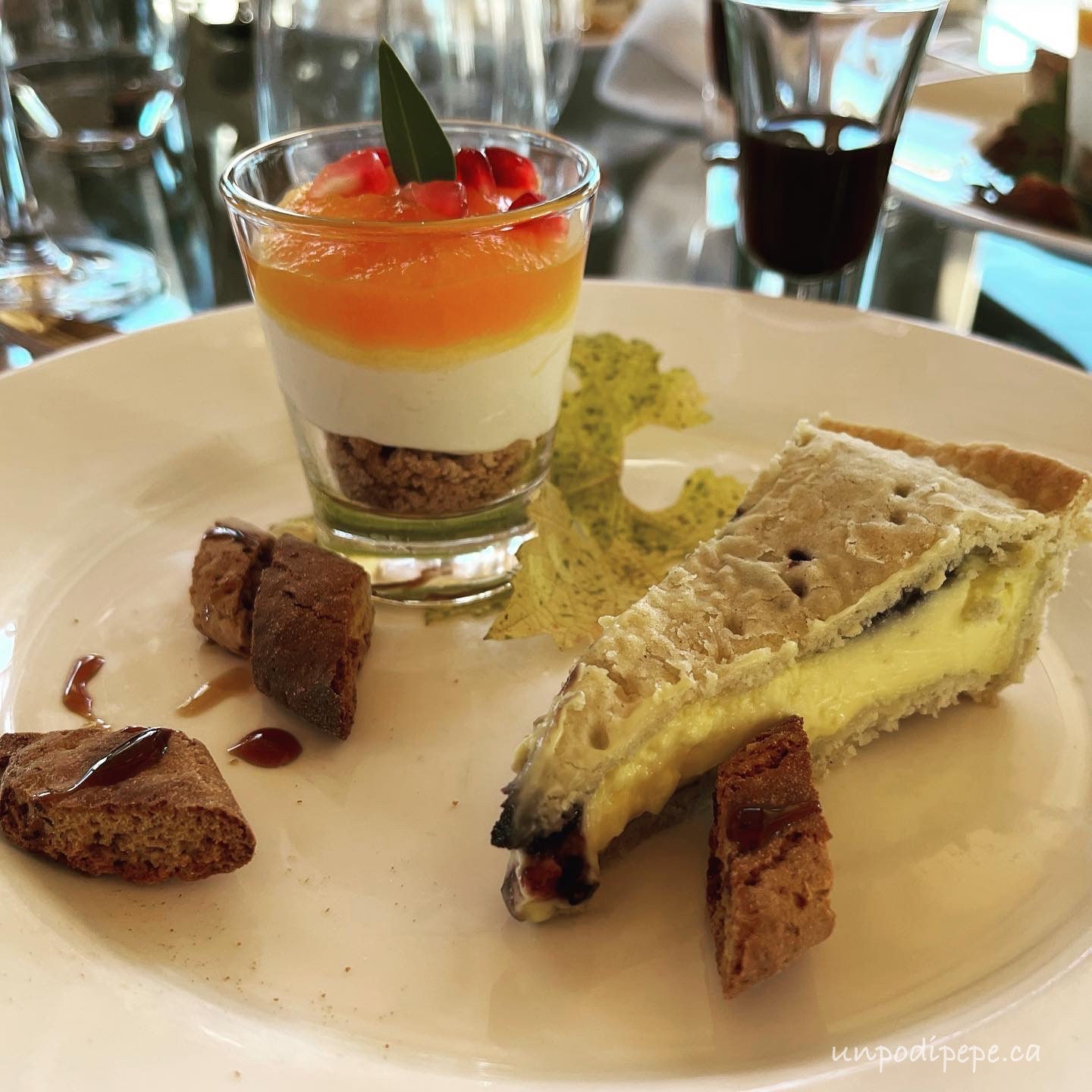
Maiale con zucchine e uva fragole e patate fritte (Pork with zucchine and sweet grapes topped with fried potatoesSemifreddo di zucca, torta con crema e biscottini di grano arso (pumpkin semifreddo with pomegranate seeds, cream cake and tiny biscotti made with grano arso, a burnt wheat flour

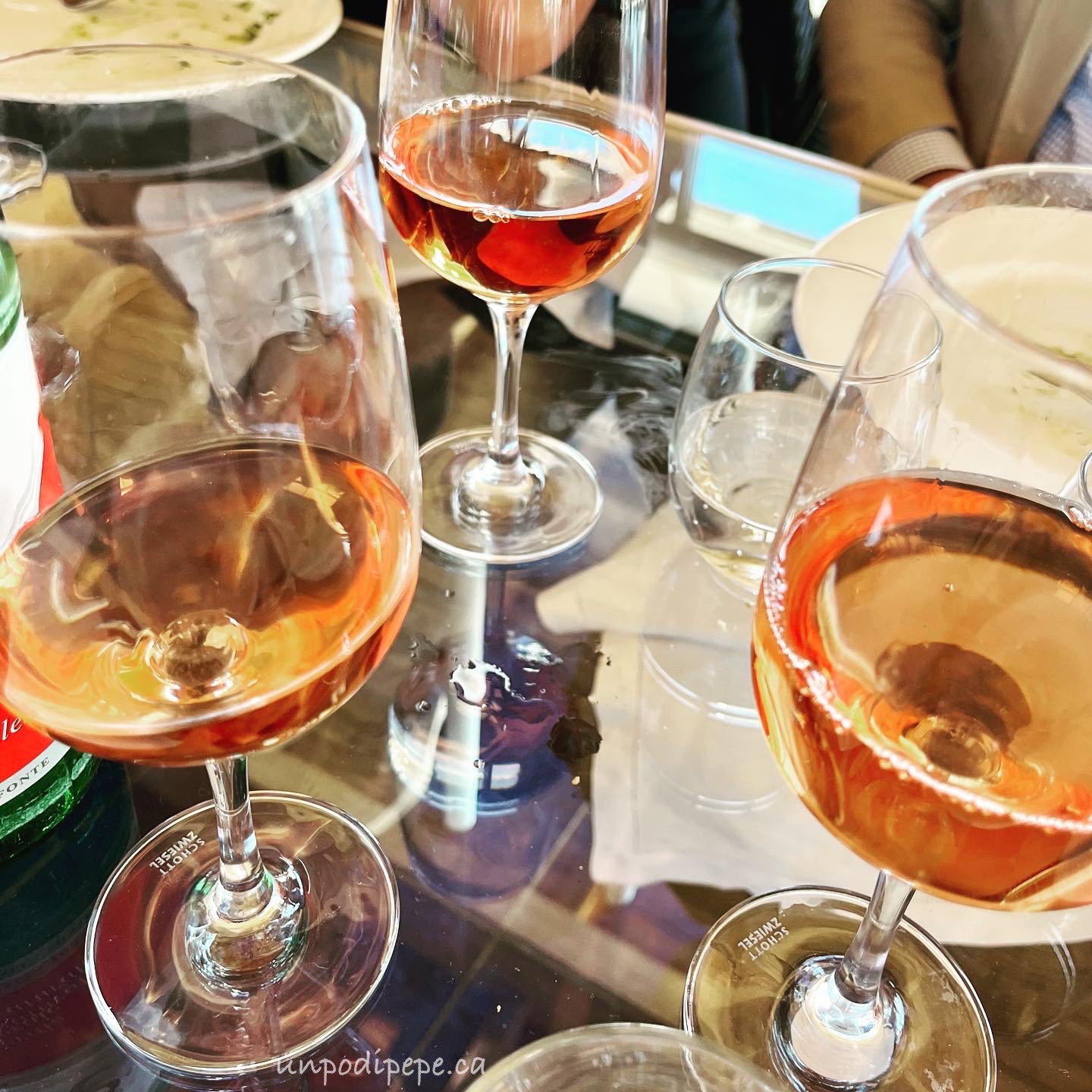
To drink, we had Peppe’s Amarosa vino rosato / Amorosa rosé.  It is made from the Nero di Troia grape, which according to legend was brought by Diomedes who settled in the Daunia area after the Trojan War. Read more in Vini di Puglia.

Peppe Zullo was recently voted one of the 10 best local restaurants in Italia and the best in Puglia by the online gastronomic guide TasteAtlas!  Here is a link to an article in Italian in Rec24 and in Corriere.it. Tantissimi auguri Peppe!!!!

Ciao, Cristina

Share this:

  • Share on Facebook (Opens in new window) Facebook
  • Share on Pinterest (Opens in new window) Pinterest
  • Share on X (Opens in new window) X
  • Email a link to a friend (Opens in new window) Email
  • Share on WhatsApp (Opens in new window) WhatsApp
Like Loading...

Un Matrimonio in Puglia

08 Thursday Sep 2022

Posted by Un po' di pepe in Amici e Famiglia, Feste, Italia, Italian life, Puglia

≈ 15 Comments

Tags

Pugliese Traditions, Santa Maria di Siponto, Southern Italy, Wedding in Puglia

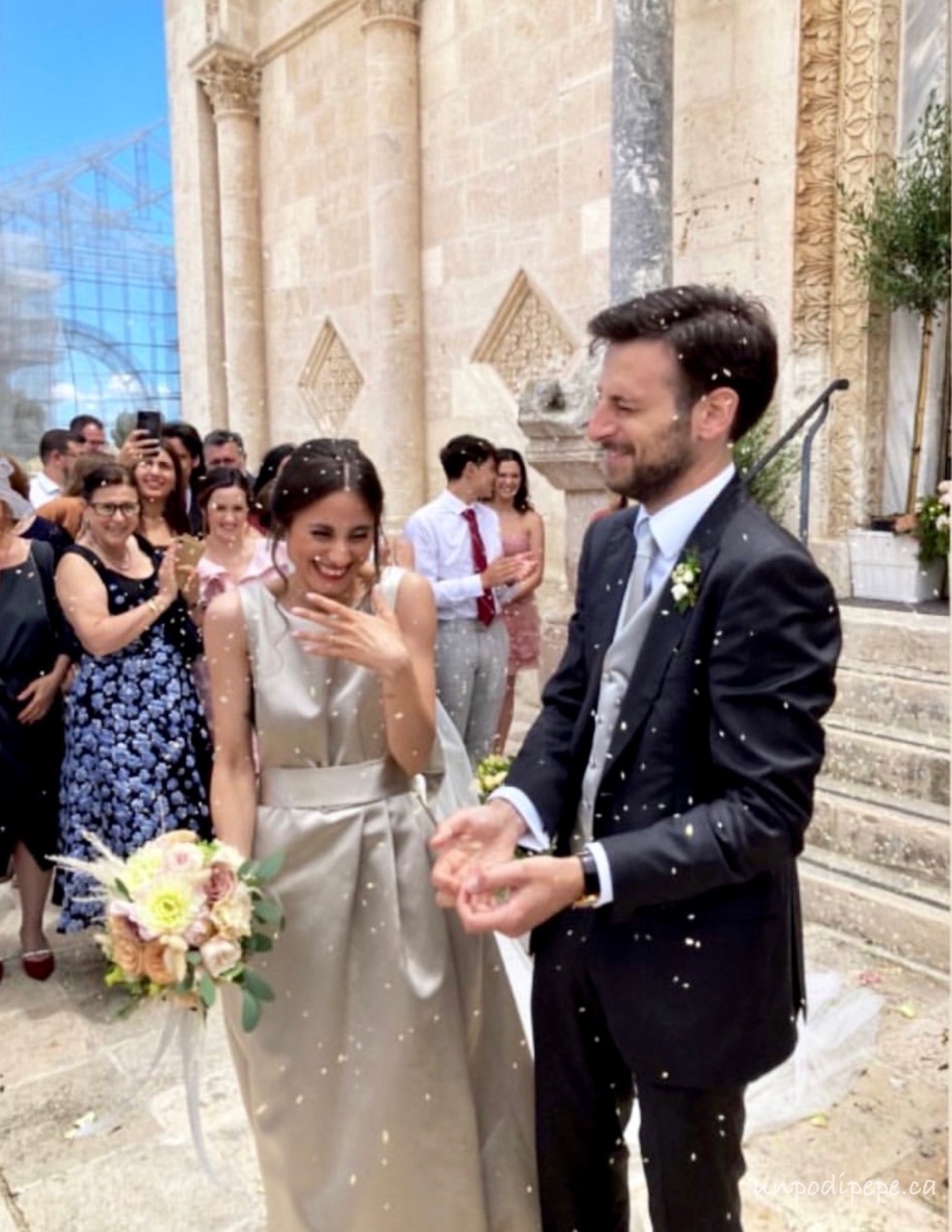
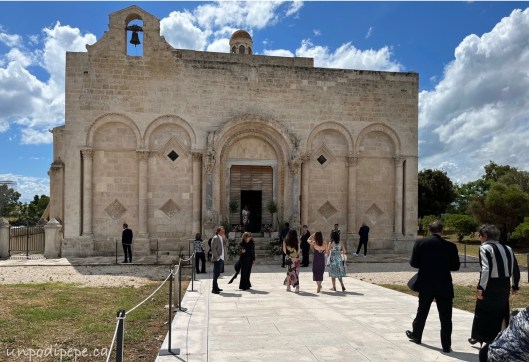
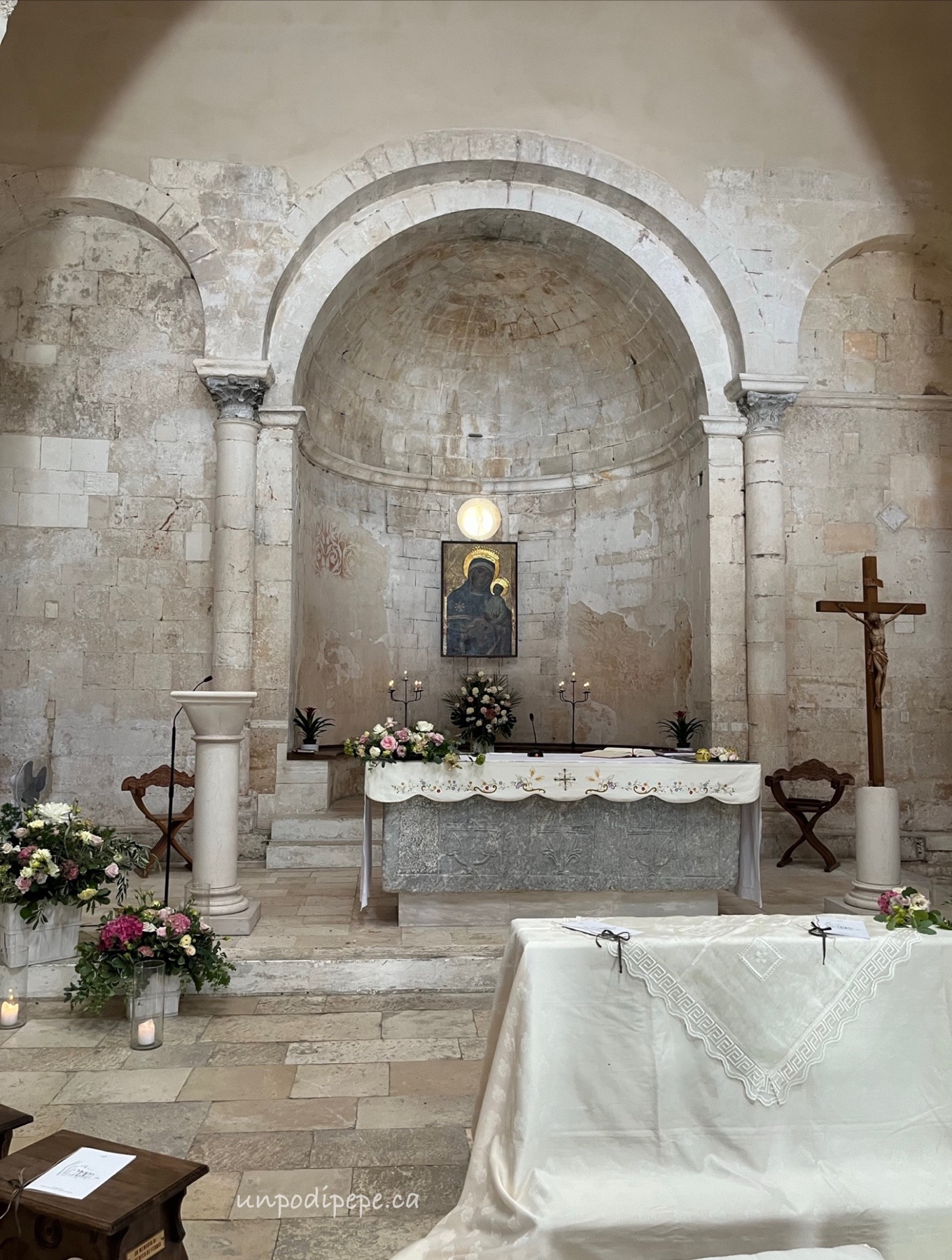
Viva gli sposi!  After a 3 year ‘pandemic hiatus’ I finally made it back to Puglia. My trip was earlier than usual to attend un matrimonio in famiglia -a family wedding in June.  Gli sposi were Federica and Antonio. The wedding was held at the 900 year old Santa Maria di Siponto. The church is in the architectural style Romanica Pugliese, Pugliese Romanesque. Byzantine and Islamic influences are evident in the pure, simple lines and geometric patterns. The building is square, which is unusual for a church.

Our day started out with heavy rain.  My parents, sister, nieces and I ran to the car with our umbrellas for the 1½ hour drive from Orsara di Puglia. Luckily it was sunny by the time we arrived. The ceremony was held at 11 am and the stark white interior of the church was bathed in light!The look on Antonio’s face when he sees Federica at the altar is priceless. 

The 4 witnesses, called compari, and the parents of the bride and groom also take part in the ceremony.Federica looked stunning.  The wedding dress was handmade by her 91 year old nonna!  Nonna Celestina made it with fabric she had kept from the time when she owned a fabric store in Foggia many years ago. The dress is ‘a portafoglio‘ which means that it had a short skirt underneath, visible only when the slit opened. Nonna even made a spare dress, just in case!

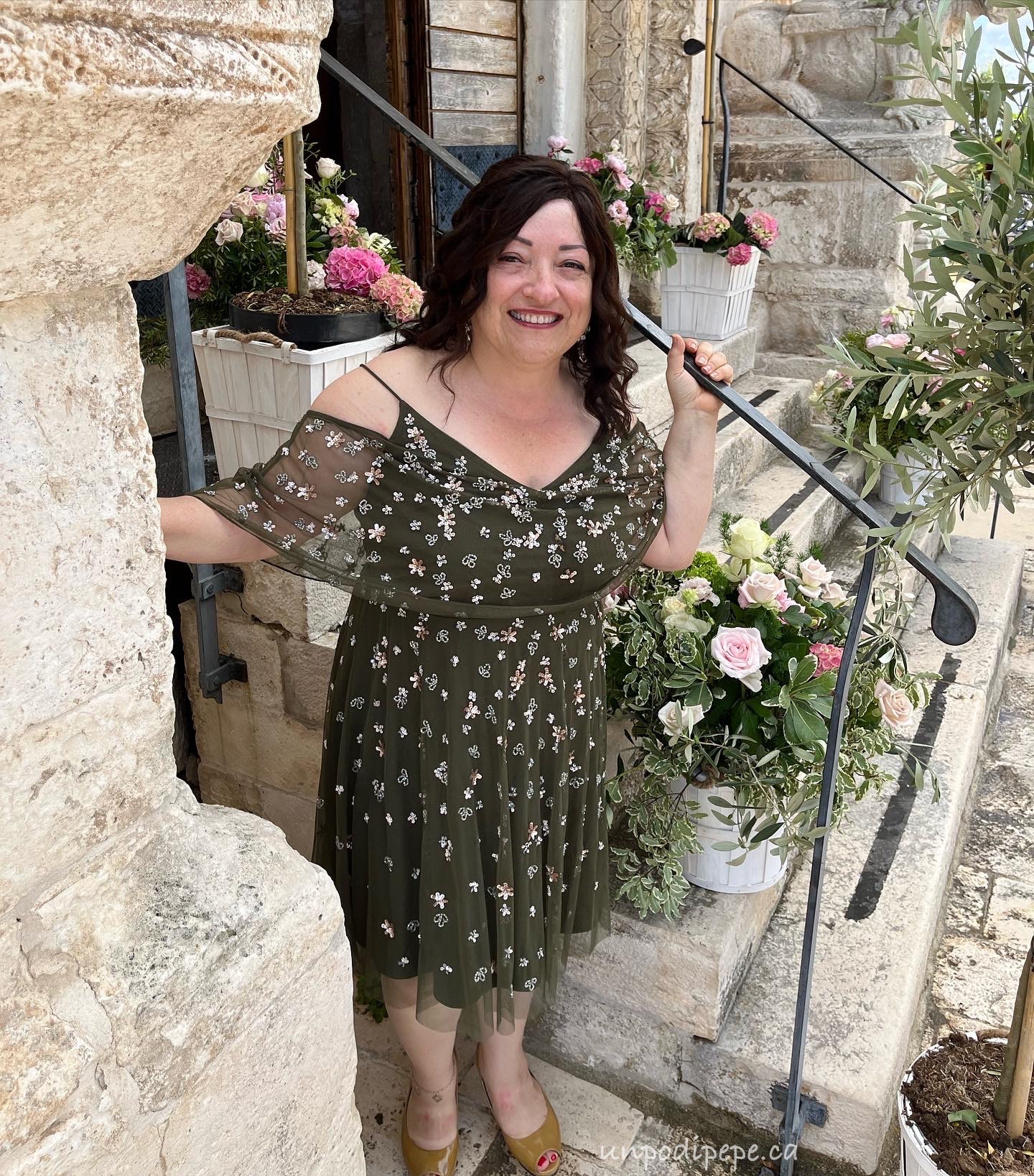
Since we were in Puglia, we were surrounded by olive trees. I fit right into the floral arrangements with my olive coloured dress with pink and silver flowers.The reception was held at Tenimento San Giuseppe, 4 km from Foggia. We started out with aperitivo in the main building, then moved to another section for the main meal.

There was un mastro casaro-a master cheesemaker-making nodini, knots of fresh mozzarella.

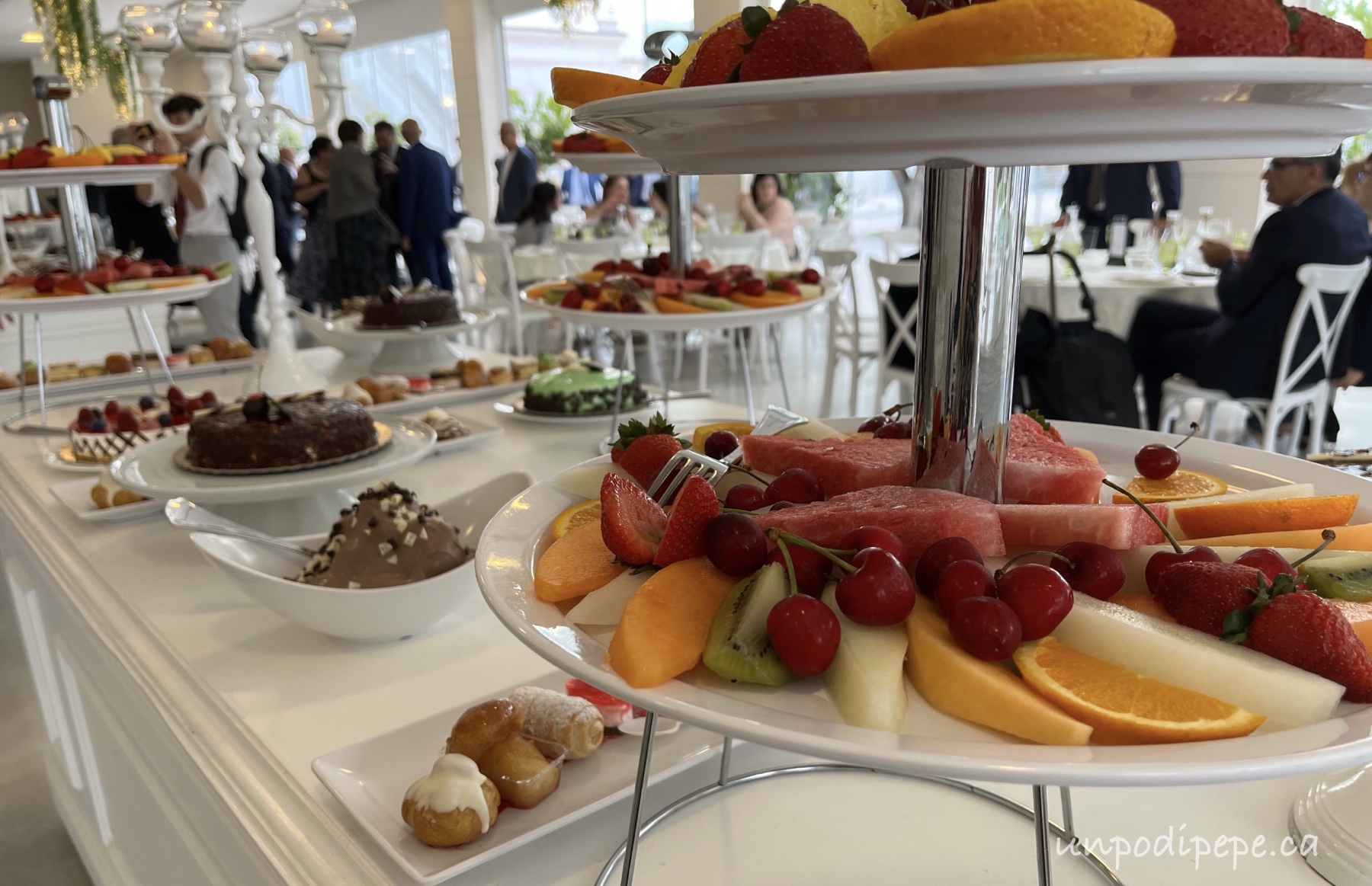
Later we moved into the cantina for degustazione di vino, where I found a tasty Susumaniello that was too good! Dessert was back in the main building.  All of this moving around really helps with digestion!

The dish in the photo above is ‘mezzi paccheri rigate con salsa di gamberl e astice’, pasta with shrimp and lobster sauce.  The black smudge on the plate is squid ink. I was too busy socializing and eating to take many food photos, so read the menu and imagine it yourself!Dancing was everywhere.  Instead of having to sit through the entire meal and a bunch of speeches and wait for the end of the night to dance, dancing happens throughout the reception. Also good for digestion!One course is served…then dancing, more food, then more dancing, etc.  Since the wedding was in Puglia, there was also dancing outside under the olive trees.

Federica likes swing dancing, so there was a swing band and later in the evening, my cousin (father of the bride) and his band played their funky music.

Cake cutting was held outside, at the bottom of the dramatic staircase.  In the photo, you can see a bit of Federica’s ‘spare’ dress, while Antonio gestures for us to move out of the way.  He probably said ‘livt da nanz’.

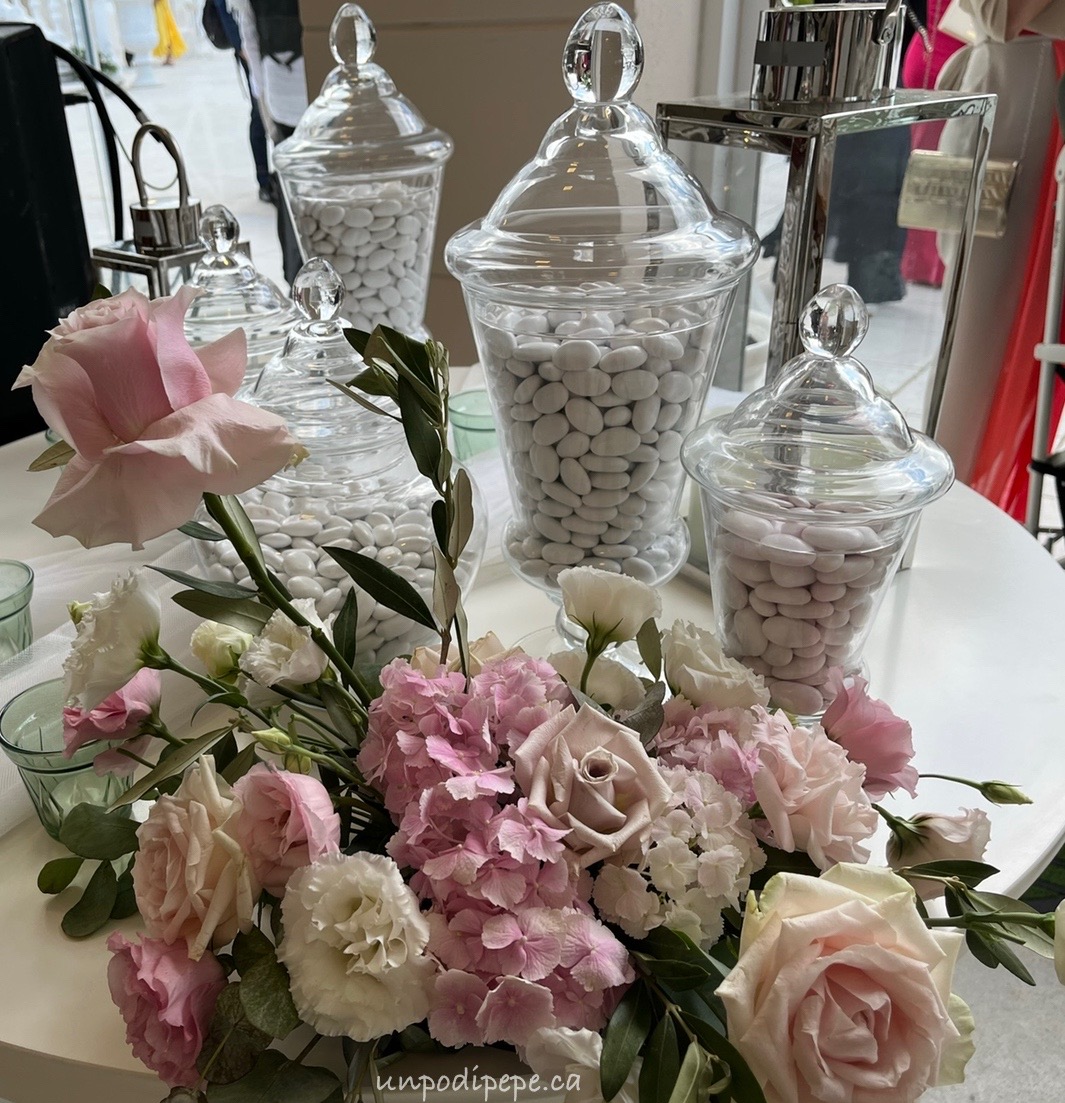
Guests take home a little bag of confetti for good luck.  These are not what you throw at the bride and groom.  They are sugared roasted almonds, sometimes with a chocolate filling.  Traditionally there are 5 almonds that represent health, wealth, happiness, fertility and long life. Bomboniere are also handed out at the end of the night.  These are a small gift from the bride and groom to thank the guests for celebrating their special day with them.

I hope you enjoyed this peak at a wedding in Puglia!  Auguri Federica e Antonio! Ciao, Cristina

Share this:

  • Share on Facebook (Opens in new window) Facebook
  • Share on Pinterest (Opens in new window) Pinterest
  • Share on X (Opens in new window) X
  • Email a link to a friend (Opens in new window) Email
  • Share on WhatsApp (Opens in new window) WhatsApp
Like Loading...

In my Kitchen in Puglia, 2022

13 Saturday Aug 2022

Posted by Un po' di pepe in Italian life, Mangiamo!, Orsara di Puglia, Puglia

≈ 45 Comments

Tags

Amarena, Cucina Pugliese, Fiori di zucca, In my kitchen, Mozzarella di bufala, Orecchiette, Parmigiana di melanzane, Polpo, Pugliese Traditions, Ravioli

I recently returned from a long trip to Italia, after an unplanned 3 year ‘pandemic break’. We missed our little casa in Orsara di Puglia.  Once we cleaned up a bit, there was a lot of activity in the kitchen. Cucina povera, literally ‘food of the poor’, is what you mostly find in Puglia.  Simple foods made with fresh local ingredients. Here are just a few of the things my family and I were up to in our tiny but functional summer kitchen in Orsara di Puglia.

Starting with the space itself, the whole casa is 40m² (about 450 square feet) including a bedroom and bathroom.  That is about the size of a double garage.  The room with the cucina is also the living room, guest room (aka my room) and art studio. The highlight of the room is the amazing barrel vaulted stone ceiling, which is hard to fit in a photo.

We had a lot of visitors who came bearing gifts.  My favourite gift was the anguria -the huge watermelon on the counter.  It was grown by a friend and was delicious!  He also grew the cipolle.

Melanzane (eggplant, or aubergine for the Brits) and zucchine are plentiful in summer.  We made Parmigiana di melanzane e zucchine.  It was soooo yummy, but we only made it once as cooking it was painful.  It was too hot to have the oven on! Now this is my idea of a bouquet of flowers! Fiori di zucca are one of my favourite summer foods. I stuffed them with caciocavallo and basilico, then battered and fried them.  It was too hot to bake them in the oven.  They were eaten before I could take a photo.  Luckily they are easy to find here. I grow fiori di zucca in my garden in Vancouver, because they are impossible to find. Recipes and harvesting tips can be found in the post Fiori di zucca. 

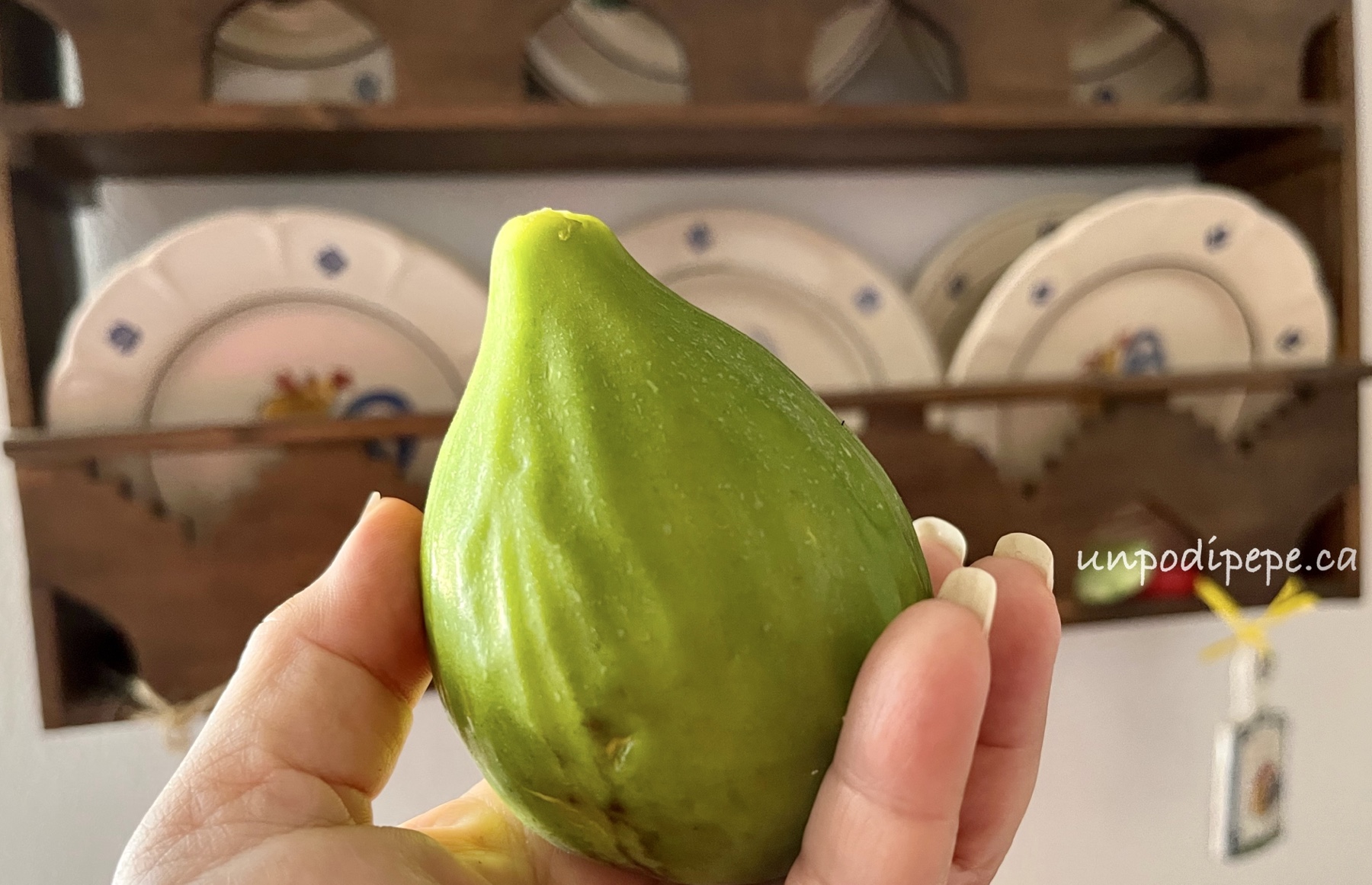
Fichi-figs-were everywhere.  Green, purple, small, big…even ginormous like this one in my hand.More fichi!basket of figsLast time I was here, I bought a spianatoia, although I only knew what is was called in dialetto.  It is a pasta rolling board with a lip on one end so it stays put on the table.  This one also has a handy carrying handle. I was only able to use it once in 2019, so I wanted to get some use out of it. I made ravioli di ricotta e spinaci a few times and filled the freezer.  I make them often in Vancouver, and they are good-but the goat milk ricotta here is so incredibly good that they taste better.

I did not get a chance to make my own orecchiette as I was too busy socializing, but we did eat them often.  I need to practice my technique!

Orecchiette con sugo

The cheese products in Puglia and Campania are drool-worthy!  Orsara has its own DOP cheese called cacioricotta, made with goat milk, but it never stays around long enough to be photographed!  Wednesday is mozzarella di bufala day. These melt in your mouth ones are from Masseria Li Gatti near Torremaggiore, SanSevero (FG).  

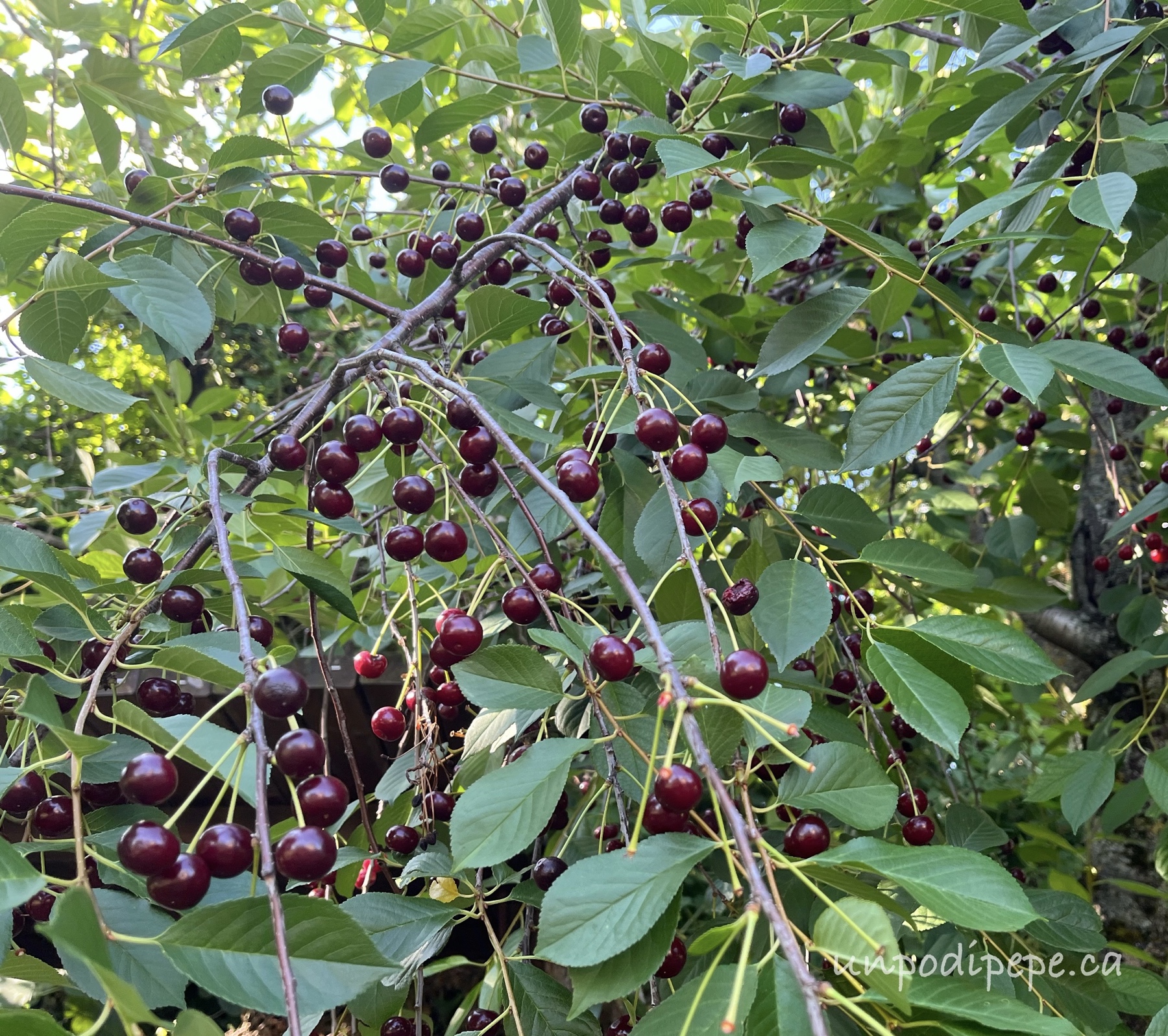
June is amarena season.  Amarene are sour wild cherries.  The word amaro means sour or bitter.  Everyone is busy picking them, making jam, canning them and making crostate.  I went amarena picking in my cousin’s olive grove.  Aren’t they gorgeous?Amarena cherries on the tree

Friends and relatives gave us amarene in syrup.  The absolute best place to use it is on top of gelato! I ate a lot of polpo or polipo on this trip.  They both mean Octopus and it is one of my favourite foods.  I will have to publish a post with all of my polpo photos.  This one of Mamma washing polpo in the kitchen sink was popular on instagram.washing octopusThis is the insalata di polpo that she made.  No leftovers.  Sorry, not sorry!Octopus salad

Cooking fish needs to be coordinated with umido day which is 3 times a week, otherwise the entire house will be puzzolente -stinky. Orsara now does la raccolta differenziata for garbage and recycling and it is extremely efficient!  Roma, are you listening?  The town has never looked so clean.  I will have to write a post about this.  Here is a sunny photo of l’umido pickup day.  This is not the kitchen, but these stairs do lead to it!

We went to a post-wedding meal in Alberona and stopped off at the caciocavallo store on the way home.  It was actually a farm and it was super-puzzolente!

Fresh caciocavallo needs to hang to dry.  The kitchen stone ceiling has a catnill’.  This is a metal ring like the ones outside that were used to tie up your donkey.  We couldn’t reach it to hang the caciocavallo, plus they tend to ‘sweat’ and leak a small amount of fluid until they dry.  Yuck.  who wants caciocavallo sweat to fall on their head?  It was hung from the fridge, next to the piattaia full of Pugliese plates.

I will leave you with one last photo of the cute little Ichnusa Sardinian beer bottle I brought home from camping in Mattinata.  I hope this post has made you either hungry and drooling or wishing you could visit Puglia yourself.  Maybe it has done both? Perché no?  I am already planning my next visit!  Buon appetito e buon viaggio, Cristina
Thanks Sherry from Australia for hosting the monthly food blogging event, In My Kitchen (IMK). Click the link to Sherry’s Pickings to read about other world kitchens. Buon appetito, Cristina

Share this:

  • Share on Facebook (Opens in new window) Facebook
  • Share on Pinterest (Opens in new window) Pinterest
  • Share on X (Opens in new window) X
  • Email a link to a friend (Opens in new window) Email
  • Share on WhatsApp (Opens in new window) WhatsApp
Like Loading...

Tutti i Santi

01 Thursday Nov 2018

Posted by Un po' di pepe in Feste, Italia, Italian Folklore, Orsara di Puglia, Photography, Puglia

≈ 12 Comments

Tags

#quinonehalloween, All Saints' Day, Falò e Teste del Purgatorio, Fucacoste e Cocce Priatorje, Muscitaglia, November 1st, Pugliese Traditions, Pumpkin carving, Southern Italy, Tutti i Santi Festa

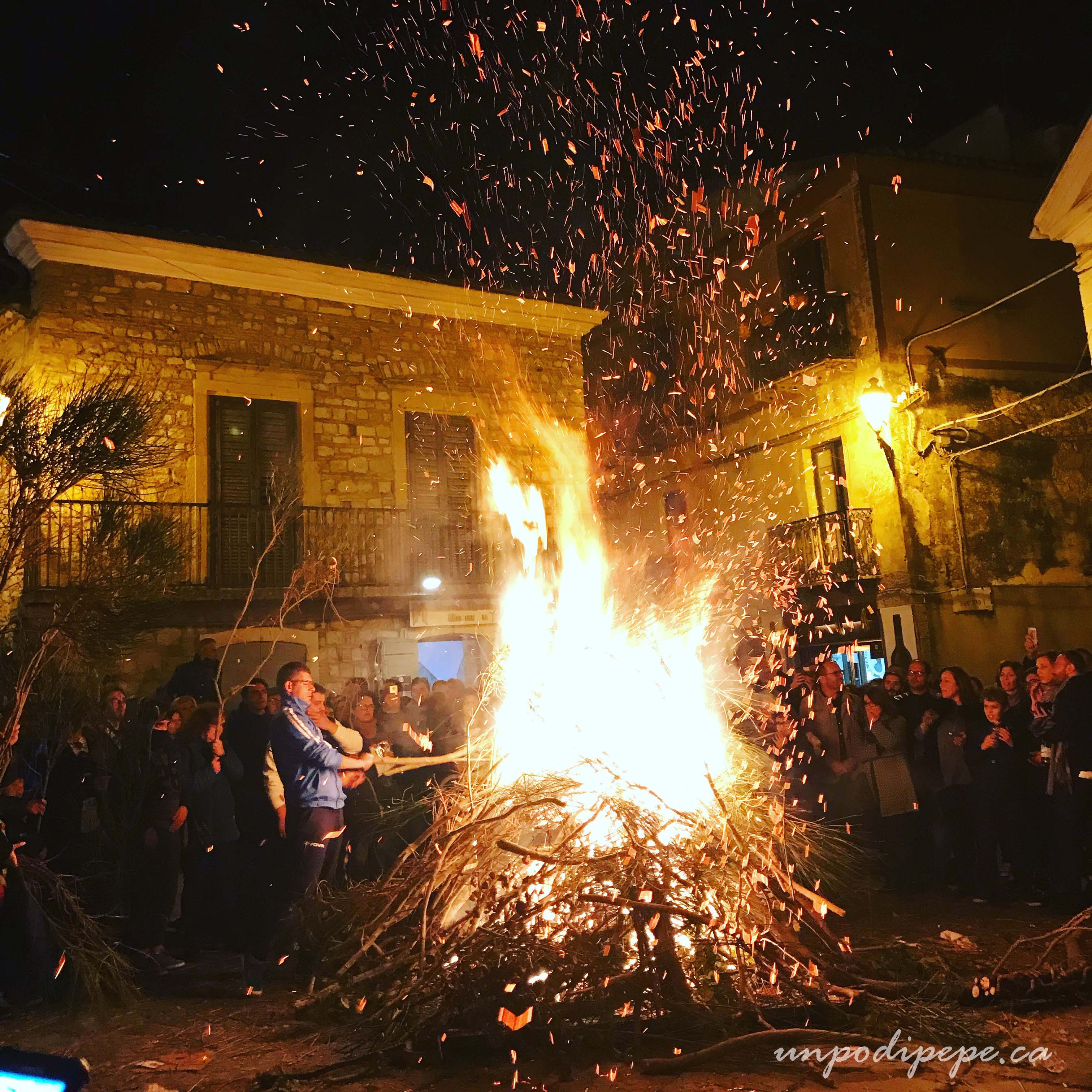
November 1st is Tutti i Santi-All Saints’ Day and is a national holiday in Italia.  It was created in the 9th century when the Pope superimposed a Christian feast day onto existing rituals, so this festa has been around for a very long time. Tonight is also an ancient festa celebrated in Orsara di Puglia called Fucacoste e Cocce Priatorje which is dialetto Orsarese for ‘Falò e teste del Purgatorio’.  This translates to ‘Bonfires and heads from purgatory’ the ‘heads’ being zucche lanterne-carved pumpkin lanterns. For simplicity, it is also called ‘Tutti i Santi’ or ‘La Festa dei Morti’.

The night between November 1stand 2nd provides the opportunity to honour, reconnect and pay respect to the spirits of loved ones.  I wrote about the festa in a 2014 post Fucacoste e Cocce Priatorje, but at that time I had not attended.  I had only heard about it from my parents, family and friends.  Last year I had the opportunity to attend. It was cold but the night was clear and an absolutely amazing, magical, spriritual experience-for me and at least 20,000 others. Orsaresi who live in other parts of Italia and Europe come home for the festa, and visitors come from all over Puglia. Since it is a holiday, many families are able to take an extra long weekend known as il Ponte dei morti.

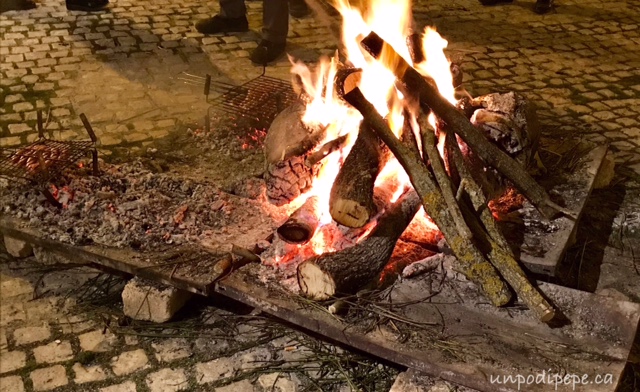
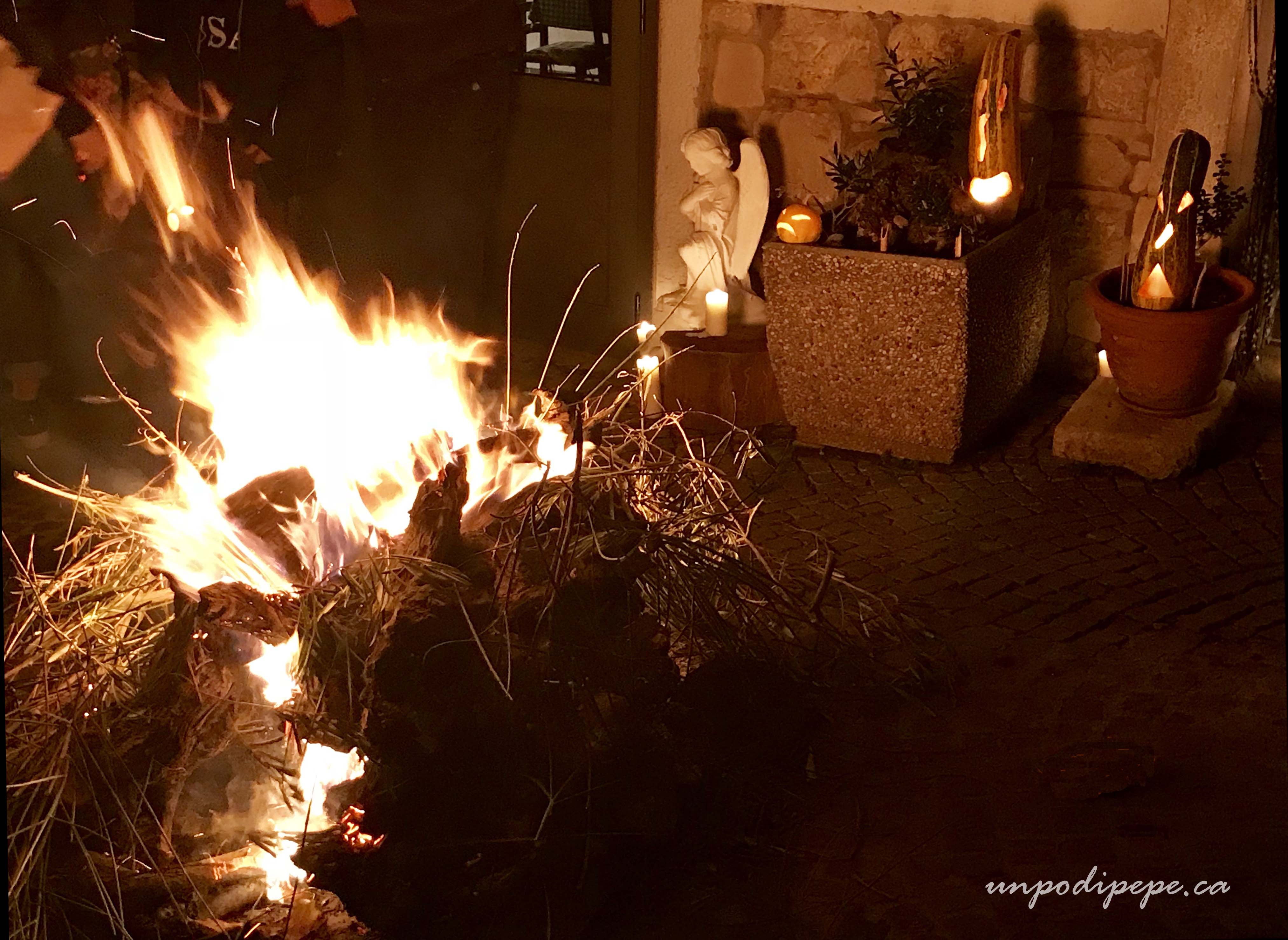
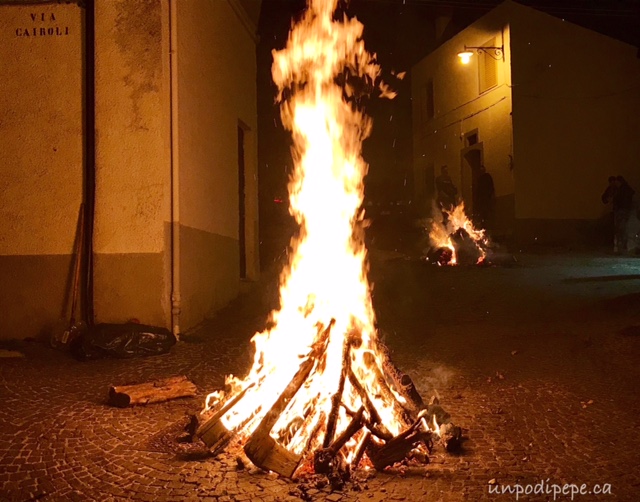
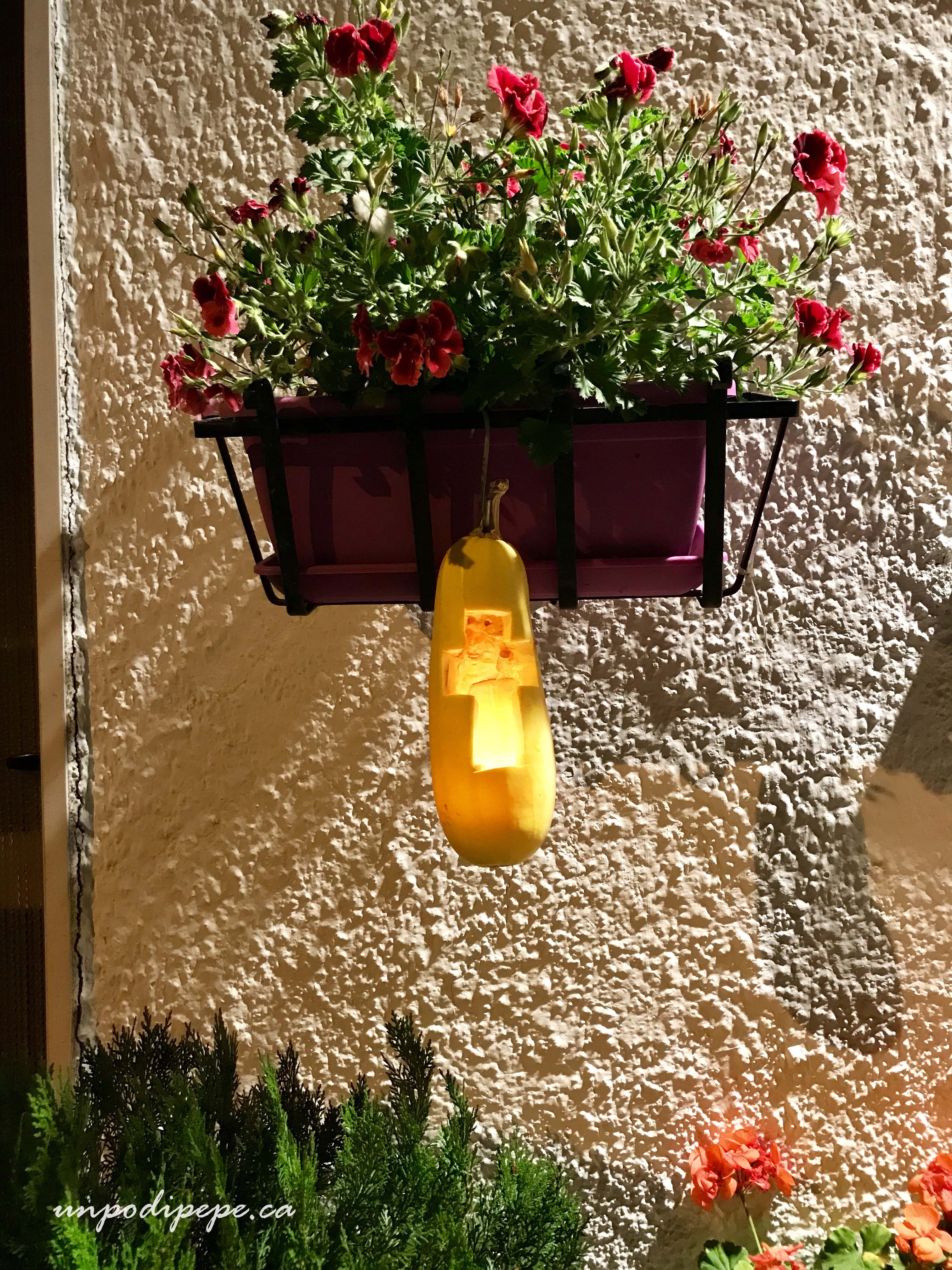
It is believed that this night between Nov 1 and 2, the souls of the recently dead return among the living to visit their relatives and their former homes before moving on to Paradiso.  Bonfires are lit with wood and branches of ginestra (broom). The light of the fires and the crackling and sparks of the ginestra reaching for the sky attract the spirits, to reunite the living with those who continue to live only in our memories. Fucacoste e Cocce Priatorje www.unpodipepe.caThe light inside ‘cocce priatorje’, pumpkin lanterns carved to look like heads or carved with crosses-light their way to find their former home.

My paesani are busy preparing for the festa for days.  Preparation involves gathering firewood and ginestra, preparing food for family and friends and picking hundreds of locally grown zucche which are carved and placed all over Orsara.  Restaurants and bars prepare for one of their busiest nights of the year.  There is even a laboratorio di intaglio delle zucche– a pumpkin carving workshop.  My street, balcony and front door were decorated with zucche.  In the evening zucche are exhibited and there is a contest for ‘la zucca più bella’.

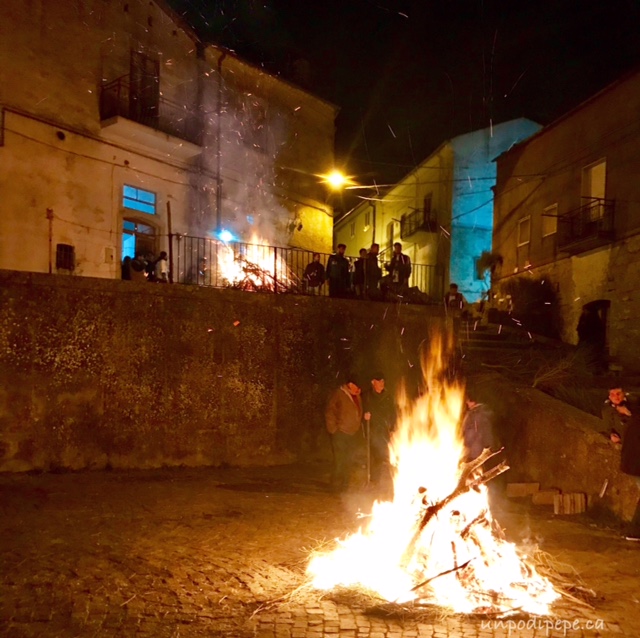
When the campanile, the church bell tower, strikes 1900 hours, Orsara di Puglia ‘catches fire’.  Bonfires are simultaneously lit in every street and piazza and remain lit through the night.  The fires, illuminated zucche, music and people in the streets create a magical, enchanted atmosphere. There are 3 large municipal falò, and every quartiere – neighbourhood, and many families also light their own.

I made a point of getting off of the main Corso to visit some of the smaller personal falò. In honour of the dead, simple but symbolic seasonal foods are cooked on the open fires and also served as cibo di strada-street food.  These include patate -potatoes, cipolle-onions, salsicce-sausages, castagne-chestnuts and pane cotto-bread cooked with garlic, potatoes and greens.

Salsicce e pancetta nel fuoco

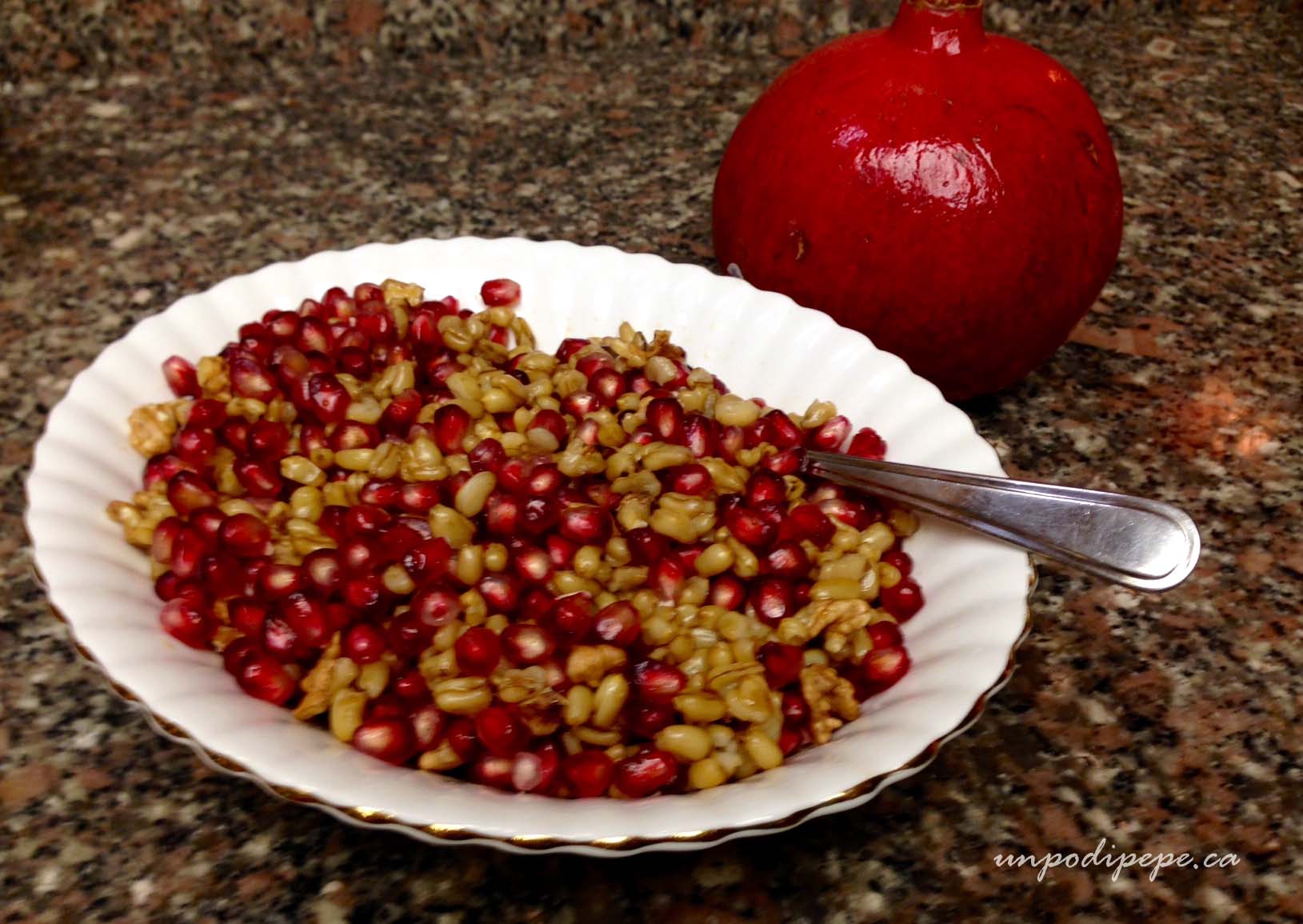
Muscitaglia (moo•shee•tah•lyah) is a traditional dish served November 1st likely dating back from the ancient Greeks and Byazantines. Muscitaglia is made up of the Greek and Latin words mosto (wine must) and talia (grain). The ingredients include boiled grain and vino cotto. Semi di melagrana e pezzi di noci -pomegranate seeds and walnut pieces are often added.  These ingredients are symbols of fertility and abundance, but also of honour and respect for the dead.

Il fuoco e le zucche di Antonella e Domenico

Fucacoste e Cocce Priatorje has often been confused by visitors with the Anglosaxon Hallowe’en, but it is an entirely different event.  Besides the obvious fact that the date is different, dressing up in costume is not part of the custom and there is nothing scary or evil about it.  This is the reason for the hashtag #quinonèhalloween. There are more similarities with Mexico’s Dia de los Muertos/Day of the Dead.  This event is about being together in community to celebrate the bond between the living and those who we remember in our hearts.  It is also to remind us that our time on earth is precious. The following day, November 2nd is l’Anime dei Morti-All Soul’s Day, and it is customary to go to the cemetery to pay respects at the resting place of loved ones.

The 9 minute video below features 94 year old Z’Gaetan talking about the festa and its significance.

This lively 48 second video from 2016 featuring the music of Tarantula Garganica will make you all wish you were there tonight:

If you did not watch the video….watch it now!  I did not make it there this year, but am looking forward to my next trip to Fucacoste e Cocce Priatorje!  Now I am off to my Mamma’s to have muscitaglia! Ciao, Cristina

Share this:

  • Share on Facebook (Opens in new window) Facebook
  • Share on Pinterest (Opens in new window) Pinterest
  • Share on X (Opens in new window) X
  • Email a link to a friend (Opens in new window) Email
  • Share on WhatsApp (Opens in new window) WhatsApp
Like Loading...

A Perfect Day in Italia

10 Tuesday Apr 2018

Posted by Un po' di pepe in Italia, Italian life, Orsara di Puglia, Puglia

≈ 41 Comments

Tags

Dolcevitabloggers, Orsara di Puglia, Pugliese Traditions, Southern Italy

The Dolce Vita Bloggers link-up theme this month is ‘a perfect day in Italy’. What a topic!  There are so many possibilities.  I have written about many wonderfully perfect days, in Roma, Matera, Alberobello, the Val d’Orcia, Polignano a Mare….  How do I narrow down what to write about? With too much material to choose from, I decided to write about a typical day ‘at home’ in Orsara di Puglia, where most days are laid back, spontaneous and pretty darn perfetto!

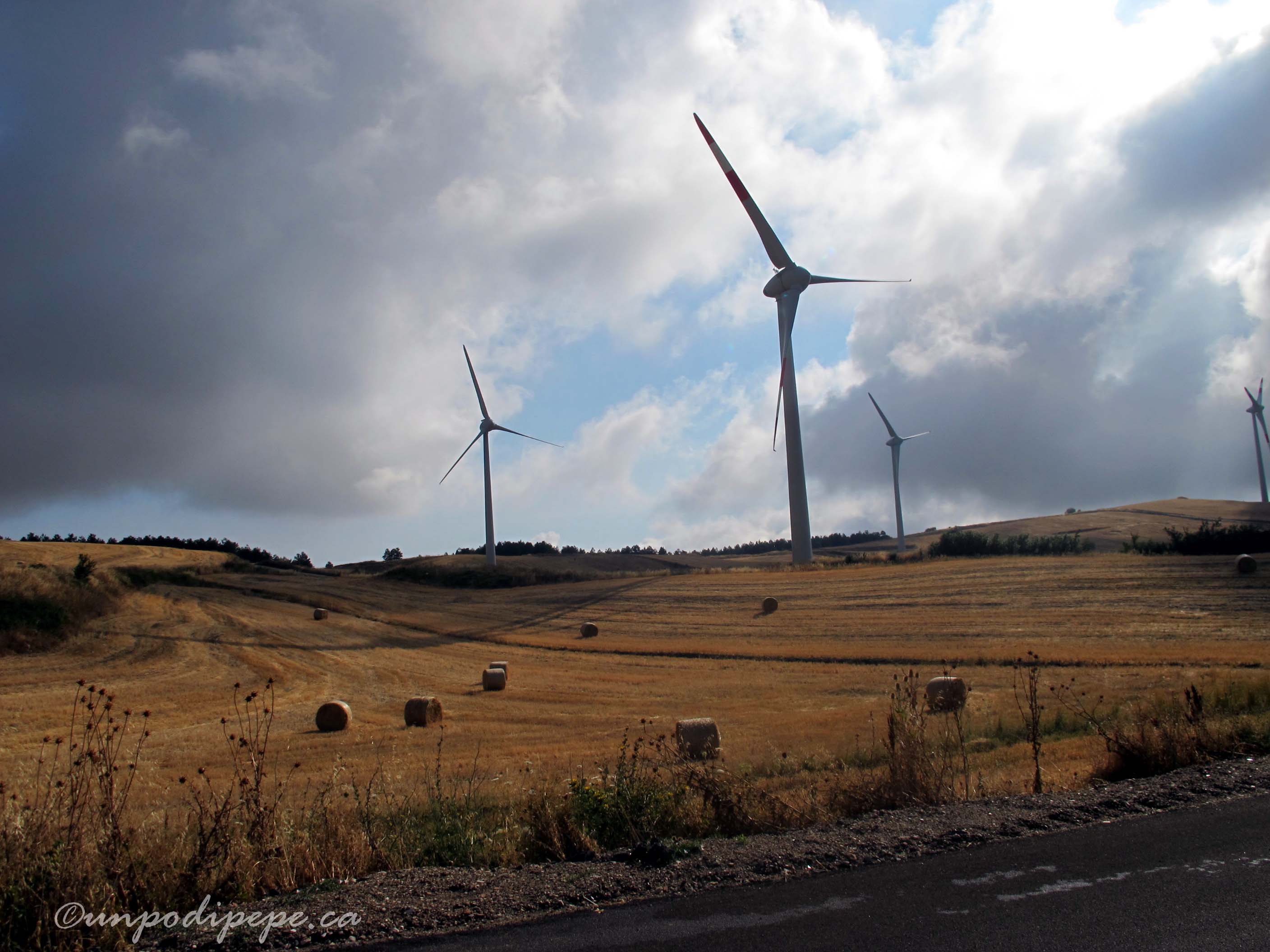
My day usually starts out with a long, early morning passeggiata to la Montagna Spaccata.  I call it ‘la Palestra di Madre Natura’ or ‘mother nature’s gym’, an uphill zig-zag walk up the mountain towards Campania with fresh aria di montagna, breathtaking views and encounters with fellow walkers.  I usually walk to the border with Campania, when I reach the pale eoliche (PAH•leh Eh•oh•LEH•keh).

Pale eoliche (wind turbines) near Montaguto

I have also walked all the way to Montaguto, in Campania 6 km away . I am not a ‘morning person’, but in the summer, the walk must be early, otherwise it gets too hot to walk on the way back. Long walks are necessary when you spend weeks eating lots yummy food and still want to fit into your clothes!

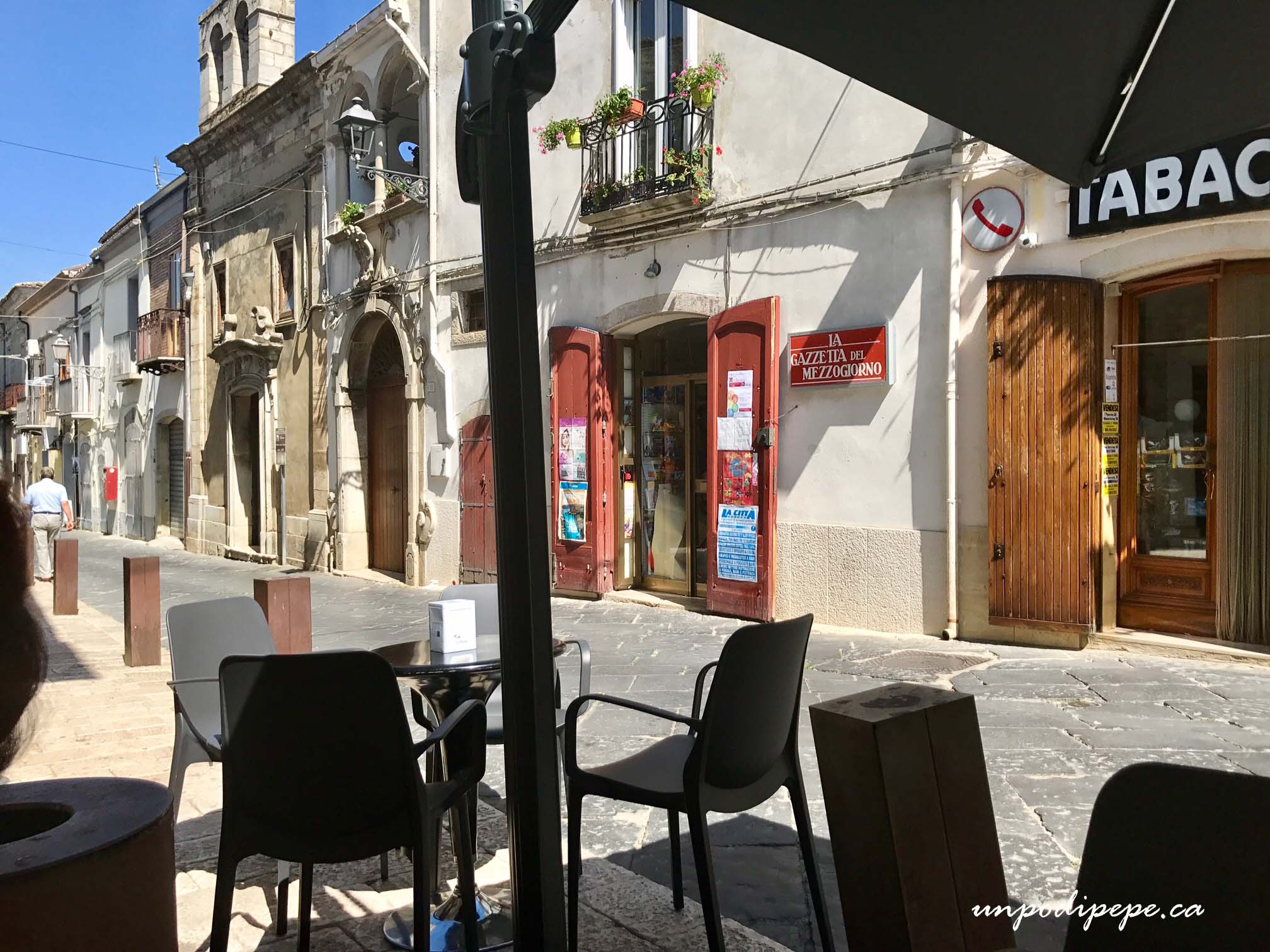
When I am back from my walk, cleaned up and changed, I often stop at the bar for an espressino, known as caffè marocchino in the rest of italia.  I also sneak in a few minutes of wifi.  Sometimes I walk to Piano Paradiso and have caffè with Peppe Zullo in the morning or afternoon.  Then I usually do servizi-errands, including shopping for food. Refrigerators are small, and most people shop at least every other day for fresh local ingredients.  Fresh bread and taralli are purchased at il forno.  Generi Alimentari are delis and also carry general grocery items.  My favourite items to purchase are fresh mozzarelle and the local specialty, cacioricotta.  Once a week, mozzarelle di bufala arrive and I am first in line! Fruit and vegetables are from the fruttivendolo-unless the neighbours give you produce from their orto.  There are also travelling fruttivendoli, selling out of small trucks.

Il fruttivendolo barely fits in Via Regina Margherita!

I celebrate when fiori di zucca are available!  Another local specialty is Tuccanese, vino made from a local native grape. As in most non-touristy towns in Italia, shops close at 1pm for la pausa pranzo and reopen at 5pm, until 8pm.

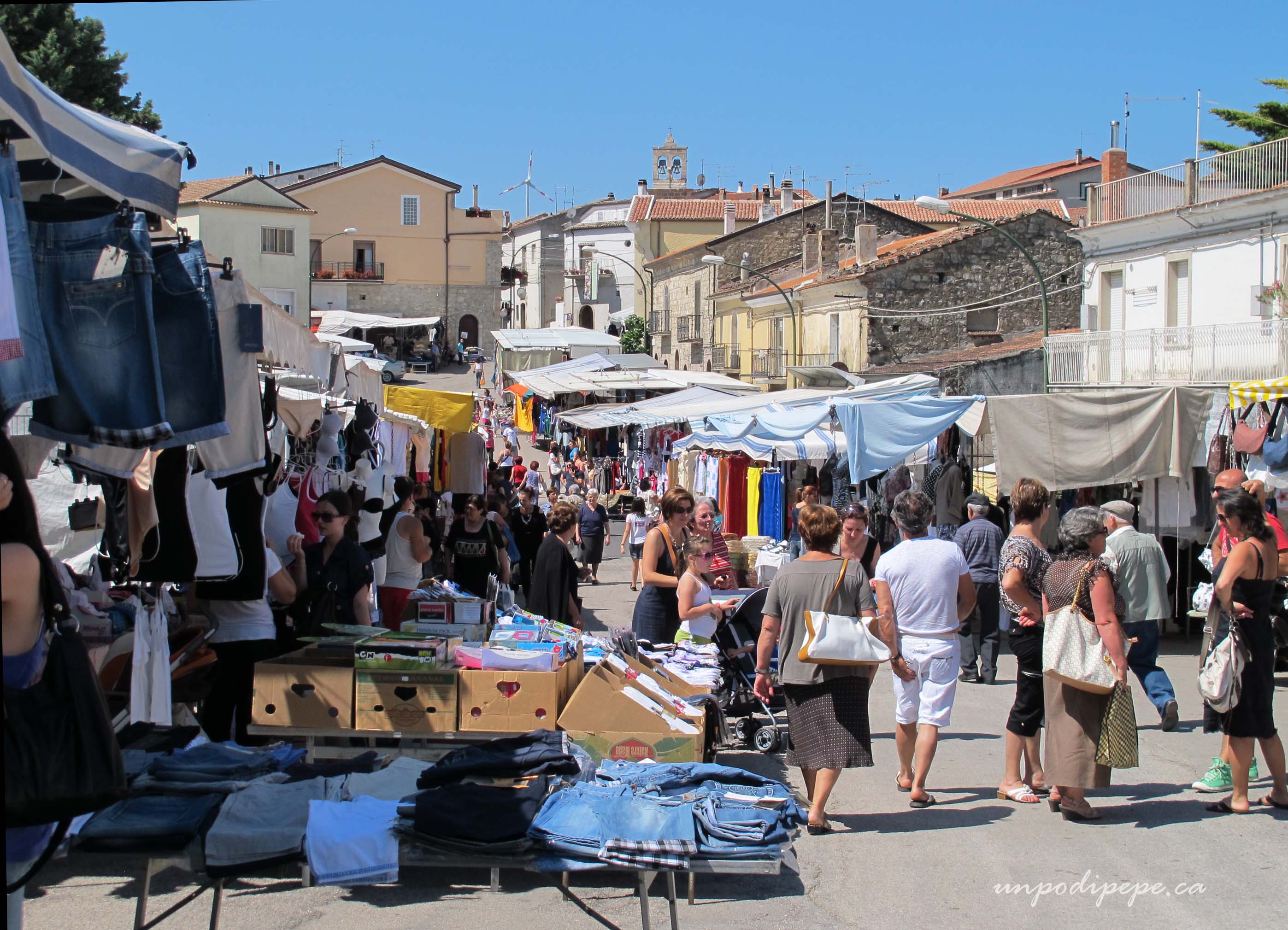
Giovedi mattina-Thursday morning is the mercato in Orsara.  The street is lined with bancarelle selling everything from fresh formaggi to produce, linens, shoes and household stuff.  A great spot to run into everyone in town, including visitors. Il postino likes giovedi, as he can hand everyone their mail on their way to the mercato.

The rest of the morning is usually spent helping to prepare pranzo, the main meal of the day, at 1pm.  In the summer, my parents are also in Orsara, sometimes my sister and her family too, so there is lots of food preparation going on, using ultra fresh local ingredients.

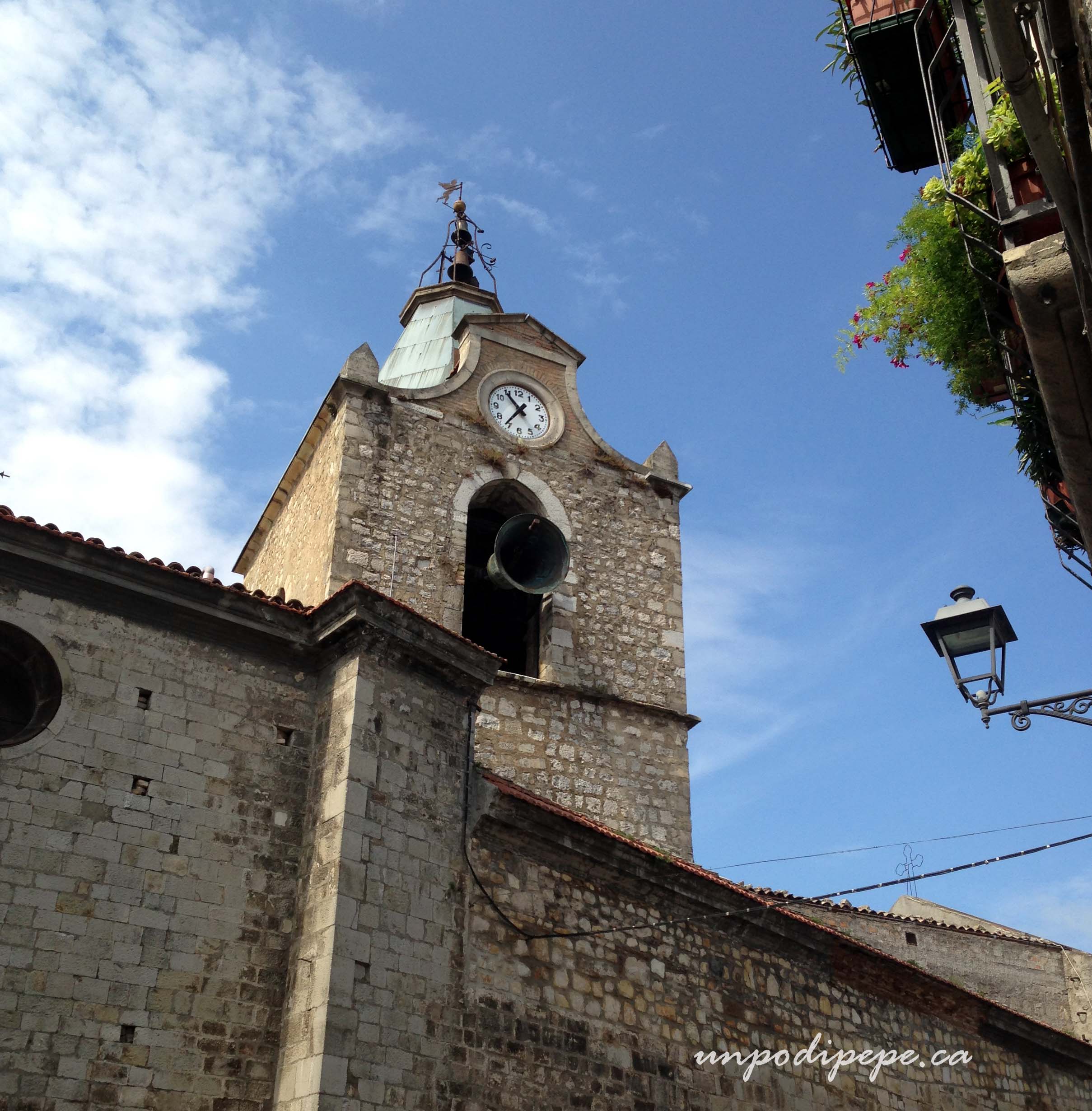
There is no need for a watch. My casa is right near the main church and the campanile– bell tower.  La campana rings every 15 minutes.  On the hour, there is one ‘ding’ for each hour, and every 15 minutes there is a higher pitched ‘ding’.  For example, at 12:45 la campana rings 12 times, followed by 3 higher pitched rings.  Back in the day when no one had a watch, contadini working in the fields would know the time. You might think this would get annoying, but la campana was broken for a year, and it was really missed! Once the dishes are done, it is orario di riposo-quiet time, as it is too hot to do much else.  Most people do not nap every afternoon, but they at least stay home and have a riposo, a rest. A short pisolino is quite civilized if you are up very early and plan to stay out late! The afternoon rest is not called a siesta in italiano- riposo or la pausa. I often read or do clean up stuff around the house, like hang laundry to dry. There are no dryers here as electricity is ridiculously expensive and sunlight is free. I may brave the mid afternoon sun to go out and take photos. The maze of steep, windy, cobblestone streets and alleys are empty and I am alone with the light and the incredible shadows.  To quote myself…

’ la luce … la gloriosa e magnifica luce del sole di metà pomeriggio è incredibile. Vorrei dipingere quella luce! / the light….the glorious and magnificent light of the mid-afternoon sun is incredible.  I want to paint that light!’ (Cristina, October 2017).

At 5pm shops and bars reopen and the streets come to life again.  I visit friends and relatives, meet for gelato, shop, or find somewhere to sit with my sketchbook. I also love to walk to La Cupa, the olive grove that used to belong to my Nonno to pick plums, figs and pears. I usually need to stop at one of the bars to use wifi, although as I explained in Chiuso per Ferie in August, this can end up seeming quite antisocial.

Sundays, I sleep in, unless going on a daytrip.  I love to have cappuccino and a cornetto crema di pistacchio before 11:00 Mass in the ancient Grotta di San Michele Arcangelo. At least one Sunday, I look forward to a barbecue at La Cupa with my extended family.

‘un po’ di relax’ under the olive trees

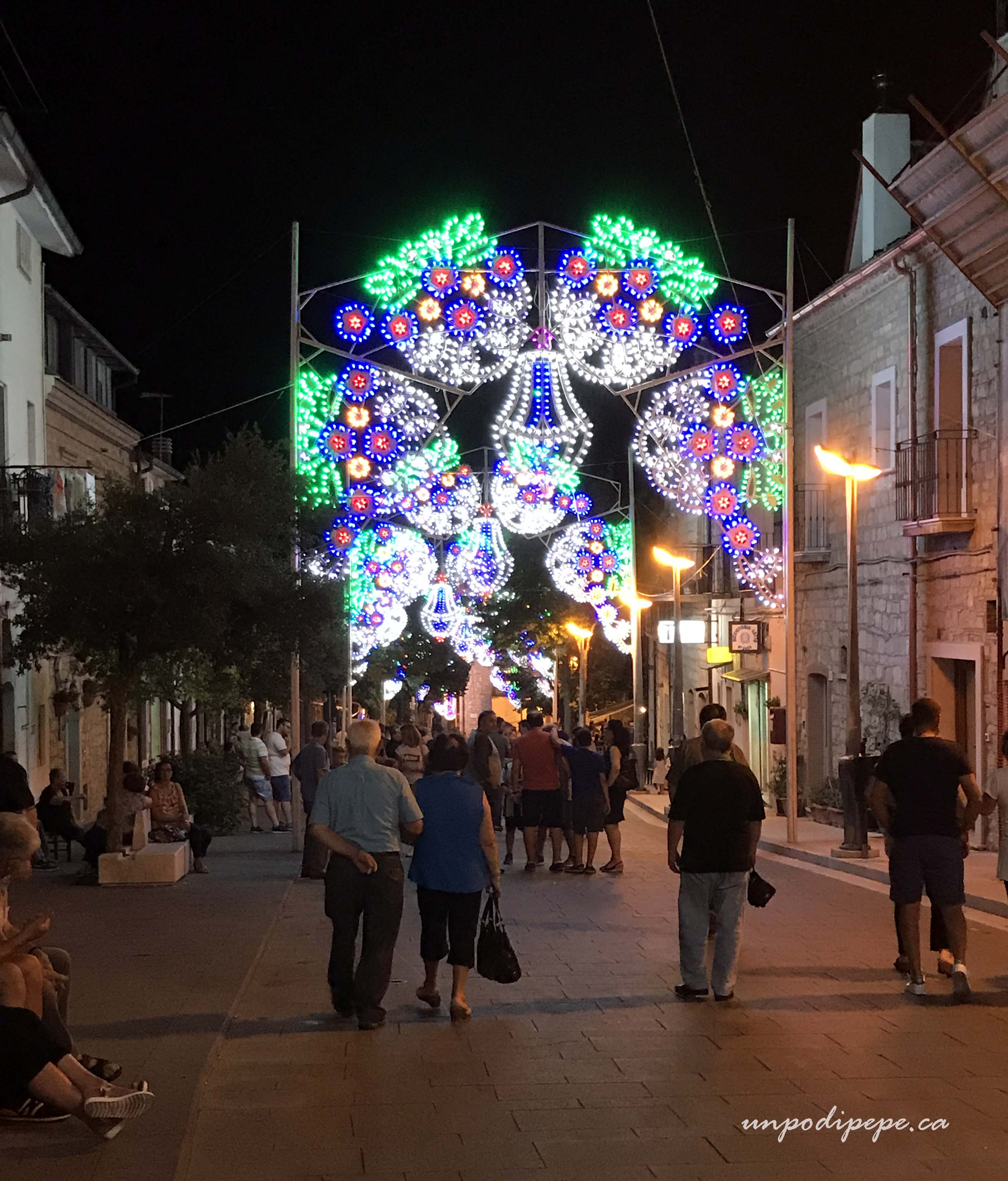
After 9pm, it is time for the evening passeggiata, walking up and down ‘il Corso’ and socializing. There are pizzerie and bars with outdoor seating along il Corso. On summer evenings, there are often concerts or special events.My favourite part of the passeggiata is walking all the way to the top of the Corso, past where the houses stop, then the streetlights stop.  It is buio (BOO•yoh) -dark, you can hear grille (GREEL•leh)-crickets, and see the stars.  On clear, windless nights, lucciole (looch•CHEEOH•leh)-fireflies make the night absolutely magical. There is usually a stop for a drink at an outdoor table before ending up back at home…never before midnight though! Buonanotte, Cristina.

Click on these links to read previous posts about wonderfully perfect days spent in… Alberobello, the Isole Tremiti, Matera, Polignano a Mare, Paestum, Roma, Trani and the Val d’Orcia.

This post is written as part of the monthly #dolcevitabloggers linkup, hosted by Jasmine of Questa Dolce Vita, Kelly of Italian at Heart and Kristie of Mamma Prada the 7th -14th of every month.

Share this:

  • Share on Facebook (Opens in new window) Facebook
  • Share on Pinterest (Opens in new window) Pinterest
  • Share on X (Opens in new window) X
  • Email a link to a friend (Opens in new window) Email
  • Share on WhatsApp (Opens in new window) WhatsApp
Like Loading...

Pomodoro Day!

27 Sunday Aug 2017

Posted by Un po' di pepe in Italian life, Mangiamo!

≈ 21 Comments

Tags

Italian food, Passata di pomodoro, photography, Pomodori, Pomodoro day, Pugliese Traditions, Tomato day, Tomato sauce

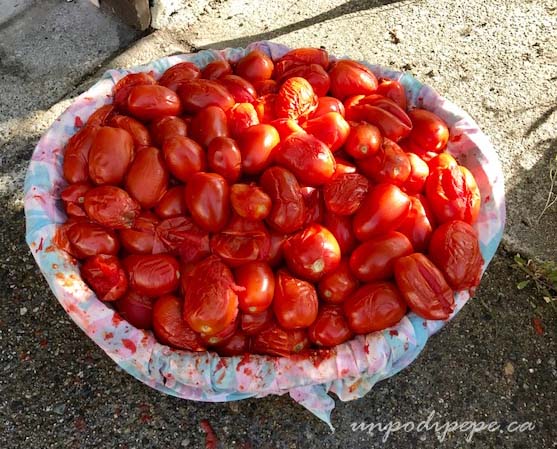
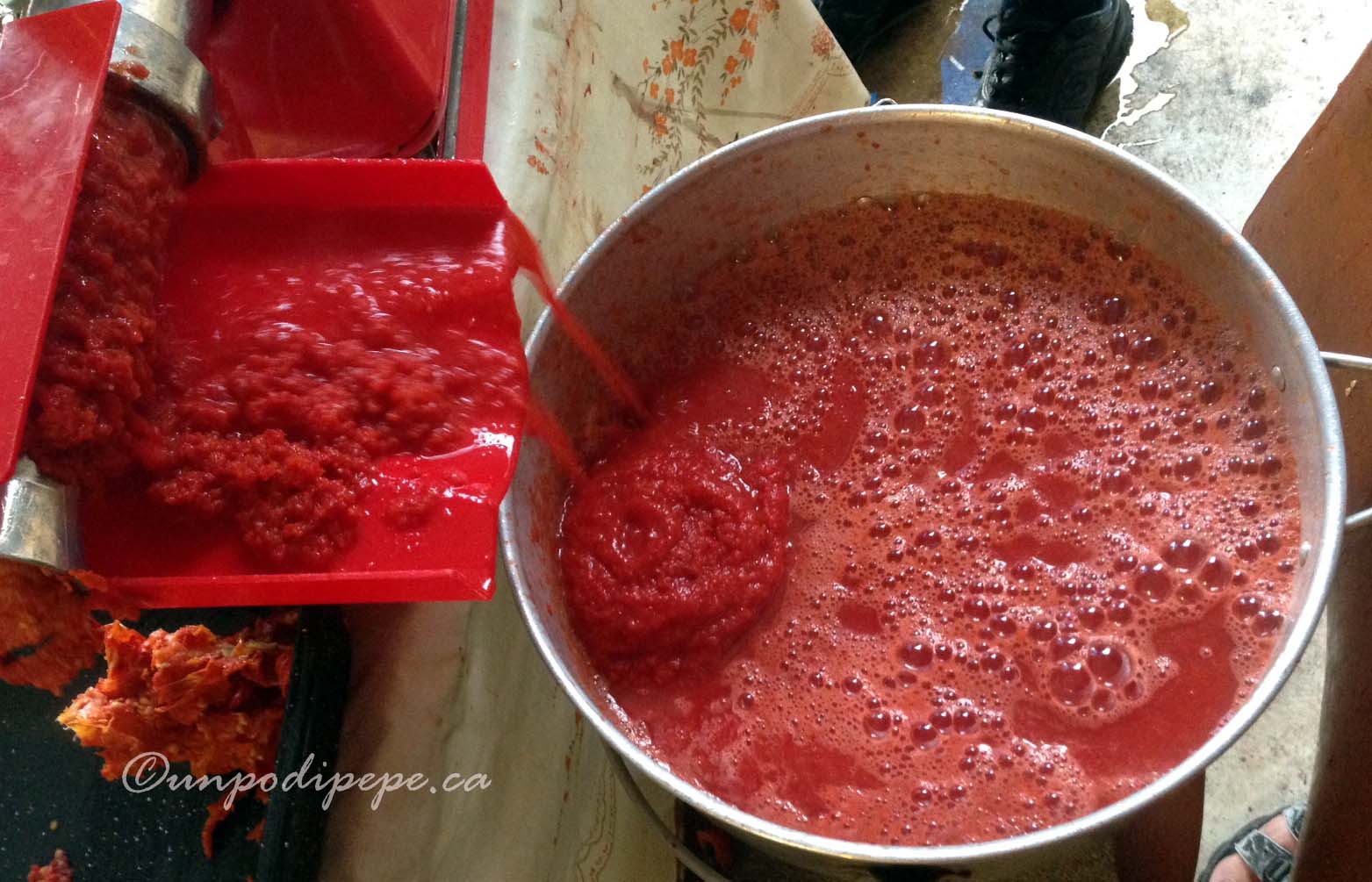
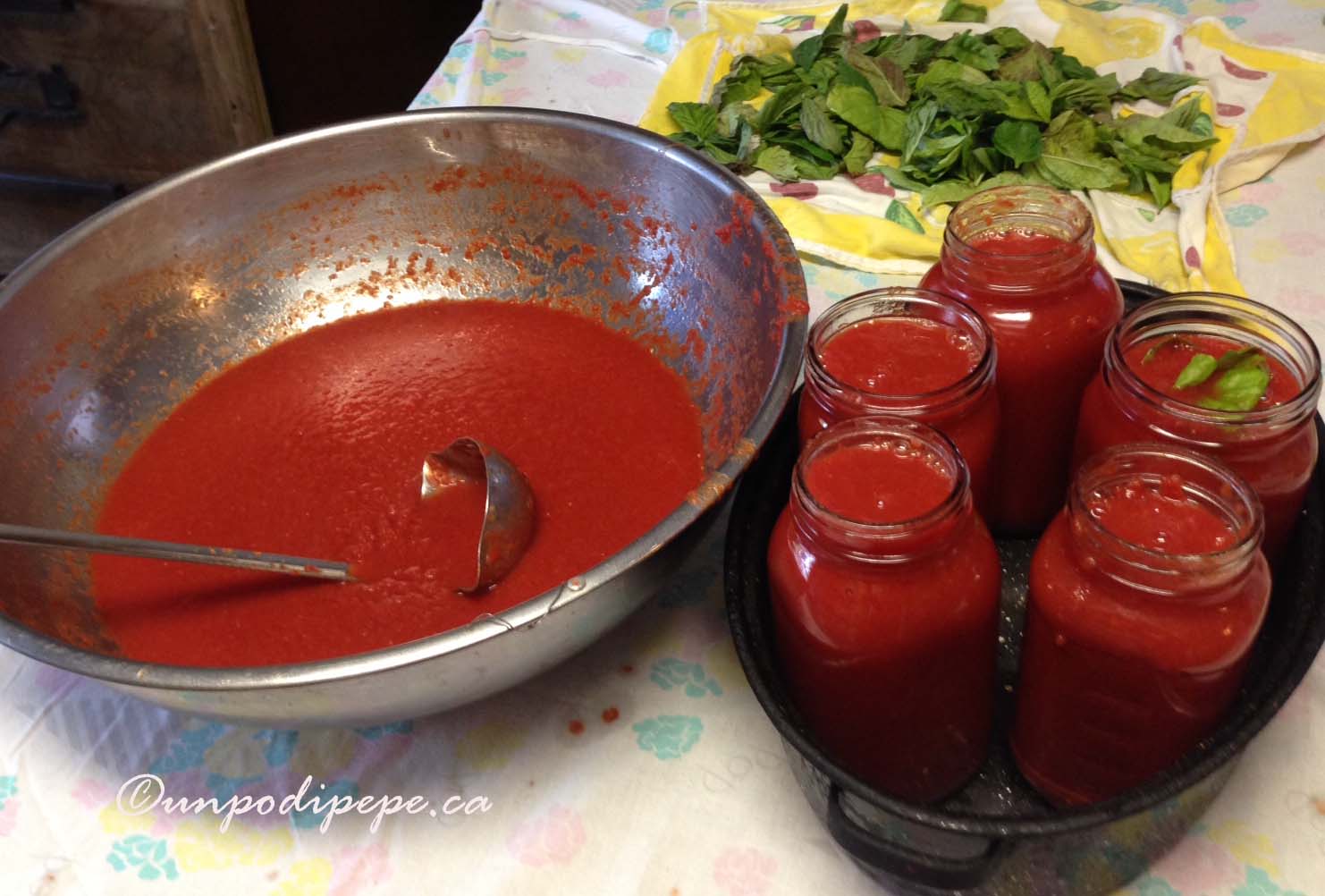
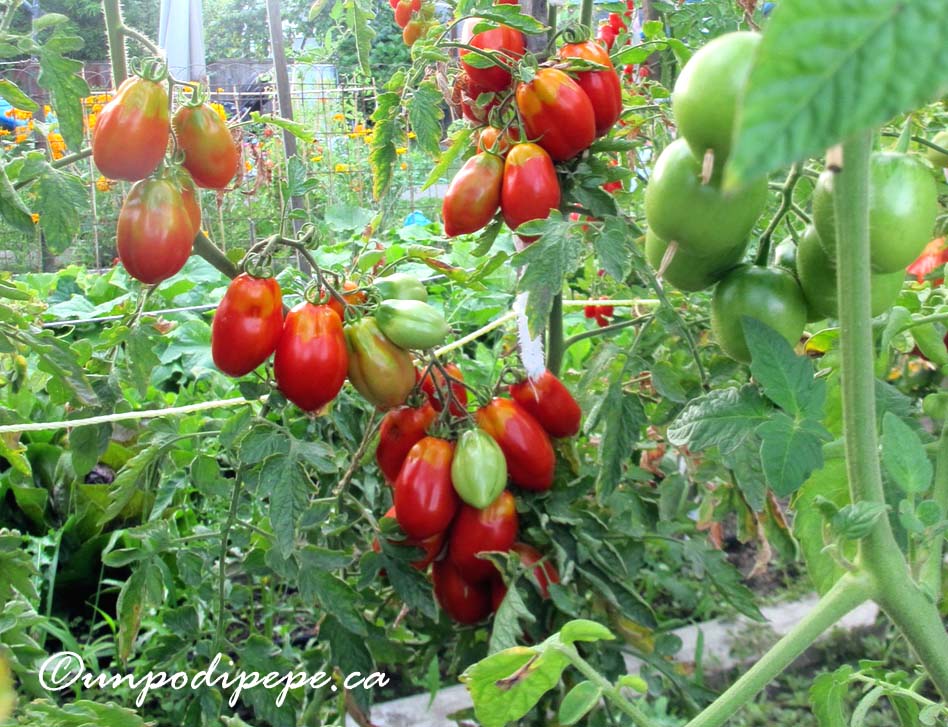
Today was my famiglia‘s annual pomodoro day.  We turned 15 boxes of pomodori, plus more from our gardens into passata di pomodoro, or as we simply call it ‘la salsa’. The boxes were 18 kg each (40 lbs)! That is 272 kg of pomodori and we made 140 litres of passata. Siamo stanchi!

For new readers of Un po’ di pepe, or those of you who have not read my previous pomodoro related posts, here they are.  Click on the appropriately coloured red links!

Passata di pomodoro

Passata di Pomodoro is a detailed description of my famiglia’s annual passata making day.  There is a lot of red in photos in this post! Rosso come un pomodoro, but no one is blushing.

Il Pomodoro discusses the history of the pomodoro and how it came to Italia and eventually became edible. You read that correctly-pomodori originally tasted really gross and were used only for ornamental purposes.  You’ve come a long way, pomodoro.

Does your famiglia make passata di pomodoro? I’d love to hear about it.  Ciao, Cristina

Share this:

  • Share on Facebook (Opens in new window) Facebook
  • Share on Pinterest (Opens in new window) Pinterest
  • Share on X (Opens in new window) X
  • Email a link to a friend (Opens in new window) Email
  • Share on WhatsApp (Opens in new window) WhatsApp
Like Loading...
← Older posts

Enter your email address to follow 'un po' di pepe' and receive notifications of new posts by email.

Join 511 other subscribers
Follow Un po' di pepe on WordPress.com

Popular Posts

  • Hairstyling in Ancient Roma
    Hairstyling in Ancient Roma
  • Cucina Italiana Patrimonio UNESCO
    Cucina Italiana Patrimonio UNESCO
  • Grano Arso
    Grano Arso
  • Napoli Street Art
    Napoli Street Art
  • Hostaria Antica Roma~Eat like an Ancient Roman
    Hostaria Antica Roma~Eat like an Ancient Roman
  • Italiano per Ristoranti~How to pronounce your restaurant menu
    Italiano per Ristoranti~How to pronounce your restaurant menu
  • Cinquecento Love
    Cinquecento Love

Recent Posts

  • Cucina Italiana Patrimonio UNESCO
  • 2025~Un po’ di pepe Year in Review
  • Castel del Monte
  • ‘The Nuances of Love’
  • Hostaria Antica Roma~Eat like an Ancient Roman
  • Santa Maria in Aracoeli
  • Casino dell’Aurora~Villa Boncompagni Ludovisi
  • Nasoni di Roma
  • Bloghiversario #11
  • Fontana di Trevi
  • Acqua Vergine
  • Giubileo 2025
  • Sanremo 2025
  • In Vino there are Memories
  • A Literary Harvest
  • 2024~Un po’ di pepe Year in Review
  • Buon Natale 2024
  • Il Bicerin
  • Mercato Porta Palazzo
  • Torino
  • Catanzaro, Calabria
  • Il Pumo Pugliese
  • Artemisia Gentileschi
  • Cavalli di San Marco
  • Panzerotti

Categories

Amici e Famiglia Architecture Art Art history Art projects Bilingual posts Blogging Canada Culture Feste Firenze Inspiration Italia Italian Folklore Italian language Italian life Italocanadesi Libri Mangiamo! Orsara di Puglia Parole piacevoli Photography Puglia Recipes Roma Travel Travel tips Uncategorized Vino

Archives

Un po’ di pepe on Facebook

Un po’ di pepe on Facebook

Start a Blog at WordPress.com.

  • Subscribe Subscribed
    • Un po' di pepe
    • Join 511 other subscribers
    • Already have a WordPress.com account? Log in now.
    • Un po' di pepe
    • Subscribe Subscribed
    • Sign up
    • Log in
    • Report this content
    • View site in Reader
    • Manage subscriptions
    • Collapse this bar
 

Loading Comments...
 

    %d