• Home
  • About me/Chi sono
  • Contact

Un po' di pepe

~ …… (oon∙poh∙dee∙PEH∙peh) Cristina writes about interesting stuff /Cristina scrive di cose interessanti

Un po' di pepe

Category Archives: Italia

A Perfect Day in Italia

10 Tuesday Apr 2018

Posted by Un po' di pepe in Italia, Italian life, Orsara di Puglia, Puglia

≈ 41 Comments

Tags

Dolcevitabloggers, Orsara di Puglia, Pugliese Traditions, Southern Italy

The Dolce Vita Bloggers link-up theme this month is ‘a perfect day in Italy’. What a topic!  There are so many possibilities.  I have written about many wonderfully perfect days, in Roma, Matera, Alberobello, the Val d’Orcia, Polignano a Mare….  How do I narrow down what to write about? With too much material to choose from, I decided to write about a typical day ‘at home’ in Orsara di Puglia, where most days are laid back, spontaneous and pretty darn perfetto!
My day usually starts out with a long, early morning passeggiata to la Montagna Spaccata.  I call it ‘la Palestra di Madre Natura’ or ‘mother nature’s gym’, an uphill zig-zag walk up the mountain towards Campania with fresh aria di montagna, breathtaking views and encounters with fellow walkers.  I usually walk to the border with Campania, when I reach the pale eoliche (PAH•leh Eh•oh•LEH•keh).
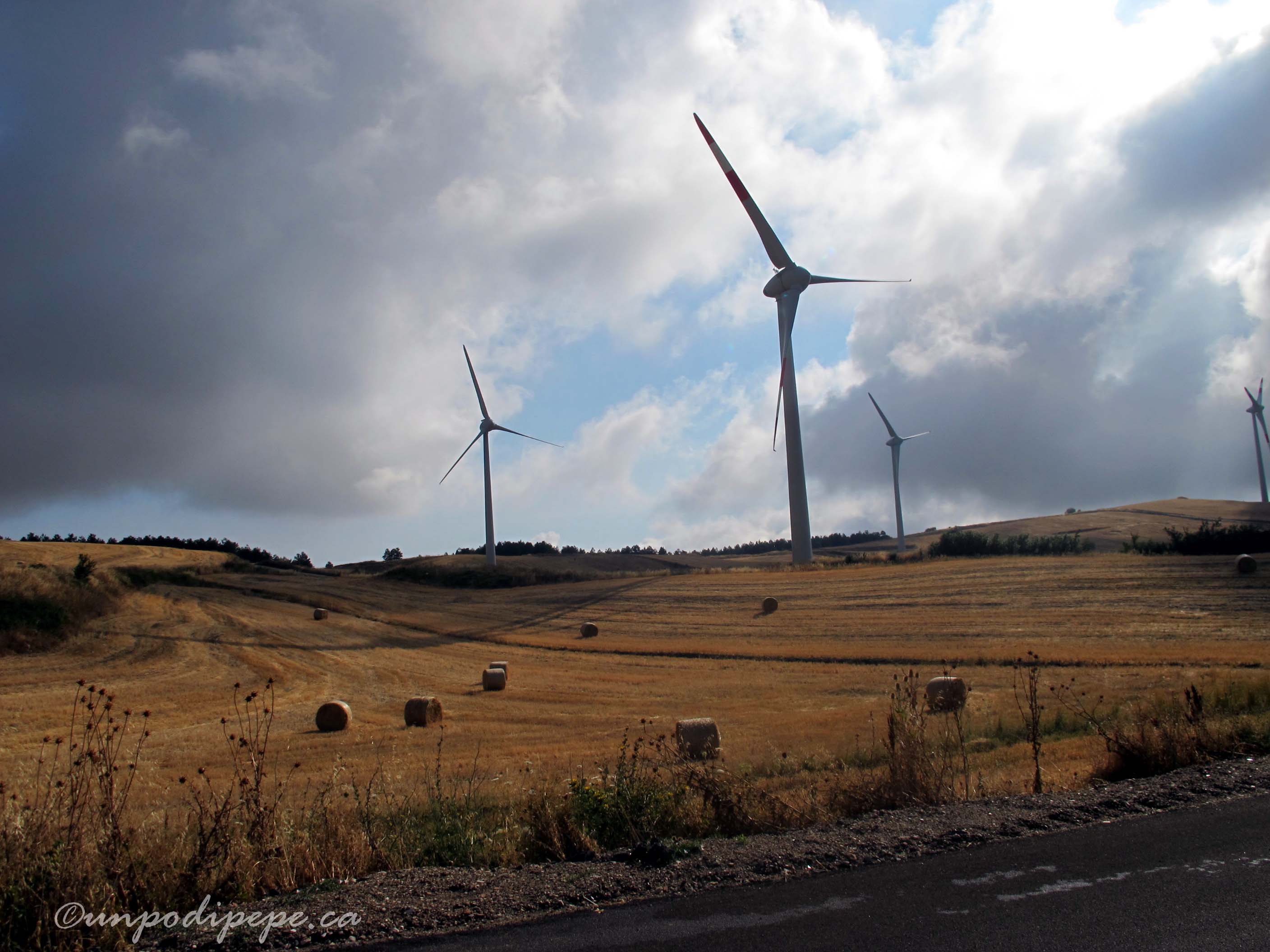
Pale eoliche (wind turbines) near Montaguto

I have also walked all the way to Montaguto, in Campania 6 km away . I am not a ‘morning person’, but in the summer, the walk must be early, otherwise it gets too hot to walk on the way back. Long walks are necessary when you spend weeks eating lots yummy food and still want to fit into your clothes!

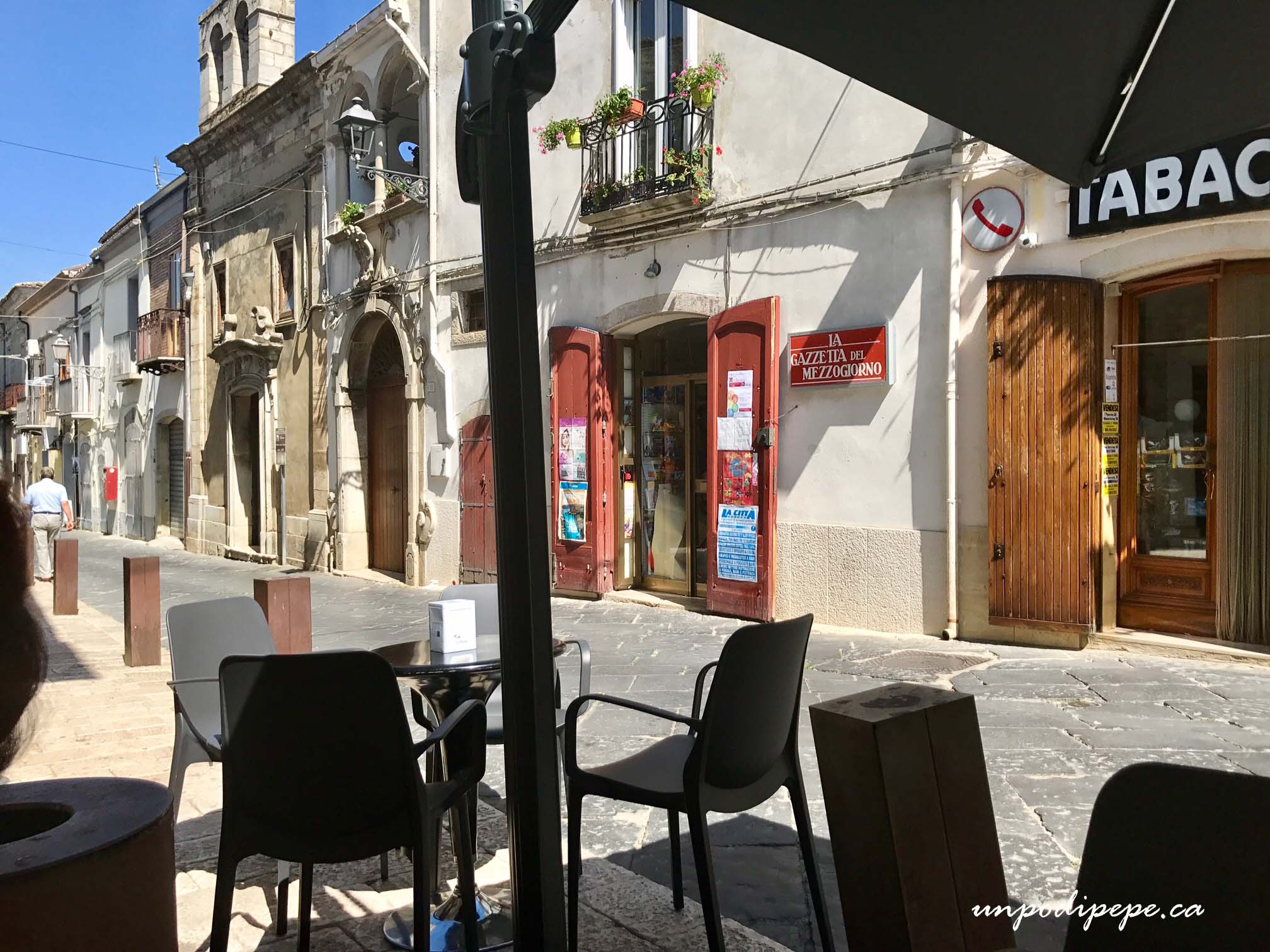
When I am back from my walk, cleaned up and changed, I often stop at the bar for an espressino, known as caffè marocchino in the rest of italia.  I also sneak in a few minutes of wifi.  Sometimes I walk to Piano Paradiso and have caffè with Peppe Zullo in the morning or afternoon.  Then I usually do servizi-errands, including shopping for food. Refrigerators are small, and most people shop at least every other day for fresh local ingredients.  Fresh bread and taralli are purchased at il forno.  Generi Alimentari are delis and also carry general grocery items.  My favourite items to purchase are fresh mozzarelle and the local specialty, cacioricotta.  Once a week, mozzarelle di bufala arrive and I am first in line! Fruit and vegetables are from the fruttivendolo-unless the neighbours give you produce from their orto.  There are also travelling fruttivendoli, selling out of small trucks.
Il fruttivendolo barely fits in Via Regina Margherita!

I celebrate when fiori di zucca are available!  Another local specialty is Tuccanese, vino made from a local native grape. As in most non-touristy towns in Italia, shops close at 1pm for la pausa pranzo and reopen at 5pm, until 8pm.

Giovedi mattina-Thursday morning is the mercato in Orsara.  The street is lined with bancarelle selling everything from fresh formaggi to produce, linens, shoes and household stuff.  A great spot to run into everyone in town, including visitors. Il postino likes giovedi, as he can hand everyone their mail on their way to the mercato.
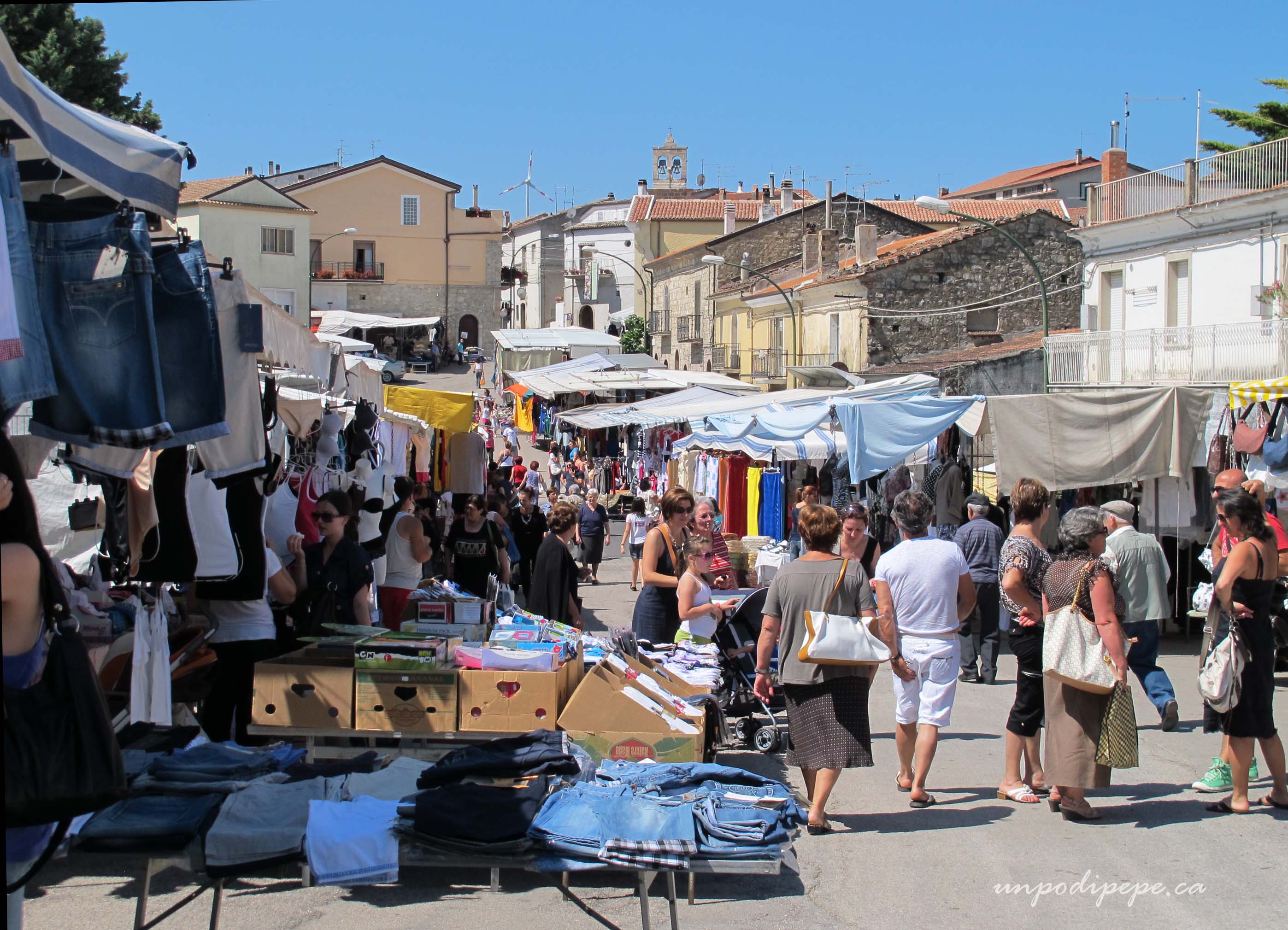
The rest of the morning is usually spent helping to prepare pranzo, the main meal of the day, at 1pm.  In the summer, my parents are also in Orsara, sometimes my sister and her family too, so there is lots of food preparation going on, using ultra fresh local ingredients.

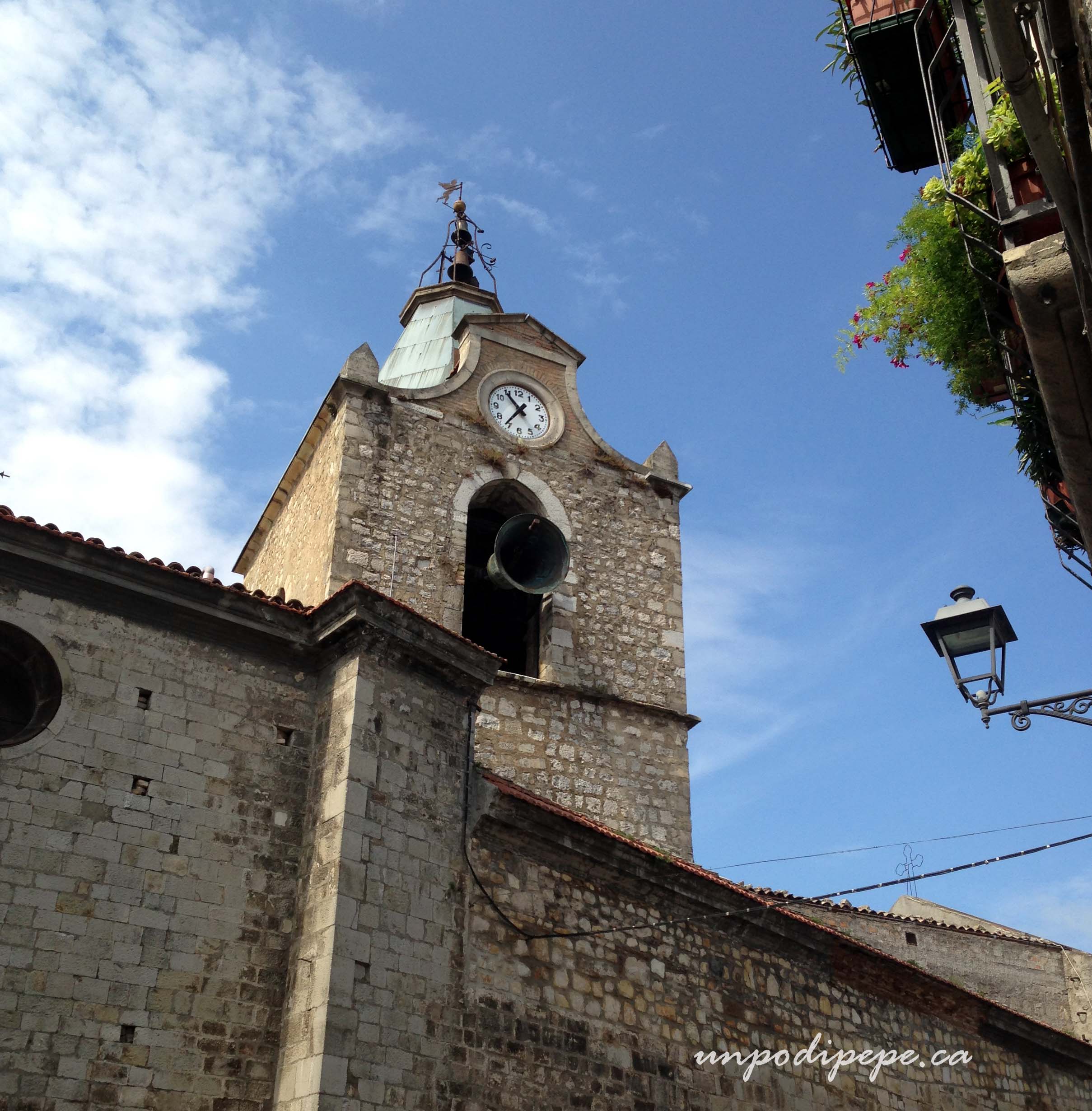
There is no need for a watch. My casa is right near the main church and the campanile– bell tower.  La campana rings every 15 minutes.  On the hour, there is one ‘ding’ for each hour, and every 15 minutes there is a higher pitched ‘ding’.  For example, at 12:45 la campana rings 12 times, followed by 3 higher pitched rings.  Back in the day when no one had a watch, contadini working in the fields would know the time. You might think this would get annoying, but la campana was broken for a year, and it was really missed! Once the dishes are done, it is orario di riposo-quiet time, as it is too hot to do much else.  Most people do not nap every afternoon, but they at least stay home and have a riposo, a rest. A short pisolino is quite civilized if you are up very early and plan to stay out late! The afternoon rest is not called a siesta in italiano- riposo or la pausa. I often read or do clean up stuff around the house, like hang laundry to dry. There are no dryers here as electricity is ridiculously expensive and sunlight is free. I may brave the mid afternoon sun to go out and take photos. The maze of steep, windy, cobblestone streets and alleys are empty and I am alone with the light and the incredible shadows.  To quote myself…
’ la luce … la gloriosa e magnifica luce del sole di metà pomeriggio è incredibile. Vorrei dipingere quella luce! / the light….the glorious and magnificent light of the mid-afternoon sun is incredible.  I want to paint that light!’ (Cristina, October 2017).

At 5pm shops and bars reopen and the streets come to life again.  I visit friends and relatives, meet for gelato, shop, or find somewhere to sit with my sketchbook. I also love to walk to La Cupa, the olive grove that used to belong to my Nonno to pick plums, figs and pears. I usually need to stop at one of the bars to use wifi, although as I explained in Chiuso per Ferie in August, this can end up seeming quite antisocial.

Sundays, I sleep in, unless going on a daytrip.  I love to have cappuccino and a cornetto crema di pistacchio before 11:00 Mass in the ancient Grotta di San Michele Arcangelo. At least one Sunday, I look forward to a barbecue at La Cupa with my extended family.

‘un po’ di relax’ under the olive trees

After 9pm, it is time for the evening passeggiata, walking up and down ‘il Corso’ and socializing. There are pizzerie and bars with outdoor seating along il Corso. On summer evenings, there are often concerts or special events.My favourite part of the passeggiata is walking all the way to the top of the Corso, past where the houses stop, then the streetlights stop.  It is buio (BOO•yoh) -dark, you can hear grille (GREEL•leh)-crickets, and see the stars.  On clear, windless nights, lucciole (looch•CHEEOH•leh)-fireflies make the night absolutely magical. There is usually a stop for a drink at an outdoor table before ending up back at home…never before midnight though! Buonanotte, Cristina.
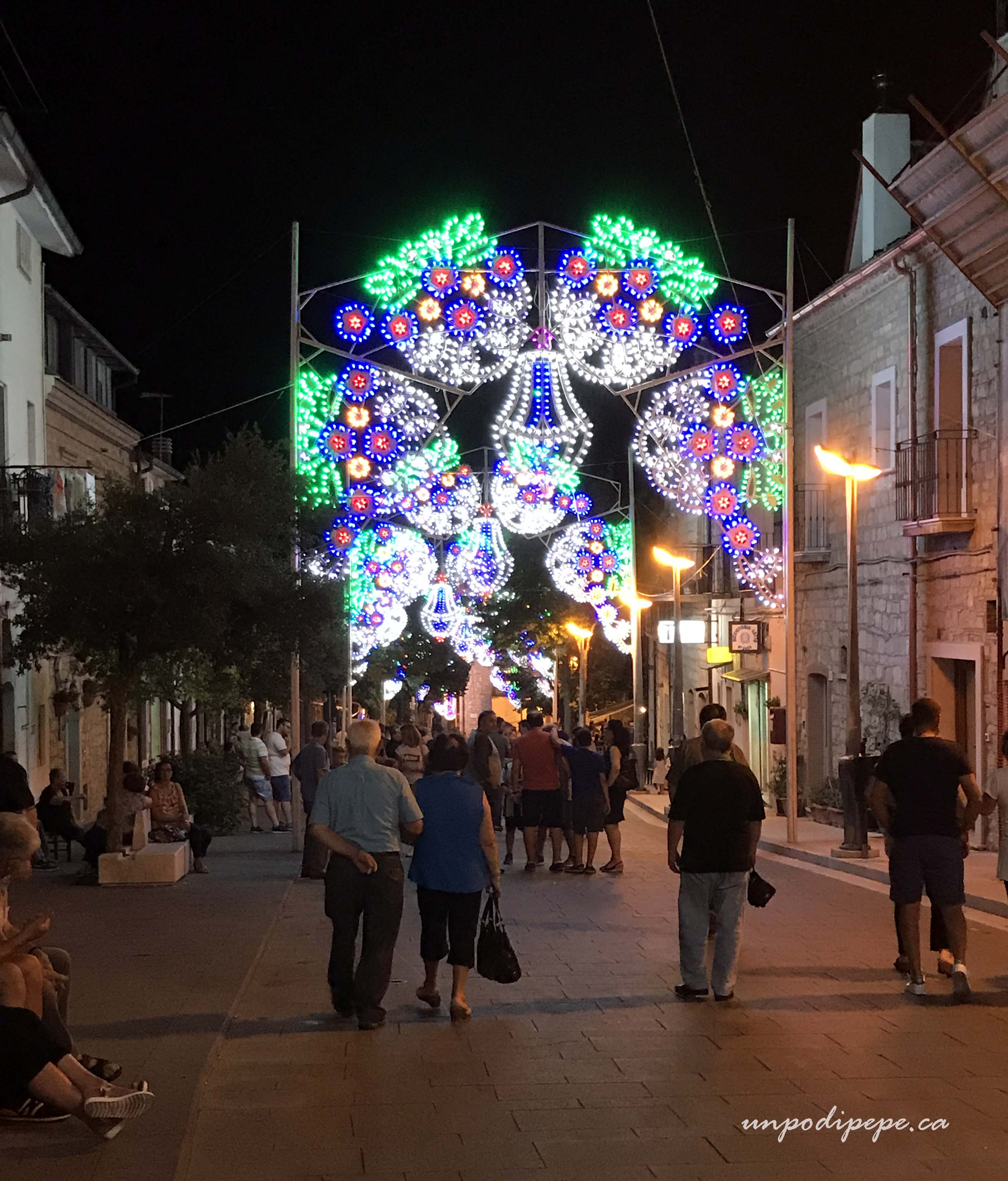
Click on these links to read previous posts about wonderfully perfect days spent in… Alberobello, the Isole Tremiti, Matera, Polignano a Mare, Paestum, Roma, Trani and the Val d’Orcia.

This post is written as part of the monthly #dolcevitabloggers linkup, hosted by Jasmine of Questa Dolce Vita, Kelly of Italian at Heart and Kristie of Mamma Prada the 7th -14th of every month.

Share this:

  • Share on Facebook (Opens in new window) Facebook
  • Share on Pinterest (Opens in new window) Pinterest
  • Share on X (Opens in new window) X
  • Email a link to a friend (Opens in new window) Email
  • Share on WhatsApp (Opens in new window) WhatsApp
Like Loading...

La Trinità di Masaccio

09 Friday Feb 2018

Posted by Un po' di pepe in Art history, Firenze, Italia

≈ 16 Comments

Tags

Brunelleschi, Firenze, Giorgio Vasari, La Santa Trinità, Linear perspective, Masaccio, Memento mori, Santa Maria Novella, Tommaso Cassai, Vanishing point

La Trinità di Masaccio is one of the most important paintings in art history…..and it came very close to being destroyed!  The fresco is on the wall of the left aisle in Santa Maria Novella, opposite the entrance through the cloisters. La Santa Trinità is the Holy Trinity; the Father, Son, and Holy Spirit.  It was commissioned by unknown donors, probably from the Lenzi or Berti families, since they had tombs close by.

La Trinità, completed in 1427, is the earliest known example of one point linear perspective.  It is painted on a flat wall, but gives the illusion of space, appearing to be a 3 dimensional chapel. This is the start of early 15th Century Humanism, when Italian painting moved from flat, idealized art to a more natural, realistic style.

To create a sense of depth and space, Masaccio uses linear perspective with a vanishing point, chiaroscuro, foreshortening and directional light. This was all new at the time. The figures are life-size, emotional, and so realistic they look sculpted. Jesus is especially realistic looking, with his body affected by gravity.  God is portrayed as a standing man holding up the cross, with foreshortened feet firmly planted on the ground.  He is usually portrayed by a hand or as an old man floating in the clouds.  Mary looks mournfully at the viewer, pointing up to Jesus as if to say ‘this is your answer to eternal salvation’. The praying witnesses are likely the unidentified donors, placed outside the ‘chapel’.

Inspired by Brunelleschi’s newly rediscovered classical principles, Masaccio creates a convincing architectural space, especially the barrel vaulted coffered ceiling. The composition is magnificent, with many triangles further emphasizing the theme of ‘trinity’.   The vanishing point is right at eye-level, guiding the viewer’s eye upwards and emphasizing the perspective of the ceiling.  Masaccio apparently inserted a nail at the vanishing point- the ledge below the cross. He tied strings to this nail which left imprints in the wet plaster.  He used these lines as a guide for the perspective.

My quick sketches of the vanishing point, perspective lines and triangular composition. The colour image is my entry ticket from 2004!

Masaccio was praised in Giorgio Vasari’s 1550 bestseller ‘The Lives of the Artists’.** Masaccio was born Tommaso Cassai. ‘Maso’ is short for Tommaso and with the superlative ‘accio’, it meant ‘big messy Maso’.  According to Vasari, this was ‘because of his complete lack of concern’ for worldly affairs or even how he dressed himself’. He was only concerned with his art.  Masaccio’s most famous work is the Cappella Brancacci in Santa Maria del Carmine.  In 1428, at the age of 27, he died suddenly of unknown causes.  Many, including Vasari believed he was poisoned by a jealous rival.  When informed of Masaccio’s death, Brunelleschi commented ‘Noi abbiamo fatto una gran perdita’-we have had a great loss. Masaccio did not live long enough to be well known in his lifetime, but his work inspired Fra Angelico, Fra Filippo Lippi, and Filippino Lippi.  The Cappella Brancacci was completed by Filippino after Masaccio’s death.
Back to La Trinità…In 1568, Vasari was commissioned by Cosimo I de Medici to ‘modernize’ Santa Maria Novella. Cosimo ordered all of the frescos to be plastered over and replaced with new ones!  Aaaaaahhhh!  Well-lucky for us, Vasari admired Masaccio and could not bear to destroy La Trinità.  He secretly built a false wall in front, effectively preserving the work for almost 300 years.  On the new wall Vasari installed an altar and painted the Madonna del Rosario.

In 1860 Santa Maria Novella was undergoing renovations and workers, noticing an irregularity in the wall, discovered La Trinità. Unfortunately, it was detached from the wall, transferred to canvas and moved to the another wall inside.  Detaching a fresco is done with the ‘strappo’ technique, which is complicated and fascinating. Italocanadese fresco artist Liana Tumino demonstrates the technique in this video.

The bottom part of the fresco was either not noticed or ignored. It is a cadaver/ skeleton on an open tomb.  Painted to look carved in the stone is written ‘Io fu già quel che voi siete, e quel chi son voi ancor sarete’ –I was what you are and you will be what I am.  This is a Memento Mori, a reminder of our eventual death, like poor Yorick’s skull.  The message can be interpreted as both ‘Do not take life for granted, live life to its fullest’ and ‘Prepare now for eternal salvation’.  The second interpretation was more likely in the 15th century.

Both parts of the fresco were reunited in the original location in 1952. Death below, and the hope of salvation above.  It suffered some damage from being transferred to canvas and then back to the wall.  I am not the biggest fan of Vasari’s work, but in this case…yeah Giorgio!  We can almost forgive him for the gaudy tomb he designed for Michelangelo… Almost.

Ciao, Cristina

**The full title is ‘The Lives of the Most Excellent Painters, Sculptors and Architects’, in italiano ‘Le Vite de’ più Eccellenti Pittori, Scultori e Architettore’ often simply called ‘Le Vite’, first published 1550, updated 1568. Read more about Vasari in this post.

Share this:

  • Share on Facebook (Opens in new window) Facebook
  • Share on Pinterest (Opens in new window) Pinterest
  • Share on X (Opens in new window) X
  • Email a link to a friend (Opens in new window) Email
  • Share on WhatsApp (Opens in new window) WhatsApp
Like Loading...

La Grande Cacata

17 Wednesday Jan 2018

Posted by Un po' di pepe in Art history, Firenze, Italia

≈ 30 Comments

Tags

Big Clay #4, Big Turd, Contemporary art Firenze, Marino Marini, Piazza della Signoria, Ratto delle Sabine

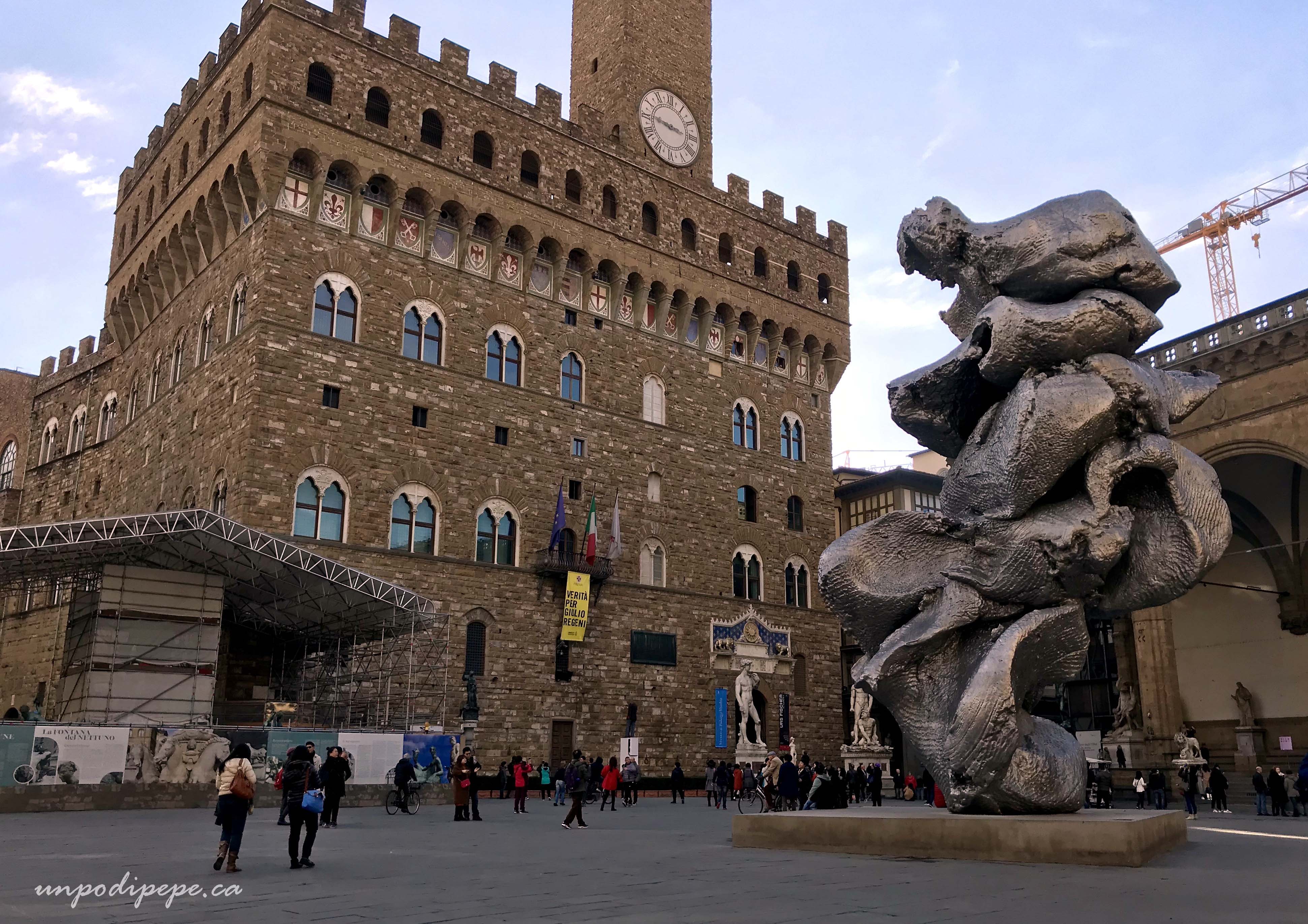
As I entered Piazza della Signoria in November, I was surprised to see it occupied by a massive excremental aluminum sculpture. Big Clay #4 is the actual title of the 12 meter high work by Swiss artist Urs Fischer.

The sculpture is actually an enlargement of pieces of clay that the artist modeled with his hands.  He took 5 small pieces of clay and squished them around in his hands, then piled them up.  Then it was ‘supersized’ to 12 meters high.  The artist’s fingerprints and palm creases that were impressed onto the surface of the clay were also reproduced. An interesting idea…. too bad it came out looking like poo.
The installation of this sculpture is not a successful pairing of contemporary and Renaissance/Classic art. If I sound like a harsh art critic, let me say that I am not one of those people who just dislikes contemporary art.  In fact, one of my favourite musei in Firenze is the Museo Marino Marini, housed in the deconsecrated ancient church of San Pancrazio. Marini’s 20th Century sculptures are elegant and classic and his melding of the historical and the contemporary is extremely successful.

In my determined quest to find a positive angle on this work, I looked at the photo below and wondered if the artist was trying to (unsuccessfully) mimic the spiraling vortex of Giambologna’s Ratto delle Sabine.  This is not the case, since I found out the sculpture was not made for this site.  It was previously displayed outside of the Seagram Building in Manhattan, where it was known as the ‘Big Turd’.

The work is supposed to be thought provoking.  The only thought that came to me was ‘Now I know what it would it look like if a brontosaurus took a big dump in the middle of Piazza della Signoria!’ The sculpture is up until January 21st, so you only have  4 more days to see it here.  My title may sound a bit harsh, but many other colourful, scatologically oriented comments were heard in the piazza and around Firenze. I don’t think many Fiorentini will be sad to see it go!

Ciao, Cristina

Share this:

  • Share on Facebook (Opens in new window) Facebook
  • Share on Pinterest (Opens in new window) Pinterest
  • Share on X (Opens in new window) X
  • Email a link to a friend (Opens in new window) Email
  • Share on WhatsApp (Opens in new window) WhatsApp
Like Loading...

Autunno in Italia

30 Thursday Nov 2017

Posted by Un po' di pepe in Firenze, Italia, Orsara di Puglia, Photography, Roma, Travel tips

≈ 31 Comments

Tags

Autumn in Italy, Casa Berti, Catalyst Art Retreat, Falò e Teste del Purgatorio, Firenze, Gugliano, Italy travel tips, Lucca, Orsara di Puglia, Piazzale Michelangelo, Roma, Tutti i Santi Festa

Returning from my short trip to Italia, as usual I was back to work the next morning.  This did not help with the cambiamento di fuso orario. I have so many posts to write, but now they will have to wait until after Christmas. Until then, here is a quick summary with some highlights from my viaggietto.  It was a bit of a blur….at 17 days, I think this was my shortest ever trip to Italia!

I had not been to Italia in autunno before. The fall weather was mostly clear and sunny, with a few days of serious rain. I envisioned myself having every piazza practically to myself….was I ever mistaken!  My first few days were in Roma the last weekend of October.  The Pantheon was packed with more people than I have ever seen in July! I could barely make it through the crowd to throw my coin into the Fontana di Trevi!  I found out that some European countries have their school midterm break around this time.  In Italia November 1st, All Saints’ Day, is a holiday and many Italians take ‘il ponte al primo novembre’, an extra-long weekend.  Even so, the guard at the Pantheon said ‘Qui non c’è bassa stagione’-there is no low season here.  My 2 partial weekends in Firenze were similar.  Smaller places, especially the seaside are quiet at this time of year, but the cities always have a lot of visitors, especially on the weekend.  Despite my utter shock at the hoardes of tour groups I was not expecting, Roma was glorious as usual. One day I want to spend a whole month in Roma.

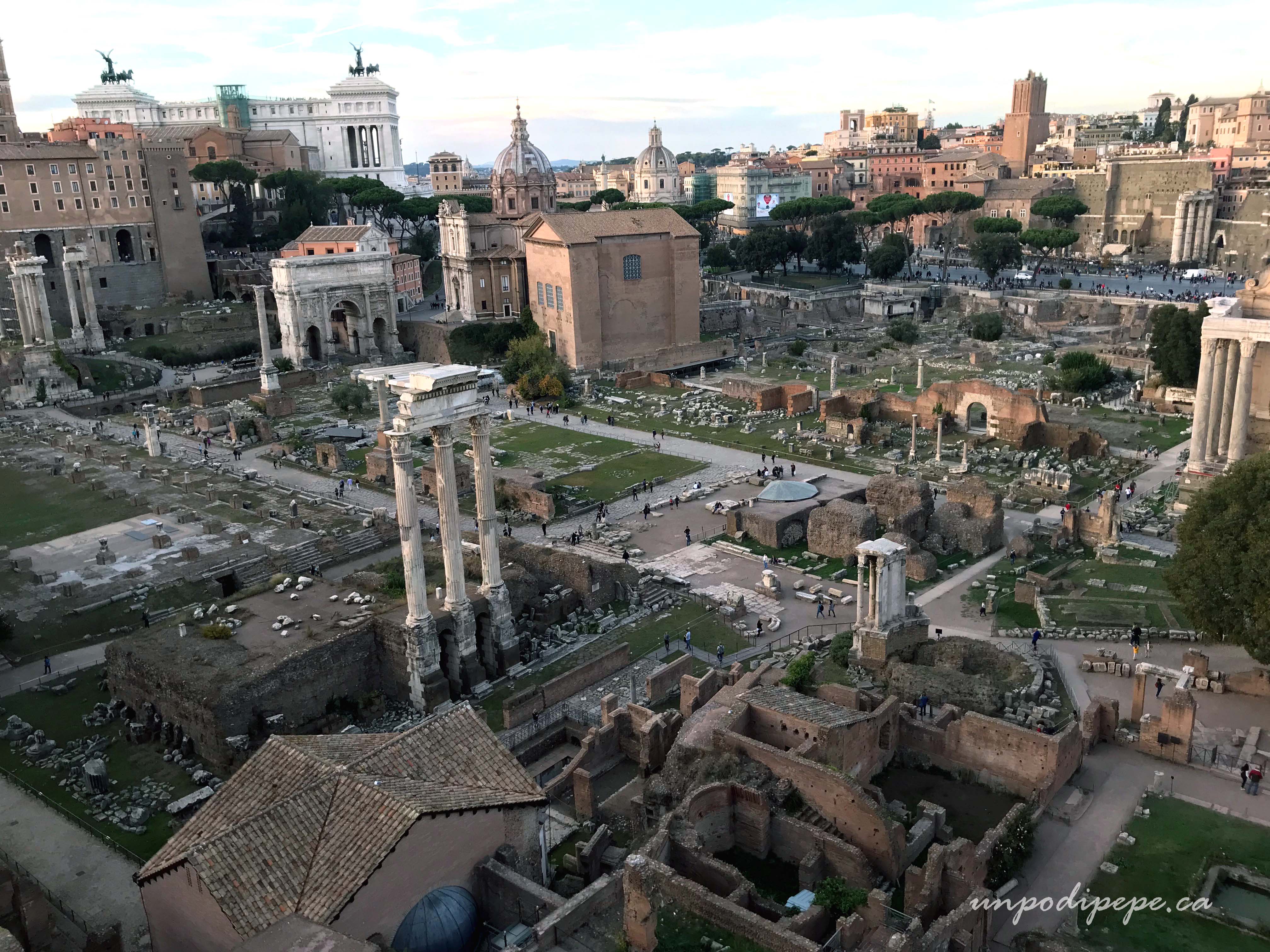
Franco joined me for the first 9 days-this was only confirmed a week before leaving! He had not been to Roma in a very long time, so we decided to visit the Colosseo and Foro Romano.  I took way too many photos of this.  I was obsessed with the way the sunlight struck this green door on the Tempio di Romolo in the Foro Romano. The rest of the day involved a lot of walking. It was centered around a visit to Poggi to buy Fabriano Rosaspina paper for my art retreat, and meeting a friend in Monti.  We ended up doing everything on my Un Giorno a Roma itinerary and a few extras.

Monti

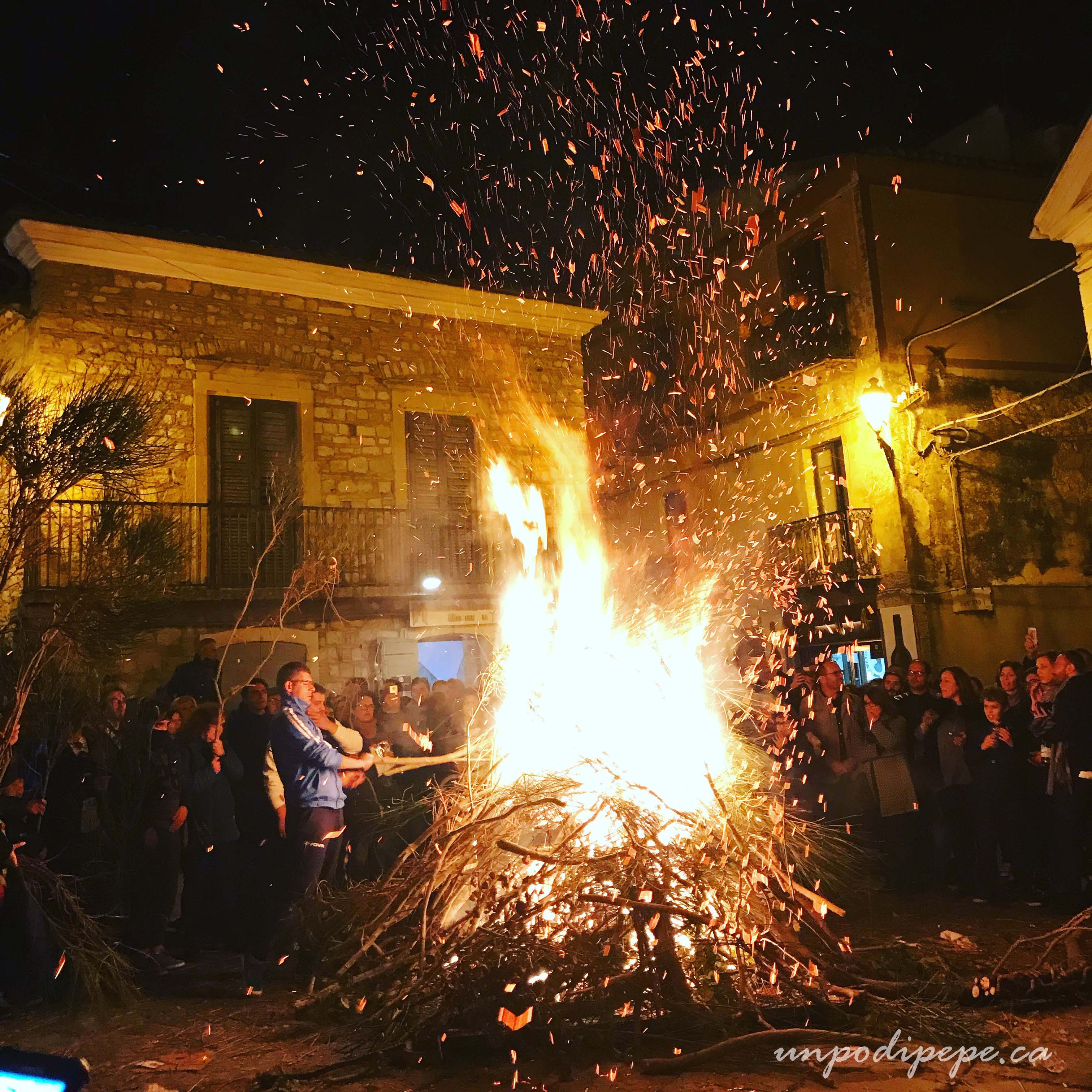
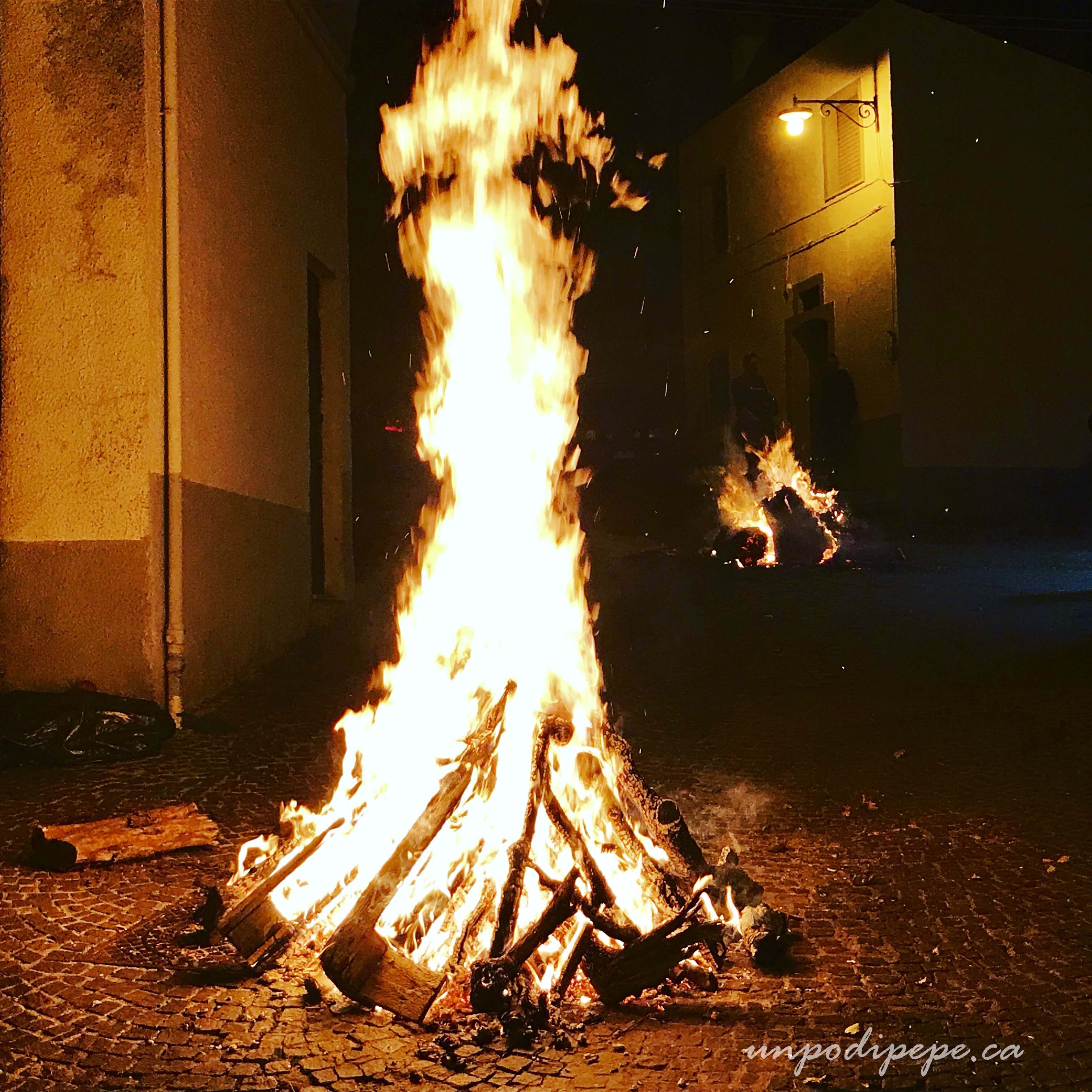
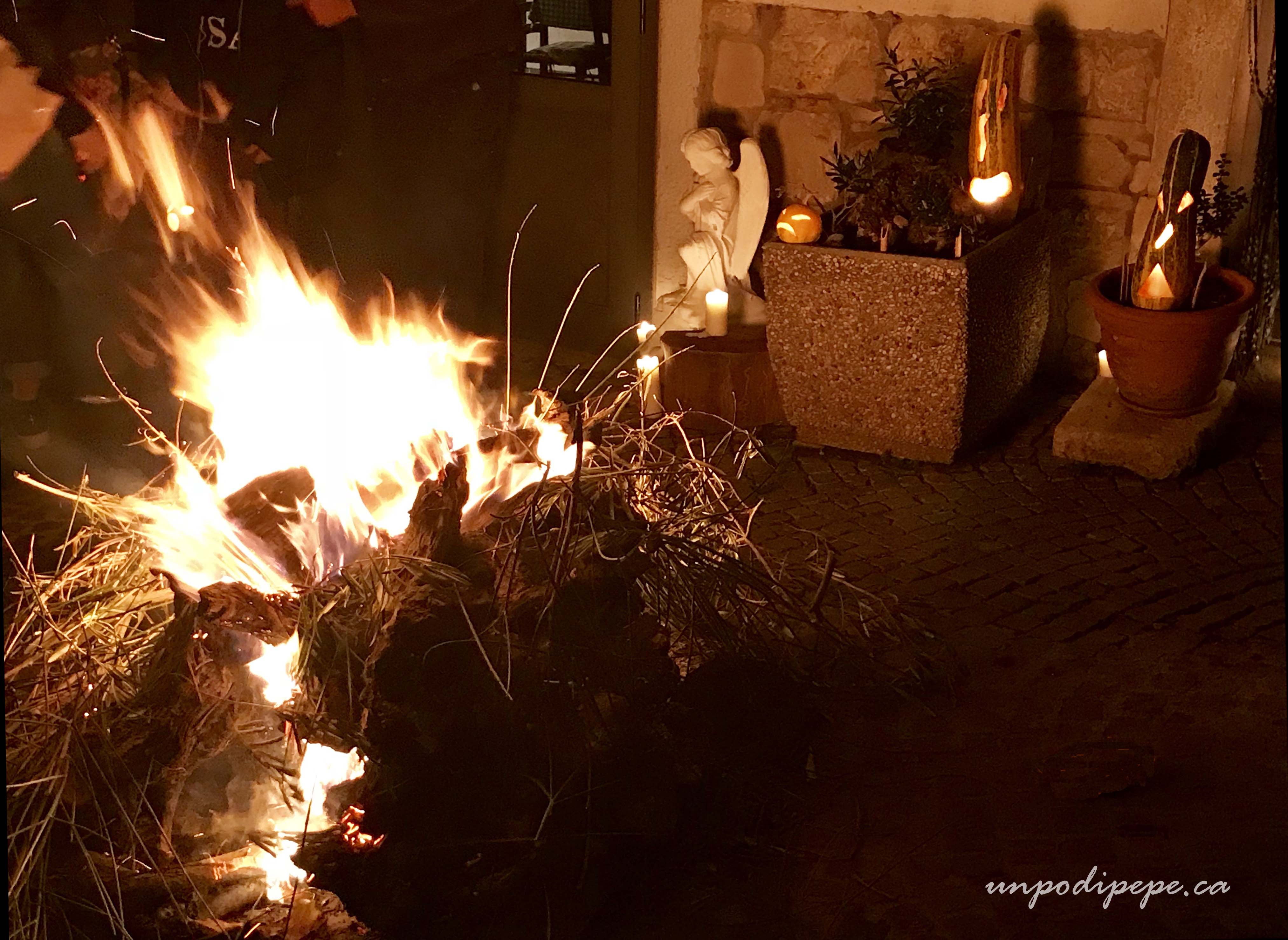
Spending just 4 days in Orsara di Puglia was a mad dash. This was not enough time to visit family and friends, so I greeted a lot of them in the street.  I heard the same phrase from anyone who was not expecting me ‘Ma sei fuori stagione!’. I guess I was out of season, but technically so were they!  It was hard to recognize people bundled up in their puffy piumini. November 1 is a holiday, and in Orsara also the festa Fucacoste e Cocce Priatorje.  In Italiano this would be Falò e Teste del Purgatorio (bonfires and heads from purgatory). Sometimes we simply call it ‘Tutti Santi’.  I wrote about the festa in this post, and now that I have been there myself, I will add photos or write a new post.  There were zucche and bonfires everywhere.  My balcony was decorated with zucche.  I took so many photos I am still going through them, but here are a few. 

Il fuoco e le zucche di Antonella e Domenico

The festa was absolutely amazing and also a moving, sprirtual experience-for me and 20,000 others. The weather was clear and crisp, but it was very cold at night.  My little casa has no heat, so I borrowed an electric space heater.  Brrrrr.

I encountered a lot of olives on this trip. It seemed every road near Orsara was full of parked cars and people with crates and olive nets.  I was not used to seeing the trees full of ripe olives!  I enjoyed spending a day at my Nonno’s olive grove. One evening we walked past the frantoio, the olive mill, which is always closed the rest of the year.  The divine smell of pressed olives lured me in.  I photo-documented the entire olive oil extraction process for a future post.  Then it was arrivederci Orsara until July.  Unfortunately, I missed my family’s olive harvest by one day, but I was able to pick olives in Gugliano.

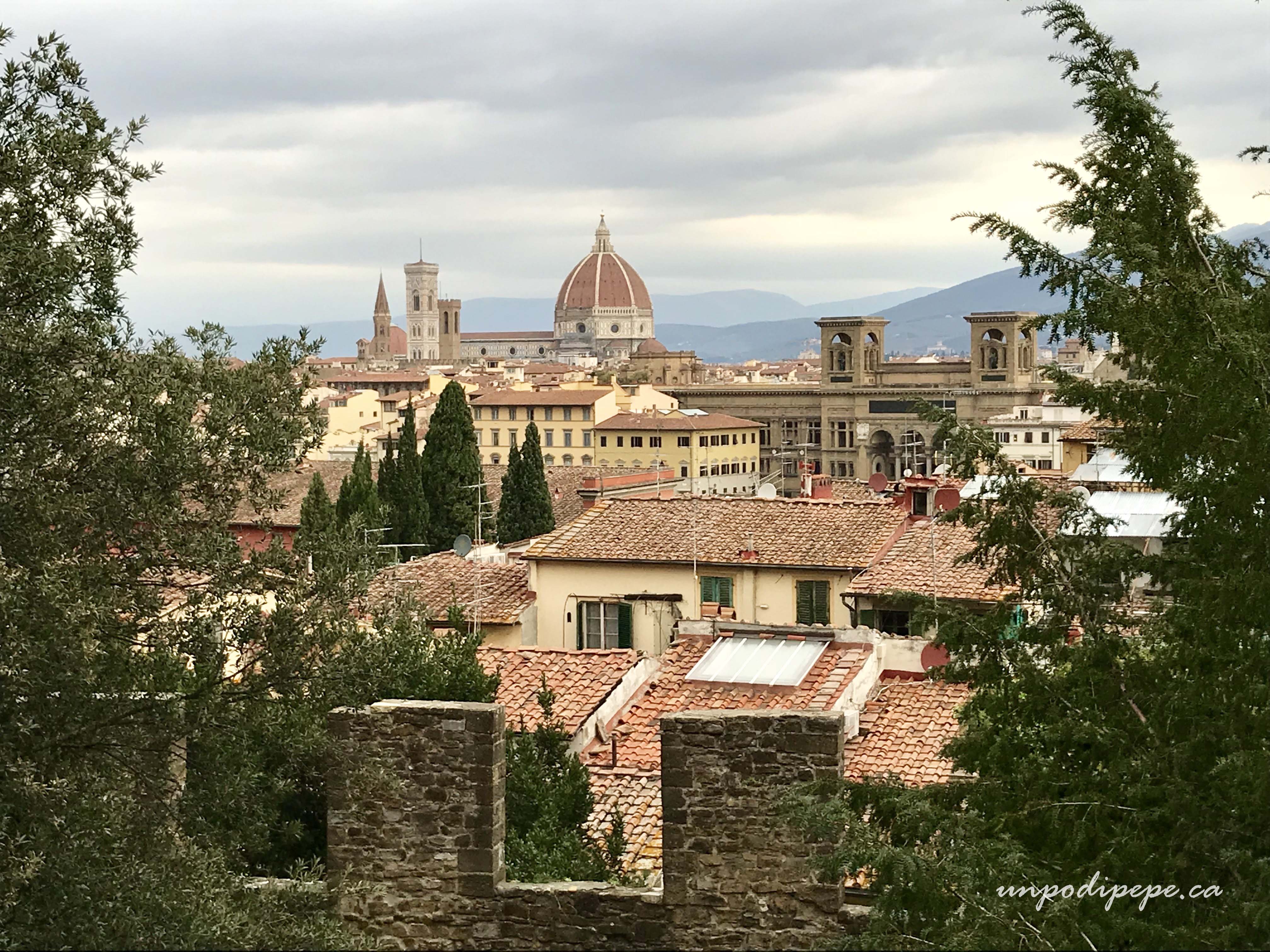
Next was Firenze for 2 half days. I had not been for several years and it felt good to be back. A spectacular view was the reward for a long morning walk along and across the Arno to Piazzale Michelangelo. A torrential downpour started just as we arrived, so the return trip was very wet. I had to blow dry myself, then got back out in the rain to catch the train to Lucca.  We arrived in Lucca just as thousands of attendees were leaving the Lucca Comics and Games Convention.  For security reasons, the front of the stazione was closed off.  My ride was waiting out front, so by the time we got there, I looked like I had been through the spin cycle.  The imposing medieval walls of Lucca were barely visible through the rain and the mist.  Next came the bumpy half hour ride to Casa Berti near Gugliano for the Catalyst Art Retreat.

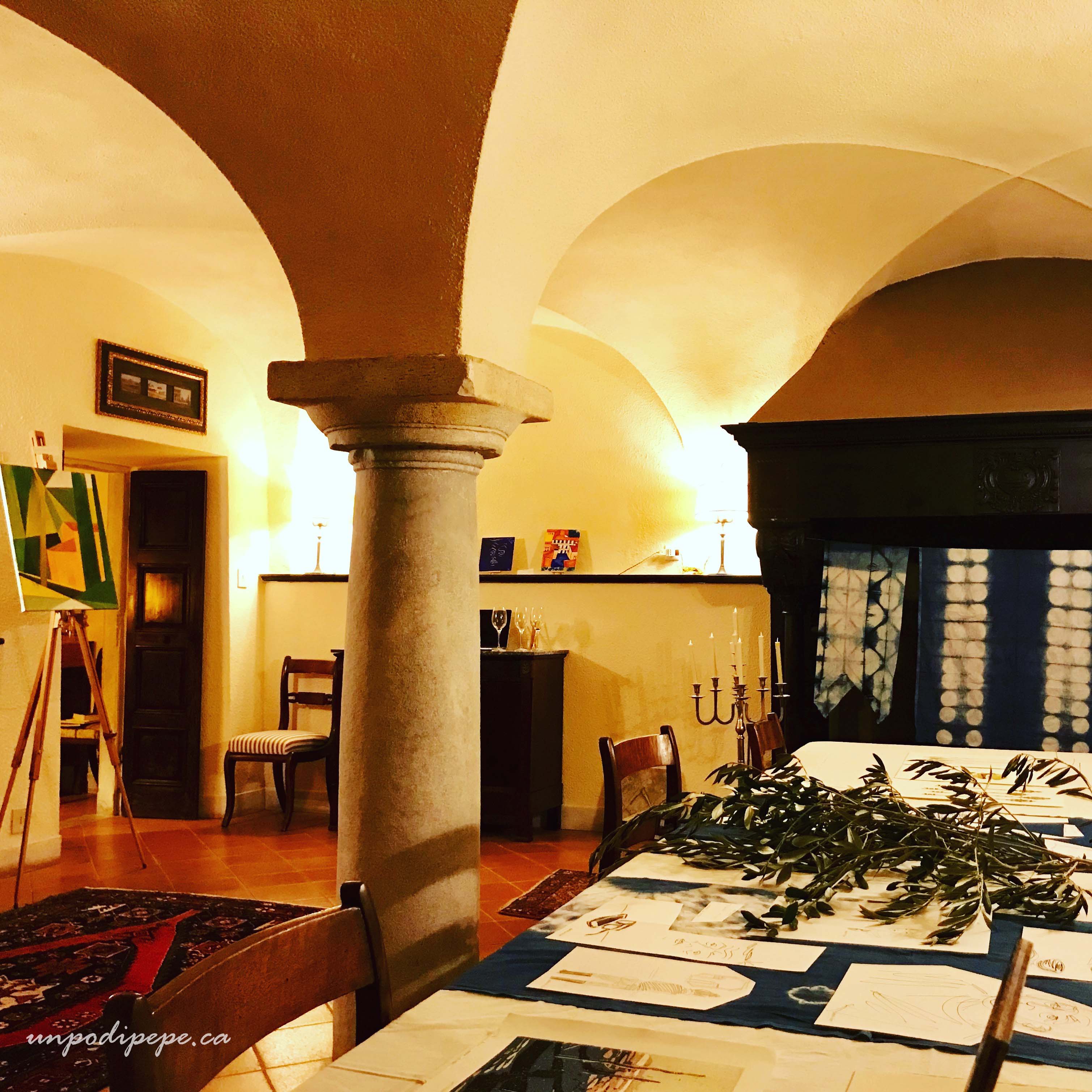
Casa Berti

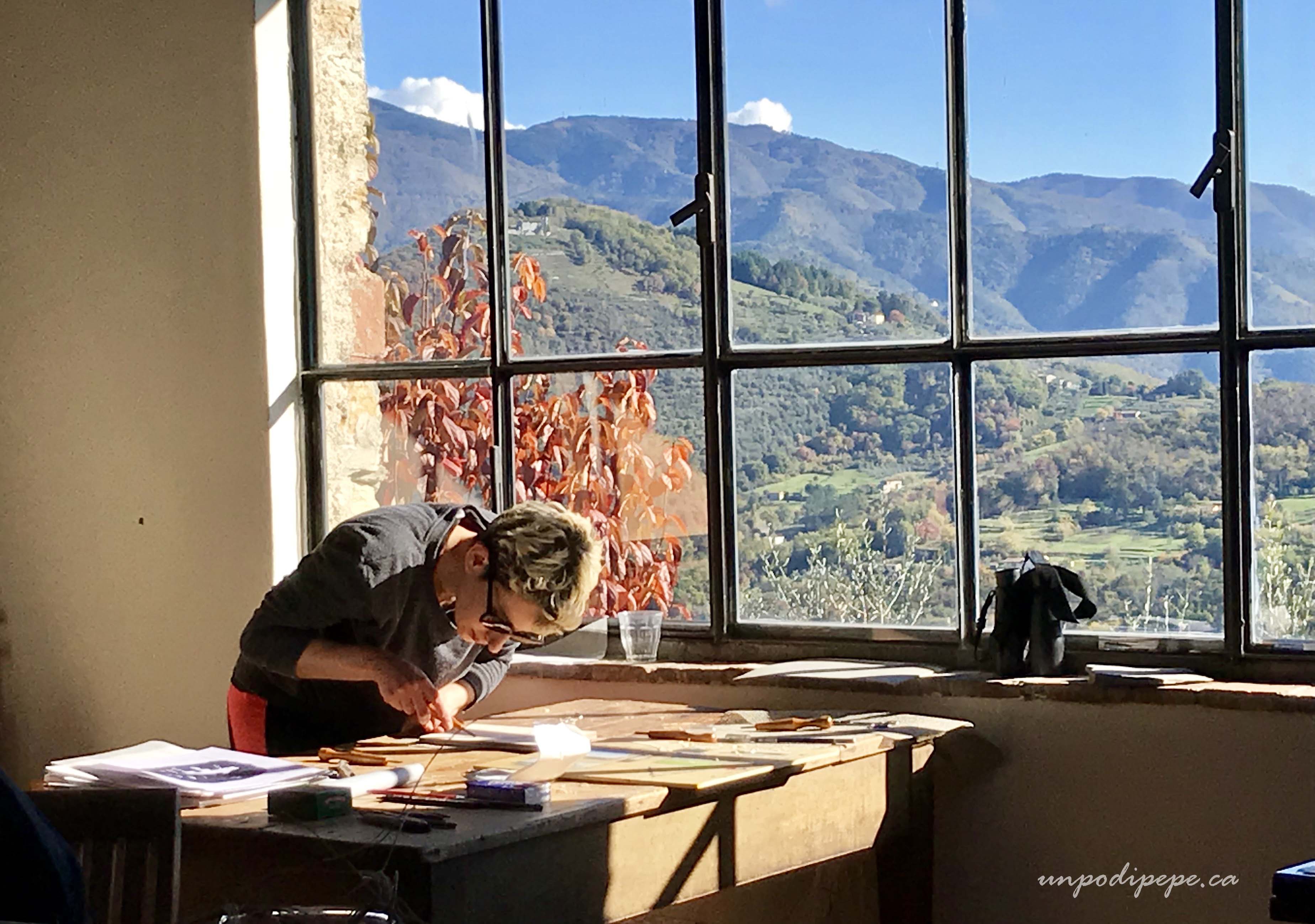
Luckily a fire was waiting.  Franco was in charge of roasting castagne, then he caught the last train back to Firenze to fly home in the am. The retreat was wonderful and the location stunning.  My fellow artists were an inspiration.

My corner of the studio at Casa Berti, looking out over olive trees

Artist Mary Cinque working on a woodcut in the studio

The retreat ended with an exhibit at Villa Coloreda near Pietrasanta

I also found time to visit Lucca, pick olives and cachi, make limoncello cake with freshly pressed olive oil and finally try Bistecca alla Fiorentina.  Lots of material for future posts.

#cooldudesroma

So much for a ‘quick’ summary! I’ll end with a few notes about travelling to Italia in autunno:

-It may be ‘low season’ for airfares, but unless your destination is a small town or a seaside area, do not expect to be alone! This is especially true on weekends. In the cities, midweek hotel prices are lower, but they go up on weekends.

-Dancing around an almost empty Piazza Navona is possible……before 8am!

-The days are shorter.  It gets dark at 16:30 to be exact. Take this into account when making plans for the day.

-The weather can be variable. Even if the days are sunny, nights are cold.  Dress ‘a la cipolla’, in layers like an onion, and be prepared for rain too!

Il Ponte Vecchio 12 Novembre

Buon Viaggio, Cristina

Share this:

  • Share on Facebook (Opens in new window) Facebook
  • Share on Pinterest (Opens in new window) Pinterest
  • Share on X (Opens in new window) X
  • Email a link to a friend (Opens in new window) Email
  • Share on WhatsApp (Opens in new window) WhatsApp
Like Loading...

In Partenza!

28 Saturday Oct 2017

Posted by Un po' di pepe in Amici e Famiglia, Italia, Parole piacevoli, Travel

≈ 13 Comments

Tags

Art retreat, Fucacoste e Cocce Priatorje, Italia in November, Ritiro artistico

Sono in partenza!  I am going on a recently planned trip to Roma, Orsara di Puglia and Lucca!  My amica Shannon, who some of you may remember from this post, has organized an artist retreat just outside of Lucca…so of course I have to go.  It just so happened I already had vacation scheduled for the week before, with no plans!  The week before the retreat includes November 1, which is the festa Fucacoste e Cocce Priatorje in Orsara di Puglia. For years I have been hearing about what an incredible experience the festa is.  Even my parents tell me stories about it. I have not ever attended because…. well really, who goes to Italia in November??? Apparently now I do!  I managed to rearrange my schedule and piece together another week to my vacation and off I go! Have a look at this lively 47 second video.

I had to find out how to say ‘artist retreat’ in italiano so I could explain what I was going to be doing to my famiglia.  The 2 best options I found are ritiro artistico and soggiorno creativo.

I arrive in Roma for the weekend, then will take the train to Orsara for the festa and a few days of hanging out and visiting with amici e famiglia.  I must admit I am a bit concerned because my little casa does not have heat!  Luckily the forecast is sunshine, and I have 2 of my Nonna‘s big blankets. I may buy a space heater or else bake biscotti every night so I can use the oven! My next stop is Lucca.  I will be at the retreat for a week and at the end of it we are having una mostra, an exhibit in Pietrasanta.  After the retreat I have a day and a half free, which I will probably spend in Firenze, since that is where I fly home from. As I explained in my summer post ‘Chiuso per Ferie’, which hardly anyone read, new posts will have to wait until I am back.  I will be posting to Instagram regularly, so check that out to see what I am up to!

Arrivederci, Cristina

PS The photo was taken while flying over Stanley Park and downtown Vancouver

Share this:

  • Share on Facebook (Opens in new window) Facebook
  • Share on Pinterest (Opens in new window) Pinterest
  • Share on X (Opens in new window) X
  • Email a link to a friend (Opens in new window) Email
  • Share on WhatsApp (Opens in new window) WhatsApp
Like Loading...

Ruote di Trani

09 Monday Oct 2017

Posted by Un po' di pepe in Italia, Photography, Puglia, Travel

≈ 13 Comments

Tags

Fiat 126, Fiat 500 Giardiniera, Fiat Cinquecento, Piaggio Ape, Renault 4, Southern Italy, Trani

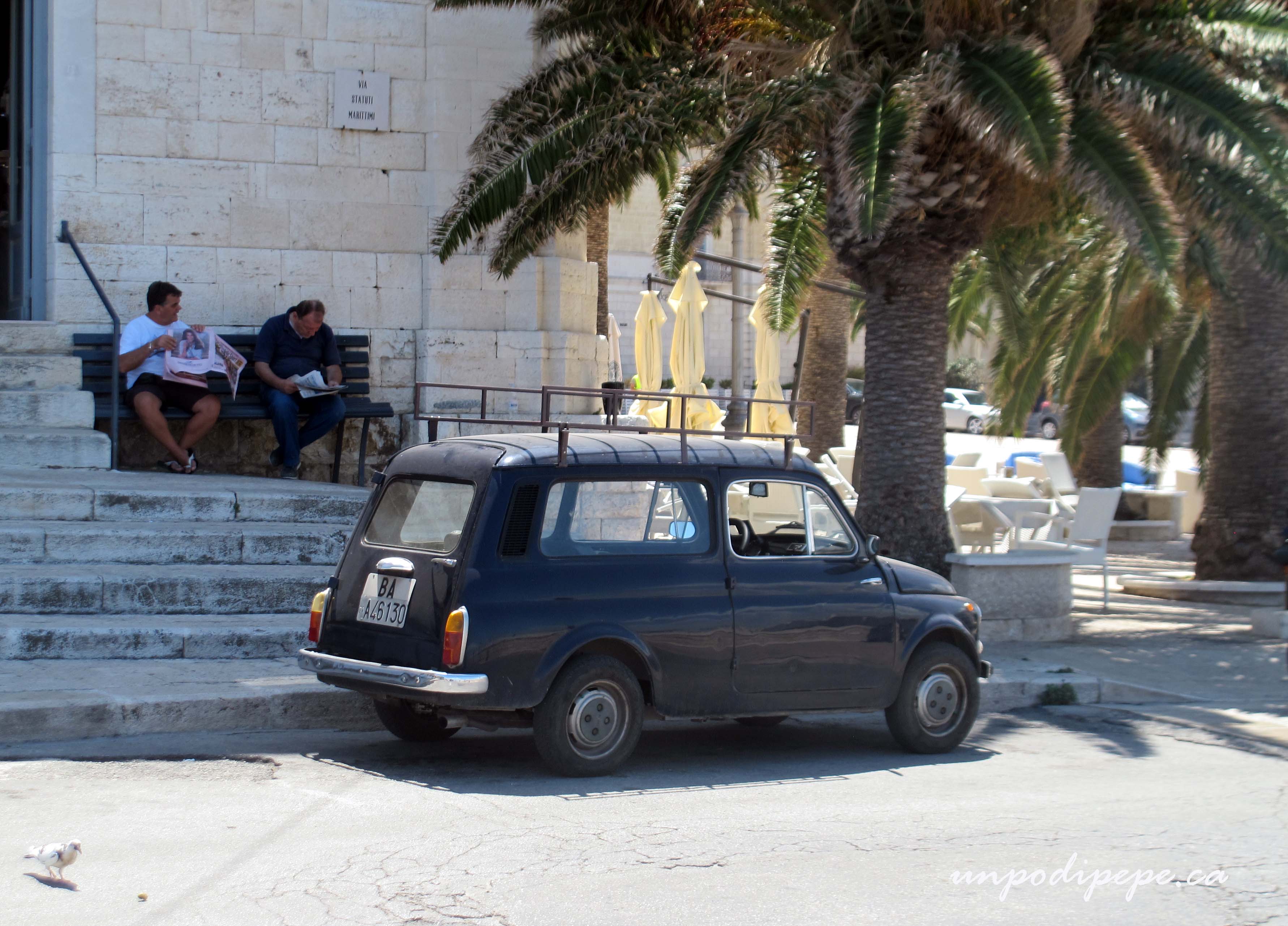
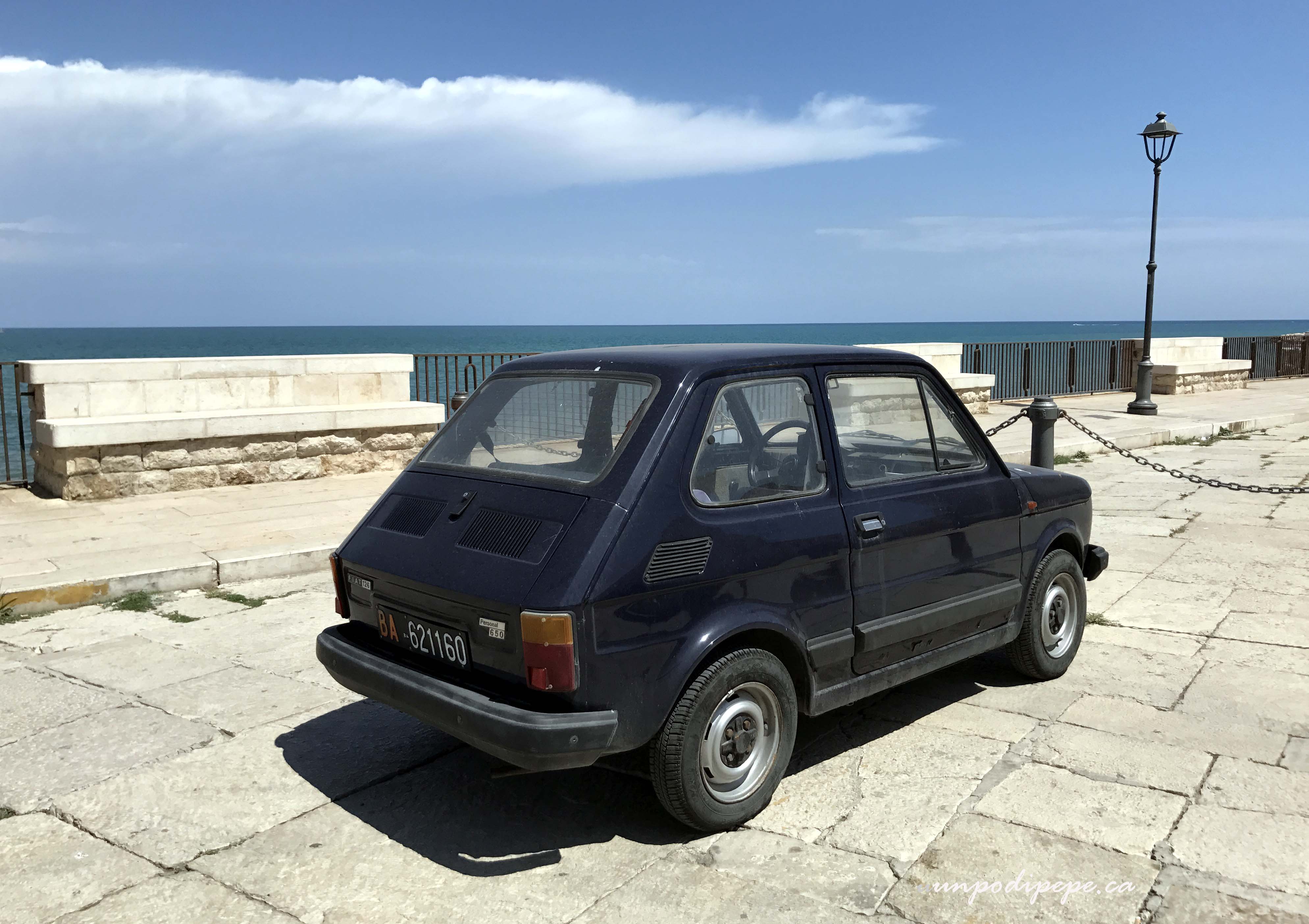
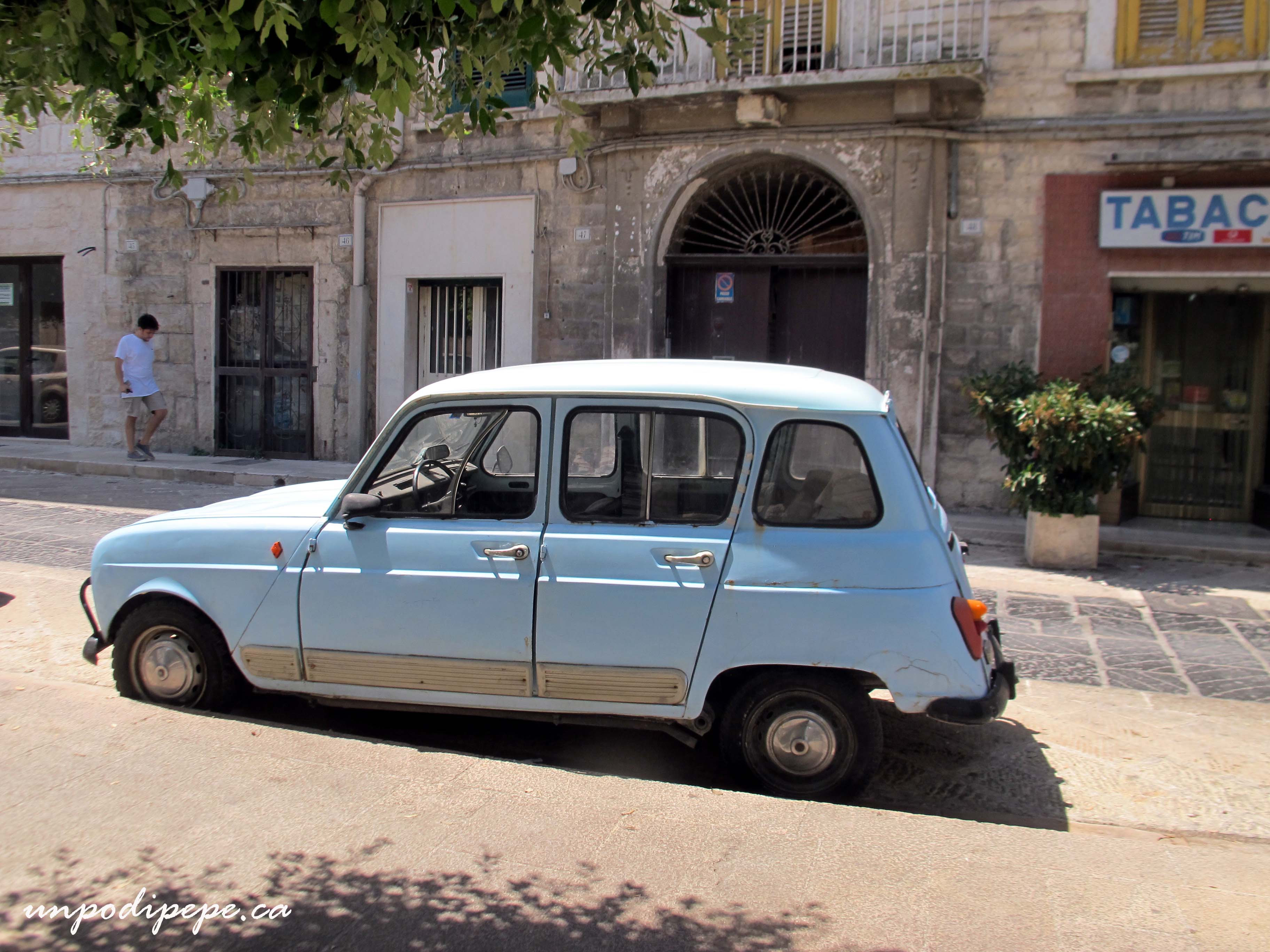
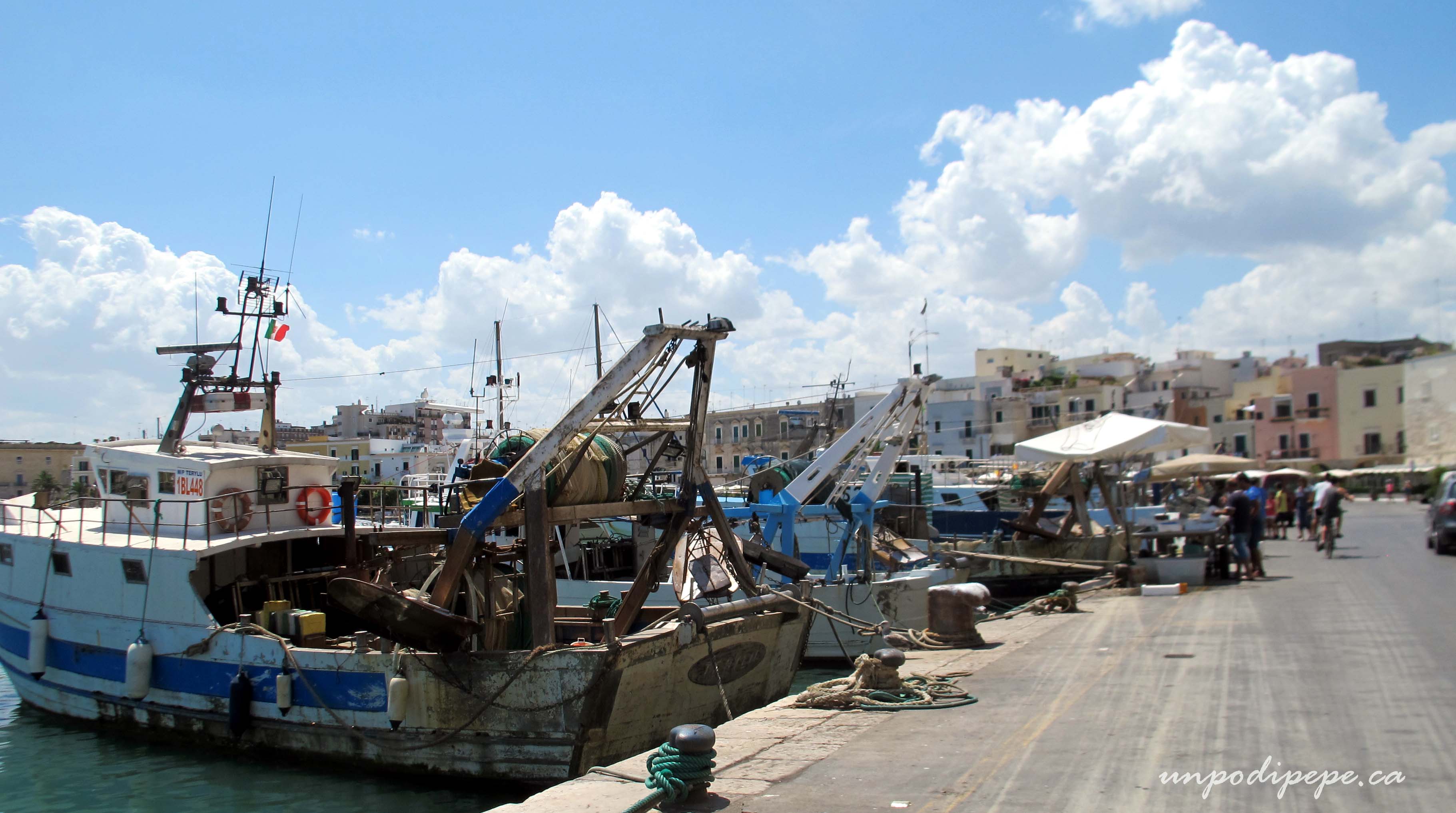
In August I took a lovely daytrip to Trani, a quiet, sun drenched fishing port on the Adriatic.  While walking through town and the port in the late morning/early afternoon there were times I felt like I was walking through a movie set! One of the reasons is because of all the macchine d’epoca or vintage cars that I saw, as well as motorini and biciclette. I have compiled a few photos of these vehicles in this post and, for lack of a better title, I am calling it Ruote di Trani or Wheels of Trani.

I was disappointed because I did not take any photos of my favourite macchina, as every time I saw a Cinquecento, a Fiat 500, it was speeding past me too quick to snap a photo! I have a bit of an obsession with them-but only the old ones.  It turns out I actually did photograph one though! 

This is a Fiat Cinquecento Giardiniera, also known as the 500K or the Autobianchi Giardiniera.  It is basically a Cinquecento station wagon, made from 1960-1977.  If you think I am joking, cover the back half of the car, and you will see that the front half is totally 500ish!  In 1970, production was transferred to Autobianchi, a Fiat subsidiary in Monza.  Later models were branded as Autobianchi rather than Fiat. Notice this one has porte di suicidio or suicide doors, which are hinged at the rear instead of the front.  They make it easier to get in and out of the car, but are a safety hazard at higher speeds.  I wrote about porte di suicidio here. Notice the bird photobomb in the corner!

The Centoventisei or Fiat 126 was a more modern model to replace the Cinquecento in 1973.  The 126 never became as popular.  My Zio used to have one that was a Robin’s egg blue.  It were very popular in the former eastern bloc countries because of its fuel efficiency.  Later models were made in Poland as the Polski 126p.

This ‘vintage’ photo of a white Fiat 126 was taken by me on my previous visit to Trani, in 1994.  My Zio had one just like this.  I think it even had the same dented front.  Thankfully, not much has changed to the look of Trani since 1994!

This photo of a late 1960’s/early 1970’s Renault 4 GTL on the street in front of old buildings looks like it was taken 50 years ago rather than just 2 months ago!

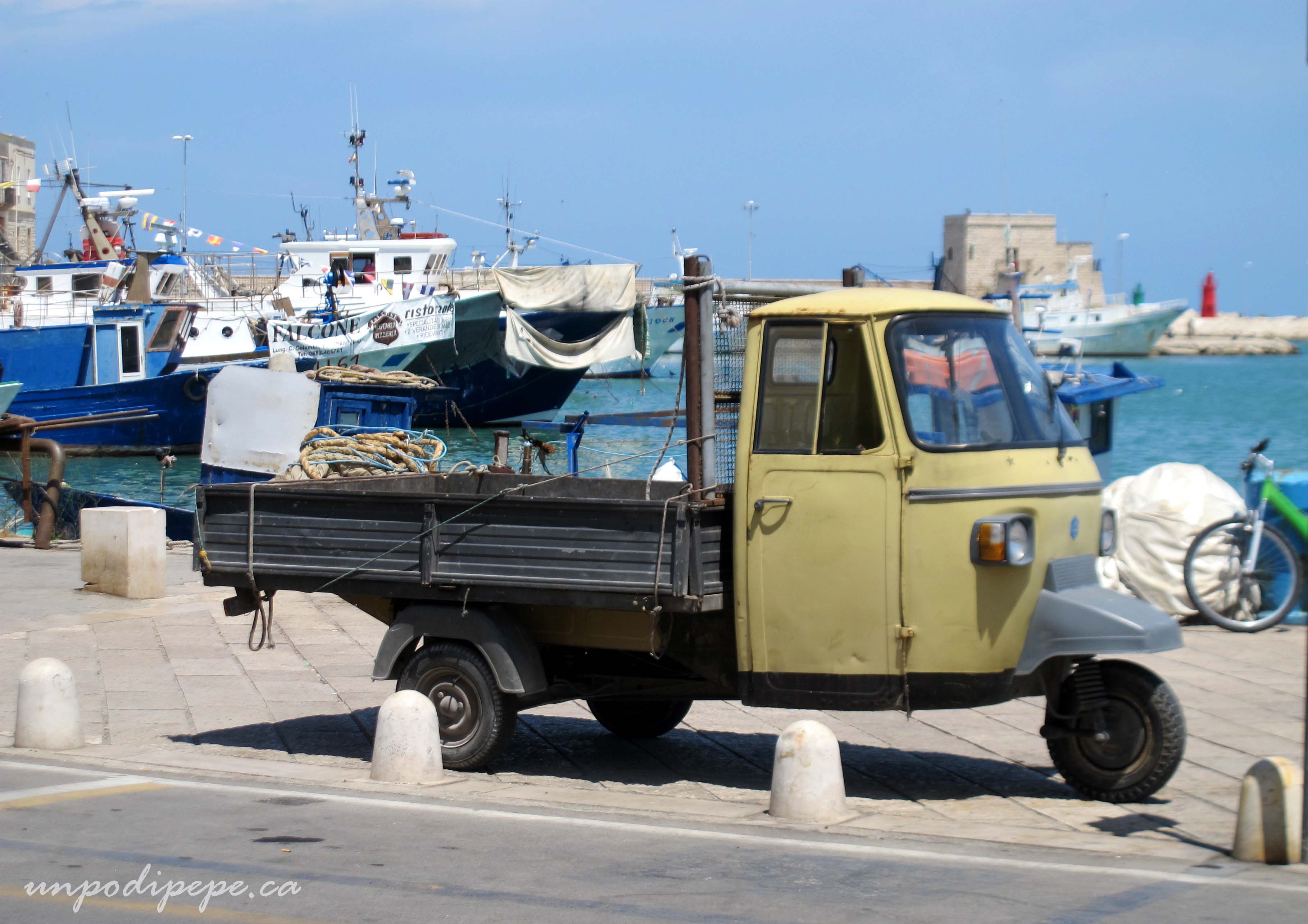
I spotted this Piaggio Ape (AH·peh) 3 wheeled vehicle at the port.  Piaggio also makes the Vespa motorino.  An Ape is basically a Vespa with 2 wheels at the back supporting a flatbed.  Piaggio started making the Ape in 1948 to fill the post-war need for inexpensive light commercial transport.  Ape means bee.  I thought it was named for the cute buzzing sound it makes while driving, but it could also be referring to the work ethic of this ‘worker bee’ hardworking vehicle.  Api make great delivery vehicles for narrow cobblestone streets and alleyways.

I hope you enjoyed your phototour of Trani’s ruote. Grazie mille to Franco for helping me identify them! Ciao, Cristina

Share this:

  • Share on Facebook (Opens in new window) Facebook
  • Share on Pinterest (Opens in new window) Pinterest
  • Share on X (Opens in new window) X
  • Email a link to a friend (Opens in new window) Email
  • Share on WhatsApp (Opens in new window) WhatsApp
Like Loading...

Trani

30 Saturday Sep 2017

Posted by Un po' di pepe in Architecture, Italia, Photography, Puglia, Travel

≈ 24 Comments

Tags

Diomedes, Italy travel tips, Puglia, Romanico Pugliese, San Nicola Pellegrino, Southern Italy, Trani, UNESCO World Heritage Sites

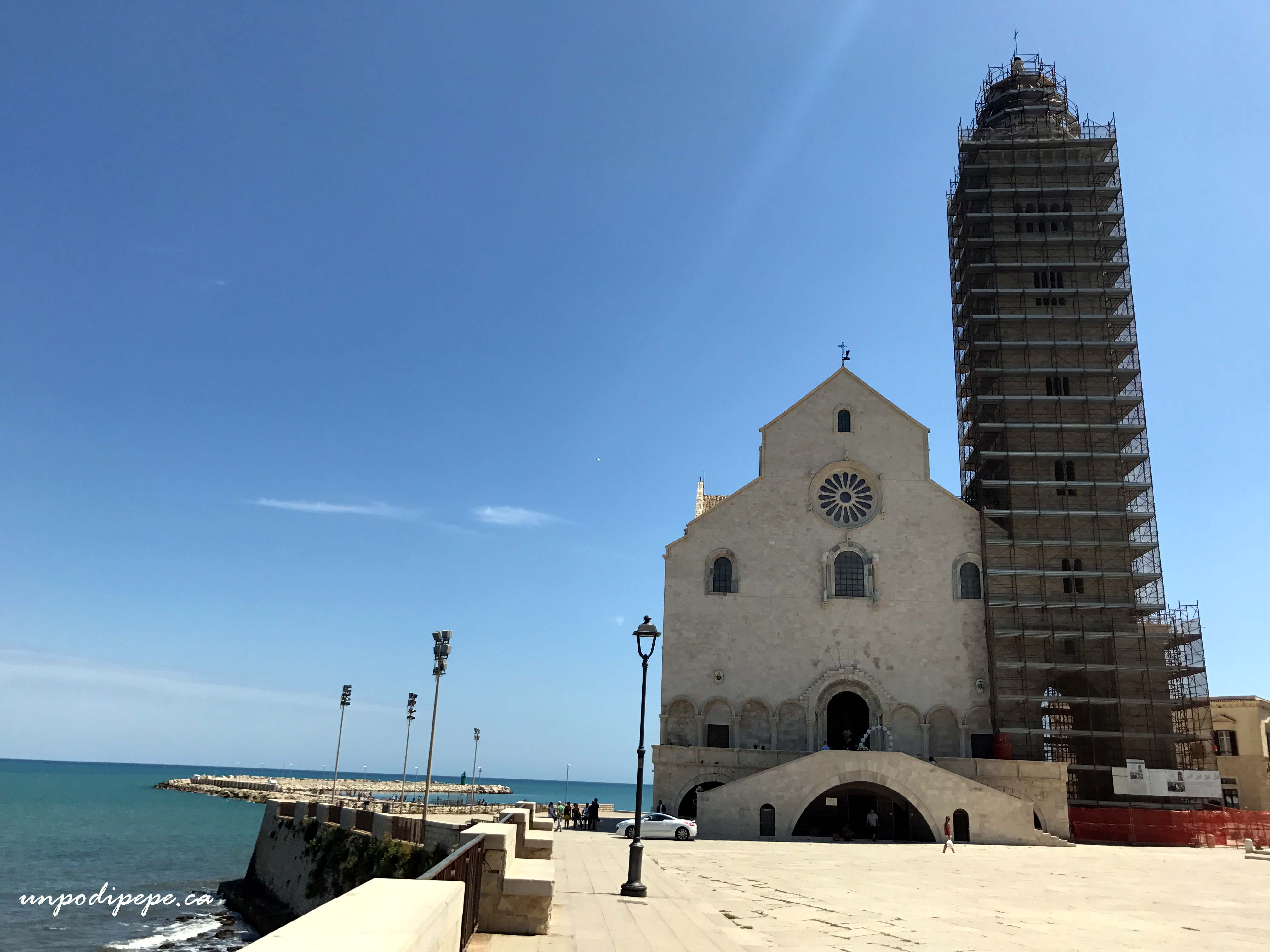
A crescent shaped port, fishermen selling their catch on the waterfront, a timeless, picturesque centro storico that looks like it could be a movie set, a castle, and a stunning limestone Romanesque cathedral right at the water’s edge where you expect to find a lighthouse.  These are some of the reasons why Trani is one of my favourite day trips.  It is a beautiful, peaceful, uncrowded fishing port on the Adriatic, between Barletta and Bari.  Trani is on the main ‘Adriatico’ railway line so it is easily accessible without a car.

Trani is ancient Tirenum, allegedly founded by Tirenus, son of Diomede.  Trani is famous for issuing the ‘Ordinamenta et consultudo Maris’ in 1063.  This is the oldest surviving maritime law code in the west. The street along the harbor is called ‘Via Statuti Marittimi’.  Trani is also known for Moscato di Trani, figs, almonds and olive oil.

During the rule of Federico Secondo (aka Holy Roman Emperor Frederick II) in the early 13th Century, Trani became an important political center and trading port with the Orient.  Since Trani was on the pilgrimage route to the Holy Land it grew and prospered.  Trani also had a close diplomatic and trading relationship with Venezia.When I got off the train in Trani, I walked about half an hour, straight to the cathedral.  I am a big fan of Romanico Pugliese (Pugliese Romanesque), an 11th-13th Century architectural style unique to Puglia.  Romanico Pugliese includes classic Romanesque features such as tall facades, campanili and rose windows, blended with Byzantine and Islamic architectural details.  In fact, since 2006, the Romanico Pugliese churches in Puglia are on the the UNESCO World Heritage Sites tentative list.  This is the step before becoming a World Heritage Site.The Trani cathedral was built in 1099 out of local tufo, a creamy coloured limestone that almost seems to glow in the sun.  One of the oldest and largest cathedrals in Puglia, it was used as a model for the ones built later. It was named for San Nicola Pellegrino (the Pilgrim), a 19 year old Greek shepherd who died while on pilgrimage in Trani in 1094.  His bones are in the crypt.  Note….this is not the same San Nicola who is buried in Bari and is the inspiration for Santa Claus.  Trani’s cathedral was constructed on layers of history.  It was built over the foundations of a 5th Century Byzantine church, Santa Maria della Scala, which was built over the Roman crypt of San Leucio.  Both of these ‘layers’ are accessible. The beautiful bronze doors are a copy.  The original doors are on display inside.  The 32 panels were sculpted by Barisano di Trani who also did work on the cathedrals in Ravenna and Monreale. The 60m high campanile built in 1239 has square corners and an octagonal spire.  The number of windows increase with each floor. The campanile was being renovated when I was there, so I have included a photo I took in 1994 without the scaffolding.

Trani 1994

Right on the harbour is the Chiesa di Ognissanti, built in the 12th Century by the Knights Templar in the courtyard of their hospital.  Trani was on the route to the Holy Land and the knights had a hospital here for those wounded in the crusades.  It is not open to the public.At the far end of the harbour, the Villa Comunale is a park with benches and a seaside walk.  The breakwater near the Cathedral is a nice place to sit and soak up the sun or go for a swim.

Federico II built the Castello Svevo in 1249.  It has square towers at each corner.  The sea water moat was filled in.  From the 1800’s-1974 the castello was used as a prison. Now it is open to visitors and hosts cultural events.  Admission is €3.

Trani once had southern Italia’s largest Giudecca community or Jewish neighborhood.  It was not a ghetto, as it was not closed off.  There were once 4 synagogues.  The Scolanova Synagogue spent centuries as a church, but in 2006 it was rededicated as a synagogue.

Trani is small enough that you can walk everywhere.  From the Stazione, walk straight out and turn left at Piazza della Repubblica.  There is an info point here.  It is about a half hour walk along quiet streets with beautiful palazzi to the cathedral and port.  Just ask a local for ‘Il Porto’ if you need directions.  Shops are closed from 1-5 pm.

For seafood lovers, the port has many excellent restaurants.  My cousins had given me 3 restaurant recommendations.  It was such a beautiful sunny day I just wanted to sit near the breakwater and enjoy the sea.  I had a mad craving for polipo-octopus.  I ended up getting a take away insalata di polipo and a glass of Falanghina.  It was perfect!

Trani is a great base to stay for exploring several UNESCO World Heritage Sites.  Castel del Monte, Alberobello and Matera are all about 1 hour away.

Ciao e buon viaggio, Cristina

Share this:

  • Share on Facebook (Opens in new window) Facebook
  • Share on Pinterest (Opens in new window) Pinterest
  • Share on X (Opens in new window) X
  • Email a link to a friend (Opens in new window) Email
  • Share on WhatsApp (Opens in new window) WhatsApp
Like Loading...

A Smoky Haze

13 Sunday Aug 2017

Posted by Un po' di pepe in Italia, Travel

≈ 11 Comments

Tags

Granville Island, Incendi, Napoli, Vancouver, Vesuvio

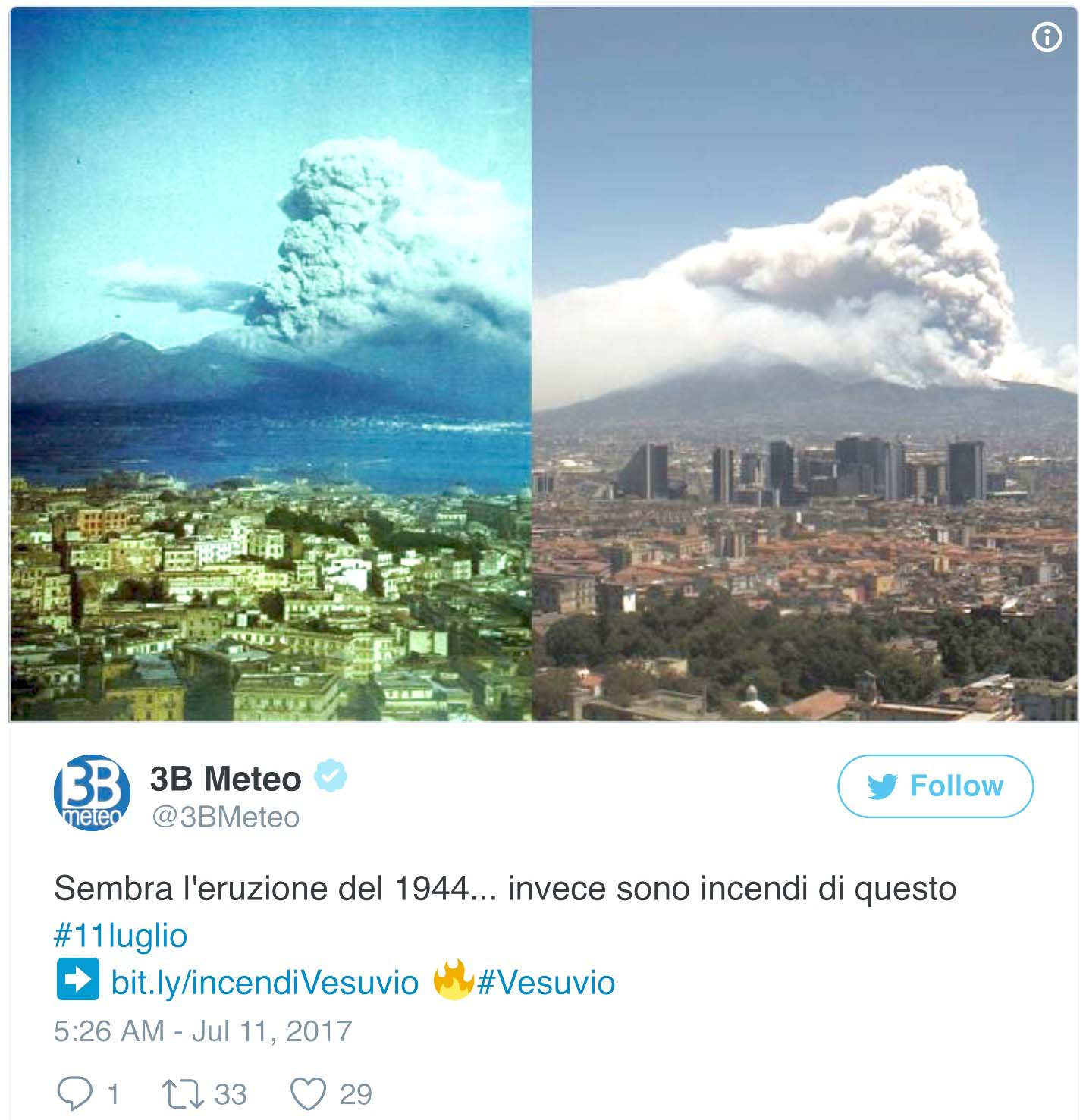
It seems a smoky haze has been following me around-and I am not talking about jet lag!  When I arrived in Napoli on July 11th, the air was grey and smoky.  As we were driving from Capodichino airport, my cugino said ‘è il fumo da Vesuvio’.  I looked over at the imposing volcano and the crater was engulfed in smoke!  I immediately thought the worst and started to panic and wonder why the 3,000,000 people living in the area were not being evacuated!  Then it was clarified…..the smoke from Vesuvio was from incendi, wildfires burning on the slopes of the volcano. The cause is thought to be intentional, although no one is really sure.  I am not even going to discuss some of the ridiculous rumours I heard. The hot weather, dry soil and wind is not helping.  This is really awful, although looking on the bright side, it is less awful than a volcanic eruption in an area with a population of 3,000,000.

July 11th tweet from 3B Meteo comparing photo of 1944 Vesuvio eruption and today’s fires!

A month later, the air in Napoli was still an atmospheric gray zone.  The day I flew home was also slightly windy.  This caused my flight to be delayed and my connecting flight in Munich left without me.  Mannaggia! I was not impressed.

A day late, I finally arrived home, and was surprised to find the air conditions to be the same smoky haze I left in Napoli!  Was this gray blanket of fog following me? To top it all off, the mountains were missing from the landscape!  It had been this way for 2 weeks due to over 150 wildfires burning in the interior of British Columbia.  The air was so smoky and gray the mountains were not visible.

Yesterday I was at Granville Island. If you are not familiar with it, this photo may look normal. There is something missing…..some very large mountains in the background!

Today the mountains were slightly visible.  Luckily it is just starting to rain now, so that will improve our air quality, and hopefully help to put out the fires.  Speriamo che piove anche a Napoli!

I wrote about my internet issues and difficulty keeping up with blogging in my last post Chiuso per Ferie.  Now that I am home, I will be catching up on reading and soon I will be publishing posts from my travels.

A presto, Cristina

Share this:

  • Share on Facebook (Opens in new window) Facebook
  • Share on Pinterest (Opens in new window) Pinterest
  • Share on X (Opens in new window) X
  • Email a link to a friend (Opens in new window) Email
  • Share on WhatsApp (Opens in new window) WhatsApp
Like Loading...

Villa Jamele

21 Wednesday Jun 2017

Posted by Un po' di pepe in Amici e Famiglia, Italia, Orsara di Puglia, Photography, Puglia

≈ 9 Comments

Tags

Dalla terra alla tavola, Orsara di Puglia, Peppe Zullo, Southern Italy, Villa Jamele

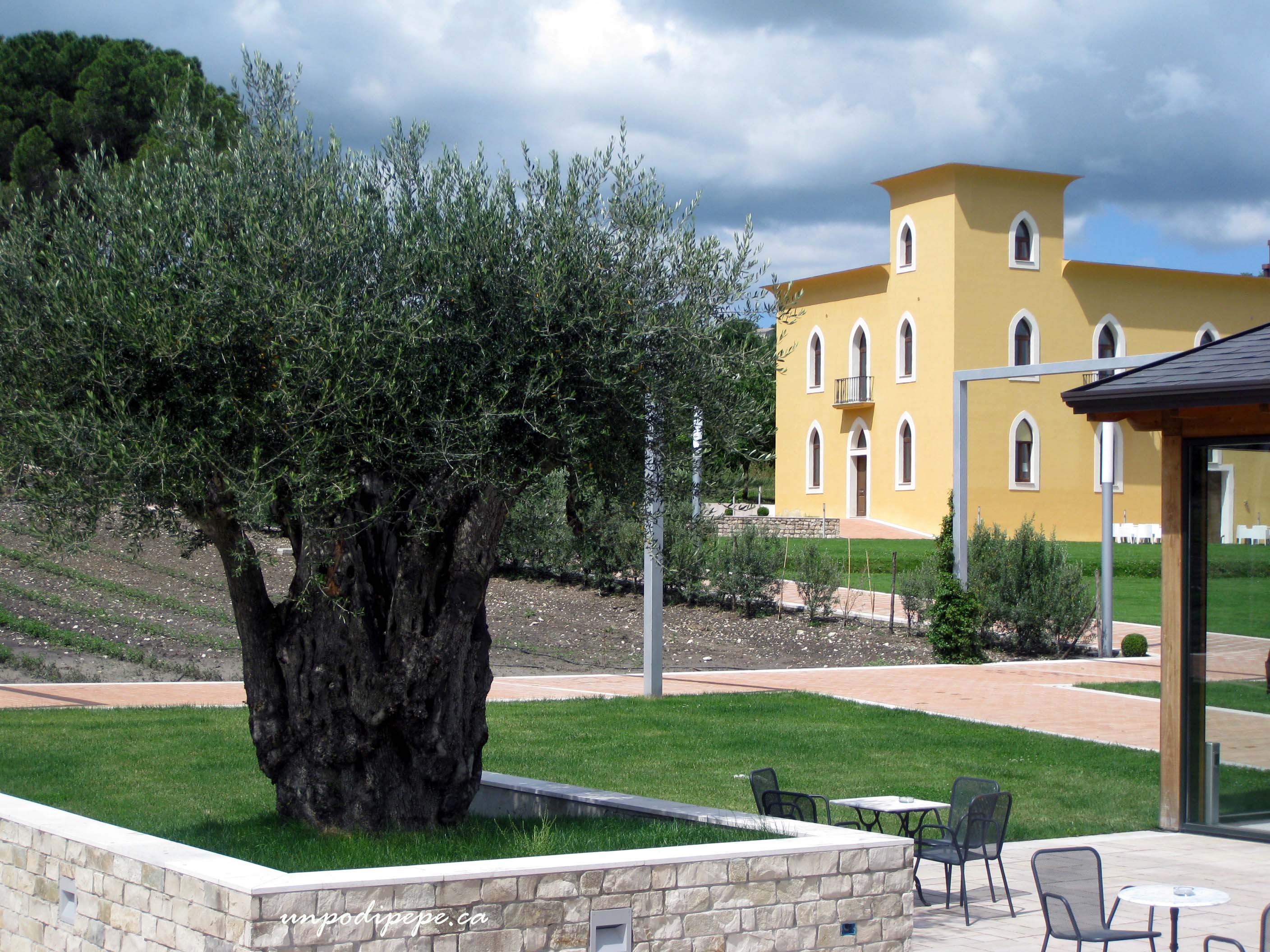
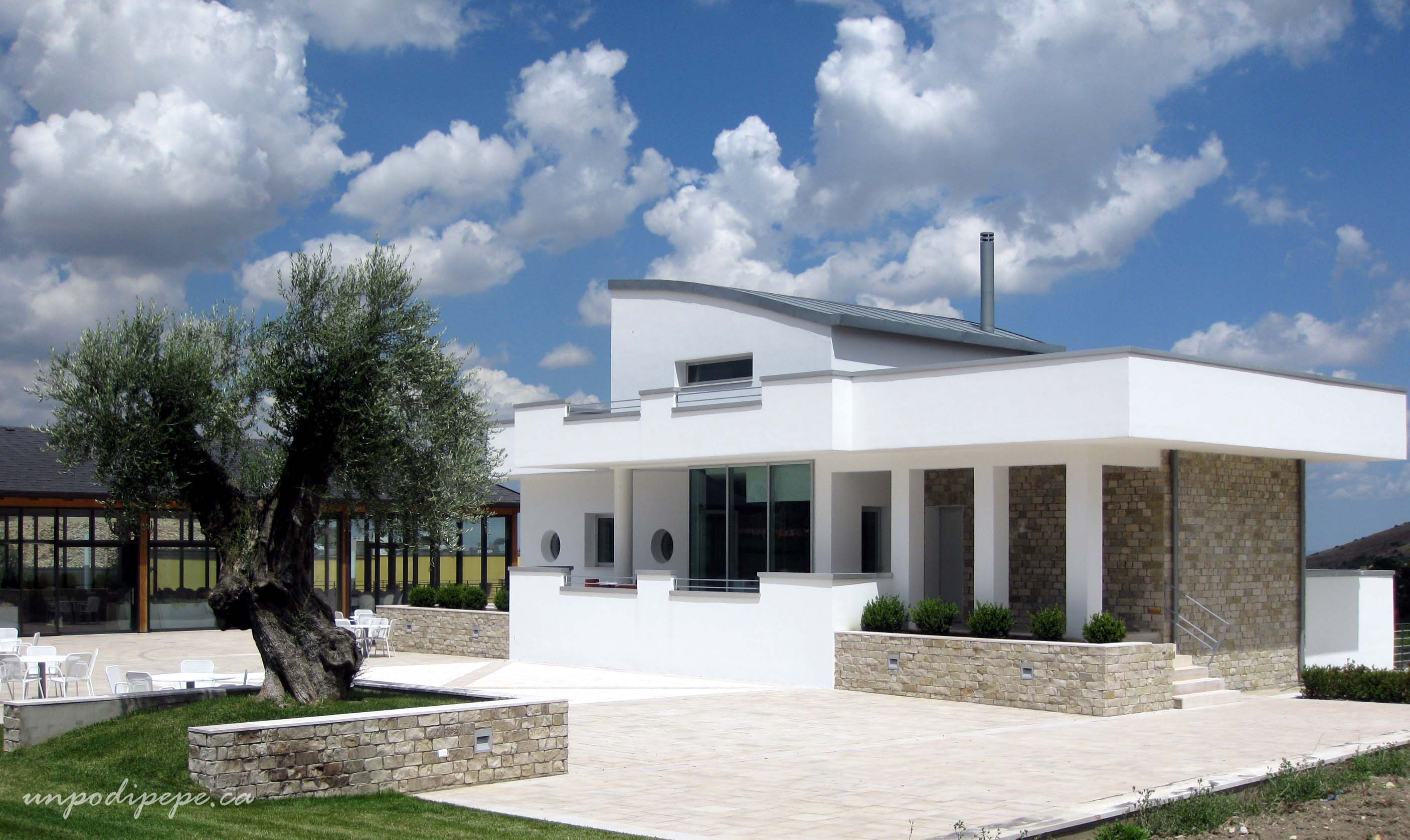
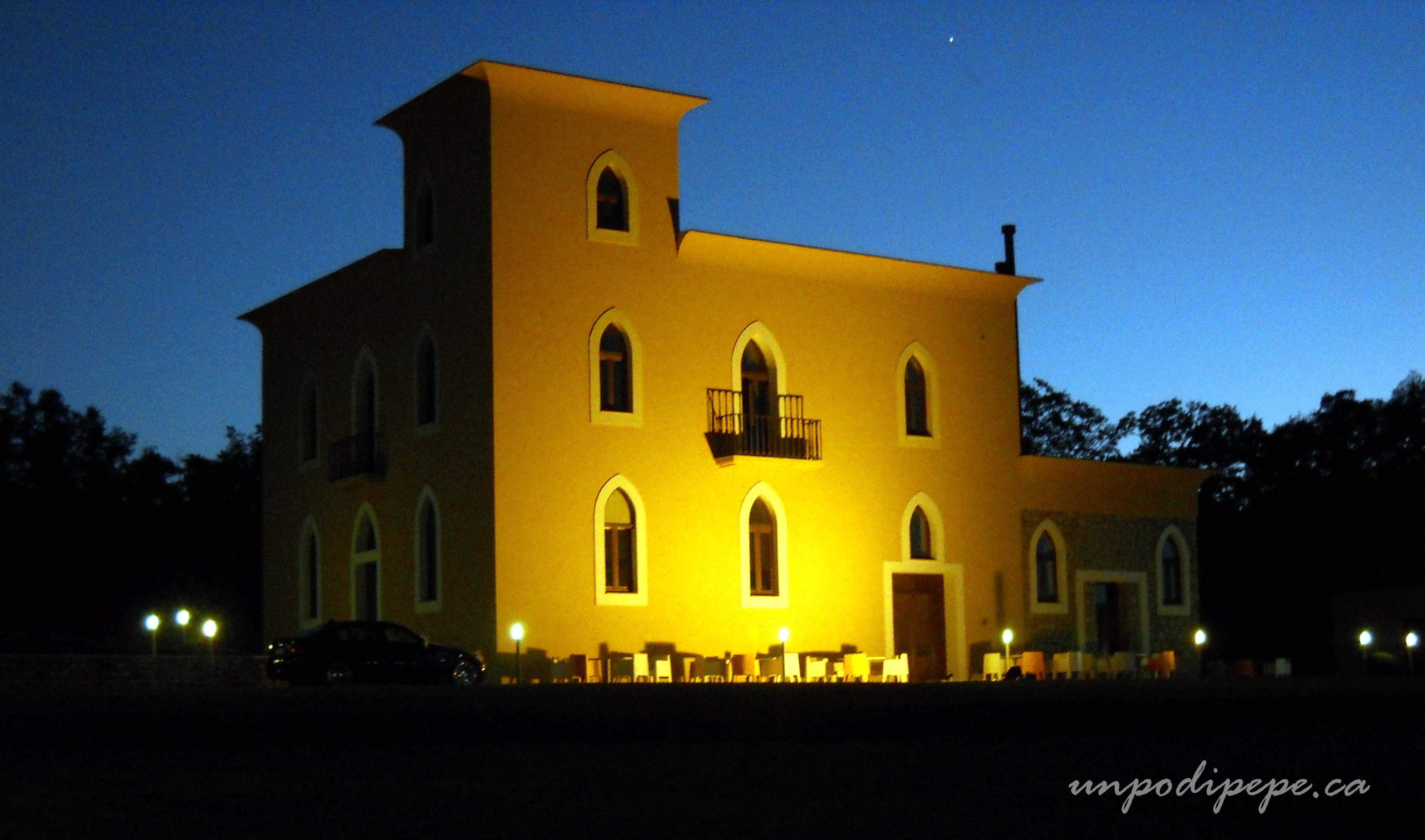
Villa Jamele (ya·MEH·leh) was mentioned in my post Peppe Zullo~Il Cuoco Contadino. Peppe’s 180,000 m² azienda agricola (agricultural estate) includes this second location acquired in 2004.  Villa Jamele is a few km down the road from Orsara di Puglia, towards Troia.  The property takes its name from the historic 1700’s villa of Hector Jamele, which has been reconstructed and is now home to an international cooking school and 5 guest rooms on the upper floor.

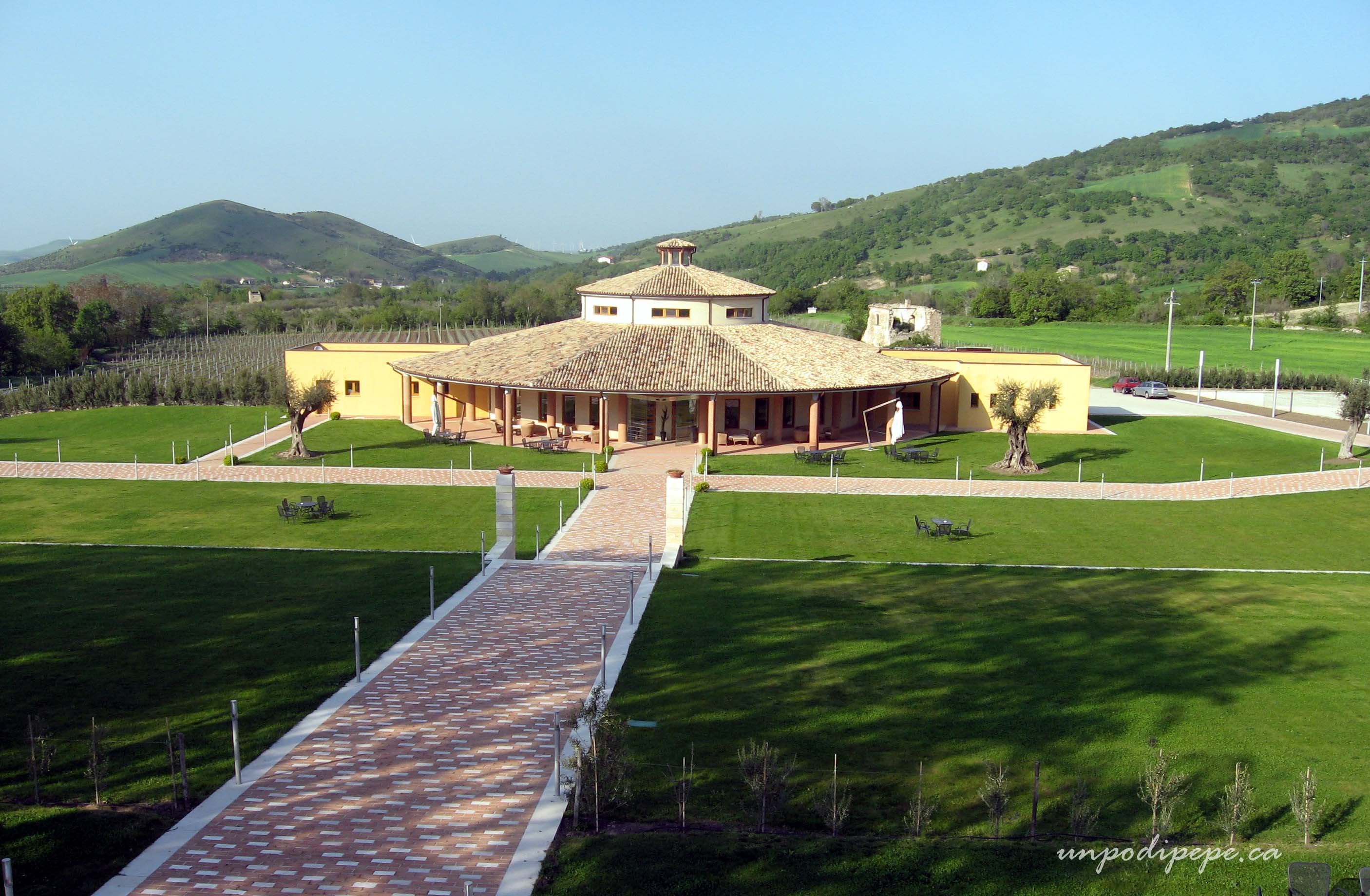
Sala Guadalajara is a large circular reception hall.  There is also a glass reception room, Sala Veracruz.  The photo below was taken from the roof terrace of Villa Jamele.

Dalla terra alla tavola is the philosophy at Villa Jamele.  This translates to ‘Field to table’. Food does not get any fresher. In addition to producing wine and olive oil, Peppe Zullo grows most of his own vegetables here at Villa Jamele, including pomodori which are canned on site in August. 

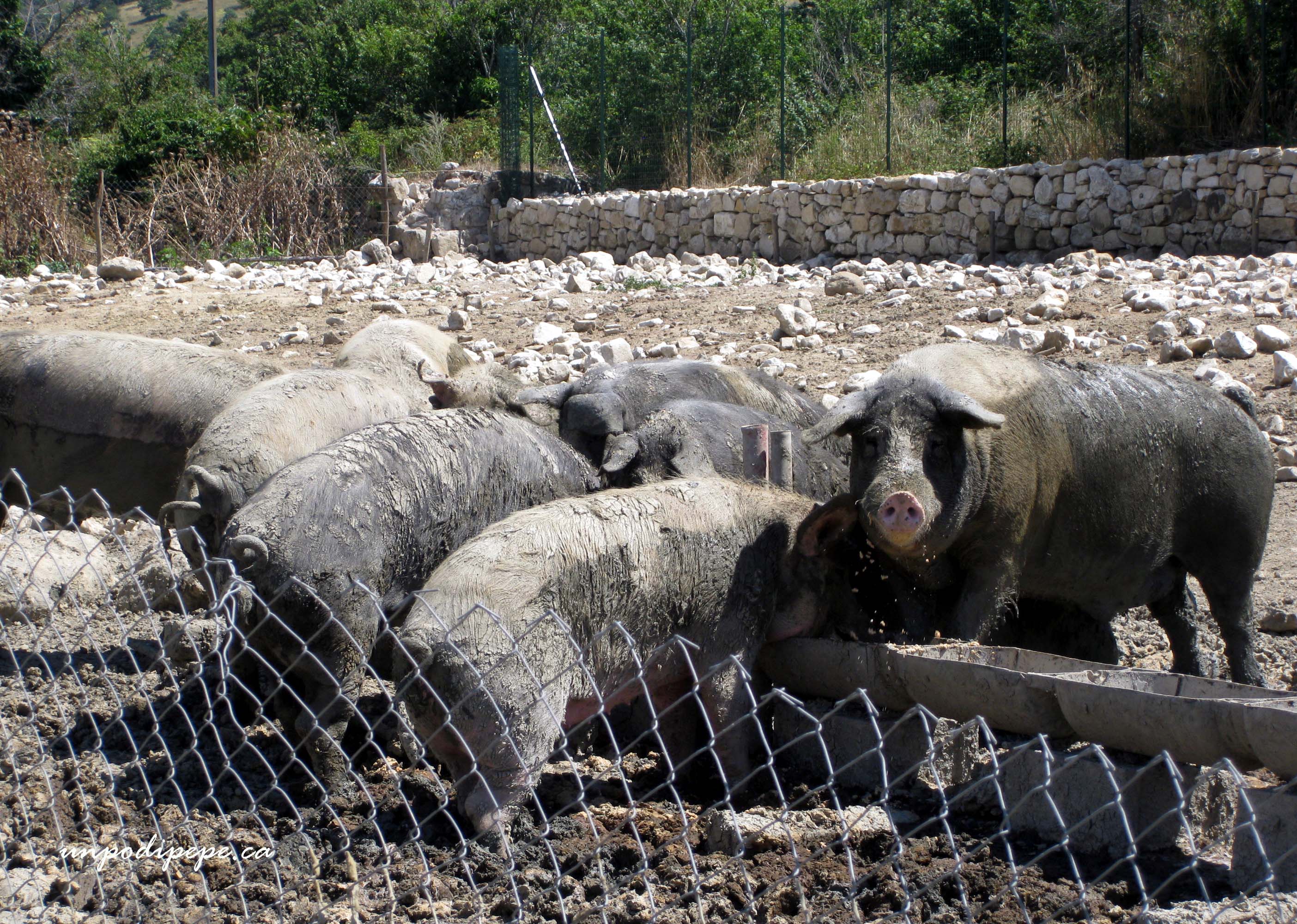
Il Bosco dei Sapori Perduti is a biodiverse orchard which includes over 50 varieties of fruit trees and herbs.  Peppe uses local, traditional products in his cooking, including wild greens and herbs such as boragine (borage), marasciuolo –a type of wild rucola found in Puglia, fiori di zucca, and wild asparagus. Behind Sala Guadalajara, past a reconstructed stone archway is a large vineyard where grapes for Peppe’s vini, Ursaria and Aliuva are grown.  Read more about them in this post.Also on the grounds is a pond and various animals, including ducks, geese, a donkey and one muddy but very photogenic maiale nero and his famiglia.

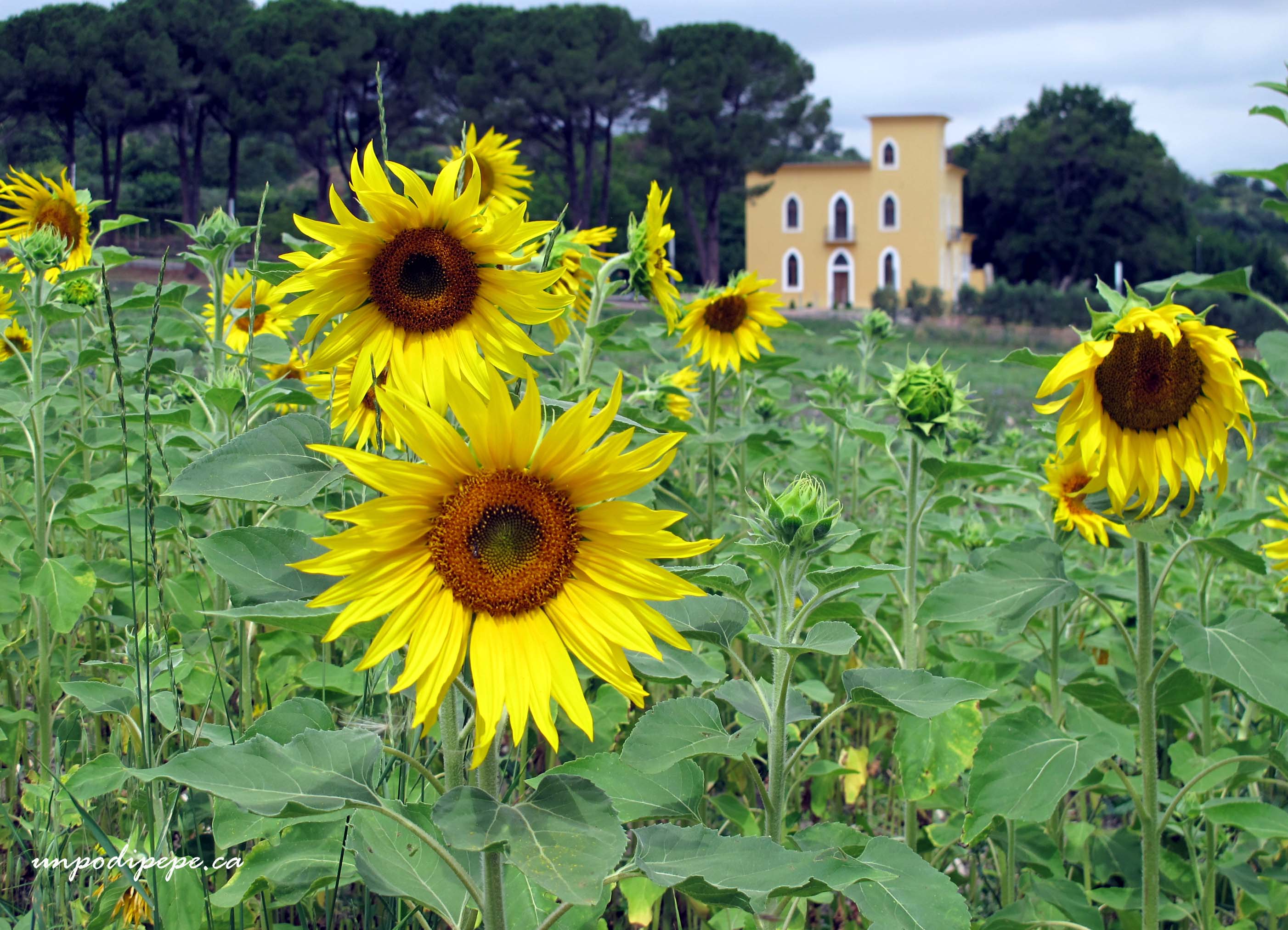
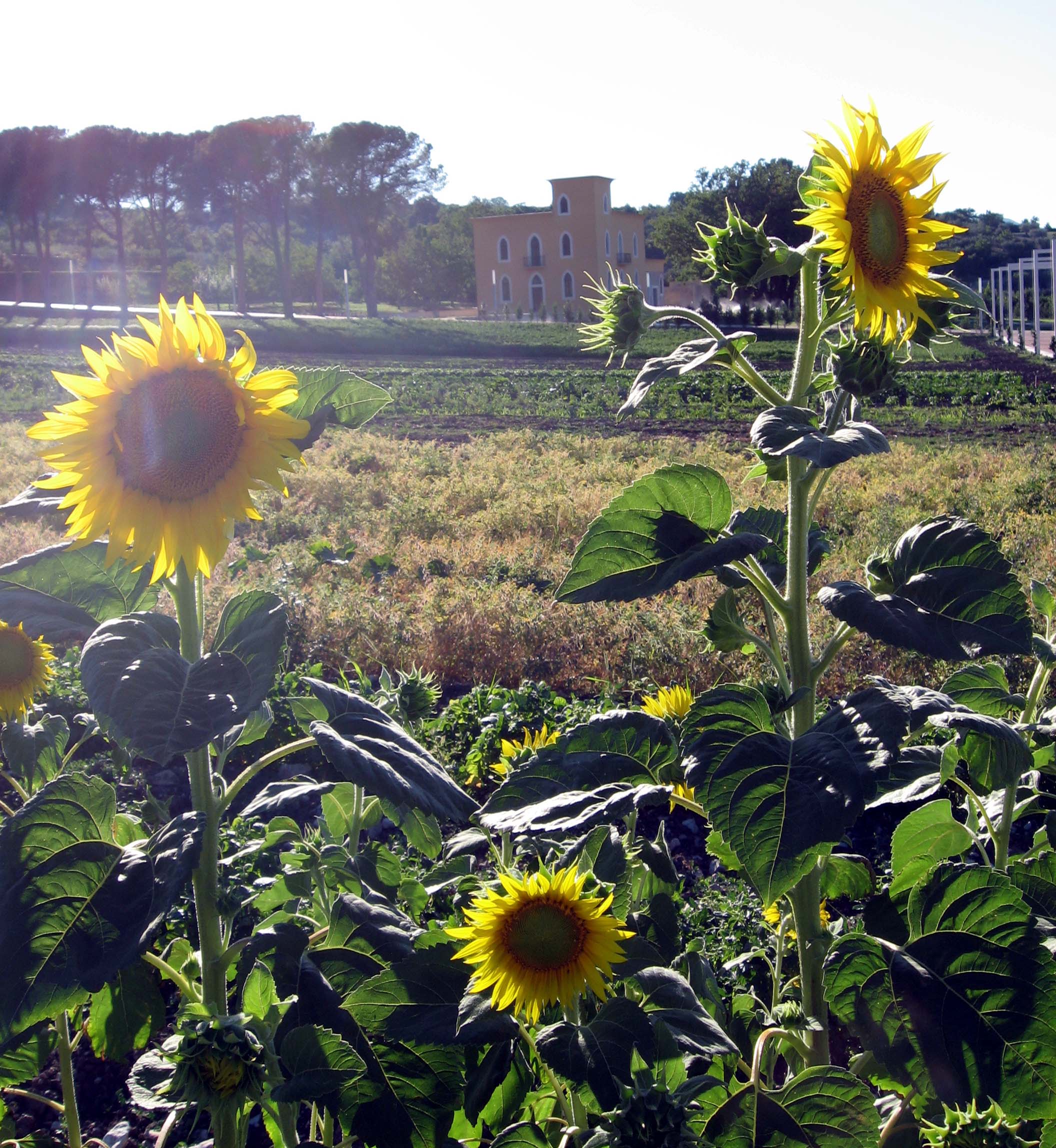
The Villa Jamele site is a tranquil oasis of green, dotted with ancient olive trees. My favourite area of Villa Jamele is the campo dei girasoli-a field of sunflowers blooming every July. 

La Scuola Internazionale di Cucina at Villa Jamele is open from September to November and February to April.  Classes can be organized for 8-16 participants. To book an event, suite, destination wedding , or make a reservation at Ristorante Peppe Zullo, call or email 39 0881 964763 info@peppezullo.it

Villa Jamele, Piano della Corte, Orsara di Puglia (FG) http://www.peppezullo.it

I hope you have enjoyed my favourite ‘scatti‘ of Villa Jamele! Ciao, Cristina

Share this:

  • Share on Facebook (Opens in new window) Facebook
  • Share on Pinterest (Opens in new window) Pinterest
  • Share on X (Opens in new window) X
  • Email a link to a friend (Opens in new window) Email
  • Share on WhatsApp (Opens in new window) WhatsApp
Like Loading...

Buon Compleanno Roma!

21 Friday Apr 2017

Posted by Un po' di pepe in Italia, Roma

≈ 2 Comments

Tags

Ancient Roma, April 21 753 BC, La Lupa Capitolina, Natale di Roma, Roma, Romolo & Remo

Roma’s turns 2770 years old today!  Auguri Roma.  The day of Roma’s foundation is called ‘Natale di Roma’.  You may be thinking… Christmas of Roma?  Huh? Christmas is called Natale in Italiano, but the word natale, with a lower case ‘n’, actually means birth-so today is the celebration of the birth of Roma. The exact date, April 21, 753 BC, was determined by Marcus Terentius Varro, a 1st Century BC Roman scholar.

According to legend, on this date Roma was founded by orphaned twins Romolo and Remo (Romulus and Remus in Latin).  Their dramatic story shares plotlines with those of Hamlet, Moses and Cain and Abel!  They were children of Mercury, God of War, and Rea Silvia, the daughter of Numitore, ex King of Alba Longa, which was 19 km southeast of Roma. Rea Silvia’s family were descendants of Aeneas, the Greek Trojan war refugee. Aeneas’ son Ascanio was the founder and first king of Alba Longa. Numitore’s brother Amulio ousted him.  To insure Numitor would have no heirs, Amulio killed his son, and forced Rea Silvia to become a Vestal Virgin. When the gemelli were born in 771 BC, Amulio ordered them to be drowned in the Tevere.

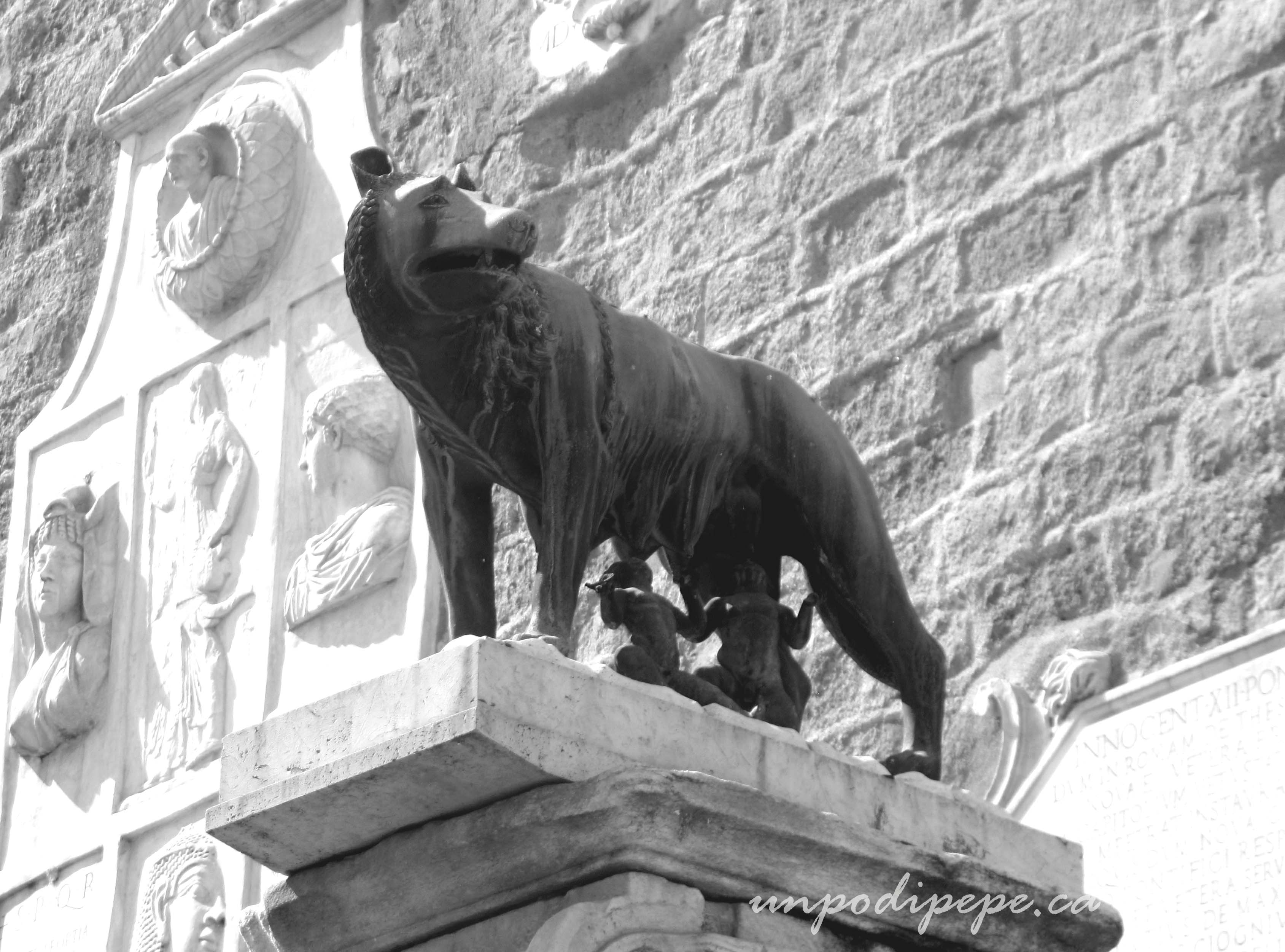
The servants who were to drown the babies set them afloat in a basket on the river instead.  They washed up near the Palatino (Palatine Hill) and were found and nurtured by a lupa (she-wolf) who had lost her newborn cubs. *Interesting note- at the time, the word ‘lupa‘ could also mean prostitute! Romolo and Remo were found by a shepherd, Faustilo. He and his wife Larentia took them in and raised them.

Romolo and Remo grew up to be leaders of a group of shepherd warriors.  When they found out that they were the true heirs to Alba Longa, they attacked, killed Amulio and restored their Nonno Numitore as king. Fresh from their revenge and still full of adrenaline, Romolo and Remo decided they would build a city of their own near where they were found by the lupa.  Romolo wanted to build on the Palatine Hill (where the Forum is) and Remo wanted to build on the Aventine.  They disagreed and fought, with Romolo accidentally killing his brother in the process.  And so began the long, bloody, politically charged history of Ancient Roma.  Romolo built the city on the Palatino and named her Roma after himself.

Gruppo Storico Romano organizes many festivities in Roma today, including a live reenactment of Il Natale di Roma at Circo Massimo.

Ciao e buon 2770mo compleanno Roma, Cristina

Share this:

  • Share on Facebook (Opens in new window) Facebook
  • Share on Pinterest (Opens in new window) Pinterest
  • Share on X (Opens in new window) X
  • Email a link to a friend (Opens in new window) Email
  • Share on WhatsApp (Opens in new window) WhatsApp
Like Loading...
← Older posts
Newer posts →

Enter your email address to follow 'un po' di pepe' and receive notifications of new posts by email.

Join 509 other subscribers
Follow Un po' di pepe on WordPress.com

Popular Posts

  • The Original Cinquecento
    The Original Cinquecento
  • Italiano per Ristoranti~How to pronounce your restaurant menu
    Italiano per Ristoranti~How to pronounce your restaurant menu
  • Gallerie d'Italia Napoli
    Gallerie d'Italia Napoli
  • Hairstyling in Ancient Roma
    Hairstyling in Ancient Roma
  • Caravaggio
    Caravaggio
  • Corzetti
    Corzetti
  • Che Cavolo!  Non Rompere le Scatole 
    Che Cavolo!  Non Rompere le Scatole 

Recent Posts

  • Polignano a Mare 2.0
  • Via dell’ Amore~Riomaggiore
  • AICW Conference, Viterbo
  • Bloghiversario #12
  • Pane e Salute
  • Sanremo 2026
  • Cucina Italiana Patrimonio UNESCO
  • 2025~Un po’ di pepe Year in Review
  • Castel del Monte
  • ‘The Nuances of Love’
  • Hostaria Antica Roma~Eat like an Ancient Roman
  • Santa Maria in Aracoeli
  • Casino dell’Aurora~Villa Boncompagni Ludovisi
  • Nasoni di Roma
  • Bloghiversario #11
  • Fontana di Trevi
  • Acqua Vergine
  • Giubileo 2025
  • Sanremo 2025
  • In Vino there are Memories
  • A Literary Harvest
  • 2024~Un po’ di pepe Year in Review
  • Buon Natale 2024
  • Il Bicerin
  • Mercato Porta Palazzo

Categories

Amici e Famiglia Architecture Art Art history Art projects Bilingual posts Blogging Canada Culture Feste Firenze Inspiration Italia Italian Folklore Italian language Italian life Italocanadesi Libri Mangiamo! Orsara di Puglia Parole piacevoli Photography Puglia Recipes Roma Travel Travel tips Uncategorized Vino

Archives

Un po’ di pepe on Facebook

Un po’ di pepe on Facebook

Start a Blog at WordPress.com.

  • Subscribe Subscribed
    • Un po' di pepe
    • Join 509 other subscribers
    • Already have a WordPress.com account? Log in now.
    • Un po' di pepe
    • Subscribe Subscribed
    • Sign up
    • Log in
    • Report this content
    • View site in Reader
    • Manage subscriptions
    • Collapse this bar
Loading Comments...
%d