L’albero di Natale, my Christmas tree is now up and decorated. I usually have it all done by now, but I am behind this year. It was not planned, but I did the Italian thing this year! December 8th is l’Immacolata Concezione, the festa celebrating the conception of the Vergine Maria. It is a national holiday in Italia and the official start of le feste Natalizie-the Christmas season. It is also the day most Italiani put up and decorate their albero di Natale and presepio. The Christmas decorations-addobbi Natalizie stay up until January 6th, la festa del Epifania-after a visit from La Befana. Earlybirds decorate on December 6th the festa di San Nicola.L’albero di Natale is long standing tradition in Northern European countries, but a much newer custom in Italia. Alberi sempervivi-evergreen trees, have symbolized life, regeneration and immortality. The Celts, Vikings and pre-Christian Germanic tribes decorated evergreens during Solstice celebrations. In the harsh northern winters evergreen trees, holly and mistletoe were the only things that stayed green, so they were thought to have magical powers. Wreaths and evergreen branches were hung over doors as a defense against evil spirits and a symbolic defense against the harsh winter. I can totally relate to this last one. My addobbi Natalizie help me get through the winter! ‘Modern’ use of l’albero di Natale started in the 13th Century and became a custom in Northern Europe. In Southern Europe, it was seen as more of a Protestant custom and did not catch on. In 1848, when Prince Albert of Germany married Queen Victoria, he brought the Christmas tree custom with him, which spread through the British Empire.
Regina Margherita di Savoia-yes she of pizza fame-was the first to decorate unalbero di Natale in Italia in the late 1800’s at the Palazzo Quirinale. The custom spread slowly, but grew in popularity after WWII. In 1982, Pope Giovanni Paolo II first introduced a tree in Piazza San Pietro. Now most families have un albero di Natale, and the presepio is often placed under the tree. Is your albero di Natale up yet? Buon Natale, Cristina
November 1st is Tutti i Santi-All Saints’ Day and is a national holiday in Italia. It was created in the 9th century when the Pope superimposed a Christian feast day onto existing rituals, so this festa has been around for a very long time. Tonight is also an ancient festa celebrated in Orsara di Puglia called Fucacoste e Cocce Priatorje which is dialetto Orsarese for ‘Falò e teste del Purgatorio’. This translates to ‘Bonfires and heads from purgatory’ the ‘heads’ being zucche lanterne-carved pumpkin lanterns. For simplicity, it is also called ‘Tutti i Santi’ or ‘La Festa dei Morti’.
The night between November 1stand 2nd provides the opportunity to honour, reconnect and pay respect to the spirits of loved ones. I wrote about the festa in a 2014 post Fucacoste e Cocce Priatorje, but at that time I had not attended. I had only heard about it from my parents, family and friends. Last year I had the opportunity to attend. It was cold but the night was clear and an absolutely amazing, magical, spriritual experience-for me and at least 20,000 others. Orsaresi who live in other parts of Italia and Europe come home for the festa, and visitors come from all over Puglia. Since it is a holiday, many families are able to take an extra long weekend known as il Ponte dei morti.
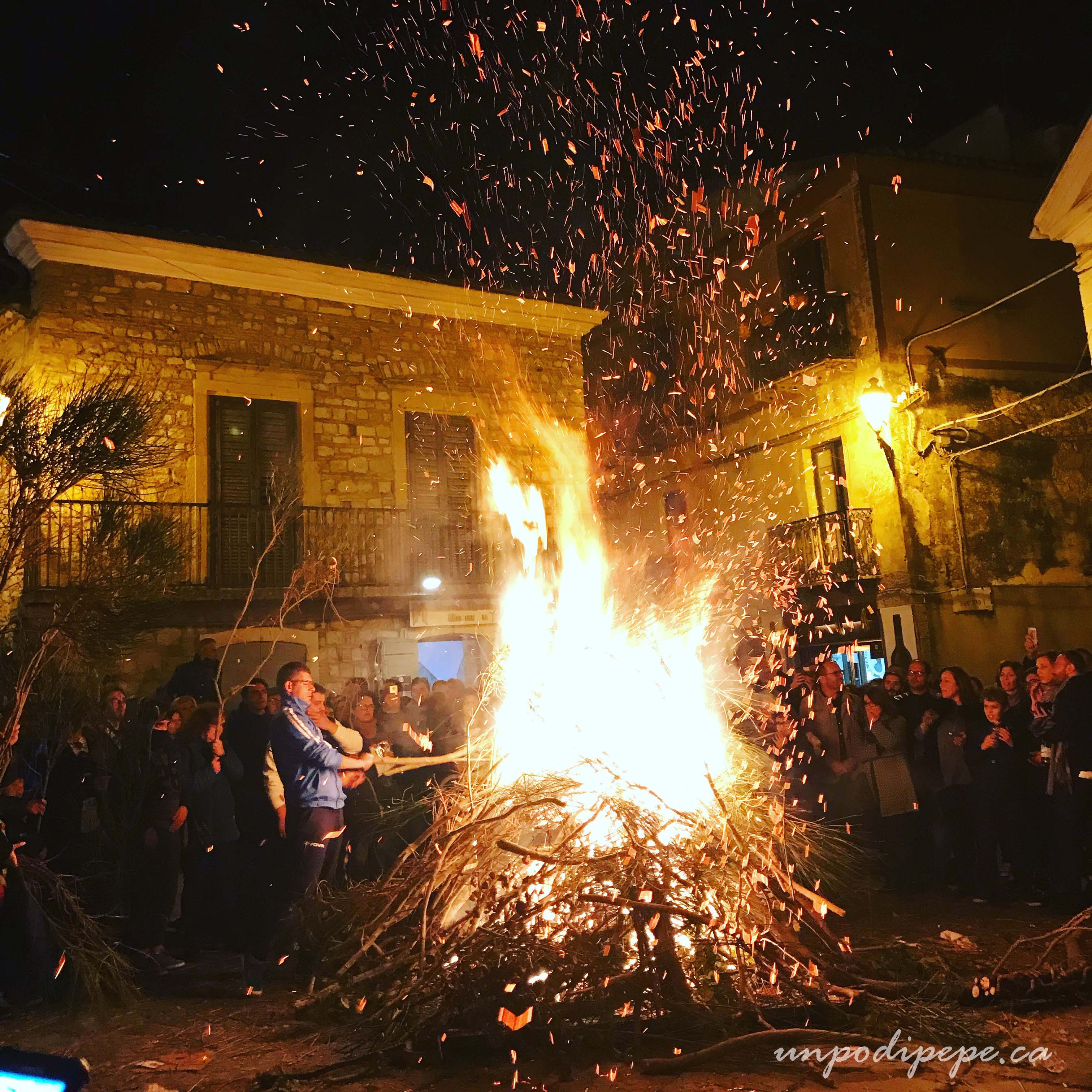
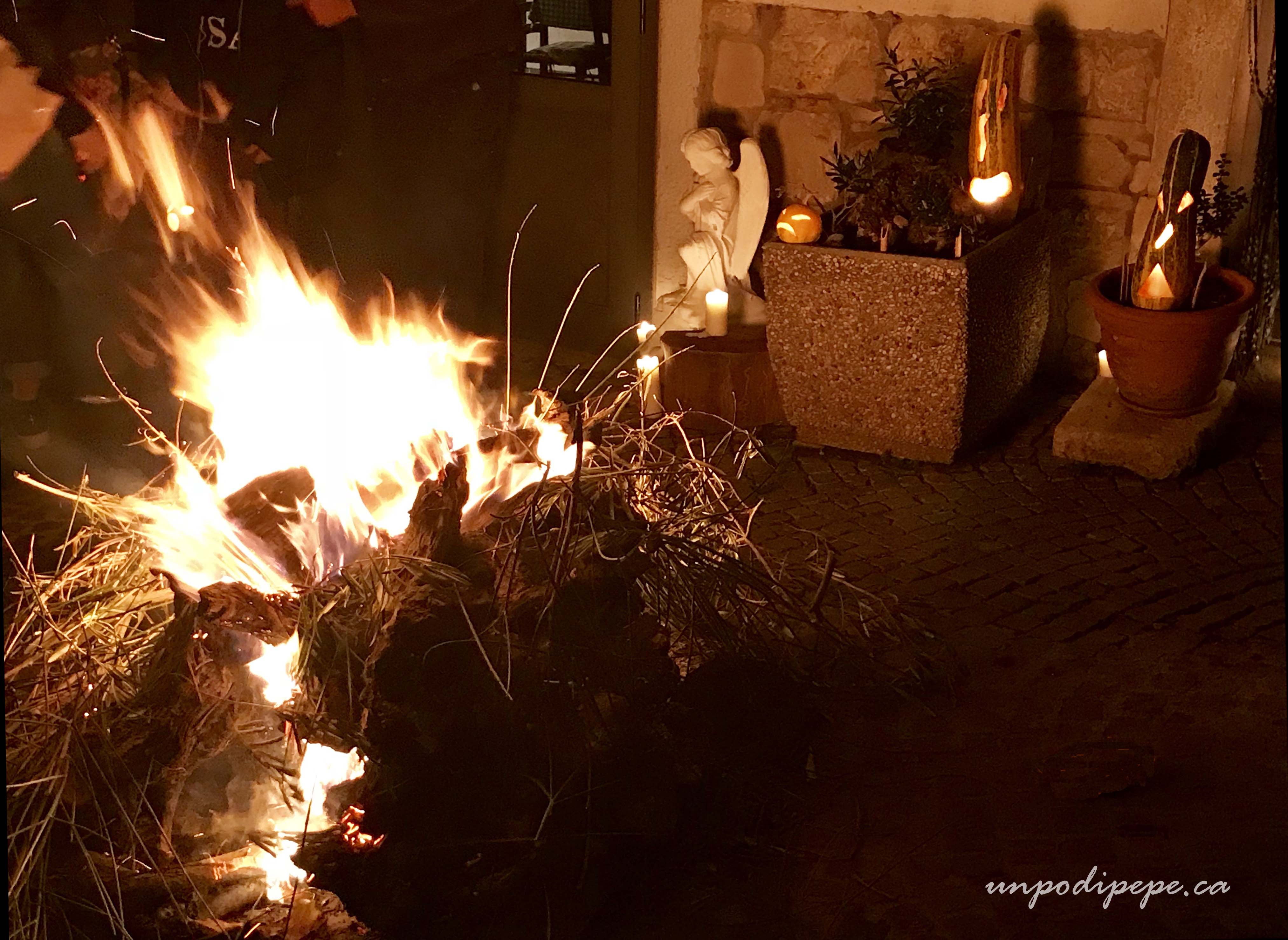
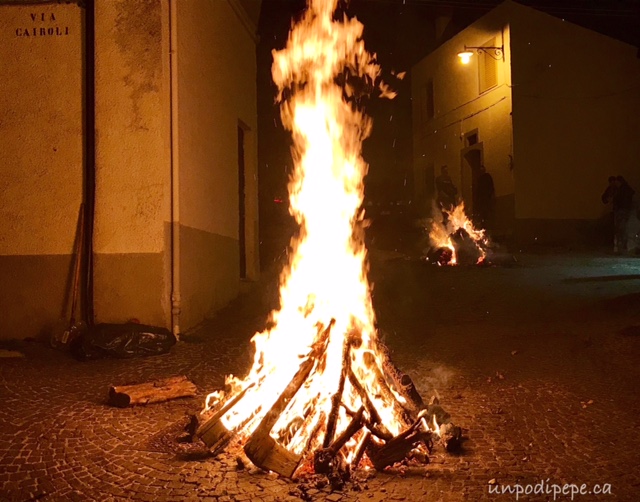
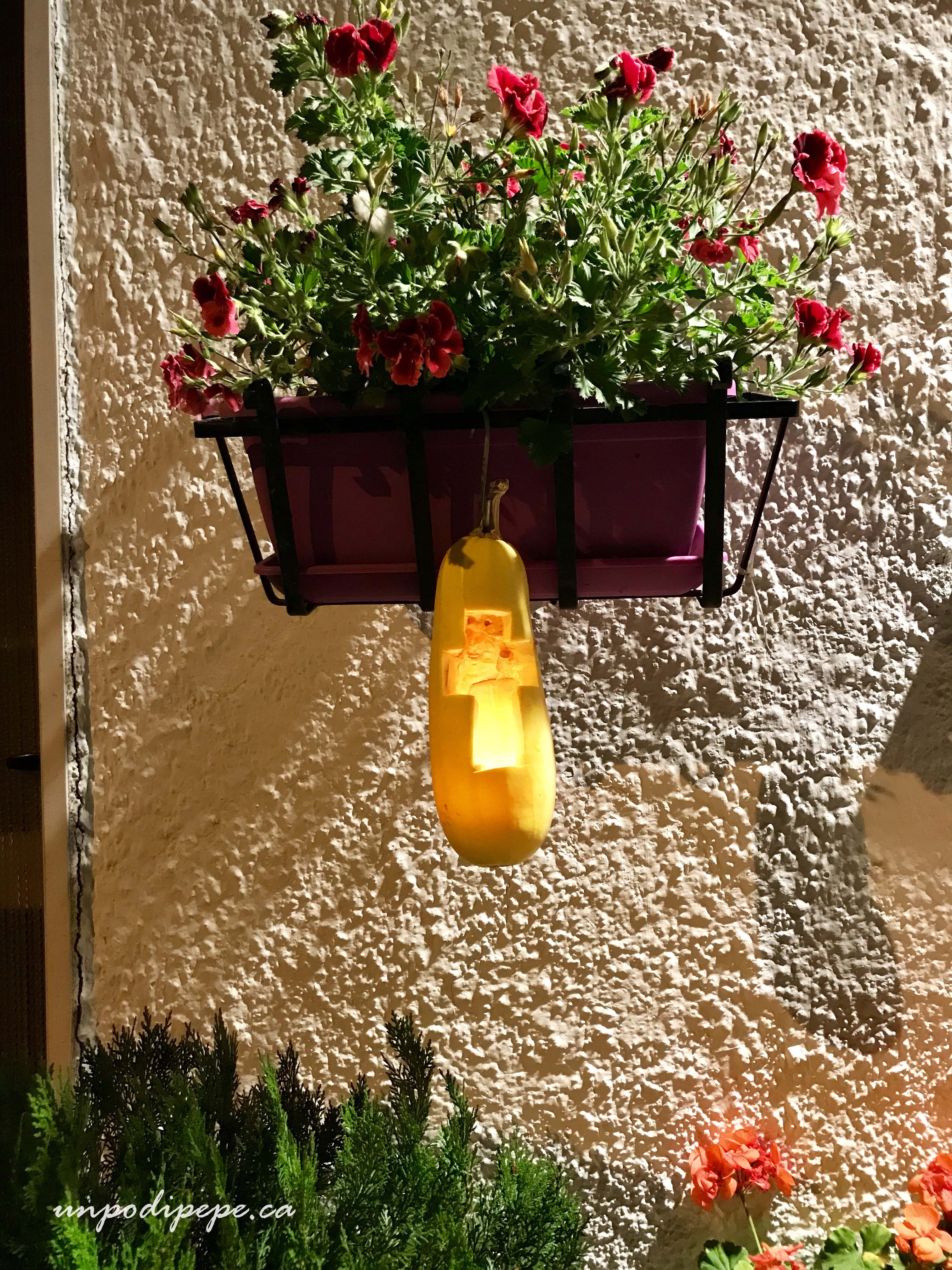
It is believed that this night between Nov 1 and 2, the souls of the recently dead return among the living to visit their relatives and their former homes before moving on to Paradiso. Bonfires are lit with wood and branches of ginestra (broom). The light of the fires and the crackling and sparks of the ginestra reaching for the sky attract the spirits, to reunite the living with those who continue to live only in our memories. The light inside ‘cocce priatorje’, pumpkin lanterns carved to look like heads or carved with crosses-light their way to find their former home.
My paesani are busy preparing for the festa for days. Preparation involves gathering firewood and ginestra, preparing food for family and friends and picking hundreds of locally grown zucche which are carved and placed all over Orsara. Restaurants and bars prepare for one of their busiest nights of the year. There is even a laboratorio di intaglio delle zucche– a pumpkin carving workshop. My street, balcony and front door were decorated with zucche. In the evening zucche are exhibited and there is a contest for ‘la zucca più bella’.
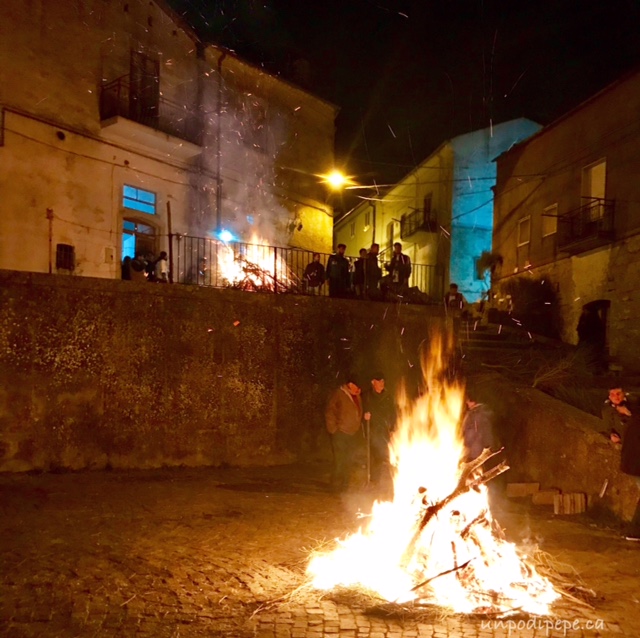
When the campanile, the church bell tower, strikes 1900 hours, Orsara di Puglia ‘catches fire’. Bonfires are simultaneously lit in every street and piazza and remain lit through the night. The fires, illuminated zucche, music and people in the streets create a magical, enchanted atmosphere. There are 3 large municipal falò, and every quartiere – neighbourhood, and many families also light their own.
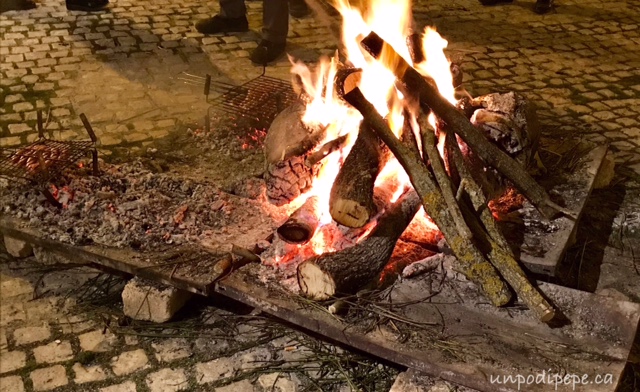
I made a point of getting off of the main Corso to visit some of the smaller personal falò. In honour of the dead, simple but symbolic seasonal foods are cooked on the open fires and also served as cibo di strada-street food. These include patate -potatoes, cipolle-onions, salsicce-sausages, castagne-chestnuts and pane cotto-bread cooked with garlic, potatoes and greens.
Salsicce e pancetta nel fuoco
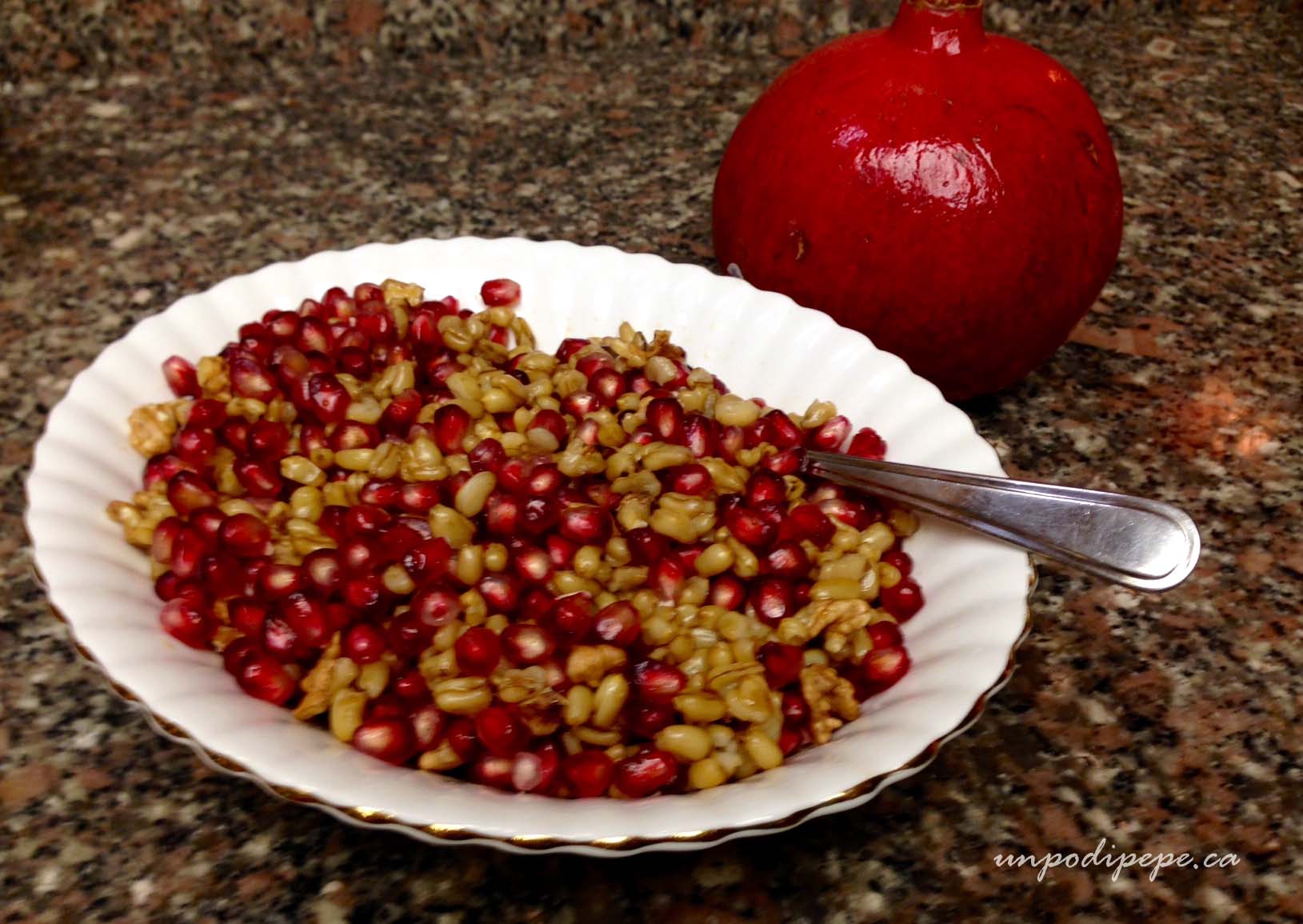
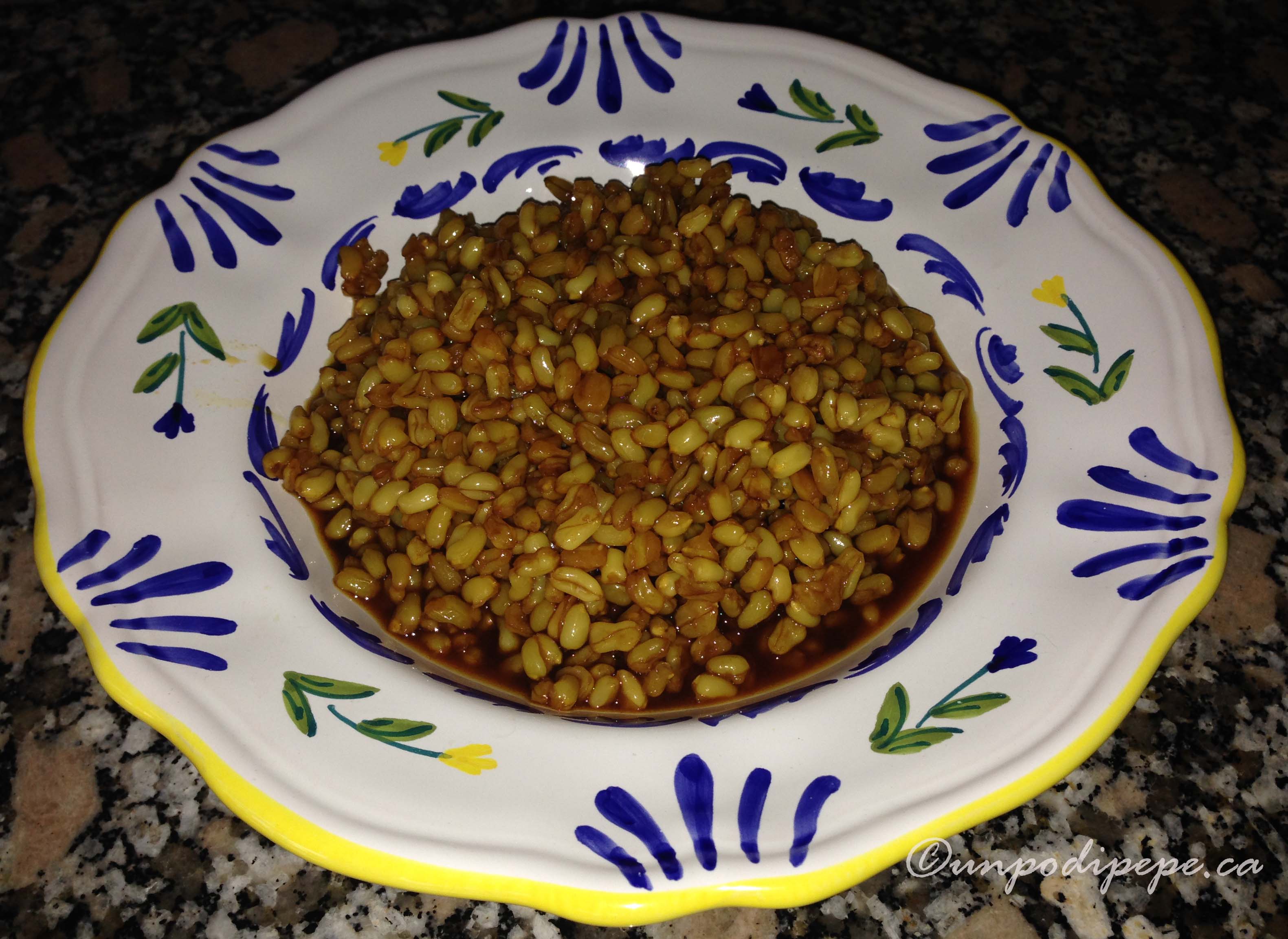
Muscitaglia (moo•shee•tah•lyah) is a traditional dish served November 1st likely dating back from the ancient Greeks and Byazantines. Muscitaglia is made up of the Greek and Latin words mosto (wine must) and talia (grain). The ingredients include boiled grain and vino cotto. Semi di melagrana e pezzi di noci -pomegranate seeds and walnut pieces are often added. These ingredients are symbols of fertility and abundance, but also of honour and respect for the dead.
Il fuoco e le zucche di Antonella e Domenico
Fucacoste e Cocce Priatorje has often been confused by visitors with the Anglosaxon Hallowe’en, but it is an entirely different event. Besides the obvious fact that the date is different, dressing up in costume is not part of the custom and there is nothing scary or evil about it. This is the reason for the hashtag #quinonèhalloween. There are more similarities with Mexico’s Dia de los Muertos/Day of the Dead. This event is about being together in community to celebrate the bond between the living and those who we remember in our hearts. It is also to remind us that our time on earth is precious. The following day, November 2nd is l’Anime dei Morti-All Soul’s Day, and it is customary to go to the cemetery to pay respects at the resting place of loved ones.
The 9 minute video below features 94 year old Z’Gaetan talking about the festa and its significance.
This lively 48 second video from 2016 featuring the music of Tarantula Garganica will make you all wish you were there tonight:
If you did not watch the video….watch it now! I did not make it there this year, but am looking forward to my next trip to Fucacoste e Cocce Priatorje! Now I am off to my Mamma’s to have muscitaglia! Ciao, Cristina
Panettone is a Christmas and New Year’s tradition in Italian households. Panettone (pah∙neh∙TOH∙neh) literally means big loaf of bread. Panetto is a small loaf of bread and the suffix ‘one’ makes it a big bread. The origins of panettone probably date back to the Ancient Romans, who made a leavened bread with honey and raisins. Bread has always been a symbol of family ties, as in ‘breaking bread’ together. In the middle ages, a sweet leavened bread with dried fruit was incised with the sign of the cross before baking as a blessing for the new year, then distributed to the family. A slice was also saved for the next year. In the 1400’s it became custom to make il pane di Natale-Christmas bread, with white flour and costly, hard to find ingredients that made it special. This was called pane di lusso-luxurious bread, which in Milanese dialect was ‘pan del ton’. Modern panettone originated 500 years ago in Milano during the reign of Ludovico Sforza (1481-1499). There are several legends regarding its origin.
In the most romanticized legend, Ughetto, son of nobleman Giacometto degli Antellari fell in love with the beautiful Adalgisa. To be near his innamorata, he pretended to be an apprentice baker for her father Antonio, who was called ‘Toni’. Desperate to impress Toni, Ughetto created a rich bread with yeast, butter, eggs, sugar and canditi- candied cedro and orange peel. The bread was an overwhelming success and people came from all over Milano to taste this ‘pane di toni’ – Toni’s bread. Duchess Beatrice d’Este, wife of Ludovico Sforza, was so taken with the love story that created this bread that she convinced Giacometto to let his son marry the baker’s daughter.
Another version takes place in Ludovico’s kitchens. There was a custom to prepare a particular dolce for guests on Christmas Eve. Unfortunately, it was burnt, sending the cook into desperation. One of the kitchen workers, a boy named Antonio, offered the bread he was making for himself using the dough left over the day before from the original dolce. It was a domed sweet bread with grapes. When the invited guests asked what this delicious dolce was called, the cook replied ‘pan del toni’.
The final legend is the simplest, but probably the most believable. It involves Suor Ughetta, a young nun in a very poor convent in Milano. To make Christmas Eve more festive, she made a dolce for her fellow sisters with butter, sugar, eggs, canditi and uvette. Uvetta means raisin in Italiano, and in dialetto Milanese it is pronounced ‘ughetta‘. Whichever legend we choose to believe, today panettone is synonymous with Natale for everyone of Italian origin.
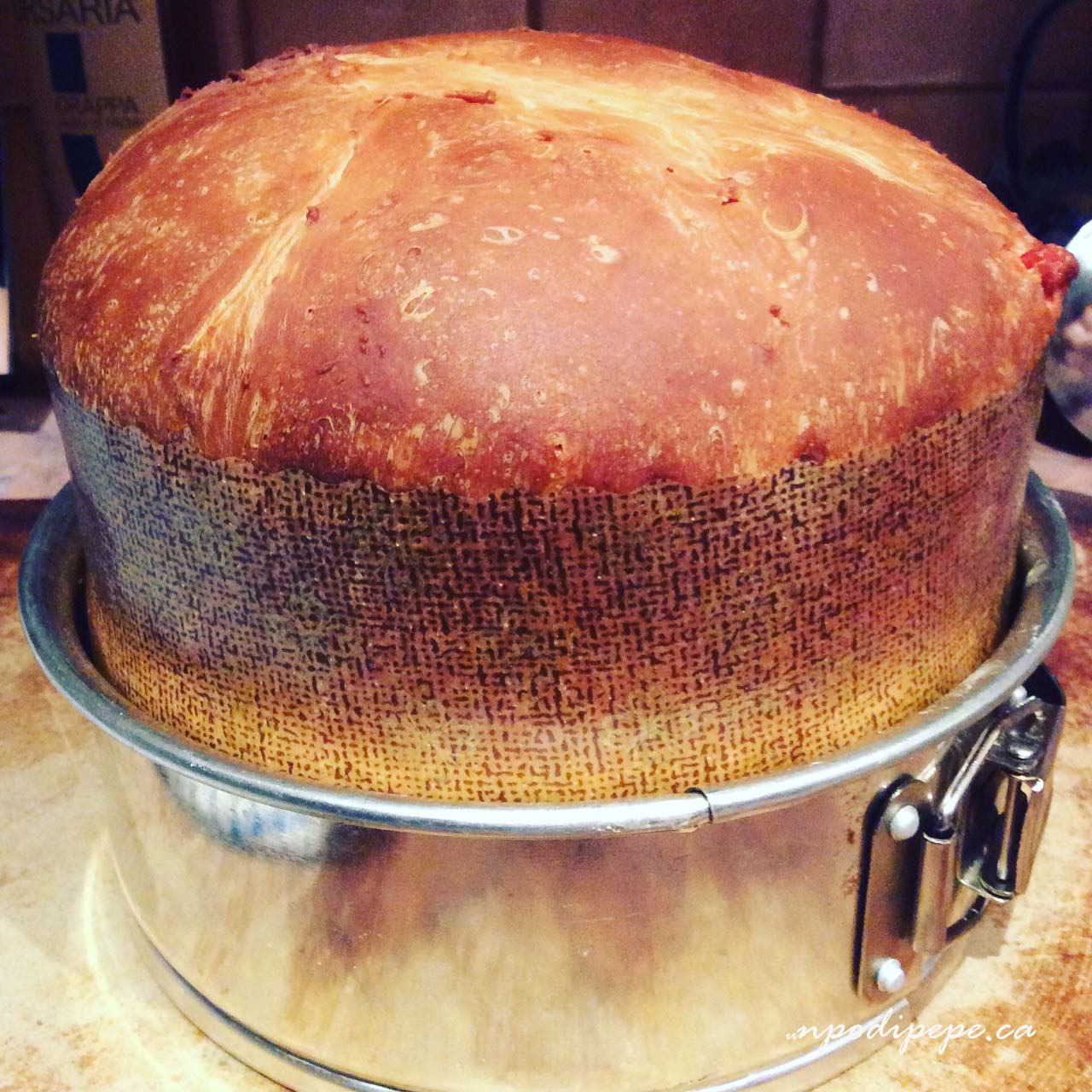
In 1919, baker Angelo Motta opened his first pasticceria in Milano. He let his panettone rise 3 times, to the familiar cupola or dome shape on a cylinder that we see today. Previously the shape of panettone was more schiacciata-lower and more compact. Motta also invented the paper wrap and box. A few years later, he had a competitor in Milano, Gioacchino Alemagna. Their competition led to industrialized production of panettone, with factories replacing the small pasticcerie. They also began exporting all over the world. Today both Motta and Alemagna are owned by Bauli, based in Verona. Last year almost 120 million panettoni were produced in Italia!
I will be enjoying my panettone and prosecco for Capodanno-New Year’s eve, and making panettone French toast with ricotta if there is any left over! I have been experimenting with making my own panettone since last December. My next post is a recipe for Panettone fatto in casa! Read about other dolci di Natale in this post. Buon appetito, Cristina
Auguri per la Festa della Donna! Today is la Giornata Internazionale della Donna/ International Women’s Day-originally known as International Working Women’s Day. There is no one specific organization or event behind International Women’s Day, but it is celebrated in many countries around the world. It is a collective day to celebrate the achievements of women and a call to action towards gender equality.
The early 1900’s were a time of great unrest for women, who did not yet have the right to vote. In New York in 1908, 15,000 women marched for better pay and shorter hours. The following year, on February 28th, the Socialist Party of America held the first National Women’s Day, which was observed until 1913. In 1910, an international conference of working women was held in Copenhagen. It was proposed that each year on the same day, every country would have a Women’s Day. The first International Women’s Day was held on March 19th in 1911 in Austria, Denmark, Germany and Switzerland as well as rallies campaigning for women’s rights to work and vote. Unfortunately, a week later in New York, 146 women were killed or jumped to their deaths in the Triangle Shirtwaist Factory fire. The women were mostly Jewish and Italian immigrants. The exit doors had been locked to prevent unauthorized breaks! This horrible event brought attention to working conditions and was the focus of future International Women’s Day events.
Russian women held a strike for bread and peace in 1917 in response to Russia’s losses in the war, and following this they were given the right to vote. The date translated to March 8th on the Gregorian calendar (that’s the one we use!) and this has been the date for International Women’s Day ever since.
International Women’s Day was first celebrated by the United Nations in 1975, and in 1977 the UN General Assembly invited member countries to proclaim March 8th as UN Day for Women’s rights and world peace.
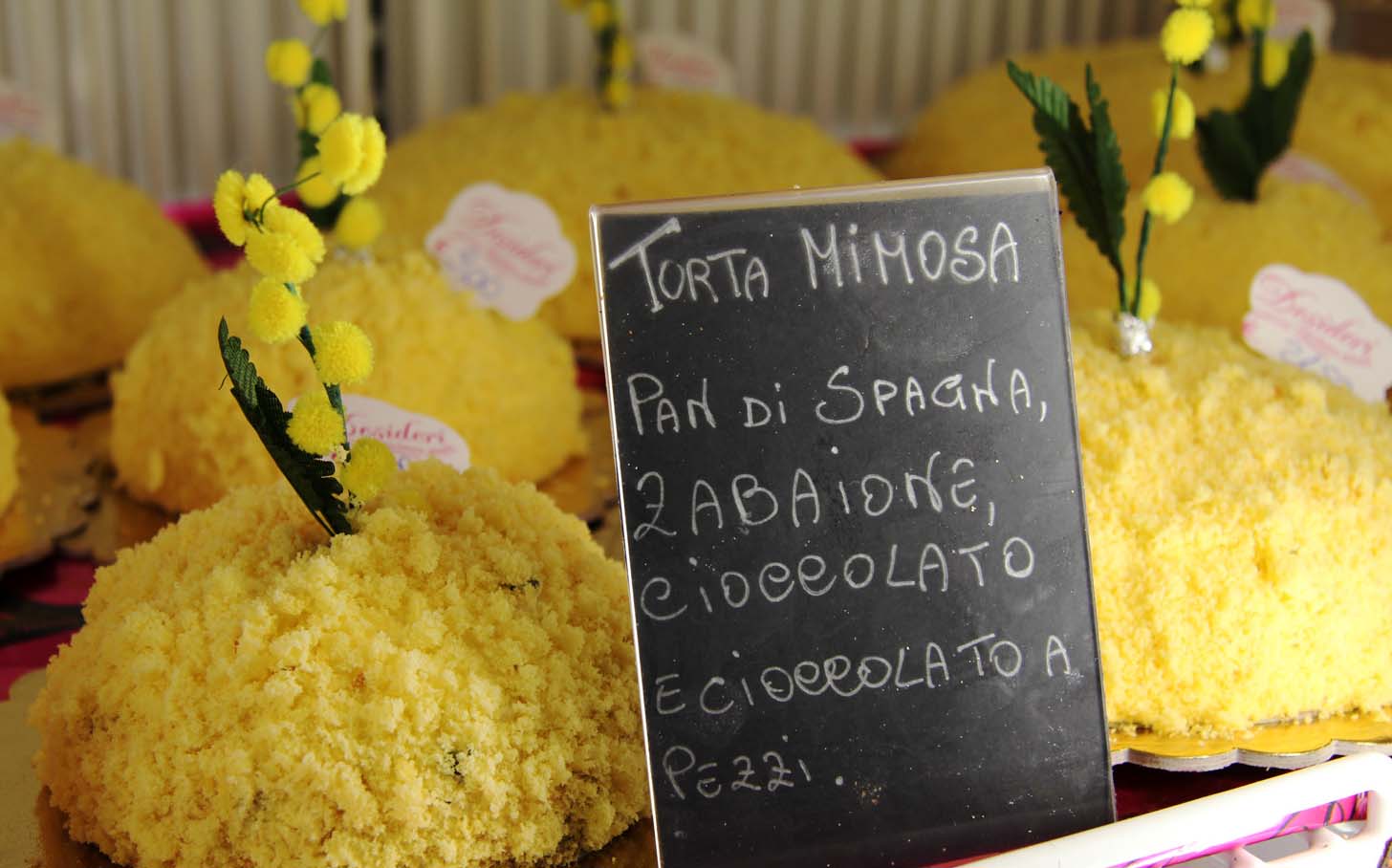
In Italia, the symbol for IWD is yellow Mimosa flowers (Acacia Dealbata). This was started in 1946 by Teresa Mattei and Rita Montagnana, activists fighting for women’s equality. They felt that the symbols used in France, violets and Lily of the valley, were too scarce, making them too expensive to use in Italia. Mimosa flowers bloom in early March. The pillowy yellow flowers look delicate and fragile, but are actually very resilient and able to resist harsh conditions. Good qualities for an symbol for women! Originally women gave small Mimosa bouquets to each other.
For those with pollen allergies, there is now also Torta Mimosa, a cake that resembles the flower, and chocolates and cookies. My amica Anna photographed these lovely torte yesterday at Dolci Desideri on Via Gozzi in Roma.
Just like Valentine’s Day, not everyone likes the idea of a ‘Women’s Day’ because love and respect need to be shown more than once a year. I agree every day should be a giornata della donna, but I also think any excuse to be extra nice to someone is a good thing! Auguri a tutte le donne!
Ciao, Cristina
Photo credits-Cover photo Wikimedia Commons, Torta Mimosa photos Anna Ambrosini
Carnevale season is here. From the Latin Carnem Vale meaning farewell meat, Carnevale is the week leading up to la Quaresima (Lent). La Quaresima is the period of 40 days between Mercoledi delle Ceneri (Ash Wednesday) and Pasqua (Easter). There are actually 46 days, but the Sundays are not included. Carnevale was traditionally a period of overindulgence before the more humble days of Lent when there was no meat, dairy, fat or sugar and sometimes even days of fasting. Martedi Grasso (Mardi Gras or Fat Tuesday) is the last day of Carnevale and the last opportunity for excesses.
Like most religious events/festivals, Carnevale and Lent took over from pagan and folk rituals. This time of year brings the transition from winter to spring and the return of increased daylight. I can’t wait for sunshine and more daylight! For most people, Carnevale was their last opportunity to eat well. They did not have freezers or refrigerators, so the winter stores of food would be running out or starting to rot. The avoiding of meat, dairy and fat was not originally for religious reasons-it was going to happen anyways. Lent was a way to mentally prepare and get through this last bit of winter! Today it is common to not eat meat on Ash Wednesday and on Fridays during Lent.
The Carnevale di Venezia was first recorded in 1268. It involved masked balls, parades, decorations, costumes and masks, and even dressing as the opposite sex. You can imagine things often got out of hand! Napoleon outlawed Carnevale in 1797, and it was only restored 182 years later, in 1979.
Today Carnevale in Italia is celebrated in Venezia, Viareggio, Ivrea and Putignano. Carnevale in Viareggio is known for its parades featuring political and satirical floats. I would like to experience Carnevale di Venezia one of these days. Carnevale is also celebrated in other parts of the world, including Rio di Janeiro, New Orleans and Mazatlan. For many years, I was involved with the ‘Carnaval‘ in Mazatlan, Mexico with the Seattle Seafair Clowns, participating in 2 parades and a childrens’ festival.
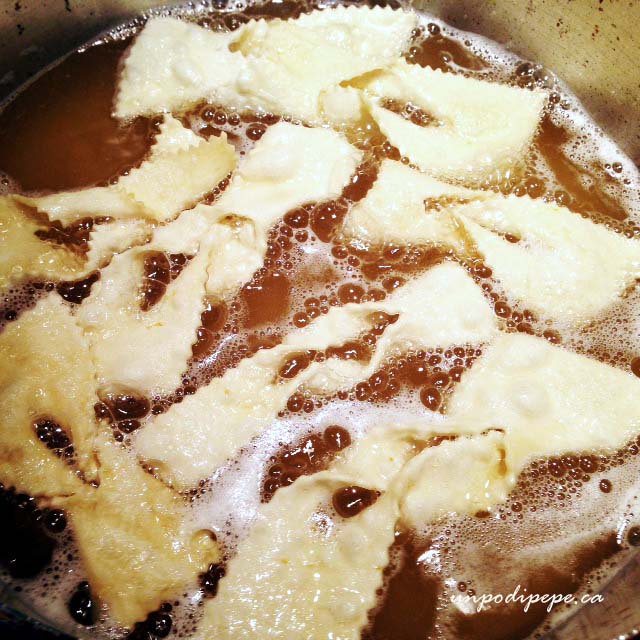
Crustoli are fried, sweet shapes of dough made for Carnevale-as well as Christmas and Easter. They are known by different names all over Italia. They are Crustoli or Galani in Puglia, Bugie (lies) in Piemonte and Liguria, Cenci ( rags) in Toscana, Chiacchiere (chitchat or gossip) in Lombardia and Calabria, Crostoli in Veneto and Friuli, Frappe in Lazio and Umbria and Sfrappole in Emilia Romagna! I hope I got them all right! In Poland, they are known as Chušciki. Recipes vary as well, but they are all very similar. Some have milk or baking powder and some do not. Here is my recipe, which is quite simple:
Crustoli
1egg
15 ml (1 tablespoon) sugar
15 ml (1 tablespoon) Anice liqueur (or Grappa or Sambuca)
Grated rind of 1 orange or lemon
15 ml (1 tablespoon) olive oil or sunflower oil
~150 grams (1 cup) flour, 00 is best
Salt
Mix all ingredients together and form into a ball. Roll half of the dough at a time out thin with a mattarello (rolling pin) or use a pasta machine. If you like them very thin and crispy, the pasta machine will work better. I like mine a little chewier. Cut crustoli into shapes with a pastry wheel. I like to make mine into bows or tie them in knots, but you can also just cut rectangles or triangles. Fry them in oil. I use sunflower or olive oil. Grapeseed oil can also be used. They cook very quickly! Drain on parchment paper or paper towels and dust with icing sugar. Note-this recipe does not make a large amount so you may want to double it!
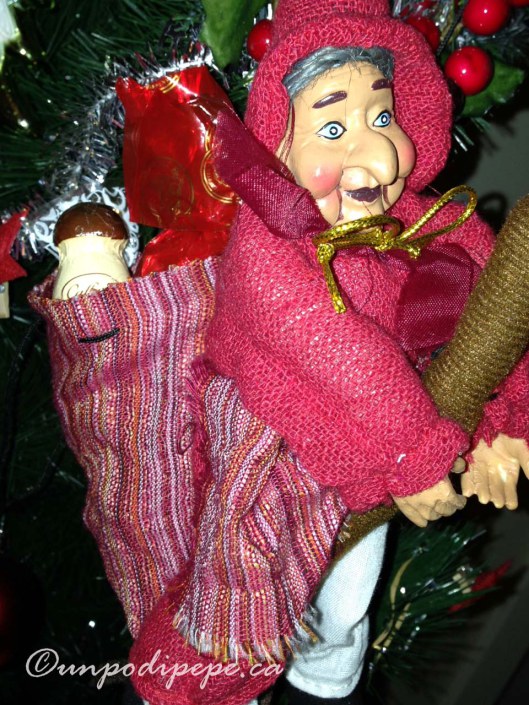
Ogni anno, nella notte tra il 5 e 6 di gennaio, volando cavalcando la scopa, La Befana porta regali ai bambini nella speranza che uno di loro sia il Bambino Gesù……
Today is la Festa dell’Epifania in Italia, celebrating the arrival of i Re Magi (the 3 Wise Men) Gasparre, Melchiorre & Baldassarre with their gifts of oro, incenso e mirra (gold, frankincense …
Continue reading original post: La Befana in English and Italiano. Buona Befana!
If you have seen my Instagram photos, you know that my famiglia and I have been busy making dolci di Natale. I decided to compile them together in a blog post. There are many other Italian dolci di Natale, but I have only included the ones we make every at home:
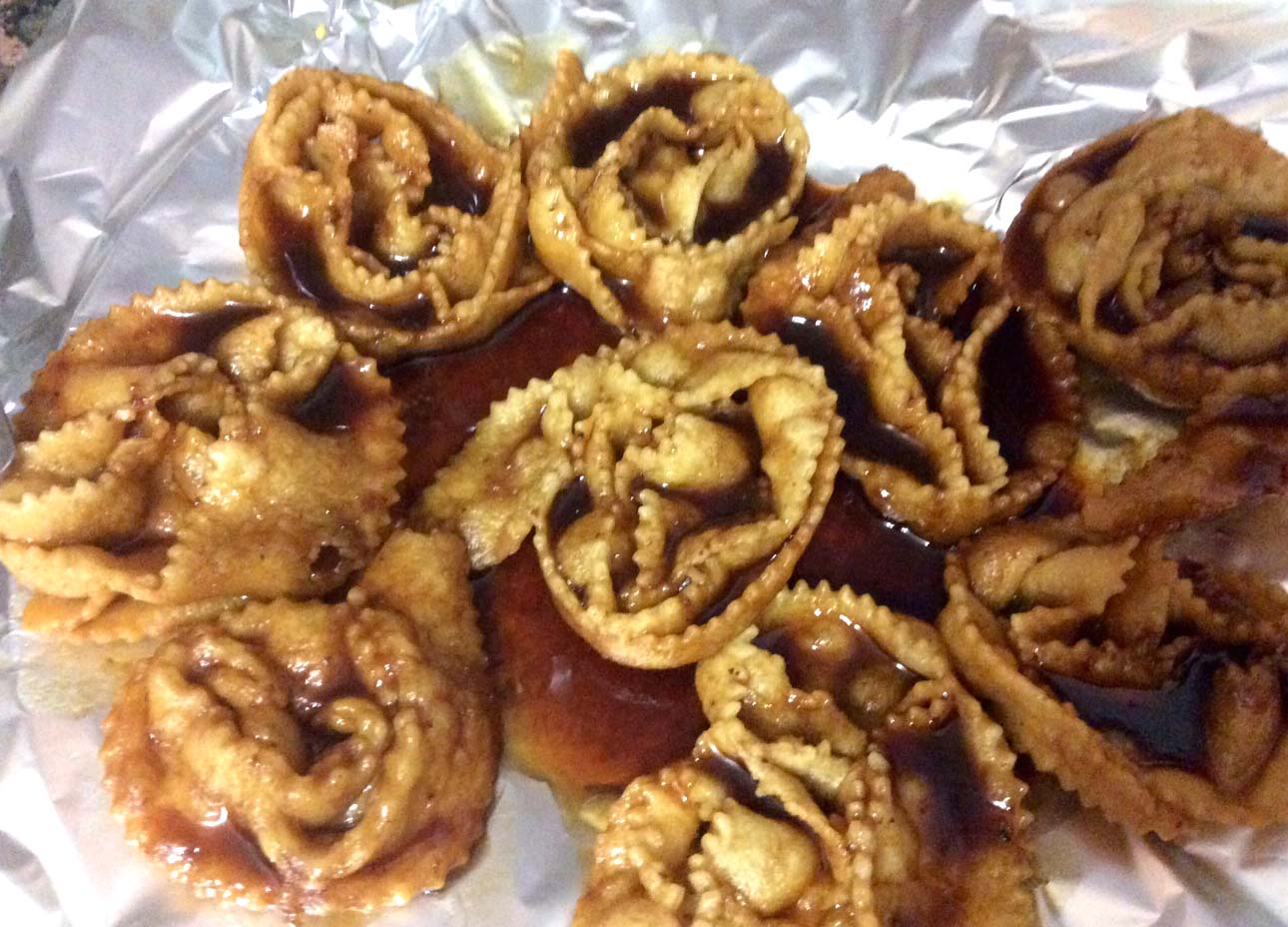
Cartellate
You can’t get more Pugliese than Cartellate (called Carteddate in Bari). My Mamma and I made them last week. The dough is pinched and rolled into pinwheel or thorny rose shapes, fried, and then vino cotto is poured over them. Their shape is apparently symbolizes the crown of thorns worn by Jesus. Vino cotto is really mosto cotto, but we call it vino cotto for some reason. The wine must is boiled and boiled down to a thick syrup and bottled. It is like a yummy wine molasses.
Cauzuncill’It wouldn’t be Natale without Cauzuncill’ (cow·ZOON·cheel) They already have their own entire blog post. Read more about them here.
Cauzuncill’ (cow-zoon-cheel) with almond and vino cotto filling, drizzled with vino cotto
Crustoli
We call these crustoli, but they are also called crostoli, chiacchiere, cenci, bugie and frappe in other parts of Italia. The sweet dough is cut into strips or bows, fried and then dusted with icing sugar. They are also traditionally made for Carnevale. The recipe is in this post.
Panettone
Panettone is traditionally from Milano, while Pandoro, the fruitless, star-shaped version, originated in Verona. They are eaten throughout Italia and it wouldn’t be Natale without panettone and leftover panettone. I love panettone french toast with fresh ricotta. This year, I made my own panettone, and it came out quite decent! I still have a bit of experimenting to do, but will hopefully be able to post about it for Natale 2017. The recipe is now posted here.
My first panettone fatto in casa
Pettole
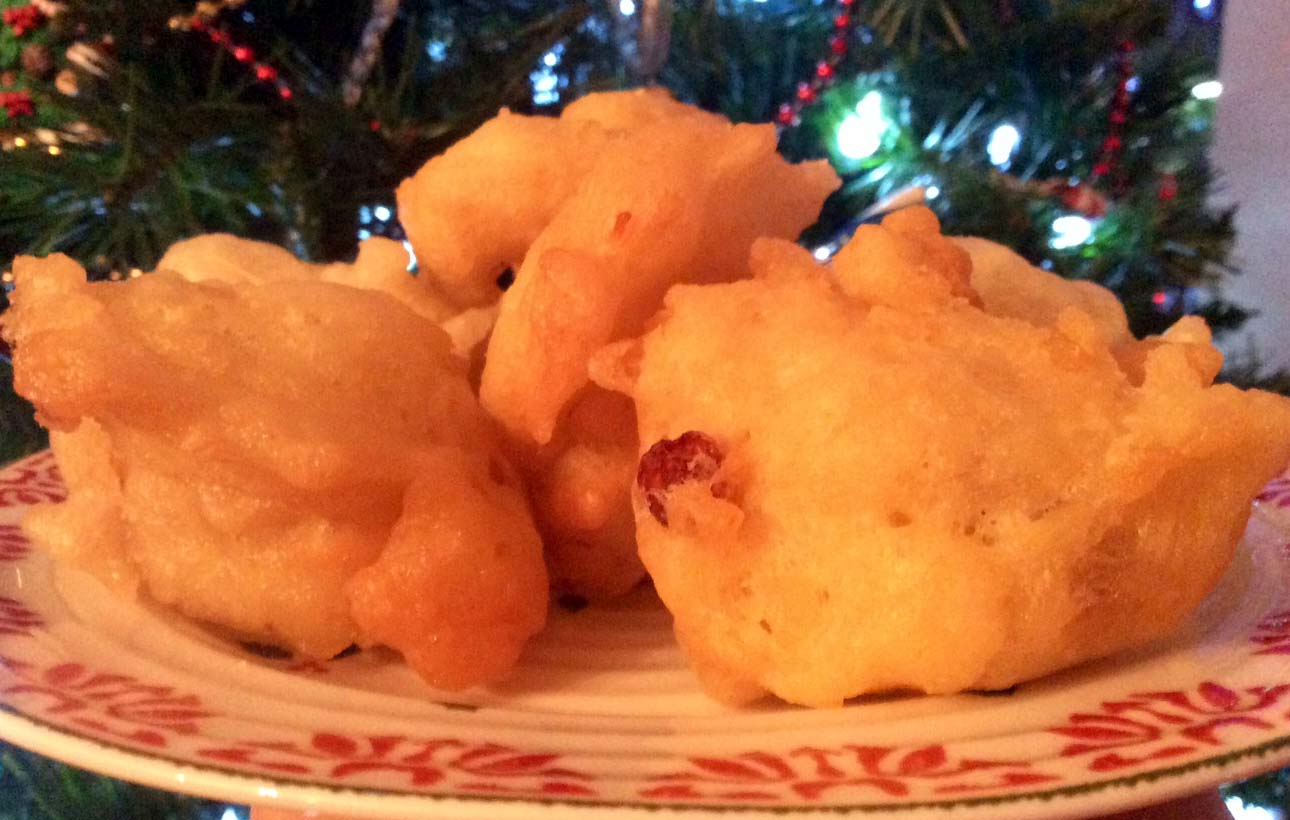
Pettole are fried balls of dough. They are made with or without raisins and are covered in honey or vino cotto. Pettole are traditionally eaten on the feast of l’Immacolata, Dec 8th, and on la Vigilia di Natale, Christmas Eve. I believe these are usually called zeppole in Calabria and in the US. In Puglia, zeppole are a completely different dolce, eaten on the feast of San Giuseppe.
Pizza con la Ricotta
Pizza con la ricotta is another traditional Pugliese dolce, and we only make it at Natale and Pasqua. I’m not sure why we only make it twice a year, as it is so delicious! It is a crostata (tart) made with pasta frolla (short crust pastry) and filled with fresh ricotta, sugar, eggs and alcohol (Sambuca or Strega). The word ‘pizza’ actually means flat and round. Pizza con la ricotta is usually round, but today ours is rectangular. I was not allowed to cut into it to take a cross sectional photo, so I will have to add it later!
Which dolci di Natale will be on your table tomorrow night? Buon Natale e Buon Appetito, Cristina
Muscitaglia (moo•shee•TAH•lyah) is a traditional dish served on November 1st in Orsara di Puglia. It probably dates back from the ancient Greeks and Byzantines. Muscitaglia, in both Greek and Latin is made up of the words mosto (wine must) and talia (grain). The ingredients include boiled grain and vino cotto, which is actually mosto cotto- boiled down grape must which becomes a thick, sweet liquid. Pomegranate seeds and walnut pieces are also added when available. These ingredients are simple and symbolic of fertility and abundance, but also of honour and respect for the dead.
November 1st is the night of Tutti i Santi (All Saints), a night which provides the opportunity to reconnect and pay respects to deceased loved ones. My post on the ancient festival Fucacoste e Cocce Priatorje which takes place in Orsara di Puglia has more information on the traditions and festivities.
Muscitaglia
Watch the video ‘#quinonèhalloween’featuring recently deceased Zi’ Gaetan talking about Fucacoste e Cocce Priatorje and its significance. I’m sure a few homes in Orsara will put out a chair tonight for Zi’ Gaetan so he can rest on his way to Paradiso. https://www.youtube.com/watch?v=9W5RD0-9H-A
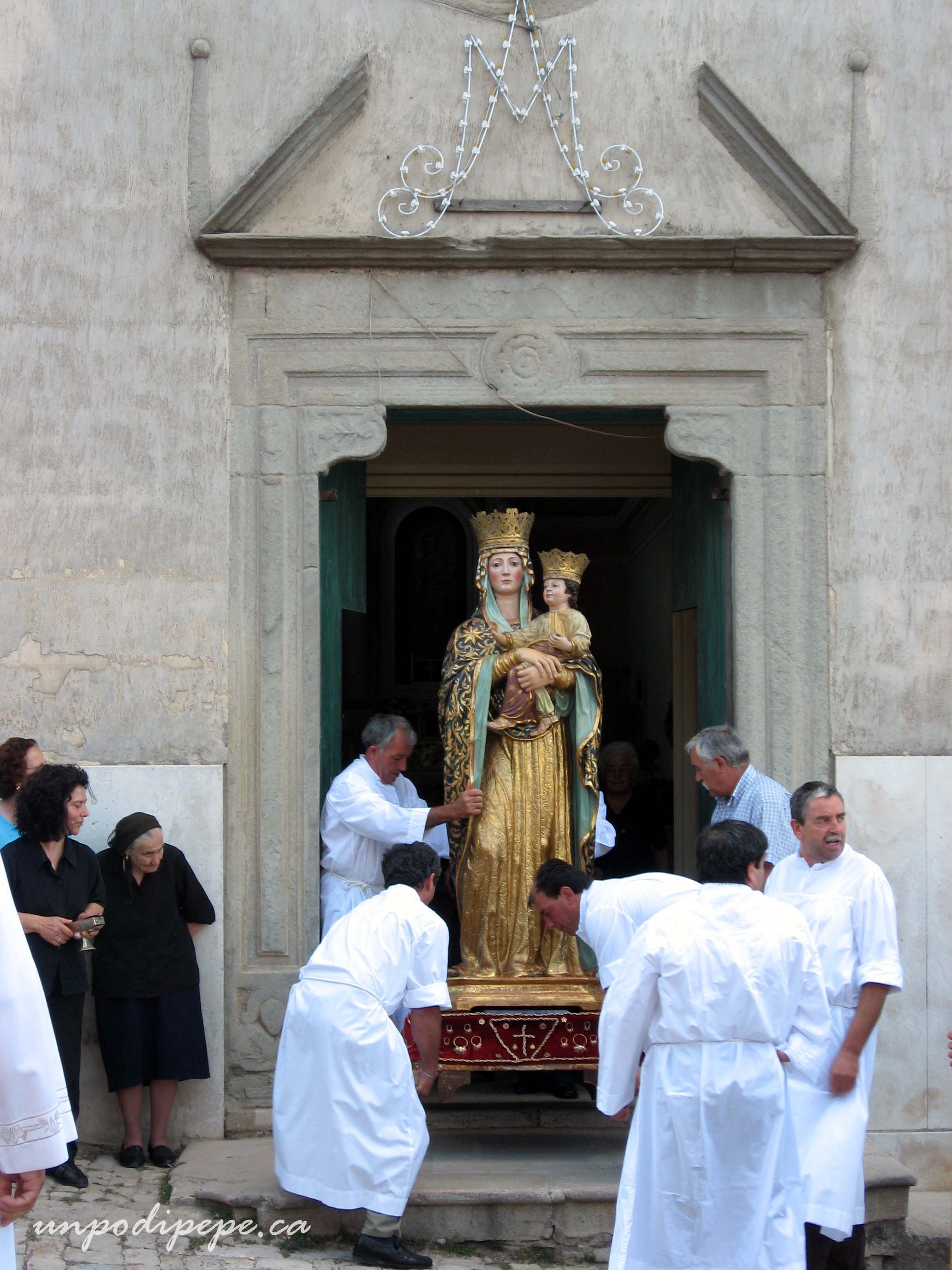
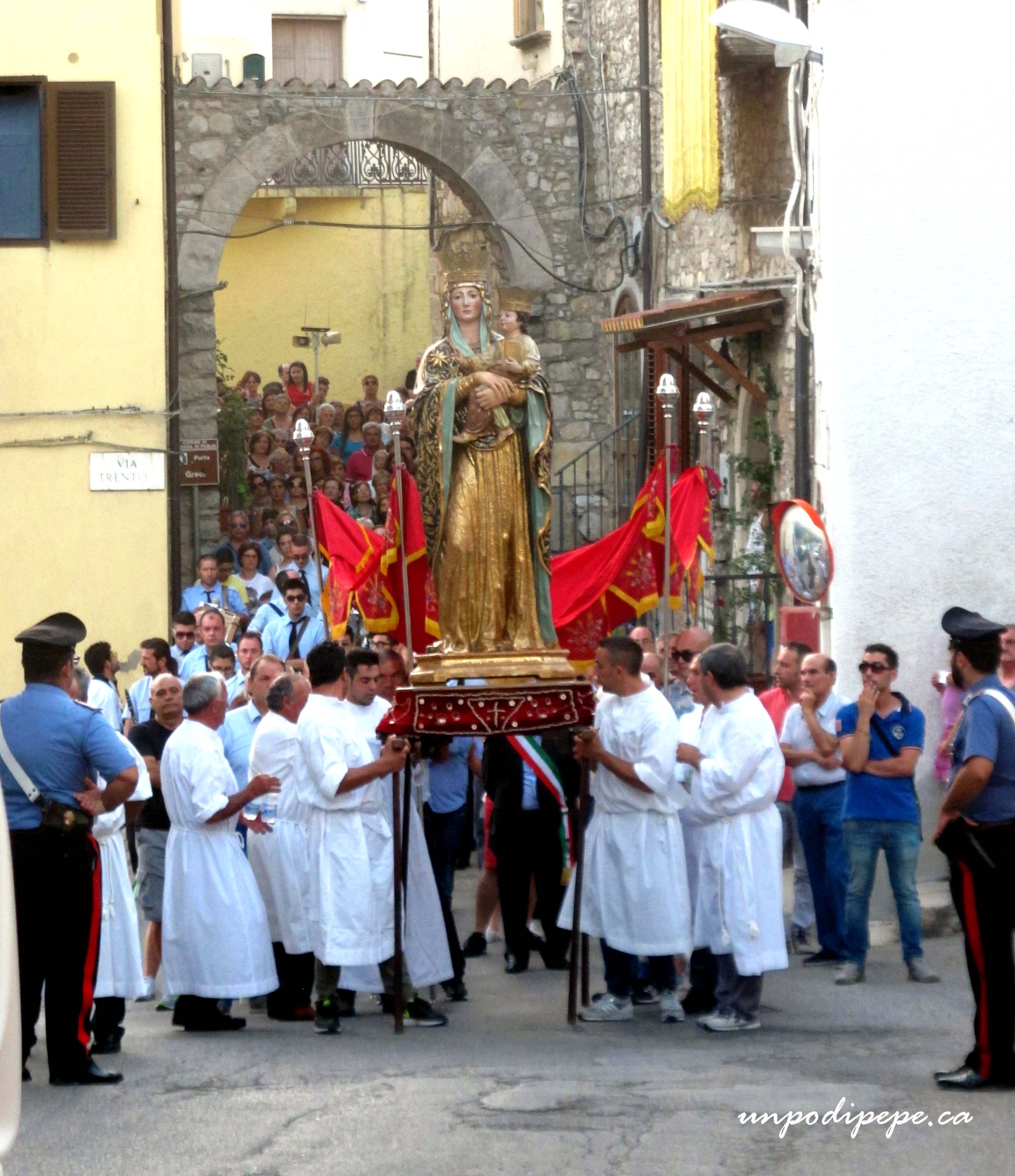
August 5th is the feast day of La Madonna della Neve (the Madonna of the Snow). She is one of the Patron Saints of Orsara di Puglia and there is a big festa. She is carried through Orsara in a procession and returned to her usual spot in the main church. In the evening there is a Mass, then music and fireworks in her honour. La Madonna della Neve is the protectoress and Patron Saint of many paesi montani or mountain villages because, of course, it snows!
La Madonna della Neve is tied to the origins of the Basilica Santa Maria Maggiore in Roma. According to legend, in the year 352, the night between August 4th and 5th, the Madonna appeared in a dream to a wealthy couple who wanted to build a church. She asked them to build a church where snow had fallen during the night. They went to tell Pope Liberio and it turns out he had the exact same dream during the night!
In the middle of a hot Roman summer, snow had fallen on L’Esquilino, the Esquiline Hill. The perimeter of the snowed on area was where the church of Santa Maria ‘Ad Nives’ (of the snow) was built. The church is usually known as Santa Maria Maggiore.
Orsara’s Madonna della Neve statue was carved out of a single piece of quercia (oak) by Napoletano sculptor Aniello Stallato in 1624. I have been familiar with this beautiful sculpture since I was 11, but I had no idea she was almost 400 years old! Here are some photos of the processione!
 L’albero di Natale, my Christmas tree is now up and decorated. I usually have it all done by now, but I am behind this year. It was not planned, but I did the Italian thing this year! December 8th is l’Immacolata Concezione, the festa celebrating the conception of the Vergine Maria. It is a national holiday in Italia and the official start of le feste Natalizie-the Christmas season. It is also the day most Italiani put up and decorate their albero di Natale and presepio. The Christmas decorations-addobbi Natalizie stay up until January 6th, la festa del Epifania-after a visit from La Befana. Earlybirds decorate on December 6th the festa di San Nicola.
 L’albero di Natale is long standing tradition in Northern European countries, but a much newer custom in Italia. Alberi sempervivi-evergreen trees, have symbolized life, regeneration and immortality. The Celts, Vikings and pre-Christian Germanic tribes decorated evergreens during Solstice celebrations. In the harsh northern winters evergreen trees, holly and mistletoe were the only things that stayed green, so they were thought to have magical powers.
  Wreaths and evergreen branches were hung over doors as a defense against evil spirits and a symbolic defense against the harsh winter. I can totally relate to this last one. My addobbi Natalizie help me get through the winter!
  ‘Modern’ use of l’albero di Natale started in the 13th Century and became a custom in Northern Europe. In Southern Europe, it was seen as more of a Protestant custom and did not catch on. In 1848, when Prince Albert of Germany married Queen Victoria, he brought the Christmas tree custom with him, which spread through the British Empire.
 Regina Margherita di Savoia-yes she of pizza fame-was the first to decorate un albero di Natale in Italia in the late 1800’s at the Palazzo Quirinale. The custom spread slowly, but grew in popularity after WWII. In 1982, Pope Giovanni Paolo II first introduced a tree in Piazza San Pietro. Now most families have un albero di Natale, and the presepio is often placed under the tree. Is your albero di Natale up yet? Buon Natale, Cristina















 Un po' di pepe