• Home
  • About me/Chi sono
  • Contact

Un po' di pepe

~ …… (oon∙poh∙dee∙PEH∙peh) Cristina writes about interesting stuff /Cristina scrive di cose interessanti

Un po' di pepe

Category Archives: Italian life

A Perfect Day in Italia

10 Tuesday Apr 2018

Posted by Un po' di pepe in Italia, Italian life, Orsara di Puglia, Puglia

≈ 41 Comments

Tags

Dolcevitabloggers, Orsara di Puglia, Pugliese Traditions, Southern Italy

The Dolce Vita Bloggers link-up theme this month is ‘a perfect day in Italy’. What a topic!  There are so many possibilities.  I have written about many wonderfully perfect days, in Roma, Matera, Alberobello, the Val d’Orcia, Polignano a Mare….  How do I narrow down what to write about? With too much material to choose from, I decided to write about a typical day ‘at home’ in Orsara di Puglia, where most days are laid back, spontaneous and pretty darn perfetto!

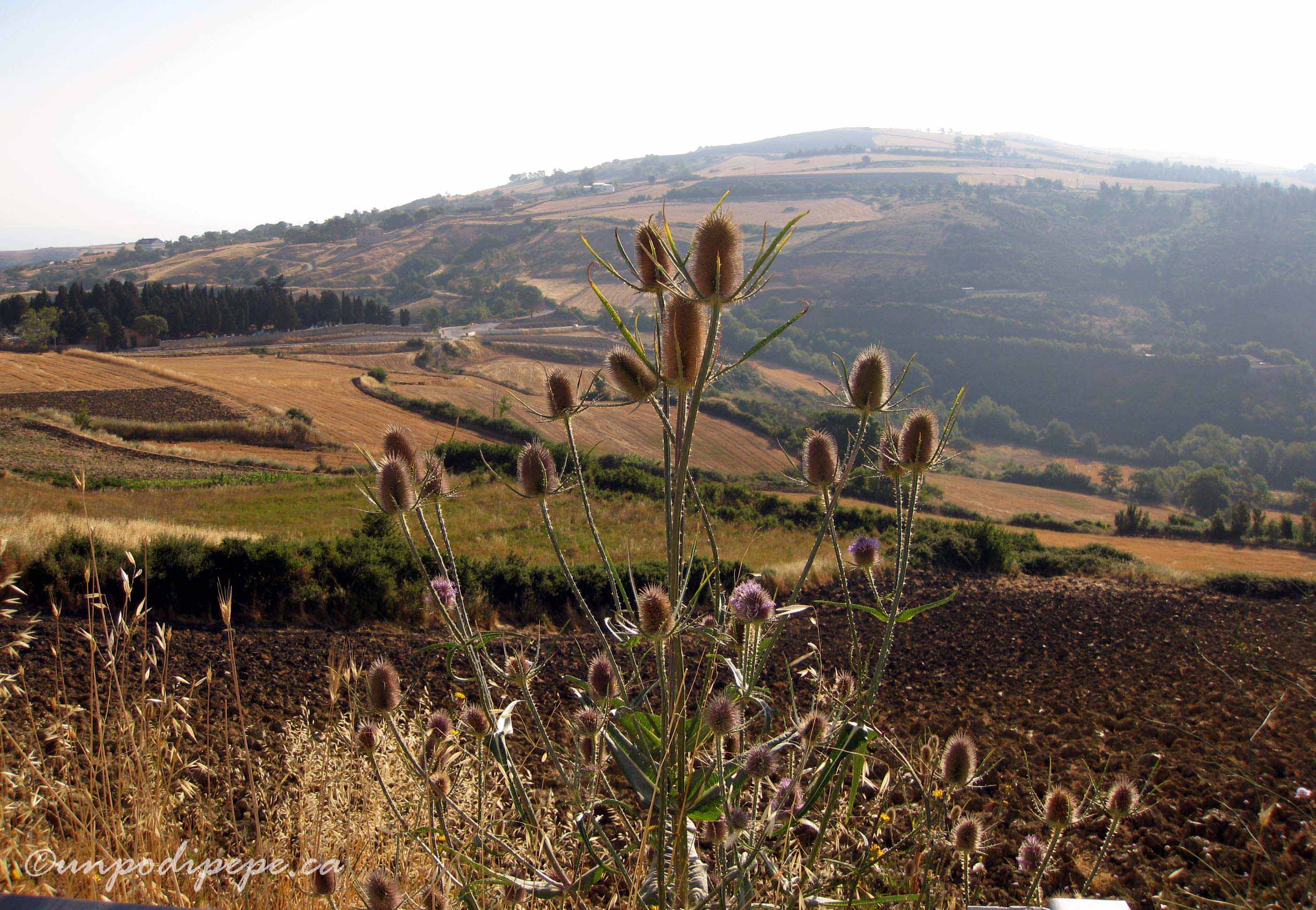
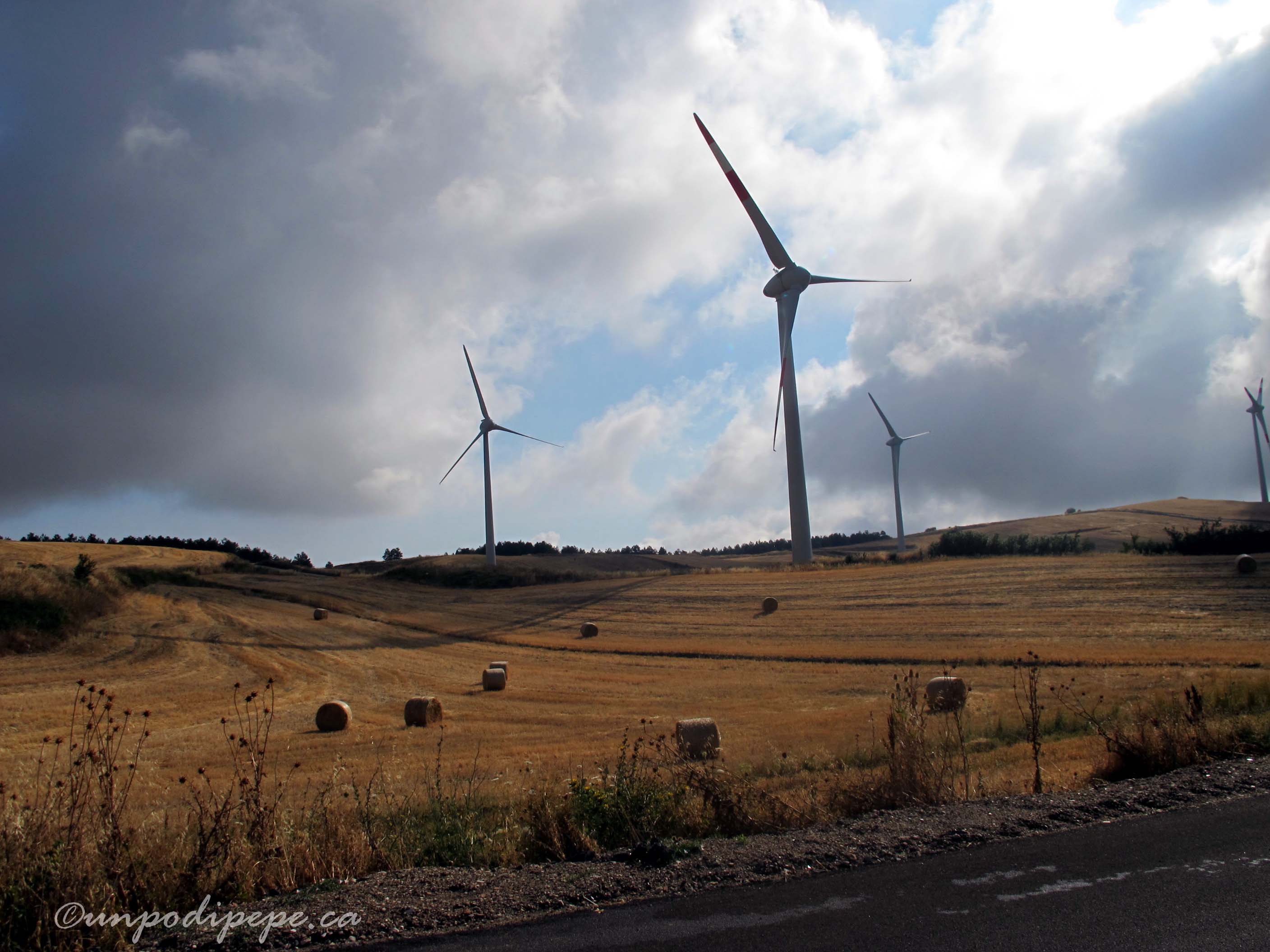
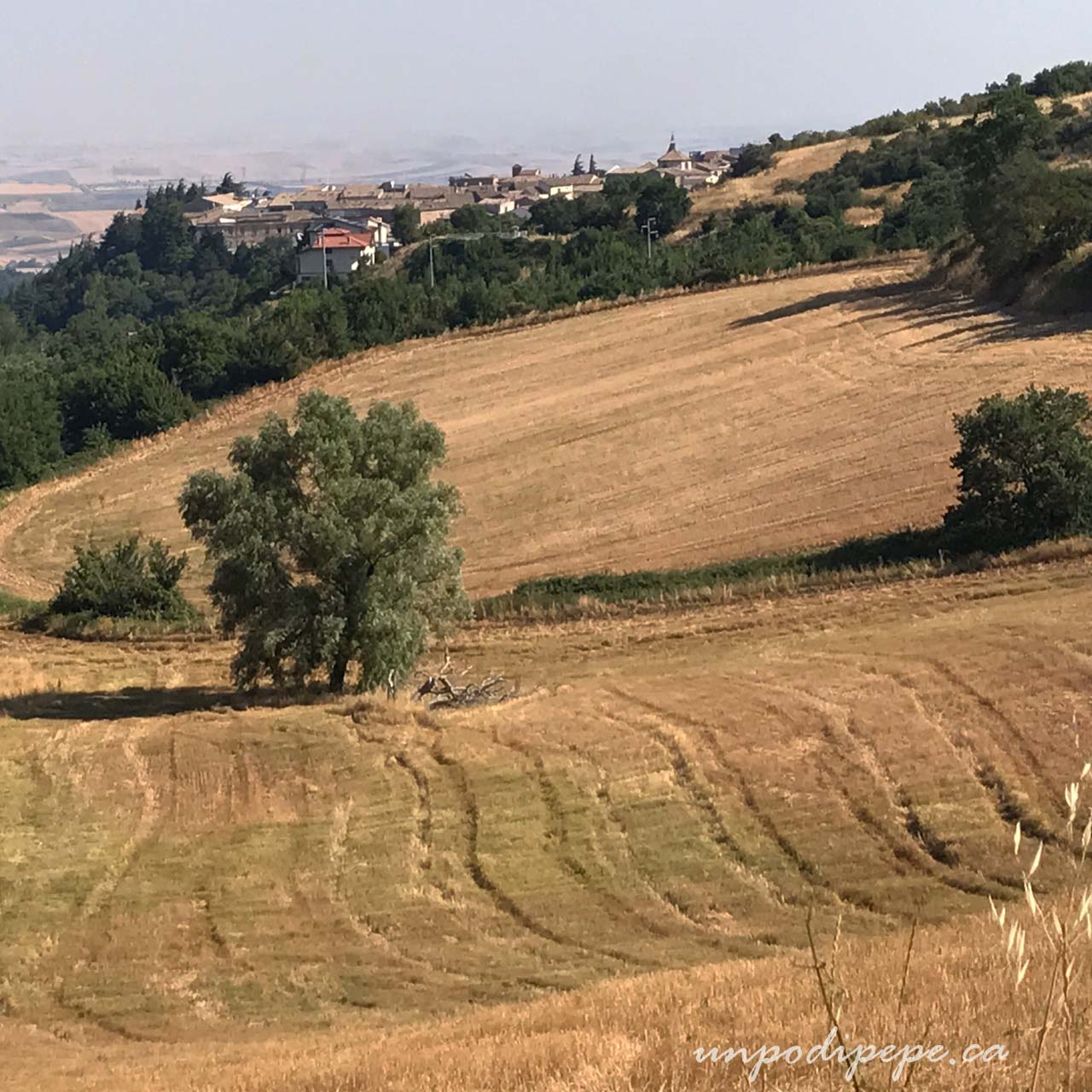
My day usually starts out with a long, early morning passeggiata to la Montagna Spaccata.  I call it ‘la Palestra di Madre Natura’ or ‘mother nature’s gym’, an uphill zig-zag walk up the mountain towards Campania with fresh aria di montagna, breathtaking views and encounters with fellow walkers.  I usually walk to the border with Campania, when I reach the pale eoliche (PAH•leh Eh•oh•LEH•keh).

Pale eoliche (wind turbines) near Montaguto

I have also walked all the way to Montaguto, in Campania 6 km away . I am not a ‘morning person’, but in the summer, the walk must be early, otherwise it gets too hot to walk on the way back. Long walks are necessary when you spend weeks eating lots yummy food and still want to fit into your clothes!

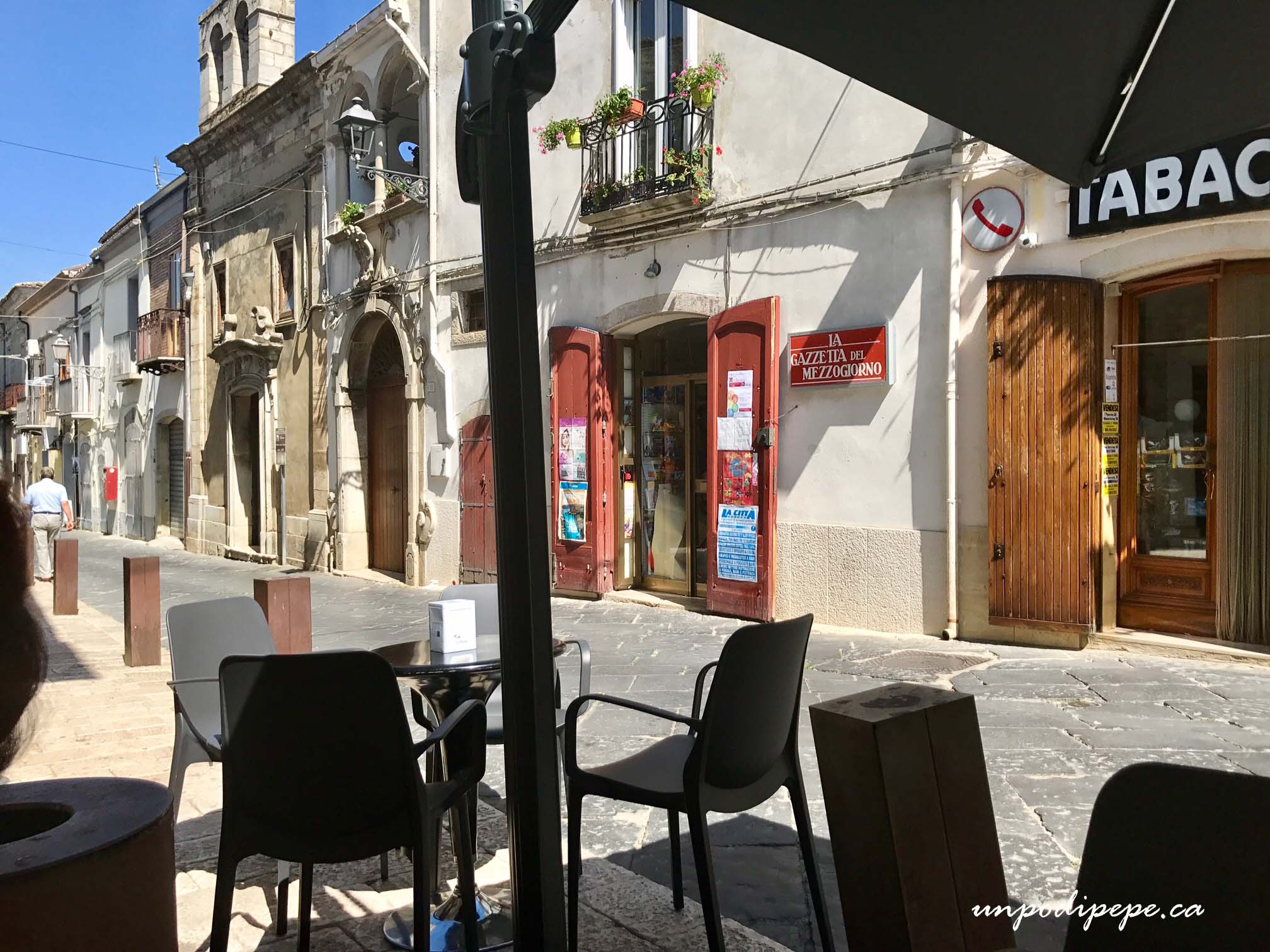
When I am back from my walk, cleaned up and changed, I often stop at the bar for an espressino, known as caffè marocchino in the rest of italia.  I also sneak in a few minutes of wifi.  Sometimes I walk to Piano Paradiso and have caffè with Peppe Zullo in the morning or afternoon.  Then I usually do servizi-errands, including shopping for food. Refrigerators are small, and most people shop at least every other day for fresh local ingredients.  Fresh bread and taralli are purchased at il forno.  Generi Alimentari are delis and also carry general grocery items.  My favourite items to purchase are fresh mozzarelle and the local specialty, cacioricotta.  Once a week, mozzarelle di bufala arrive and I am first in line! Fruit and vegetables are from the fruttivendolo-unless the neighbours give you produce from their orto.  There are also travelling fruttivendoli, selling out of small trucks.

Il fruttivendolo barely fits in Via Regina Margherita!

I celebrate when fiori di zucca are available!  Another local specialty is Tuccanese, vino made from a local native grape. As in most non-touristy towns in Italia, shops close at 1pm for la pausa pranzo and reopen at 5pm, until 8pm.
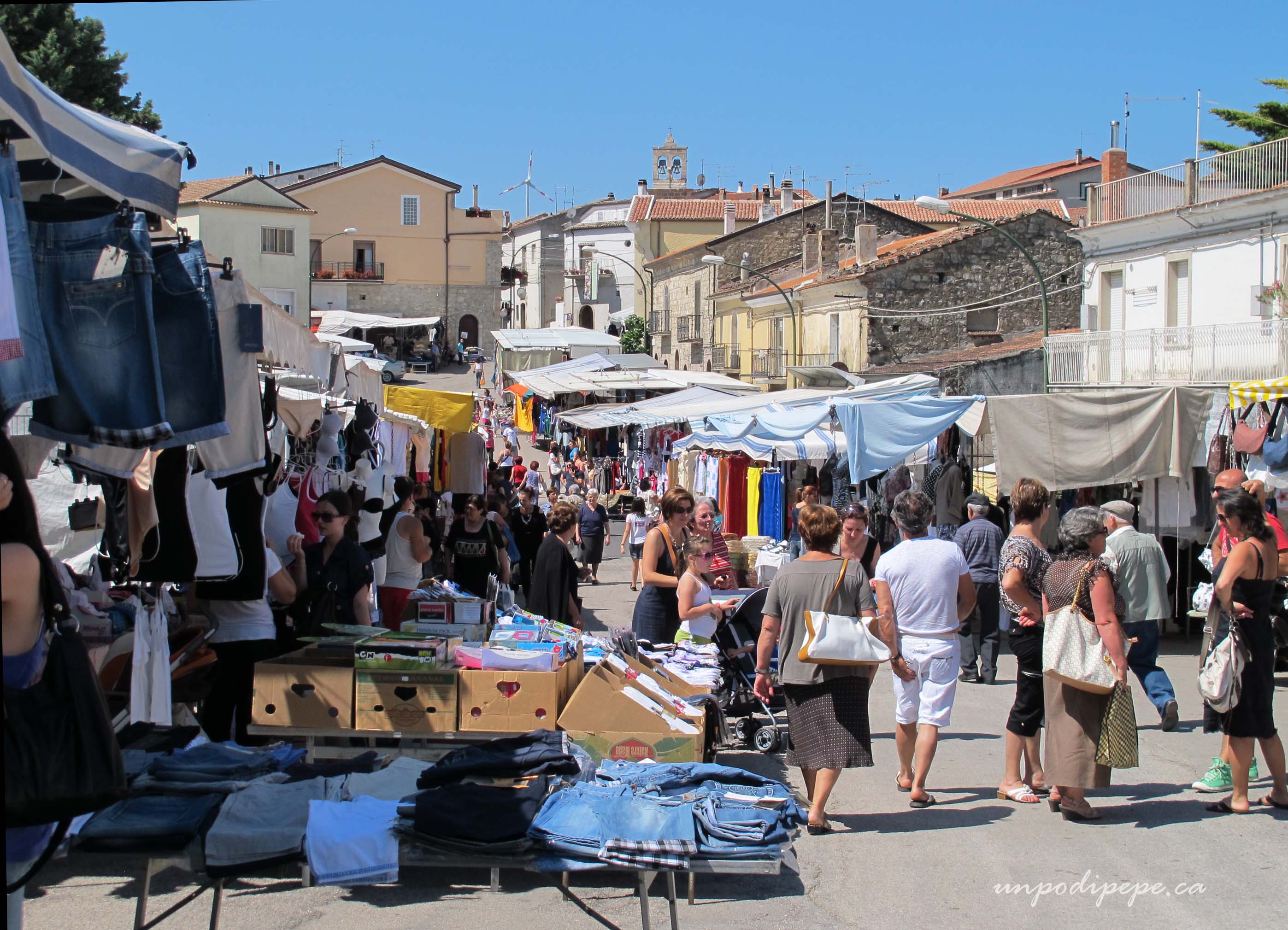
Giovedi mattina-Thursday morning is the mercato in Orsara.  The street is lined with bancarelle selling everything from fresh formaggi to produce, linens, shoes and household stuff.  A great spot to run into everyone in town, including visitors. Il postino likes giovedi, as he can hand everyone their mail on their way to the mercato.

The rest of the morning is usually spent helping to prepare pranzo, the main meal of the day, at 1pm.  In the summer, my parents are also in Orsara, sometimes my sister and her family too, so there is lots of food preparation going on, using ultra fresh local ingredients.

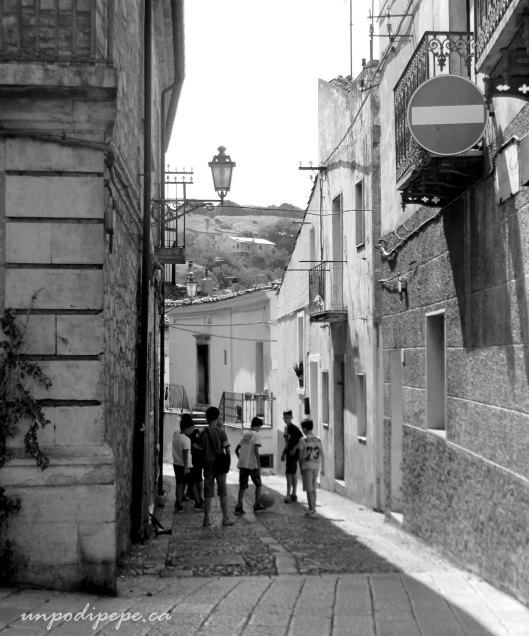
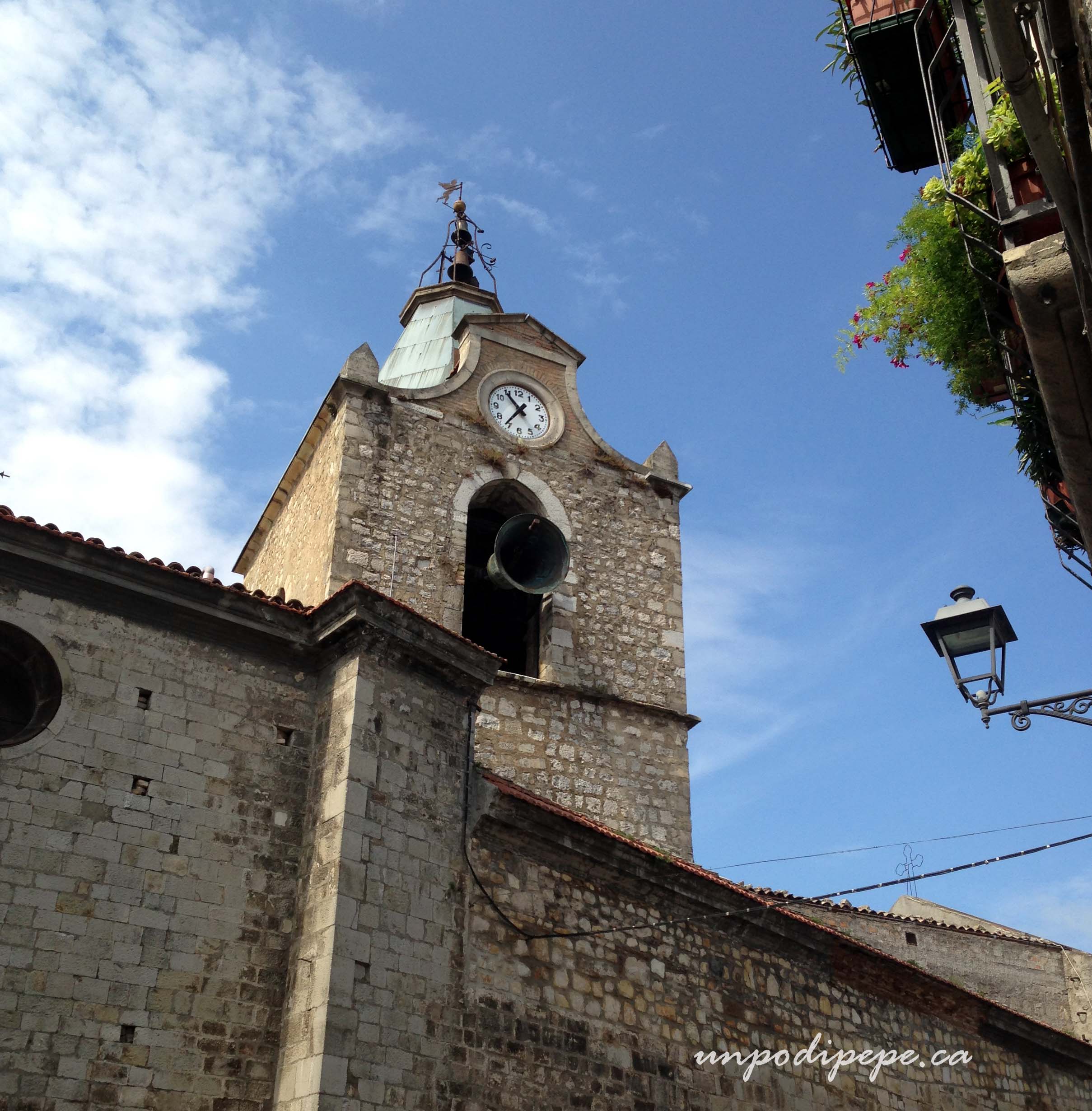
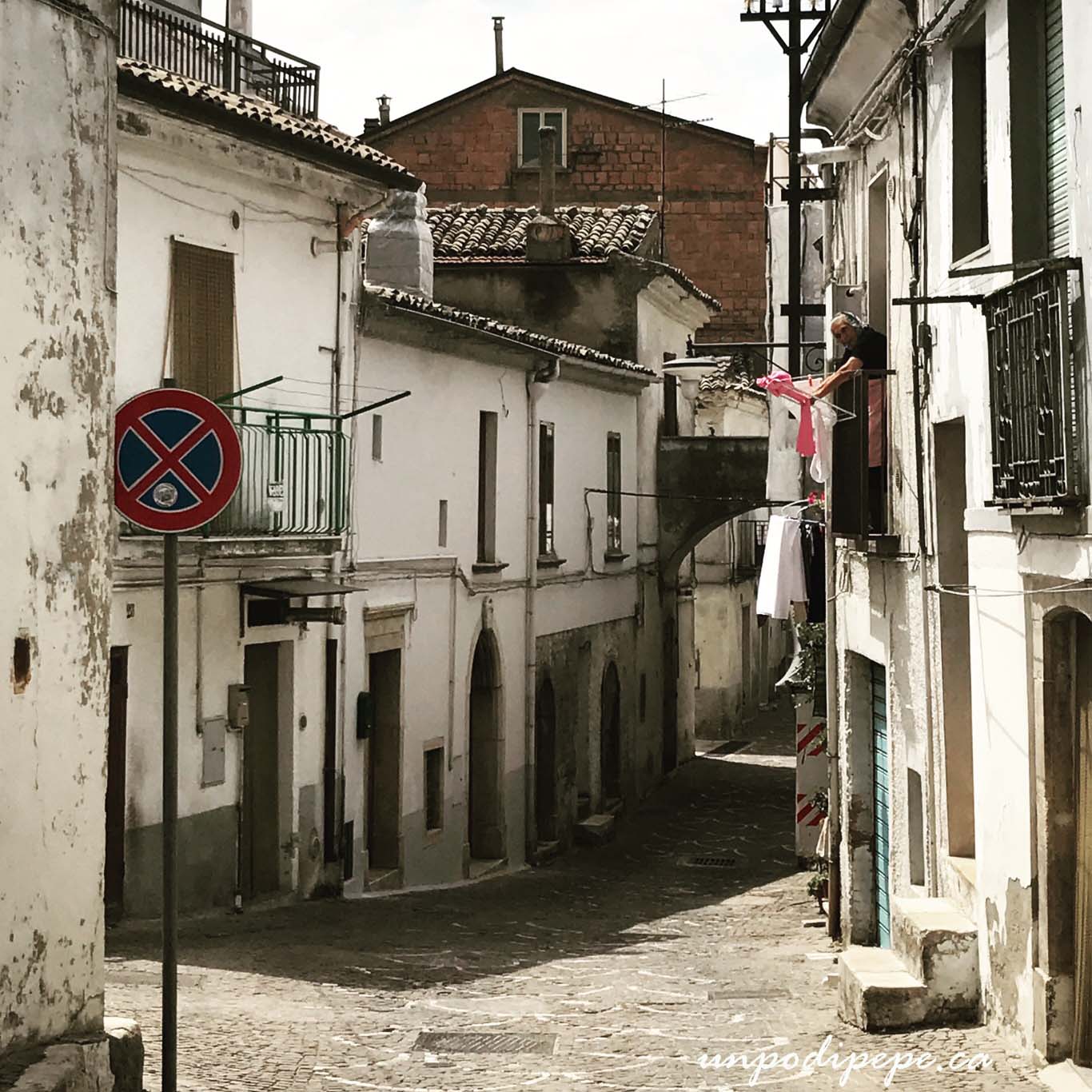
There is no need for a watch. My casa is right near the main church and the campanile– bell tower.  La campana rings every 15 minutes.  On the hour, there is one ‘ding’ for each hour, and every 15 minutes there is a higher pitched ‘ding’.  For example, at 12:45 la campana rings 12 times, followed by 3 higher pitched rings.  Back in the day when no one had a watch, contadini working in the fields would know the time. You might think this would get annoying, but la campana was broken for a year, and it was really missed! Once the dishes are done, it is orario di riposo-quiet time, as it is too hot to do much else.  Most people do not nap every afternoon, but they at least stay home and have a riposo, a rest. A short pisolino is quite civilized if you are up very early and plan to stay out late! The afternoon rest is not called a siesta in italiano- riposo or la pausa. I often read or do clean up stuff around the house, like hang laundry to dry. There are no dryers here as electricity is ridiculously expensive and sunlight is free. I may brave the mid afternoon sun to go out and take photos. The maze of steep, windy, cobblestone streets and alleys are empty and I am alone with the light and the incredible shadows.  To quote myself…

’ la luce … la gloriosa e magnifica luce del sole di metà pomeriggio è incredibile. Vorrei dipingere quella luce! / the light….the glorious and magnificent light of the mid-afternoon sun is incredible.  I want to paint that light!’ (Cristina, October 2017).

At 5pm shops and bars reopen and the streets come to life again.  I visit friends and relatives, meet for gelato, shop, or find somewhere to sit with my sketchbook. I also love to walk to La Cupa, the olive grove that used to belong to my Nonno to pick plums, figs and pears. I usually need to stop at one of the bars to use wifi, although as I explained in Chiuso per Ferie in August, this can end up seeming quite antisocial.

Sundays, I sleep in, unless going on a daytrip.  I love to have cappuccino and a cornetto crema di pistacchio before 11:00 Mass in the ancient Grotta di San Michele Arcangelo. At least one Sunday, I look forward to a barbecue at La Cupa with my extended family.

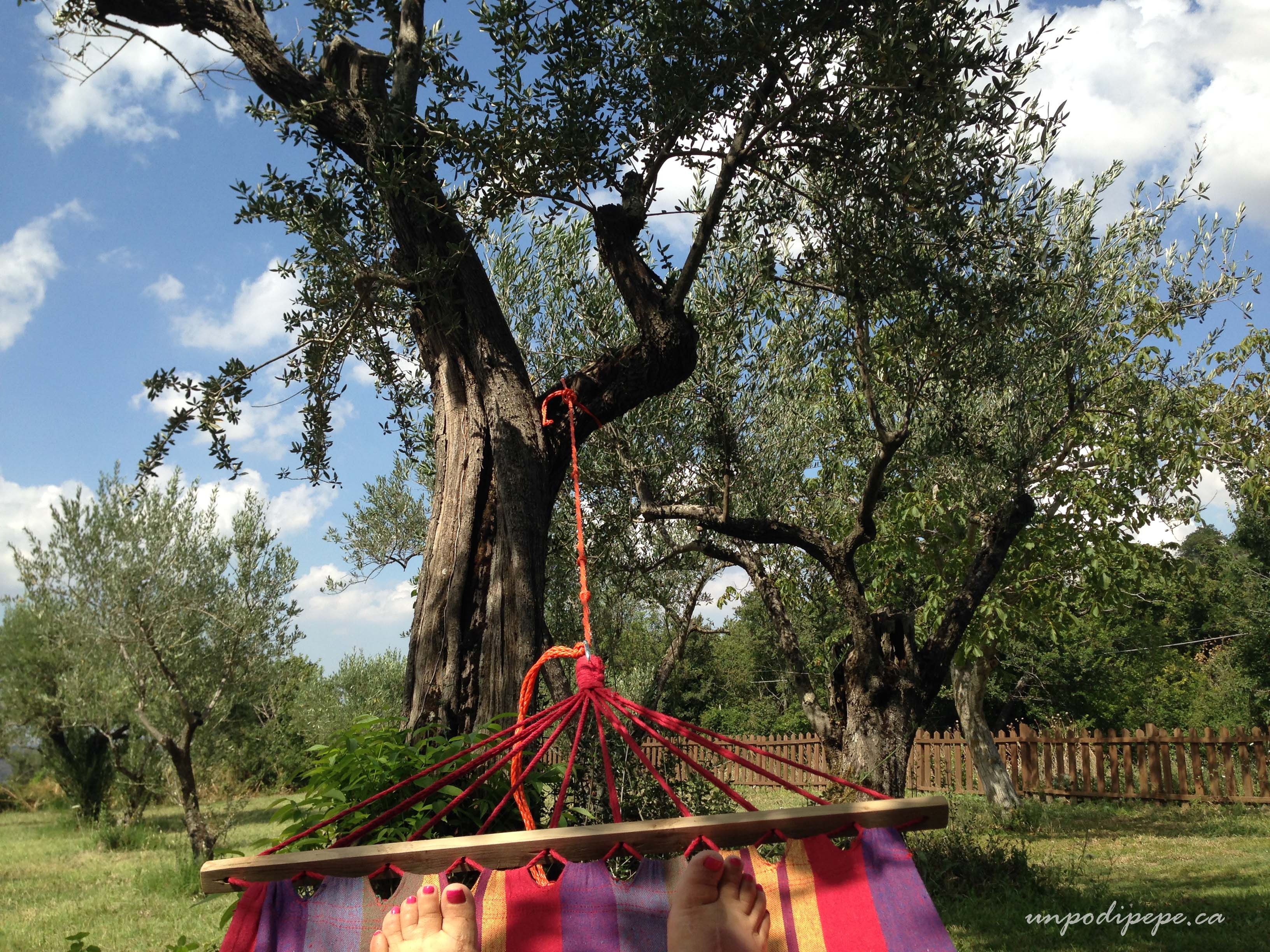
‘un po’ di relax’ under the olive trees

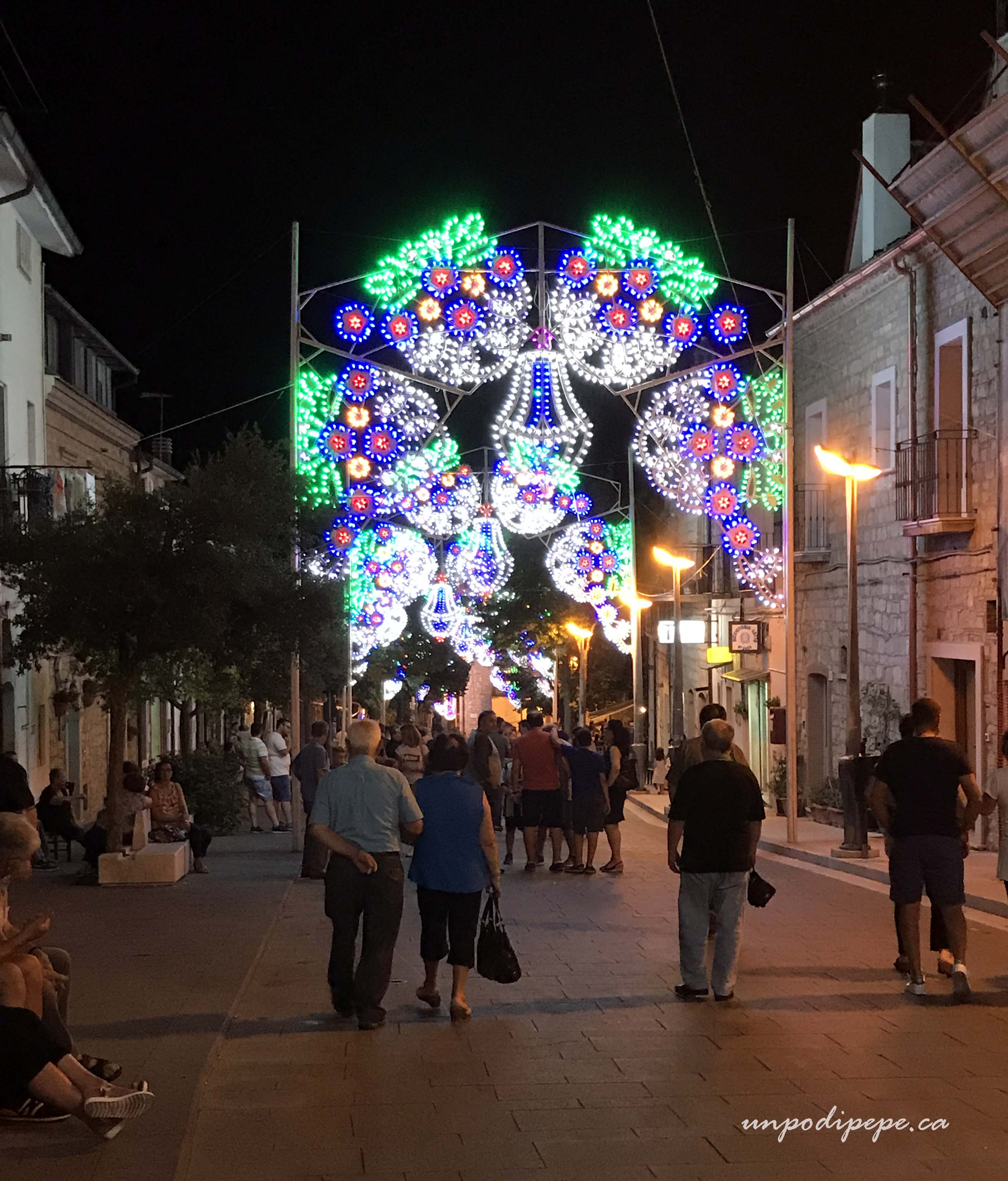
After 9pm, it is time for the evening passeggiata, walking up and down ‘il Corso’ and socializing. There are pizzerie and bars with outdoor seating along il Corso. On summer evenings, there are often concerts or special events.My favourite part of the passeggiata is walking all the way to the top of the Corso, past where the houses stop, then the streetlights stop.  It is buio (BOO•yoh) -dark, you can hear grille (GREEL•leh)-crickets, and see the stars.  On clear, windless nights, lucciole (looch•CHEEOH•leh)-fireflies make the night absolutely magical. There is usually a stop for a drink at an outdoor table before ending up back at home…never before midnight though! Buonanotte, Cristina.

Click on these links to read previous posts about wonderfully perfect days spent in… Alberobello, the Isole Tremiti, Matera, Polignano a Mare, Paestum, Roma, Trani and the Val d’Orcia.

This post is written as part of the monthly #dolcevitabloggers linkup, hosted by Jasmine of Questa Dolce Vita, Kelly of Italian at Heart and Kristie of Mamma Prada the 7th -14th of every month.

Share this:

  • Click to share on Facebook (Opens in new window) Facebook
  • Click to share on Pinterest (Opens in new window) Pinterest
  • Click to share on X (Opens in new window) X
  • Click to email a link to a friend (Opens in new window) Email
  • Click to share on WhatsApp (Opens in new window) WhatsApp
Like Loading...

Panettone

11 Monday Dec 2017

Posted by Un po' di pepe in Feste, Italian life, Mangiamo!, Parole piacevoli

≈ 10 Comments

Tags

Alemagna, Dolci di Natale, Ludovico Sforza, Motta, Natale, Pan del Ton, Panettone, Panettone origins

Panettone is a Christmas and New Year’s tradition in Italian households. Panettone (pah∙neh∙TOH∙neh) literally means big loaf of bread. Panetto is a small loaf of bread and the suffix ‘one’ makes it a big bread.  The origins of panettone probably date back to the Ancient Romans, who made a leavened bread with honey and raisins.  Bread has always been a symbol of family ties, as in ‘breaking bread’ together. In the middle ages, a sweet leavened bread with dried fruit was incised with the sign of the cross before baking as a blessing for the new year, then distributed to the family.  A slice was also saved for the next year.  In the 1400’s it became custom to make il pane di Natale-Christmas bread, with white flour and costly, hard to find ingredients that made it special.  This was called pane di lusso-luxurious bread, which in Milanese dialect was ‘pan del ton’.  Modern panettone originated 500 years ago in Milano during the reign of Ludovico Sforza (1481-1499). There are several legends regarding its origin.

In the most romanticized legend, Ughetto, son of nobleman Giacometto degli Antellari fell in love with the beautiful Adalgisa. To be near his innamorata, he pretended to be an apprentice baker for her father Antonio, who was called ‘Toni’.  Desperate to impress Toni, Ughetto created a rich bread with yeast, butter, eggs, sugar and canditi- candied cedro and orange peel. The bread was an overwhelming success and people came from all over Milano to taste this ‘pane di toni’ – Toni’s bread.  Duchess Beatrice d’Este, wife of Ludovico Sforza, was so taken with the love story that created this bread that she convinced Giacometto to let his son marry the baker’s daughter.

Another version takes place in Ludovico’s kitchens. There was a custom to prepare a particular dolce for guests on Christmas Eve. Unfortunately, it was burnt, sending the cook into desperation.  One of the kitchen workers, a boy named Antonio, offered the bread he was making for himself using the dough left over the day before from the original dolce. It was a domed sweet bread with grapes.  When the invited guests asked what this delicious dolce was called, the cook replied ‘pan del toni’.

The final legend is the simplest, but probably the most believable.  It involves Suor Ughetta, a young nun in a very poor convent in Milano. To make Christmas Eve more festive, she made a dolce for her fellow sisters with butter, sugar, eggs, canditi and uvette.  Uvetta means raisin in Italiano, and in dialetto Milanese it is pronounced ‘ughetta‘. Whichever legend we choose to believe, today panettone is synonymous with Natale for everyone of Italian origin.

In 1919, baker Angelo Motta opened his first pasticceria in Milano. He let his panettone rise 3 times, to the familiar cupola or dome shape on a cylinder that we see today. Previously the shape of panettone was more schiacciata-lower and more compact. Motta also invented the paper wrap and box. A few years later, he had a competitor in Milano, Gioacchino Alemagna. Their competition led to industrialized production of panettone, with factories replacing the small pasticcerie. They also began exporting all over the world. Today both Motta and Alemagna are owned by Bauli, based in Verona. Last year almost 120 million panettoni were produced in Italia!

I will be enjoying my panettone and prosecco for Capodanno-New Year’s eve, and making panettone French toast with ricotta if there is any left over! I have been experimenting with making my own panettone since last December.  My next post is a recipe for Panettone fatto in casa!  Read about other dolci di Natale in this post. Buon appetito, Cristina

Share this:

  • Click to share on Facebook (Opens in new window) Facebook
  • Click to share on Pinterest (Opens in new window) Pinterest
  • Click to share on X (Opens in new window) X
  • Click to email a link to a friend (Opens in new window) Email
  • Click to share on WhatsApp (Opens in new window) WhatsApp
Like Loading...

Pomodoro Day!

27 Sunday Aug 2017

Posted by Un po' di pepe in Italian life, Mangiamo!

≈ 21 Comments

Tags

Italian food, Passata di pomodoro, photography, Pomodori, Pomodoro day, Pugliese Traditions, Tomato day, Tomato sauce

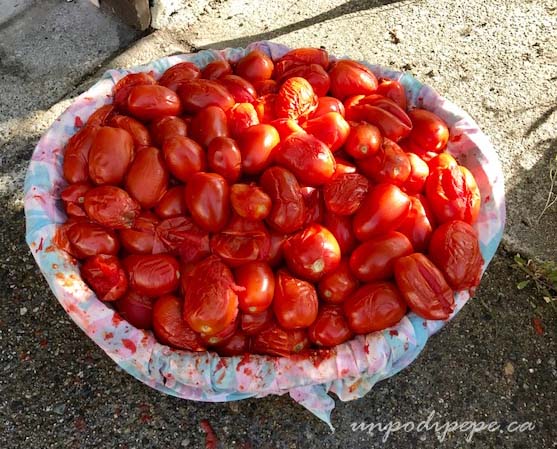
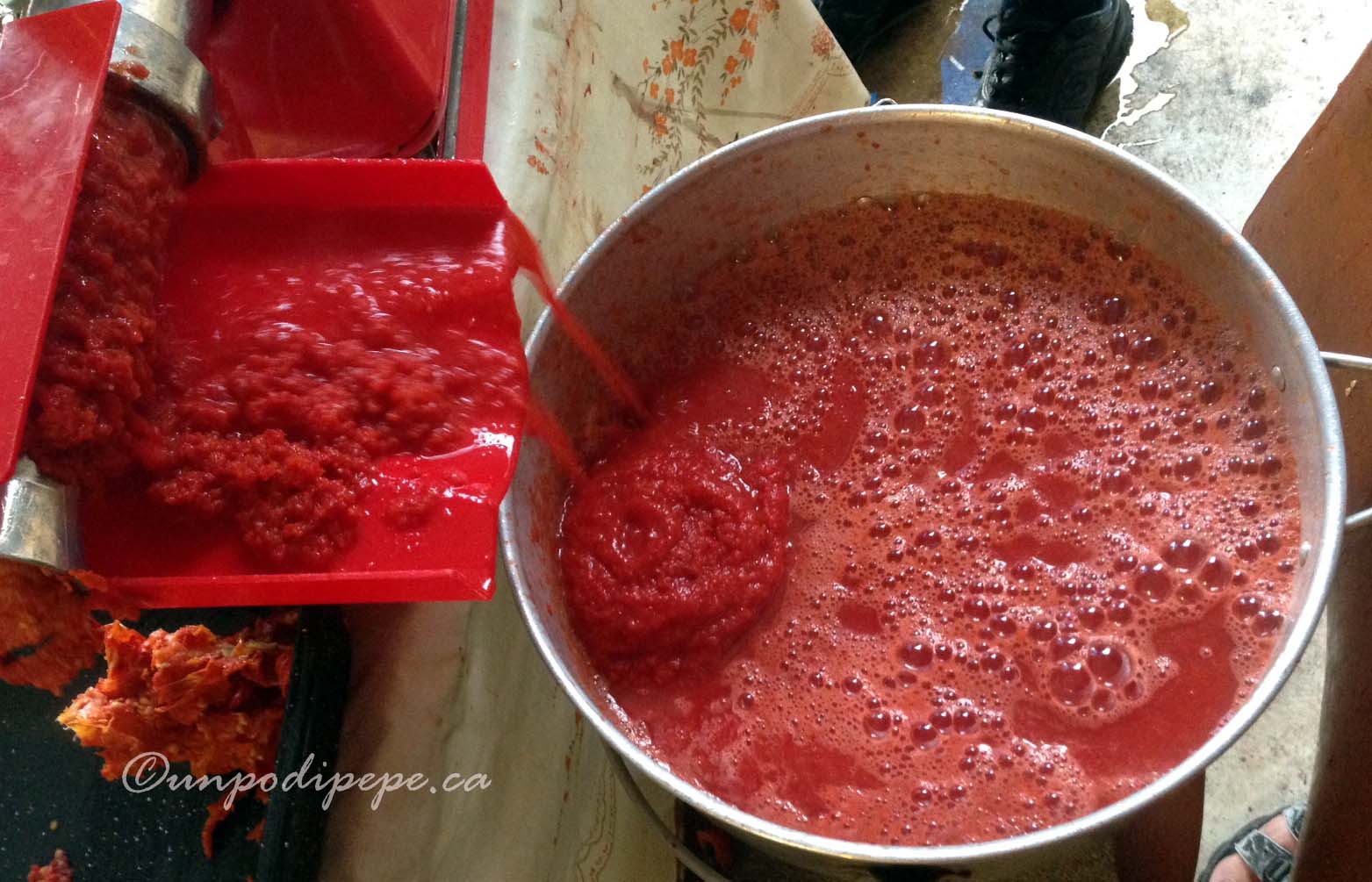
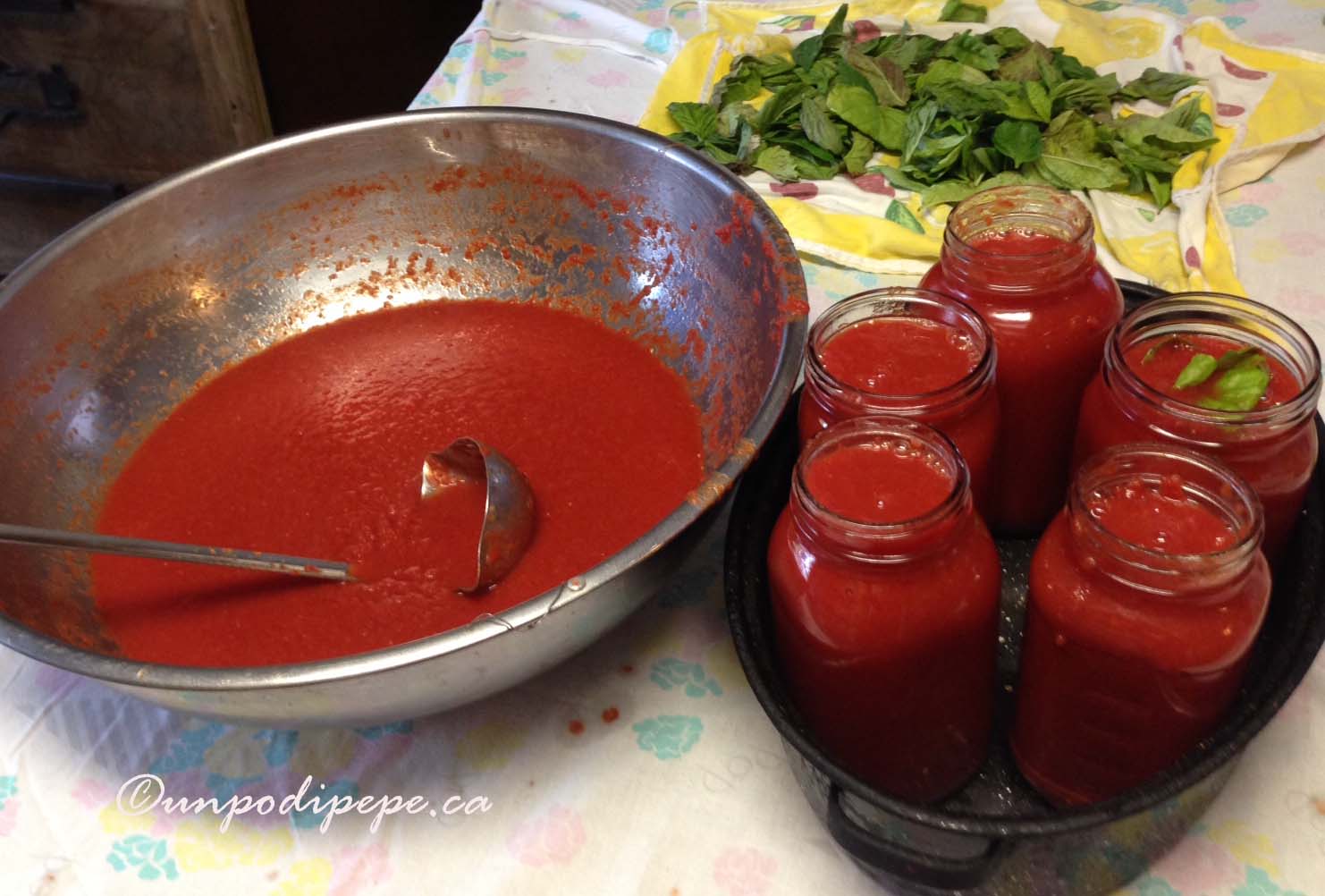
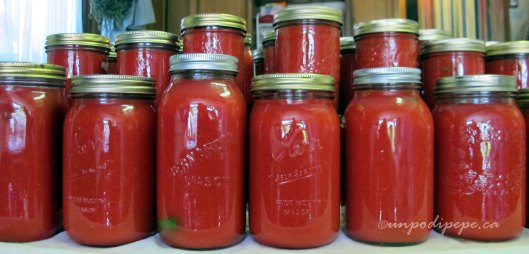
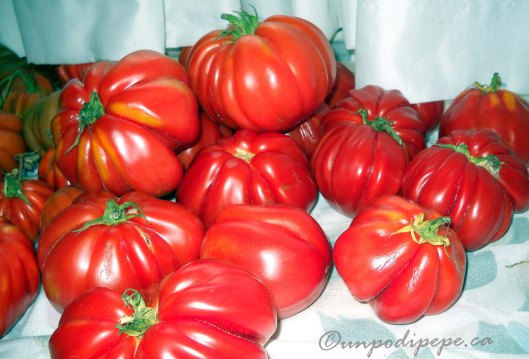
Today was my famiglia‘s annual pomodoro day.  We turned 15 boxes of pomodori, plus more from our gardens into passata di pomodoro, or as we simply call it ‘la salsa’. The boxes were 18 kg each (40 lbs)! That is 272 kg of pomodori and we made 140 litres of passata. Siamo stanchi!

For new readers of Un po’ di pepe, or those of you who have not read my previous pomodoro related posts, here they are.  Click on the appropriately coloured red links!

Passata di pomodoro

Passata di Pomodoro is a detailed description of my famiglia’s annual passata making day.  There is a lot of red in photos in this post! Rosso come un pomodoro, but no one is blushing.

Il Pomodoro discusses the history of the pomodoro and how it came to Italia and eventually became edible. You read that correctly-pomodori originally tasted really gross and were used only for ornamental purposes.  You’ve come a long way, pomodoro.

Does your famiglia make passata di pomodoro? I’d love to hear about it.  Ciao, Cristina

Share this:

  • Click to share on Facebook (Opens in new window) Facebook
  • Click to share on Pinterest (Opens in new window) Pinterest
  • Click to share on X (Opens in new window) X
  • Click to email a link to a friend (Opens in new window) Email
  • Click to share on WhatsApp (Opens in new window) WhatsApp
Like Loading...

Chiuso per Ferie

25 Tuesday Jul 2017

Posted by Un po' di pepe in Blogging, Italian life, Orsara di Puglia

≈ 14 Comments

Tags

Blogging, Orsara di Puglia

Chiuso per ferie = closed for holidays.  Chiuso per ferie signs can be seen posted all over Italia in summer, especially in the weeks before and after Ferragosto, the 15th of August. I was not organized to post-date anything and was hoping I could publish a few posts with only my iPad and wifi, but i give up. Un po’ di pepe is now chiuso per ferie until mid August!

I have a chiavetta internet, which until this year, I used at home with a small laptop.  I would load $ on it and use it for 1 month a year.  The technology is old and it was not a great connection anyways, making it more frustrating than useful.  I ended up wasting a lot of time, so this year, I decided to scrap it and just make do with wifi available at 3 bars in town.

Not so easy!  My wifi access usually consists of a few stolen minutes here and there. When I sit at the bar with my espressino, inevitably, someone sees me sitting there and comes over to chat, which is awesome, and much more sociable than staring at a screen by myself.  In the evening, I am usually at one of the bars, but with family or friends, so anything longer than a quick Instagram post is socially unacceptable.

One of the bars is at a crossroads, very close to my casa.  I have to walk past it to get to most of the places I need to go,  When I walk past, I walk really slowly and then I hear my pocket go ‘ding ding ding’ as all of my WhatsApp messages come in!  I read them later, and respond when in wifi again.  

I have been too busy socializing, taking photos and enjoying the fresh air in Orsara di Puglia to have time to keep up with reading blog posts, let alone deal with the technical issues of posting any.  I have been posting frequently to Instagram and a bit on Facebook.  If you want to see what I have been up to, check out my Instagram feed on the sidebar to the right.  For now, consider me chiuso per ferie! Ciao da Orsara, Cristina

Share this:

  • Click to share on Facebook (Opens in new window) Facebook
  • Click to share on Pinterest (Opens in new window) Pinterest
  • Click to share on X (Opens in new window) X
  • Click to email a link to a friend (Opens in new window) Email
  • Click to share on WhatsApp (Opens in new window) WhatsApp
Like Loading...

Dolci di Natale

23 Friday Dec 2016

Posted by Un po' di pepe in Feste, Italian life, Mangiamo!

≈ 15 Comments

Tags

Cartellate, Cauzuncill, Crustoli, Dolci di Natale, Panettone, Pizza con la ricotta, Pugliese Traditions

crustoli2If you have seen my Instagram photos, you know that my famiglia and I have been busy making dolci di Natale.  I decided to compile them together in a blog post. There are many other Italian dolci di Natale, but I have only included the ones we make every at home:

Cartellatecartellate

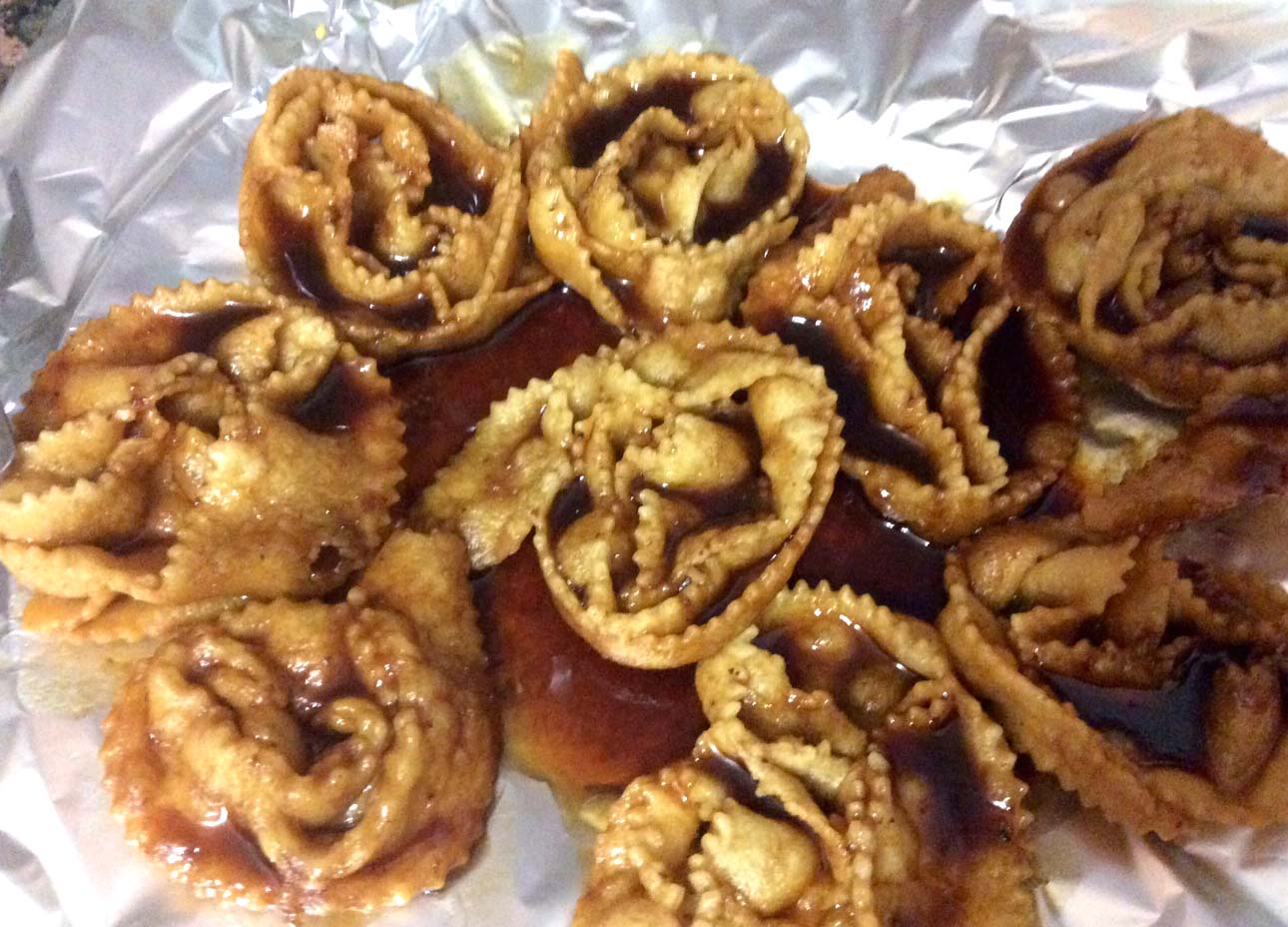
You can’t get more Pugliese than Cartellate (called Carteddate in Bari).  My Mamma and I made them last week. The dough is pinched and rolled into pinwheel or thorny rose shapes, fried, and then vino cotto is poured over them. Their shape is apparently  symbolizes the crown of thorns worn by Jesus. Vino cotto is really mosto cotto, but we call it vino cotto for some reason. The wine must is boiled and boiled down to a thick syrup and bottled.  It is like a yummy wine molasses.  cartellate2

cartellate3Cauzuncill’cauzuncillIt wouldn’t be Natale without Cauzuncill’ (cow·ZOON·cheel)  They already have their own entire blog post.  Read more about them here.

Cauzuncill' (cow-zoon-cheel) with almond and vino cotto filling, drizzled with vino cotto

Cauzuncill’ (cow-zoon-cheel) with almond and vino cotto filling, drizzled with vino cotto

Crustolicrustoli

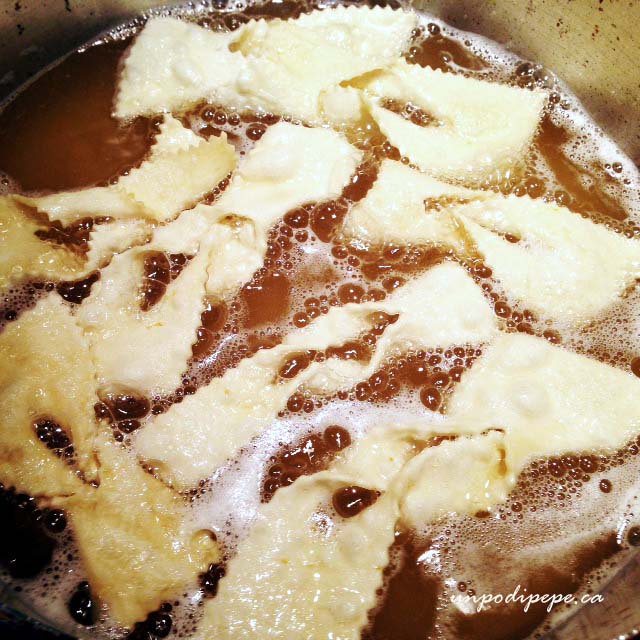
We call these crustoli, but they are also called crostoli, chiacchiere, cenci, bugie and frappe in other parts of Italia.  The sweet dough is cut into strips or bows, fried and then dusted with icing sugar. They are also traditionally made for Carnevale.  The recipe is in this post.crustolipentola

Panettonepanettone2

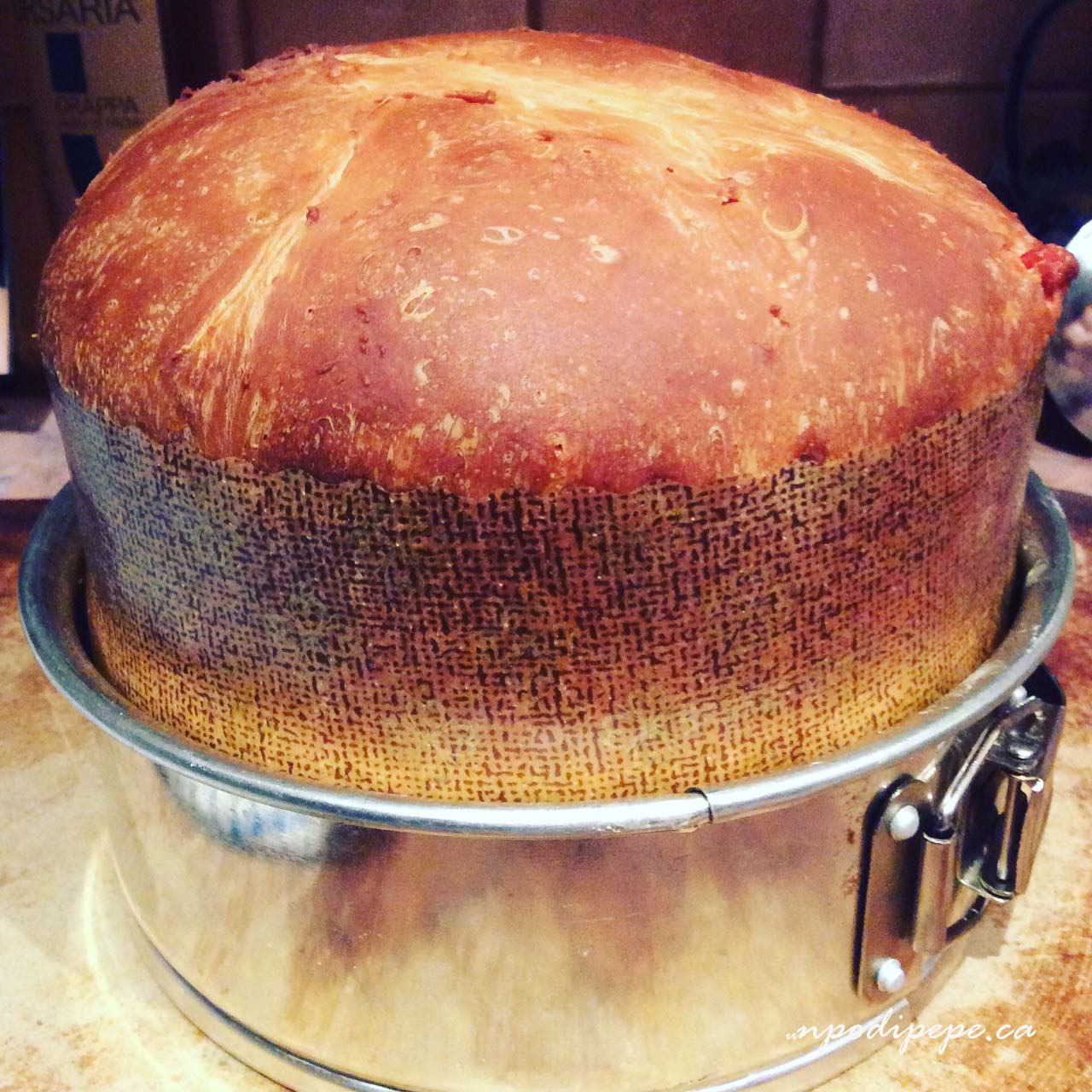
Panettone is traditionally from Milano, while Pandoro, the fruitless, star-shaped version, originated in Verona.  They are eaten throughout Italia and it wouldn’t be Natale without panettone and leftover panettone.  I love panettone french toast with fresh ricotta.  This year, I made my own panettone, and it came out quite decent!  I still have a bit of experimenting to do, but will hopefully be able to post about it for Natale 2017. The recipe is now posted here.

My first panettone fatto in casa

My first panettone fatto in casa

Pettolepettole

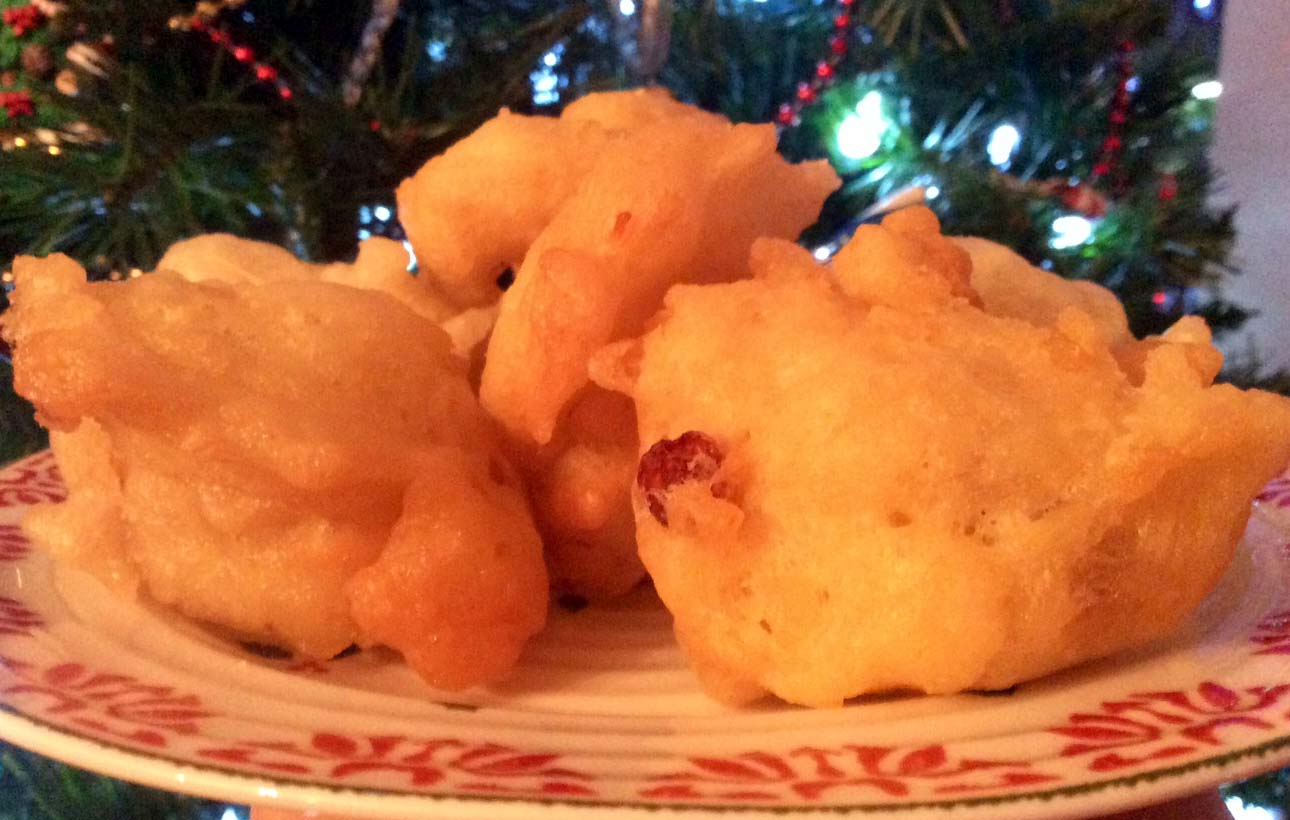
Pettole are fried balls of dough.  They are made with or without raisins and are covered in honey or vino cotto.  Pettole are traditionally eaten on the feast of l’Immacolata, Dec 8th, and on la Vigilia di Natale, Christmas Eve.  I believe these are usually called zeppole in Calabria and in the US.  In Puglia, zeppole are a completely different dolce, eaten on the feast of San Giuseppe.

Pizza con la Ricottapizzaconlaricotta

Pizza con la ricotta is another traditional Pugliese dolce, and we only make it at Natale and Pasqua.  I’m not sure why we only make it twice a year, as it is so delicious!  It is a crostata (tart) made with pasta frolla (short crust pastry) and filled with fresh ricotta, sugar, eggs and alcohol (Sambuca or Strega).  The word ‘pizza’ actually means flat and round.  Pizza con la ricotta is usually round, but today ours is rectangular.  I was not allowed to cut into it to take a cross sectional photo, so I will have to add it later!

Which dolci di Natale will be on your table tomorrow night? Buon Natale e Buon Appetito, Cristina

Share this:

  • Click to share on Facebook (Opens in new window) Facebook
  • Click to share on Pinterest (Opens in new window) Pinterest
  • Click to share on X (Opens in new window) X
  • Click to email a link to a friend (Opens in new window) Email
  • Click to share on WhatsApp (Opens in new window) WhatsApp
Like Loading...

Passata di Pomodoro

05 Monday Sep 2016

Posted by Un po' di pepe in Italian life, Mangiamo!

≈ 6 Comments

This weekend was my family’s annual passata di pomodoro canning fest. For those of you interested in seeing the process, I’m reposting ‘Passata di Pomodoro’. Ciao, Cristina

Un po' di pepe's avatarUn po' di pepe

Passata di pomodoro
Every year my family gets together to make ‘la salsa’, or passata di pomodoro. Everyone participates, even the nipotini. It is a 2 day event and we are all tired today, as we made about 180 litres of salsa/passata! Some of the tomatoes came from our gardens, but most of them were purchased.

Pomodori ready to be washed Pomodori ready to be washed

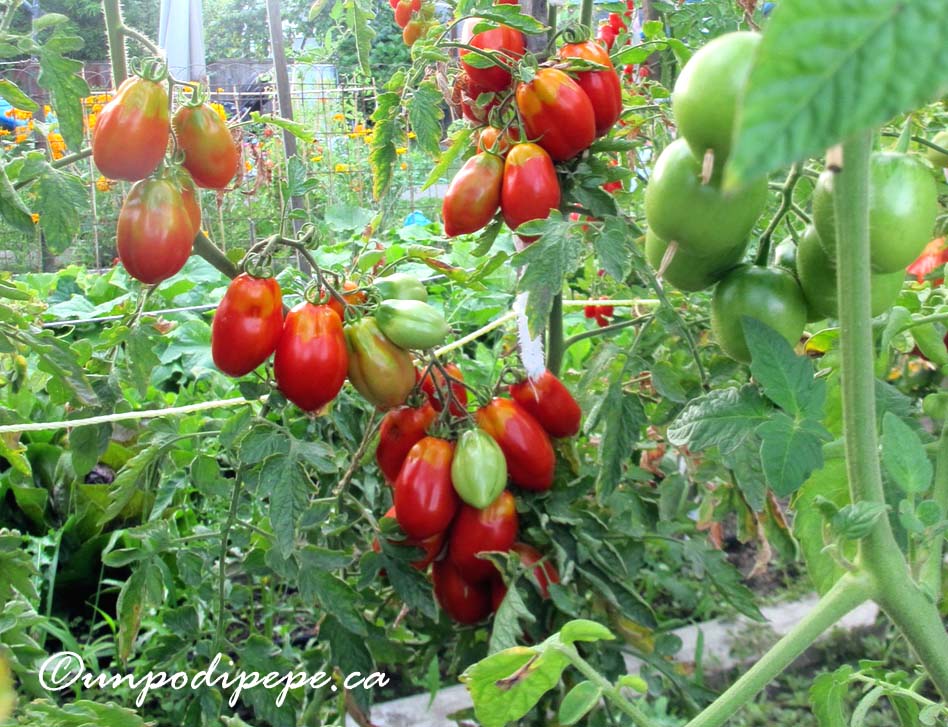
Pomodori from the garden Pomodori from the garden

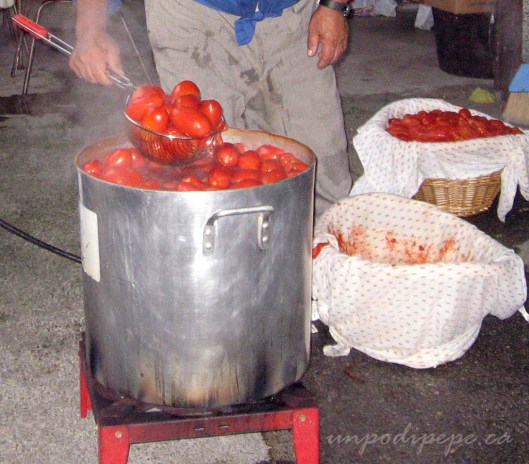
La pentola per i pomodori-a really big pot to cook the tomatoes! La pentola per i pomodori-a really big pot to cook the tomatoes!

The ripe pomodori are washed, then cooked in a really big pot until soft. Then they are drained in baskets lined with cloth. If they aren’t drained well, then the passata will be too watery.  To make’pomodori pelati'(peeled tomatoes) instead of passata, the skin is removed by hand and the whole pomodori are put in jars.

Cooked pomodori drained in baskets lined with cloth Cooked pomodori drained in baskets lined with cloth

Passata refers to ‘passed’ through a sieve, a passapomodoro, or an electric machine to…

View original post 220 more words

Share this:

  • Click to share on Facebook (Opens in new window) Facebook
  • Click to share on Pinterest (Opens in new window) Pinterest
  • Click to share on X (Opens in new window) X
  • Click to email a link to a friend (Opens in new window) Email
  • Click to share on WhatsApp (Opens in new window) WhatsApp
Like Loading...

La Madonna della Neve

05 Friday Aug 2016

Posted by Un po' di pepe in Culture, Feste, Italia, Italian life, Orsara di Puglia, Puglia

≈ 13 Comments

Tags

August 5th, Italia, Madonna della Neve, Orsara di Puglia, Pugliese Traditions, Southern Italy

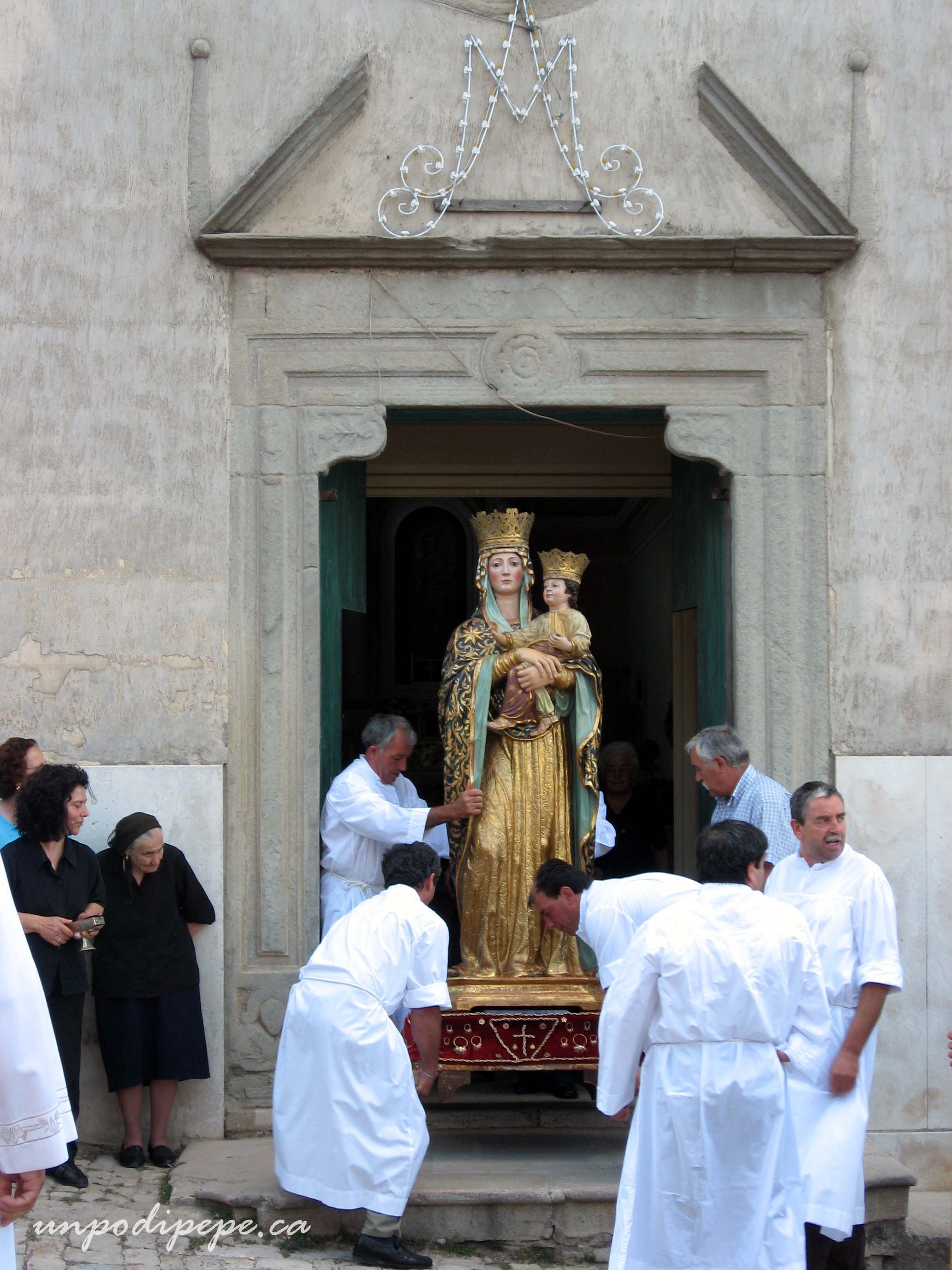
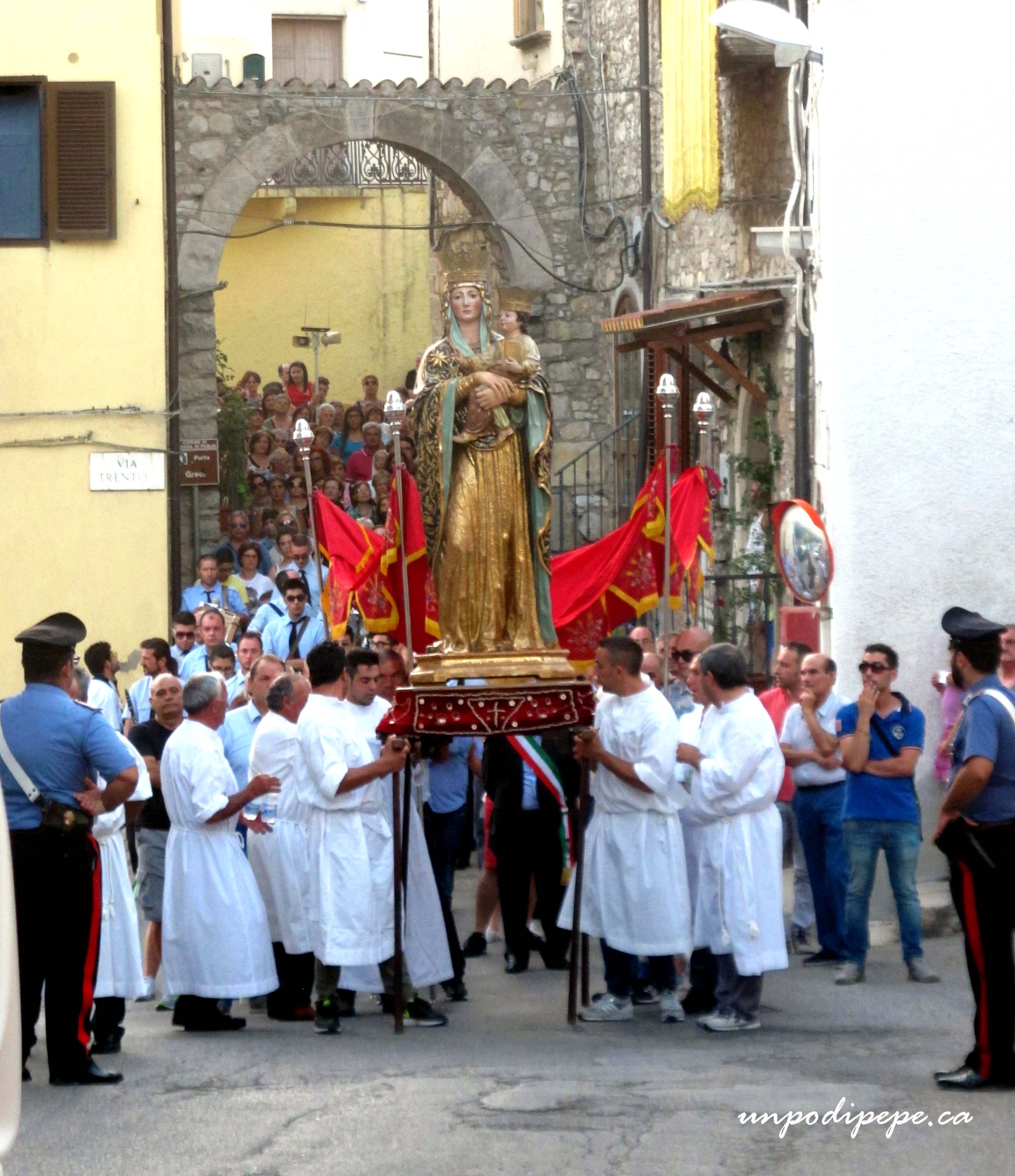
MadonnanevechiesaAugust 5th is the feast day of La Madonna della Neve (the Madonna of the Snow).  She is one of the Patron Saints of Orsara di Puglia and there is a big festa.  She is carried through Orsara in a procession and returned to her usual spot in the main church. In the evening there is a Mass, then music and fireworks in her honour.  La Madonna della Neve is the protectoress and Patron Saint of many paesi montani or mountain villages because, of course, it snows!

La Madonna della Neve is tied to the origins of the Basilica Santa Maria Maggiore in Roma.  According to legend, in the year 352, the night between August 4th and 5th, the Madonna appeared in a dream to a wealthy couple who wanted to build a church.  She asked them to build a church where snow had fallen during the night.  They went to tell Pope Liberio and it turns out he had the exact same dream during the night!

In the middle of a hot Roman summer, snow had fallen on L’Esquilino, the Esquiline Hill.  The perimeter of the snowed on area was where the church of Santa Maria ‘Ad Nives’ (of the snow) was built. The church is usually known as Santa Maria Maggiore.Madonnaneve06

Orsara’s Madonna della Neve statue was carved out of a single piece of quercia (oak) by Napoletano sculptor Aniello Stallato in 1624. I have been familiar with this beautiful sculpture since I was 11, but I had no idea she was almost 400 years old! Here are some photos of the processione!Madonnaneve10

Madonnaneve2MadonnanevestradadirittaMadonnanevearco

Ciao, Cristina

Share this:

  • Click to share on Facebook (Opens in new window) Facebook
  • Click to share on Pinterest (Opens in new window) Pinterest
  • Click to share on X (Opens in new window) X
  • Click to email a link to a friend (Opens in new window) Email
  • Click to share on WhatsApp (Opens in new window) WhatsApp
Like Loading...

Il Presepio

23 Wednesday Dec 2015

Posted by Un po' di pepe in Culture, Feste, Italian life

≈ 11 Comments

Tags

Greccio, L'Immacolata, Napoli, Nativity history, Presepio, San Francesco d'Assisi, Via San Gregorio Armeno

presepio2014L’Immacolata is the feast of the conception of the Virgin Mary on December 8th.  It is a national holiday in Italia and also the official beginning of the Feste Natalizie.  Italiani usually put up l’albero di Natale (the Christmas tree) and il Presepio (the Nativity scene) on this day.

San Francesco d’Assisi created the first Presepio in 1223 in a cave in Greccio.  He had been to the birthplace of Gesù (Jesus) in Bethlehem and was inspired to recreate the scene.  This was his attempt to return the emphasis of Christmas on the birth of Christ rather than gift-giving.  I find it interesting that the ‘commercialization’ of Christmas is not a new concept at all.  Searching for ‘the true meaning of Christmas’ did not start with Charlie Brown but in the 13th Century!

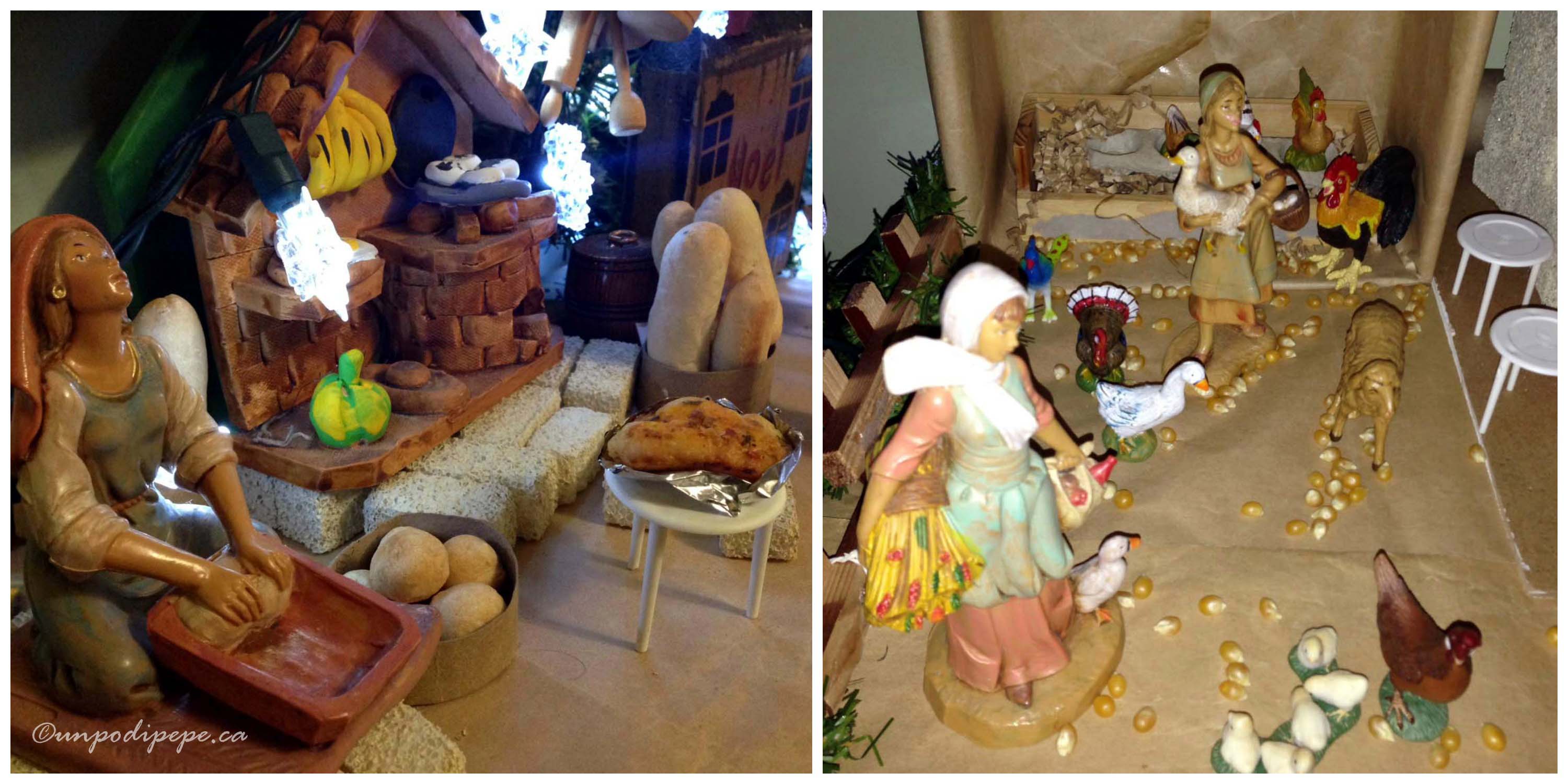
San Francesco’s was a ‘Presepio Vivente’, with real people and animals.  The live figures were eventually replaced by statues, and Presepi also started to be set up in homes.  The Presepio includes the Holy Family-although Bambino Gesù is not placed in the manger until after midnight Christmas Eve-angels, shepherds, animals, and the Re Magi (3 Wise Men).  The 3 Wise Men are at a distance, since they arrive on January 6th.  I also have my Befana figurine trailing behind them!  Several hundred years ago, Presepi also started to include scenes from village life.  Of course before Google Earth, Wikipedia, or even photography, no one actually knew what 1st Century Bethlehem looked like, so the village scenes resembled the local areas.  The tradition of the Presepio is popular throughout Italia, with most families having one. My Mamma gets very detailed and creative with her Presepio, even baking tiny bread, pizze and Panini.

Particolari del Presepio di Mamma-Details of Mamma's Presepio

Particolari del Presepio di Mamma-Details of Mamma’s Presepio

Via San Gregorio Armeno in Napoli is lined with artigiani (artisans) making presepio figurines and accessories all year round. The attention to detail is incredible! I must go and get myself a zampognaro (zam·poh·NYAH·roh) for my presepio.  This is a traditional Abruzzese bagpiping shepherd! The 2 photos below of San Gregorio Armeno artigiani were taken by my amica Anna.
san gregorio armeno 2san gregorio armeno 1

Many villages, including Orsara di Puglia, have a Presepe Vivente in December.  Like the original one, this features the live Nativity and also artisans in traditional costume working on trades and making traditional local dishes. I’d love to hear what you have in your Presepio!

Gloria2

A tutti i miei cari lettori, vi auguro un Buonissimo Natale, Cristina

Share this:

  • Click to share on Facebook (Opens in new window) Facebook
  • Click to share on Pinterest (Opens in new window) Pinterest
  • Click to share on X (Opens in new window) X
  • Click to email a link to a friend (Opens in new window) Email
  • Click to share on WhatsApp (Opens in new window) WhatsApp
Like Loading...

Il Pomodoro

07 Monday Sep 2015

Posted by Un po' di pepe in Italian life, Mangiamo!

≈ 24 Comments

Tags

Acqua sale, Antonio Latini, Conserva di pomodoro, Francesco Leonardi, History of the tomato, Italian food, Mediterranean diet, Passata di pomodoro, Pomodori, Tomato sauce, Traditional recipes

PomodorivillajameleLate August/early September is pomodoro season. Last weekend my family made passata di pomodoro and pomodori pelati in the garage. If you haven’t read last year’s post, check ‘Passata di Pomodoro’ out for a step by step commentary! Passata di pomodoro, or simply ‘salsa’ as we usually call it, is very versatile. It is used to make sugo (tomato sauce) or ragù (meat sauce) and pizza, or added to fagioli (beans) and lenticchie (lentils), minestrone and other zuppe (soups).Salsa2015

To make pomodori pelati, pomodori are cut into quarters, the seeds removed, and then tightly packed into vasetti (jars) with basilico and a spoonful of salt. The vasetti are sealed and cooked, then turned upside down to cool. Pelati are used for pizza al pomodoro and zuppe. They can also be used for making sauces, although I am not a fan of skins and seeds in my sugo!pomodoripelati2015Pelati2015

Canning or bottling pomodori is a yearly domestic ritual for many Italian and Italocanadese families. It’s a lot of work, but totally worth it. All year round you have the taste of summer in a jar!Vasetti2015

The pomodoro was not always such a staple in the Italian cucina. First grown by the Aztecs in Mexico, then also in the South American Andes, the pomodoro was brought to Europe by the Spanish in the 16th Century. The first documentation of pomodori in Italia is a 1548 note from Cosimo de’ Medici’s household to his secretary. The note states that ‘un cestino di pomodori’ (a basket of tomatoes) from one of the Medici estates had been received.  At this time, pomodori were not eaten or used in cooking. They were exotic but their taste was considered really gross, so they were mostly ornamental and sometimes used in potions as an aphrodisiac.  Hmmmm.pomodori2015b

Early pomodori did not taste anything like they do today, and some varieties were even toxic. Fortunately, the Mediterranean climate was ideal for growing the pomodoro.  It was able to mutate and create better tasting, sweeter versions of itself. It did take awhile for anyone to figure out what to do with the pomodoro. I’m really glad someone thought of adding olive oil, basilico, salt and of course, un po’ di pepe!

The earliest recorded recipe using pomodori was in Napoli, in Antonio Latini’s book ‘Il Scalco alla Moderna’.  This translates to something like ‘The Modern Butler’. The recipe was for ‘Salsa alla Spagnuola’, a Spanish condiment made with pomodoro, melanzane (eggplant) and cipolla (onion). Sounds a bit like ratatouille.  The first recipe using pomodori on pasta was in Roman chef Francesco Leonardi’s 1790 cookbook ‘L’Apicio Moderno’. By the mid 1800’s the pomodoro was a staple food of Italian contadini. The ‘Contadino diet’ was mostly raw or cooked pomodori and other vegetables, legumes, bread or pasta, salt and olive oil. Today they call this the ‘Mediterranean diet’.Pomodori2012

‘Acqua Sale’ is a classic Orsarese comfort food. Older bread slices are soaked in water and then pomodori are squished over it. A drizzle of olive oil, salt, and basilico or oregano and it’s an instant delicious meal, similar to Panzanella Toscana. This tastes even better on freshly baked bread-minus the soaking in water! We always ate ‘pan’ e pomodoro’ when the bread came out of the oven. Yum. So simple yet so delicious.

I asked Mamma what they did before glass vasetti and other modern canning conveniences were available. She said they made ‘la conserva’ which was like a tomato paste that could be stored. It was used in winter to make sugo for pasta or to add flavor to other foods. In August, pomodori were cooked with skins and seeds removed, similar to passata. This salsa was salted, placed in large earthenware dishes and left out in the sun for several days. Once it was dark and thick, la conserva was transferred to terracotta or glass containers and covered with a film of olive oil and fig leaves or basilico to seal it. The container was then covered and tied with un straccio (a dishrag). Quartered pomodori were also sundried to use in winter.

My recreation of 'la conserva'. The passata was dried in the sun, then the thickened stuff was placed in an earthenware bowl, covered with a film of olive oil and fig leaves, then covered with a dishrag

My recreation of ‘la conserva’. The passata was dried in the sun, then the thickened stuff was placed in an earthenware bowl, covered with a film of olive oil and fig leaves, then covered with a dishrag

Talking about pomodori is making me hungry! I’ll go pick some in the garden and make some pan’ e pomodoro!pomodori2015a

Share this:

  • Click to share on Facebook (Opens in new window) Facebook
  • Click to share on Pinterest (Opens in new window) Pinterest
  • Click to share on X (Opens in new window) X
  • Click to email a link to a friend (Opens in new window) Email
  • Click to share on WhatsApp (Opens in new window) WhatsApp
Like Loading...

Museo Diocesano, Orsara di Puglia

29 Saturday Aug 2015

Posted by Un po' di pepe in Art history, Italia, Italian life, Orsara di Puglia, Photography, Puglia

≈ 7 Comments

Tags

Italian history, Museo Diocesano Orsara di Puglia, Orsara di Puglia, Palazzo Varo, Puglia, Southern Italy

museodiocesanoorsaraThe last time I was in the Museo Diocesano di Orsara di Puglia was about 1980. It looks as if hardly anyone else has been there either! The Museo is right around the corner from my casa, and it is not usually open. To visit, you need to ask for the person who has the key.  Last week I was walking by and noticed it was open as there was a photo exhibit in one of the rooms. As I walked up the stone staircase it was like stepping through time.

My accidental selfie

My accidental selfie

The Museo occupies part of the upper floor of the Palazzo Varo, a 16th Century building that was part of the Abbazia dell’Angelo. The famiglia Varo sold the palazzo and it became a convent for the ‘Monache Bianche’ or white nuns. When the sisters moved in the 1960’s it became the Scuola Media until a new school was built. In the 1970’s, some of the rooms became a depository for archeological relics and museum items. The bottom floor was recently remodelled into a very nice meeting/conference area.  The upper floor has a separate entrance and is in an elegant state of decay, to match the artifacts it is housing.museodiocesanocollage2

The collection is actually really impressive and reflects the history of the area.   Most of the artifacts, except the sacred items formerly used in the parish, have been donated, collected and collated by volunteers. The Museo encompasses a time span from Neolithic to mid 20th Century. That’s a really long time! The bronze and selce (flint) tools and utensils, earthenware vessels, lamps, tomb decorations and even fragments of a 10th Century pavimento (mosaic pavement) were dug up by contadini (farmers/peasants) while plowing their fields.

Roman lucerne -oil lamps

Roman lucerne -oil lamps

Ascia e lancie in Bronzo (bronze hatchet and spears)

Ascia e lancie in Bronzo (bronze hatchet and spears)

There are also farm implements, tools, utensils and household items used by local contadini in daily life. The lack of formal organization and cataloguing of the items makes the place so much more interesting. The crumbling, aging plaster walls of the formerly grand Palazzo provide a beautiful, yet ironic backdrop for the crumbling rusted work and field implements used by contadini Orsarese.

Museodiocesanocollage3 copymuseodiocesanosellaThe Museo is definitely worth a visit-you need to ask at the Parish or Comune (Town Hall) for someone to let you in.  Let me know if you need more info on this, and read Benvenuti ad Orsara di Puglia!

A piattaia, called a 'scudular' (scoo.doo.lahr) in Orsarese. I have one just like it, made by a friend of Papà's. My plates are quite a bit newer though!

A piattaia, called a ‘scudular’ (scoo.doo.lahr) in Orsarese. I have one just like it, made by a friend of Papà’s. My plates are quite a bit newer though!

museodiocesano3

Share this:

  • Click to share on Facebook (Opens in new window) Facebook
  • Click to share on Pinterest (Opens in new window) Pinterest
  • Click to share on X (Opens in new window) X
  • Click to email a link to a friend (Opens in new window) Email
  • Click to share on WhatsApp (Opens in new window) WhatsApp
Like Loading...
← Older posts
Newer posts →

Enter your email address to follow 'un po' di pepe' and receive notifications of new posts by email.

Join 511 other subscribers
Follow Un po' di pepe on WordPress.com

Popular Posts

  • Panforte di Siena
    Panforte di Siena
  • Hairstyling in Ancient Roma
    Hairstyling in Ancient Roma
  • Panettone Fatto in Casa
    Panettone Fatto in Casa
  • Polpo e patate
    Polpo e patate
  • Italiano per Ristoranti~How to pronounce your restaurant menu
    Italiano per Ristoranti~How to pronounce your restaurant menu
  • Dolci di Natale
    Dolci di Natale
  • Acqua Vergine
    Acqua Vergine

Recent Posts

  • Castel del Monte
  • ‘The Nuances of Love’
  • Hostaria Antica Roma~Eat like an Ancient Roman
  • Santa Maria in Aracoeli
  • Casino dell’Aurora~Villa Boncompagni Ludovisi
  • Nasoni di Roma
  • Bloghiversario #11
  • Fontana di Trevi
  • Acqua Vergine
  • Giubileo 2025
  • Sanremo 2025
  • In Vino there are Memories
  • A Literary Harvest
  • 2024~Un po’ di pepe Year in Review
  • Buon Natale 2024
  • Il Bicerin
  • Mercato Porta Palazzo
  • Torino
  • Catanzaro, Calabria
  • Il Pumo Pugliese
  • Artemisia Gentileschi
  • Cavalli di San Marco
  • Panzerotti
  • Torcello
  • 10 years of Un po’ di pepe!

Categories

Amici e Famiglia Architecture Art Art history Art projects Bilingual posts Blogging Canada Culture Feste Firenze Inspiration Italia Italian Folklore Italian language Italian life Italocanadesi Libri Mangiamo! Orsara di Puglia Parole piacevoli Photography Puglia Recipes Roma Travel Travel tips Uncategorized Vino

Archives

Un po’ di pepe on Facebook

Un po’ di pepe on Facebook

Start a Blog at WordPress.com.

  • Subscribe Subscribed
    • Un po' di pepe
    • Join 511 other subscribers
    • Already have a WordPress.com account? Log in now.
    • Un po' di pepe
    • Subscribe Subscribed
    • Sign up
    • Log in
    • Report this content
    • View site in Reader
    • Manage subscriptions
    • Collapse this bar
 

Loading Comments...
 

    %d